Wood is one of the oldest building materials, used in construction, finishing, furniture making, and landscape design. However, despite its many advantages, wood is vulnerable to moisture, fire, insects, fungus, and ultraviolet radiation. Proper wood treatment with specialized products is essential to extend the lifespan of wooden structures and maintain their attractive appearance. This article will detail the appropriate wood treatments, depending on its intended use, type, and operating conditions.
- Why treat wood?
- Classification of wood treatment products
- Antiseptics
- Fire retardants
- Oils
- Varnishes and glazes
- Paints
- Waxes
- Wood processing by type of construction
- For external structures (fences, facades, terraces)
- For interior spaces (floors, ceilings, furniture)
- For baths and saunas
- For wooden floors
- Stages of wood processing
- Step 1. Surface preparation
- Step 2: Primer (if necessary)
- Step 3. Applying antiseptic
- Step 4. Fire retardant treatment
- Step 5. Decorative finishing
- Recommendations for choosing funds
- Safety and Operating Tips
- Conclusion
Why treat wood?
Natural wood is an organic material that is susceptible to environmental degradation. The main threats are:
- Moisture and decayWhen wood gets wet and lacks ventilation, it can develop rot and fungus.
- Wood-boring insectsBeetles, larvae, and termites can penetrate the structure of the tree and destroy it from the inside.
- Mold and fungiThey are especially dangerous in areas with high humidity—saunas, bathrooms, and basements.
- Exposure to ultraviolet radiationThe sun destroys the lignin in the wood structure, leading to discoloration, cracking, and surface erosion.
- Fire hazardWood ignites quickly unless treated with fire retardants.
Protection from these factors is achieved through complex treatment of wood with various compounds – antiseptics, fire retardants, oils, varnishes, paints and waxes.
Classification of wood treatment products
Wood processing includes two main stages:deep impregnationAndexterior protective finishDepending on the purpose, the following types of funds are distinguished:
Antiseptics
Designed to protect against fungus, mold, blue stain, and insects, they are divided into:
- Water-based— environmentally friendly, odorless, and quickly absorbed. Suitable for interior use.
- Organic (oil)— penetrate deeply and are used for external protection. They provide long-lasting results.
- Salt- budget-friendly and versatile, but require a top coat to protect against washing out.
- Combined— combine protection against biological threats and moisture.
Fire retardants
They prevent wood from burning. They can be used alone or as part of complex preservatives. They are usually classified by their effectiveness and application method (surface or deep penetration).
Oils
Natural or modified oils penetrate the wood structure without leaving a dense film, imparting water-repellent and decorative properties to the surface. Suitable for terraces, furniture, baths, saunas, and facades.
Popular types:
- flaxseed,
- tung,
- teak,
- oil with wax.
Varnishes and glazes
They create a durable film on the wood surface, protecting it from water, dirt, and UV rays. They are primarily used for interior finishing, furniture, and decorative elements.
- Varnishes – provide a glossy or matte protective film.
- Glazes are tinted compositions that impregnate wood with a slight tinting effect.
Paints
They are used for decorative and protective finishing of exterior and interior wooden surfaces. They come in acrylic, alkyd, and polyurethane varieties. They provide water repellency, UV protection, and aesthetic appeal.
Waxes
They are most often used in interiors, for furniture and decorative panels. They create a thin, water-repellent layer with a pleasant shine. They are often included in oils.
Wood processing by type of construction
Different wooden products and structures require an individual approach to the selection of protective equipment.
For external structures (fences, facades, terraces)
- Usedeep-penetrating antisepticswith water-repellent effect.
- Be sure to applyfire retardant, especially for buildings made of timber or logs.
- Complete processingweather-resistant oil, paint or varnishwith UV filter.
For interior spaces (floors, ceilings, furniture)
- Preferredwater-based antiseptics- environmentally friendly and odorless.
- For decorative protection -varnish, oil or wax.
- Use in bathrooms and saunasmoisture-resistant oils with antiseptic.
For baths and saunas
- Specialantiseptics that can withstand high temperatures.
- For the regiments -natural odorless oils, safe when heated.
- Use paints and varnishes with caution - only heat-resistant ones and those without toxic fumes.
For wooden floors
- Primary treatment: antiseptic and oil.
- Finish -wear-resistant varnishwater-based or polyurethane-based.
- An alternative is wax or hard wax oils for parquet floors.
Stages of wood processing
Proper application of protective compounds affects the longevity of wood. General scheme:
Step 1. Surface preparation
- Clean from dust, dirt, old coating.
- Be sure to dry to a humidity level of no more than 20%.
- Sand the surface (especially for interior work).
Step 2: Primer (if necessary)
- A special primer is used to improve adhesion to the finishing compound.
- Often combined with a primary antiseptic.
Step 3. Applying antiseptic
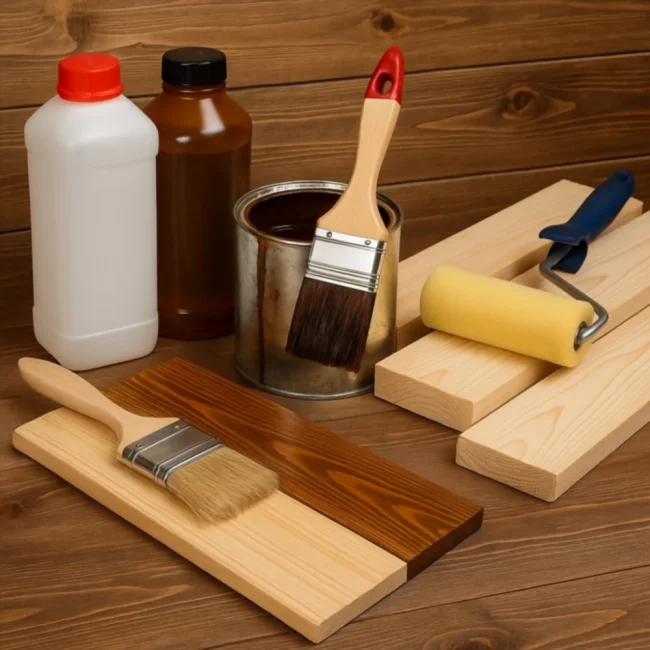
- By roller, brush, spray or dipping.
- It is important to follow the instructions regarding the number of layers and the intervals between them.
- In case of a strong risk of infection, use deep impregnation or autoclave treatment.
Step 4. Fire retardant treatment
- Apply after the antiseptic has dried.
- Required for load-bearing structures, stairs, attics, and lofts.
Step 5. Decorative finishing
- Paints, oils, varnishes, and glazes are applied in 1–3 layers.
- Light sanding is recommended between coats.
- It is important to choose formulations that are compatible with previous products.
Recommendations for choosing funds
- Preferred for outdoor useoil antiseptics and weather-resistant paints.
- It is safer to use inside the househigh-quality water-based products.
- Please notepenetration depth,availability of certificates,compatibility with other coatings.
- When buying, focus not only on the price, but also onvalidity period of the composition— many are effective for 5–10 years.
Safety and Operating Tips
- When working with wood preservatives, wear gloves and a mask.
- Ventilate the room after application.
- Do not neglect the drying time of each layer.
- Store materials in a closed container, away from fire and direct sunlight.
Conclusion
Wood treatment is more than just a decorative procedure; it's a crucial step in ensuring the durability and reliability of wooden structures. By approaching this process wisely, taking into account the operating conditions and intended use of the structure, you can significantly extend the lifespan of the wood, prevent damage from moisture, fungus, and pests, and enhance the safety and aesthetic appeal of any wooden elements in your home or property. Choosing the right products and strictly following the application technique are the key to high-quality results and savings on future repairs.