The topic of cutting gas pipelines from existing networks raises many questions, both among specialists and users who encounter it in practice. This type of work may be required for a variety of reasons: replacing obsolete pipes, upgrading networks, eliminating faulty sections, or expanding gas distribution systems. It's important to understand that cutting gas pipelines is not simply the physical removal of a section of pipe, but a complex engineering process that requires consideration of numerous factors. This work must be carried out in compliance with strict safety regulations and with due consideration of all potential consequences for the continued operation of the system.
Why and when are gas pipelines cut?
The process of cutting a gas pipeline from an existing network can be necessitated by various circumstances. In practice, this often occurs when new facilities need to be connected or the gas flow direction needs to be changed. Meanwhile, old sections of the pipeline may be worn, damaged, or no longer functional, leading to the decision to dismantle or replace them.
One of the most common reasons for cutting is an emergency. If a section of pipeline is damaged, for example due to leaks or corrosion, it must be isolated from the existing network to prevent further safety issues. In such cases, cutting is the first step to repairing the defect and restoring normal gas service.
Gas pipeline cutting may also be associated with planned network modernization. Gas companies frequently upgrade infrastructure, replacing old pipes with new, more durable and efficient ones. This often requires severing sections of pipelines that will no longer be used.
How does the gas pipeline cutting process work?
The process of cutting a gas pipeline involves several important steps, each of which requires careful attention and adherence to necessary safety precautions. The most crucial aspect is shutting off the gas supply to the section to be cut. This step requires complete isolation of the gas pipeline from the main network, minimizing the risk of accidents during the work.
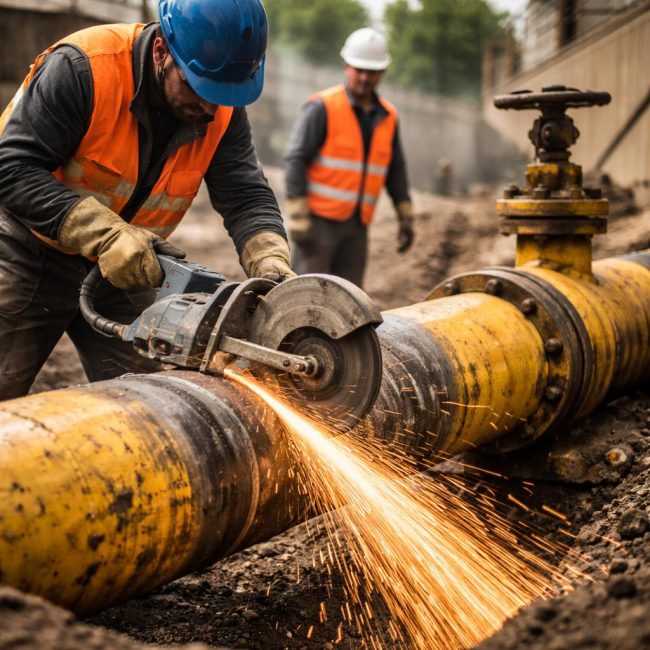
Once the gas pipeline section is isolated, the pipe is cut. Various technologies can be used for this, including mechanical cutters or specialized welding machines. It's important to note that the process must be carried out in compliance with all safety regulations, as gas can be hazardous even in minimal concentrations.
In practice, cutting may also be accompanied by leak testing of the remaining pipeline to ensure that the system will continue to operate normally after cutting. If necessary, subsequent work may include installing new valves, transition elements, or connections to ensure stable system operation.
Technological complexities and nuances
Cutting a gas pipeline from an existing network is not always a simple task. In some cases, gas pipelines may pass through complex sections, such as underground spaces, enclosed structures, or hard-to-reach areas, significantly complicating the process. For example, cutting pipelines in urban areas or near infrastructure facilities requires preliminary surveys and planning to minimize risks.
Furthermore, in practice, it is often necessary to trim pipes that have been in service for a long time. In such cases, it is important to consider not only the age of the pipes but also their physical condition. This is often due to the fact that older pipes may be subject to additional corrosion or damage, requiring not only trimming but also additional measures to strengthen the entire system.
Legal and regulatory aspects
Since gas pipelines are a vital part of the energy infrastructure, any work on them must be carried out in strict compliance with state standards and regulations. In Russia, for example, all work on gas pipelines, including their trimming, is governed by a number of laws and regulations that establish safety requirements, work procedures, and specialist qualifications.
Furthermore, every gas company is required to comply with established regulations and obtain the appropriate permits for work. It is important to remember that any changes to the gas supply system can have far-reaching consequences, and improper execution can lead to emergency situations.
Common mistakes and misconceptions
One common misconception is that cutting a gas pipeline requires no special knowledge or training. In reality, the process requires high qualifications and strict adherence to all regulations. Mistakes during the pipeline isolation stage or improper use of equipment can lead to serious consequences.
Furthermore, many underestimate the importance of subsequent inspections and testing of gas pipelines after work is completed. Incorrect connection of new pipes, poorly sealed connections, or inadequate insulation can lead to gas leaks, posing a hazard not only to workers but also to nearby residents.
Conclusion
Cutting gas pipelines from an existing network is a critical and responsible process that requires a careful approach, adherence to all safety regulations, and strict oversight at every stage. This is not only a technical operation but also part of an overall strategy for maintaining gas supply security and improving infrastructure. The complexity and risks of such work highlight the importance of the professionalism and experience of the specialists performing these operations.