The three most popular roofing materials for private homes in Belarus are ondulin, metal tiles, and bitumen shingles. Technically, they all serve the same purpose: protecting the roof from precipitation and wind. However, in the real-life conditions of the Belarusian climate, with its temperature fluctuations, snow loads, and frequent thaws, these materials perform differently.
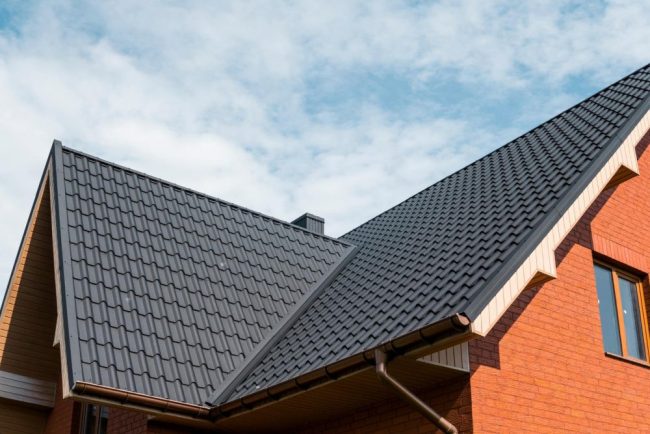
By 2026, the materials market itself had changed. Reinforced ondulin sheets with denser bitumen, metal roofing tiles with improved polymer coatings and matte colors, and new collections of bituminous shingles based on modified bitumen with highly fade-resistant granules were introduced. At the same time, logistics and import costs increased, so the price and final cost of a solution depend not only on the type of material but also on the specific manufacturer and its product line.
Plus, energy efficiency requirements have become more stringent: a high-quality roofing system, ventilation, and vapor barrier are now mandatory even for small homes. In such a system, the roofing itself is only a single layer, but its properties determine the durability of the entire structure. You can view the range of roofing and wall insulation materials in specialized catalogs, such as https://fixit.washerhouse.com/en/utepliteli/.
This article won't tell you "just buy this roofing." Instead, it'll provide a clear selection process: how to weigh your home type, roof shape and complexity, budget, service life, and installation requirements to ensure you get the right material for years to come without any unpleasant surprises.
- A brief overview of each material: not "what it is," but "what you'll get on your roof."
- Ondulin vs. metal vs. bituminous shingles: a comparison of key criteria for Belarus
- 1. Cost of materials and total cost of the roof
- 2. Service life and warranty
- 3. Noise, comfort, attic
- 4. Roof complexity
- 5. Weight of the covering and the condition of the house
- 6. Maintenance and repairability
- How to Know What's Right for You: Selection Scenarios for Different Home Types
- A small cottage or garden house, limited budget
- A private house for permanent residence with an insulated attic.
- Reconstruction of an old roof in a village or old private sector
- Complex roof architecture
- Priority is the appearance and “status” of the facade
- What's often forgotten when choosing a roof: nuances that professionals take into account
- A quick guide to choosing: how to settle the debate between Ondulin vs. metal roofing vs. bituminous shingles
- Final advice: how to avoid making a mistake in your choice
A brief overview of each material: not "what it is," but "what you'll get on your roof."
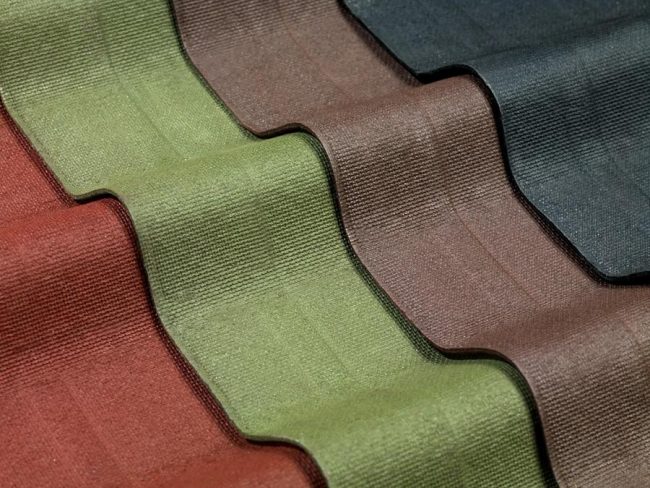
Onduline is a corrugated sheet made of cellulose impregnated with bitumen and protected with a colored pigment. On the roof, you get a lightweight covering that minimally stresses existing rafter systems and allows for quick roofing, even with simplified sheathing. Its advantages for a private home include soft acoustics (rain is almost inaudible), ease of cutting and installation, and the ability to be installed over old slate. Its disadvantages include color fading, limited service life (usually 15–20 years with careful use), and sensitivity to errors: if the sheets and nails are not properly fastened, leaks will appear sooner.
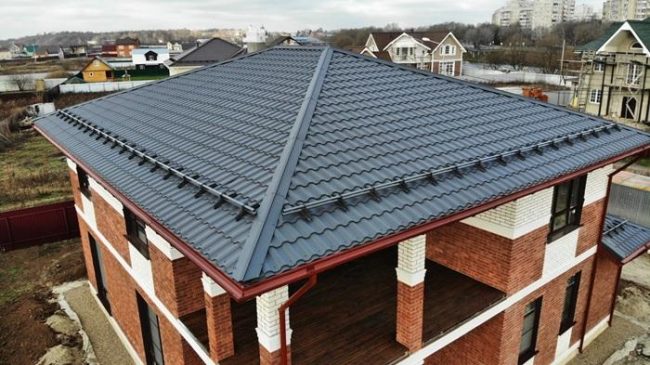
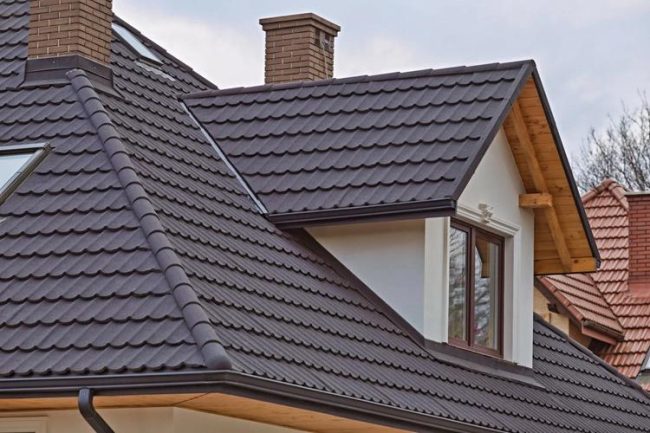
Metal roofing is a type of steel sheet with a specific profile and a protective and decorative polymer layer. Visually, it's a classic "tile" roofing style, common in private homes in Minsk and surrounding cities. In practice, you get a lightweight, galvanized metal roofing material with high load-bearing capacity when properly battened. Advantages: a wide selection of profile shapes and a RAL color palette, high durability for series with thick metal and a high-quality coating, and quick installation on simple slopes. Disadvantages include the risk of corrosion if the coating layer is damaged, increased noise without adequate insulation and vapor barriers, and visible waste on a complex roof.
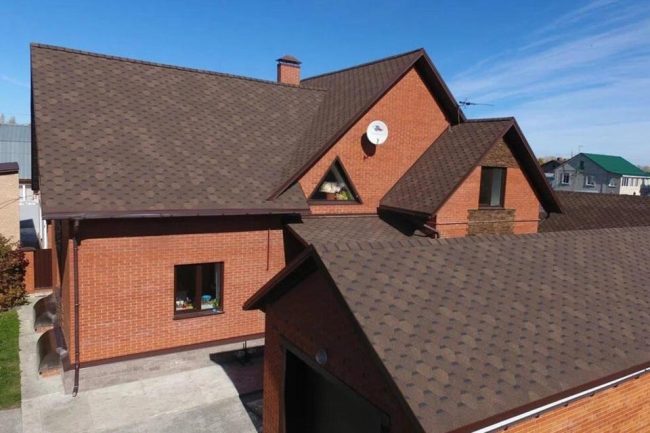
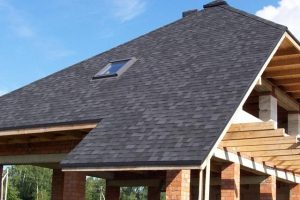
Bituminous (flexible, soft) shingles are modules made of fiberglass and modified bitumen with a mineral dressing. They are installed on a solid base (usually OSB or moisture-resistant plywood). The result is a quiet roof with a neat pattern, ideal for complex roof shapes such as valleys, turrets, and dormers. Pros: high wind resistance, minimal waste even with complex geometries, and rich decorative possibilities. Cons: a high-quality, solid base and well-designed ventilation are required, the air temperature during installation is critical (they usually cannot be installed in extreme cold), and skimping on underlayment and additional materials quickly results in leaks.
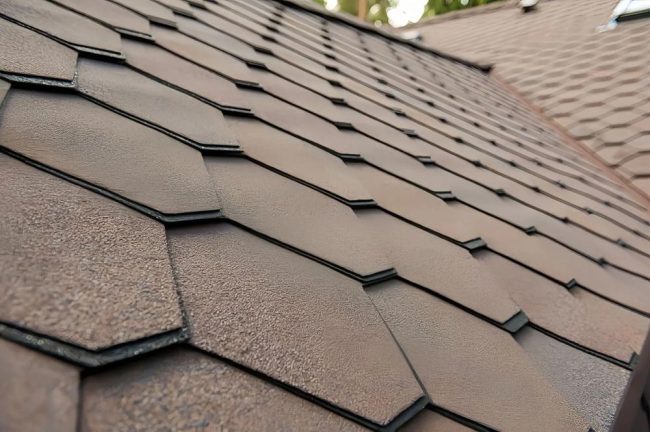
Ondulin vs. metal tiles vs. bituminous tiles—these are three different approaches to roofing, not just three names on a price list.
Ondulin vs. metal vs. bituminous shingles: a comparison of key criteria for Belarus
To prevent the choice from turning into a “like/dislike” debate, it is useful to sort the materials according to key criteria.
1. Cost of materials and total cost of the roof
- Metal roofing occupies a middle ground: the market offers both very affordable thin sheets and modern premium solutions that are significantly more expensive.
- Bituminous shingles are often more expensive due to the material itself and the need for a continuous base and underlayment. However, on a complex roof with many curves, their final cost can be comparable or even lower than metal shingles due to less waste.
It is important to consider not only the cost of the sheets or shingles, but also:
- type and pitch of the lathing;
- the need for continuous flooring (for bituminous shingles);
- fasteners, strips, aerators and other additional elements.
For example, a simple gable roof for a country house near Minsk with metal roofing tiles may be cheaper than the same roof with asphalt shingles. However, if you consider a complex multi-pitched roof for a cottage in the suburbs of Grodno, the consumption of metal roofing tiles and accessories will be higher, and waste will be greater, making soft roofing a more cost-effective option.
2. Service life and warranty
- Onduline: a reliable service life of 15–20 years if the manufacturer's instructions are followed and installation is careful. In very exposed, sunny areas, its appearance may change after just a few years: the color may fade, and the surface may become rough.
- Metal roofing: the range is vast. Thin metal with a simple polyester coating is one thing, while 0.5 mm steel sheets with a durable matte or PUR coating are quite another. Under real Belarusian conditions (freeze-thaw cycles, snow, ice), high-quality metal roofing lasts 25–40 years, or longer with regular inspection.
- Bituminous shingles: budget series have a realistic lifespan of 20–25 years, while branded ones (with modified bitumen and heavy coating) have a lifespan of 30–50 years. This requires proper pitch, ventilation, and proper installation.
Temperature fluctuations and thaws in Belarus are critical: water entering microcracks or scratches expands when it freezes, accelerating metal corrosion and bitumen aging. Therefore, the durability of the coating is always dependent on the quality of installation work and the treatment of the junctions.
3. Noise, comfort, attic
- Metal roofing without a sufficient layer of insulation does produce noise in rain and hail. However, with a roofing layer of 200–250 mm of mineral wool, a vapor barrier, and a wind barrier, the noise is reduced to a comfortable level and is not significantly different from other materials.
- Ondulin and bitumen shingles are inherently softer, so they transmit less sound. This is a plus for an attic near Minsk or Brest: it's quieter and reduces the drum effect.
If a residential attic is planned and sound insulation is important, bituminous shingles or ondulin are often considered, or reinforced thermal insulation is immediately installed under the metal roofing.
4. Roof complexity
- For a simple gable roof of a house or garage, metal tiles are almost always the winner: the sheets are large, installation is quick, and waste is minimal.
- For complex, sloping roofs with valleys, dormers, and bay windows, where there is a lot of trimming, soft bitumen shingles save material and provide a neater appearance without "torn" elements.
- Onduline is convenient for use on simple and medium-complexity roofs, including outbuildings and small country houses. For very complex roof geometries, the accuracy of the joints depends on the skill of the installers.
5. Weight of the covering and the condition of the house
- Onduline: one of the lightest options, which is important when renovating old houses where the rafter system is weakened and unable to bear additional loads.
- Metal roofing: also a lightweight material, it poses no problems when calculated for most modern homes with sufficient load-bearing capacity.
- Asphalt shingles: While not particularly heavy on their own, when used as a continuous covering, the roofing weight increases significantly. Older houses in rural areas often require reinforced rafters, which increases the overall cost of roofing.
6. Maintenance and repairability
- Metal roofing: if damaged locally by hail or wind, replacing a single sheet is more difficult than it seems. Sometimes, a significant portion of the roof needs to be removed.
- Ondulin: individual sheets are relatively easy to replace, but the colour of the new section often differs from the faded old one.
- Bituminous shingles: it's easy to make local repairs to just a few shingles; if the batch is carefully selected, the repair marks are almost invisible.
Brief summary of the materials:
- Onduline is suitable as a budget-friendly lightweight solution for simple roofs of small houses and outbuildings, especially with weak rafters.
- Metal roofing is ideal for applications where a familiar roof appearance, reasonable cost, and relatively simple slope shape are desired.
- Bituminous shingles are ideal for complex architecture, quiet under-roofing, and projects where the appearance and status of the façade are more important than the lowest price.
How to Know What's Right for You: Selection Scenarios for Different Home Types
To turn the "Ondulin vs. metal vs. bitumen shingles" debate into a clear solution, it's helpful to apply typical scenarios to your property.
A small cottage or garden house, limited budget
The roof is simple, there's no attic, and the appearance requirements are moderate. The main goal is to quickly and affordably close the house. In this case, ondulin or inexpensive metal roofing tiles are often chosen. Ondulin is easier to install and offers soft acoustics, while metal roofing tiles offer a more stable appearance over several years. If there's a risk of minor errors in the rafter system, ondulin is more forgiving.
A private house for permanent residence with an insulated attic.
Priorities: comfort, quietness, durability, and a neat roof and façade appearance. In this case, bitumen shingles often provide the best balance: complex roof slopes, dormers, neat valleys, and good sound insulation. Metal roofing is also suitable if:
- the roof is not of a very complex shape;
- high-quality metal with a good coating is used;
- The roofing cake is designed with sufficient insulation thickness and ventilation gaps.
Reconstruction of an old roof in a village or old private sector
The main issue is the load-bearing capacity of the old rafters. Reinforcing the system is often more expensive than the material itself. Therefore, it's logical to consider Ondulin or lightweight metal roofing tiles. Asphalt shingles with a base most often require structural reinforcement. If you need to quickly update a roof without major renovations, Ondulin is a clear option in this scenario, provided the customer is satisfied with the service life and appearance.
Complex roof architecture
Numerous curves, valleys, chimneys, and turrets are typical of modern cottages near Minsk. On such a roof, bitumen shingles produce minimal waste and a visually seamless pattern. Metal roofing on a very complex shape is more expensive to install, produces more waste, and requires highly skilled workers for precise trimming.
Priority is the appearance and “status” of the facade
For modern projects with an architectural focus, textured metal roofing tiles with a premium coating or asphalt shingles with complex shades and three-dimensional patterns are typically chosen. Ondulin is more difficult to integrate into such a façade, but dark, rich colors and neat installation also look impressive on smaller homes and saunas.
In any scenario, it's important to remember: the final result is determined not only by the chosen material, but also by the manufacturer's brand, the quality of the components, and professional installation. The same type of coating can last 10 or 40 years—this is where the difference lies.
What's often forgotten when choosing a roof: nuances that professionals take into account
Even good metal or bituminous tiles will show their shortcomings if you don't take into account several critical points.
- Roof pitch and manufacturer requirementsEvery material has a minimum slope. For metal roofing, it's typically higher than for asphalt shingles. Onduline can be used on relatively flat slopes, but it also requires following the instructions. Failure to comply with these requirements is guaranteed to result in water leakage through joints and screws, regardless of the quality of the materials.
- Lathing and foundationMetal roofing and ondulin are installed on sparse sheathing, the spacing of which depends on the profile. Asphalt shingles require a continuous sheathing, which adds to the cost of OSB or plywood sheets, fasteners, and wood treatment. This is often forgotten when calculating the "price per meter," resulting in an unexpectedly high estimate.
- Ventilation of the under-roof spaceAny roofing type requires a ventilation gap to remove moisture. If the ventilation gap is blocked with insulation and aerators are not installed, condensation will accumulate under the roofing and reduce the lifespan of wood and metal. This is especially critical for warm roofs with an attic.
- Components and "little things"Low-quality screws without rubber washers, cheap flashing, and the lack of underlayment under asphalt shingles are typical ways to save money in subtle ways. However, these factors determine the tightness of valleys and abutments, where leaks first appear.
- Warranty and service in BelarusBuying a product with attractive advertising but no official representation or documentation is risky. Warranty obligations are difficult to enforce. It's better to choose coatings that are officially available on the Belarusian market, with clear warranty terms and accessible technical support.
This list of nuances is useful to use as a checklist when comparing commercial proposals and choosing a contractor.
A quick guide to choosing: how to settle the debate between Ondulin vs. metal roofing vs. bituminous shingles
Brief summary of the materials:
- Onduline is a lightweight, easy-to-install, and affordable material. It's ideal when the key goal is to quickly and affordably cover the roof of a small house or outbuilding, but you're willing to accept a shorter lifespan and a change in appearance after a few years.
- Metal roofing offers a balance of price, durability, and appearance for a relatively simple roof. When choosing, consider the metal thickness, polymer type, manufacturer's warranty, and coating corrosion resistance.
- Bituminous shingles are a solution for those who value quietness, a prestigious appearance, a complex roof shape, and high durability. They are more expensive during construction, but provide comfortable operation for decades.
Before making your final choice, answer a few questions:
- What type of house is it: a summer house, a permanent residence, or a renovation of an old building?
- Is the roof warm or cold, simple or complex in shape?
- What is your budget, taking into account not only the covering, but also the sheathing, foundation, additional elements and installation?
- Are there any load limits on existing rafters?
- How critical are the silence in the rain and the appearance of the façade after 10–20 years?
- Are there reliable suppliers and installation crews in your region of Belarus who actually work with the type of roofing you've chosen?
If you still have doubts after answering these questions, it's worth consulting with specialists to compare several options: ondulin, metal, and asphalt shingles for your specific roof. This comparative calculation, taking into account all materials, characteristics, project specifics, and service life, provides a more accurate picture than any general recommendation in this article.
Final advice: how to avoid making a mistake in your choice
Choosing a roof is always a compromise between your preferences, budget, and the technical constraints of your home. In 2026, there's no such thing as a "bad" roofing material: only one that's unsuitable for your specific needs or improperly installed.
- If you need maximum savings and speed for your summer house or simple roof, Ondulin is your choice.
- If you're looking for a classic look and reliability for a standard cottage, consider high-quality metal roofing.
- If you have a complex project, an attic, and absolute silence is important, invest in bituminous shingles.
The key to a durable roof is to consider all structural elements as a whole. Even expensive roofing materials won't solve the problem if rafter calculations were incorrect during installation or if inappropriate membranes and fasteners were used. Therefore, it's important to consider all the details at the planning stage.
Moreover, the experience gained from Postroyka.bel projects shows that precise selection of coverings and correct calculation of additional elements help avoid unnecessary costs and downtime.