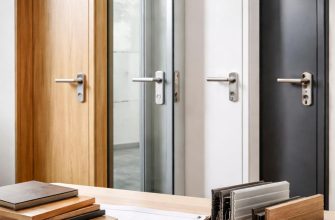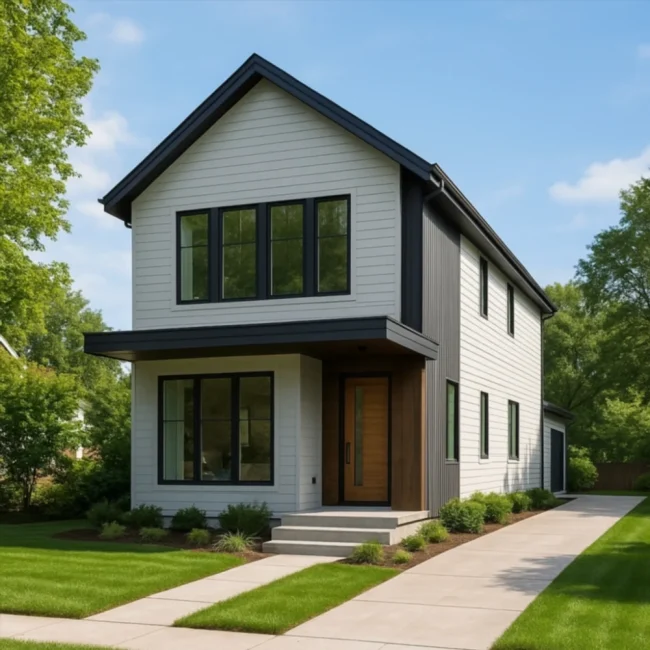
Building a house always involves a multitude of decisions, from the selection of materials to the layout. One of the key parameters determining the appearance of the future home is the width of the house. In dense urban areas or with limited lot width, houses 10 meters wide are particularly suitable. Despite their relative compactness, such buildings can be incredibly functional, aesthetically pleasing, and meet all the needs of a modern family.
In this article, we'll explore architectural and engineering solutions suitable for 10-meter-wide homes, how to effectively organize interior space, and what technologies make such projects energy-efficient and comfortable to live in.
- Why a 10-meter-wide house is convenient and rational
- The influence of site shape on house design
- Layout of a 10-meter wide house: effective solutions
- One-story house 10 m wide
- A two-story house 10 m wide
- Architectural design options
- Construction technologies: what are 10-meter-wide houses built from?
- Examples of successful layouts
- Finishing and façade: how to make your home expressive
- Features of interior comfort and engineering
- Construction Tips
- Conclusion
Why a 10-meter-wide house is convenient and rational
A 10-meter width is a compromise between compactness and ample space. Such a house can be built on a narrow lot without violating regulatory setbacks from boundaries, neighbors, and roads, while also complying with fire and sanitary regulations.
The main advantages of houses 10 meters wide:
- VersatilitySuitable for both single and two-story projects.
- Saving on materialsSmaller width means fewer supporting structures and floors.
- Convenience in a narrow areaIdeal for standard areas of 12 to 15 meters in width.
- Simplicity of layoutThe rooms can be arranged linearly or with a slight protrusion, providing zoning.
The influence of site shape on house design
Narrow plots are often found in old garden communities, suburbs, or new dacha communities. On such land, it's important to use every acre efficiently. A house 10 meters wide can be built in an elongated rectangular shape, allowing it to be placed along the plot line, leaving room for a recreation area, a garden, or an additional structure, such as a garage or sauna.
What you need to consider:
- The distance from the house to the boundary of the site must be at least 3 meters (according to SNiP).
- The design must take into account insolation: the orientation of windows, especially in living rooms, is of great importance.
- Extension options: If future expansion is planned, it's worth planning your home in advance with the option of integrating an additional wing or terrace.
Layout of a 10-meter wide house: effective solutions
Compact homes require thoughtful planning. Every square meter must be used efficiently, especially in single-story buildings. Let's look at standard and non-standard interior layout options.
One-story house 10 m wide
Space in single-story houses is distributed longitudinally, often divided into day and night areas. Possible solutions include:
- The kitchen-living room is along the facade, the bedrooms are in the back of the house.
- Linear layout: room – corridor – room, with a minimum number of partitions.
- Built-in wardrobe and utility rooms in the center of the building, between two residential blocks.
The advantage of a single-story option is the absence of stairs, which is especially important for families with children and the elderly.
A two-story house 10 m wide
In two-story projects, you can use a division by functions: on the first floor - public areas (living room, kitchen, bathroom, study), on the second - bedrooms and bathrooms.
Advantages:
- Increasing the total area without expanding the building.
- Possibility of creating a balcony or terrace across the entire width of the facade.
- Savings on foundation and roofing (per square meter).
Architectural design options
Houses 10 meters wide allow for the implementation of virtually any architectural style, from classical to high-tech. The main stylistic trends are:
- Modern minimalism— straight lines, panoramic windows, facades made of wood, metal and glass.
- Classic style- symmetrical shape, gable roof, decorative elements.
- Half-timbered house— relevant when using frame technology.
- Scandinavian style- simple silhouette, light finish, pitched roof.
These homes are also ideal for attic solutions, allowing the attic space to be used as a full-fledged living space.
Construction technologies: what are 10-meter-wide houses built from?
The choice of construction technology depends on budget, climate conditions, and preferences for thermal efficiency and construction speed.
Popular options:
- Aerated concrete— lightweight, durable, and retains heat well. Ideal for one- and two-story homes.
- Frame technology— quick assembly, flexibility in planning, possibility of self-erection.
- Brick— durability and excellent soundproofing properties. More time-consuming and costly.
- Monolithic construction- high strength, possibility of non-standard shapes, but requires qualified labor.
Examples of successful layouts
Option 1: one-story house 10x15 m
- Total area: 120–130 m².
- 3 bedrooms, kitchen-living room, 2 bathrooms, boiler room, hallway.
- Zoning: bedrooms in one part of the house, public areas in another.
- It is possible to add a terrace along the side facade.
Option 2: a two-story house 10×10 m
- Total area: 180–200 m².
- First floor: living room, kitchen, bathroom, study.
- Second floor: 3 bedrooms, dressing room, bathroom.
- Compact staircase in the center of the house.
Finishing and façade: how to make your home expressive
A narrow house can look stylish and modern with the right facade design. Here are a few tricks to visually expand or decorate your home:
- Contrasting materials: a combination of plaster and wood.
- Vertical and horizontal panels for accents.
- Protruding elements are bay windows, canopies, balconies.
- Facade lighting and landscape design are an important element of aesthetics.
Features of interior comfort and engineering
Even a narrow house can be energy efficient and comfortable with the right approach to engineering systems:
- Heating systems— heated floors throughout the entire area or radiator heating with zone distribution.
- Ventilation- important for tight layouts, especially in houses without an attic.
- Lighting- well-thought-out natural lighting through end and side windows, additional skylights on the roof.
- Soundproofing- between rooms and floors in dense layouts.
Construction Tips
- The project must be individual— standard solutions do not always fit well into a real site.
- Don't skimp on zoning- Incorrect distribution of rooms will worsen the comfort of living.
- Think about furniture in advance— built-in wardrobes and custom-sized furniture will help save space.
- Pay attention to external communications- narrow areas often have limited access to networks.
Conclusion
A 10-meter-wide house isn't a limitation, but an opportunity to create a comfortable, stylish, and functional home that perfectly fits the confines of a narrow lot. Thanks to modern architectural solutions, engineering technologies, and thoughtful planning, maximum comfort can be achieved with minimal width. These homes are suitable for both permanent residence and country retreats, while remaining affordable and easy to build.
A rational approach to design, attention to detail, and smart use of space make compact dimensions a real advantage.