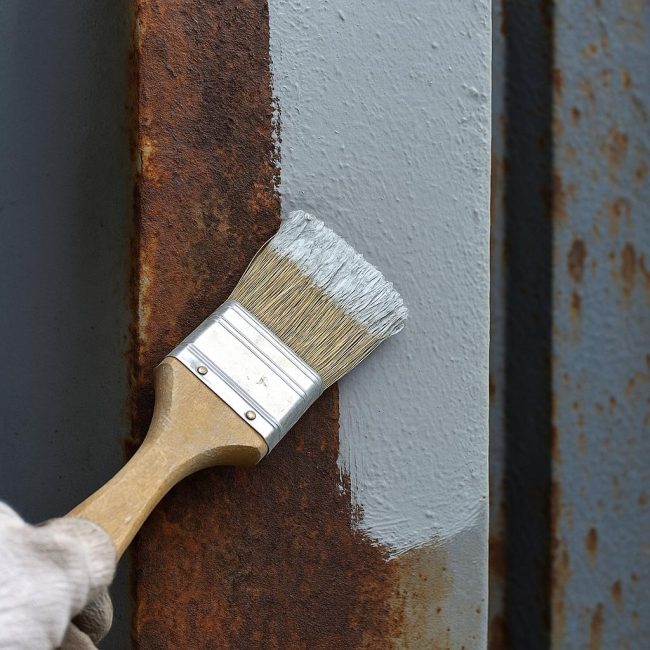
Preparing metal for protection is a process that requires attention, precision, and strict adherence to technology. Despite its apparent simplicity, the priming step often causes premature coating wear. Even proven materials such as primers based on inhibitor additives, including the widely used NK 50 Primer in industrial environments, will not provide the expected durability if applied under improper conditions or without proper substrate preparation. Therefore, it is important to understand the most common mistakes painters make and how to avoid them in your work.
Primer is more than just the first step in protecting metal. The quality of its application determines the adhesion of subsequent layers, the coating's resistance to external factors, and the service life of the entire structure. While the choice of primer is determined by the tasks and operating conditions, process discipline remains essential in all situations. Let's look at the most common mistakes encountered in practice and examine their causes.
Insufficient surface cleaning
The most common problem is incomplete cleaning of the metal before applying the primer. The surface may appear clean, but the presence of tiny particles of rust, dust, or traces of old paint reduces adhesion. As a result, the primer adheres unevenly, peels off in places, and significantly reduces its protective properties.
Problems are usually caused by either haste or skimping on preparation. However, thorough surface preparation is the key to the quality of subsequent work. Mechanical cleaning, degreasing, and dust and moisture removal must be performed thoroughly. In cases where the metal shows signs of corrosion, complete removal is required, or converters must be used if permitted by the specific coating system.
Incorrect choice of application method
Primers are applied by brush, roller, spray, or airless spray. Each method has its own characteristics, and a mismatch between the method and actual conditions often results in inconsistent layer thickness. For example, brushing can be difficult to achieve even coverage over large surfaces, while airless spraying requires a well-prepared room and equipment.
Mistakes in choosing a method often arise from the desire to speed up the process. However, every tool has its limitations. If a specific task requires a thin, even layer, spraying is preferable. However, if the surface is complex, with many corners and hard-to-reach areas, manual application is more reliable.
Failure to comply with layer thickness
The primer layer thickness is one of the most important parameters. A layer that is too thin will not provide sufficient corrosion protection, while one that is too thick will take a long time to dry, may cause runs, and may lead to cracking during subsequent paint applications. Incorrect thickness is often caused by a lack of control tools or improper equipment settings.
To avoid such errors, it is recommended:
- use thickness gauges when working on large objects;
- control material consumption;
- Carefully follow the manufacturer's recommendations for dry and wet layer thickness.
In industrial settings, such requirements are the norm, but in private practice they are often ignored.
Work at unsuitable temperature and humidity
Primers are sensitive to environmental conditions. High humidity reduces adhesion, and low temperatures can cause the primer to thicken, resulting in uneven application and increased drying time. Condensation is a common problem in outdoor areas: in the morning or after precipitation, the metal surface may remain damp, even if it's not immediately noticeable.
Working in unfavorable weather conditions is a common cause of coating degradation. The optimal parameters for most primers are known in advance, and ignoring them requires redoing the entire coat. It's important to remember that even the right material cannot compensate for a violation of the technology.
Incomplete drying between layers
If the protective system includes multiple layers, each must dry completely before applying the next. Impatience or a desire to save time can result in the mixture remaining damp on the inside, even though it appears sufficiently dense on the outside. This hidden violation of the technology will eventually manifest itself as bubbling, swelling, or peeling.
It's especially important to consider the drying time between coats when working in cold weather. The primer dries not only through solvent evaporation but also through chemical processes that depend on temperature.
Neglect of mixing and filtration
Any primer requires thorough mixing before application to ensure even distribution of the components. Failure to do so may result in some surfaces receiving less binders, while others may receive more solvent or sediment. Similarly, if the mixture isn't filtered, lumps may remain, potentially causing defects in the coating.
This error is less common, but it is particularly unpleasant, since it can only be corrected by completely removing the defective layer.
Incompatibility of the primer with the subsequent coating
Sometimes a composition is selected based on its availability rather than compatibility with the future paint. Meanwhile, the binders of different materials can react, leading to poor adhesion, color loss, or the development of a network of cracks.
To avoid such situations, it's important to think through the entire protective system in advance, rather than just choosing one material at random. Manufacturers typically specify compatible coating groups, and these recommendations should be followed.
Conclusion
Errors in applying protective primers inevitably impact the service life of metal structures. However, most of these errors can be prevented by following the proper procedures, carefully preparing the surface, and considering the working conditions. Even the most reliable compounds will fail to perform effectively if the process is approached in a formal manner.