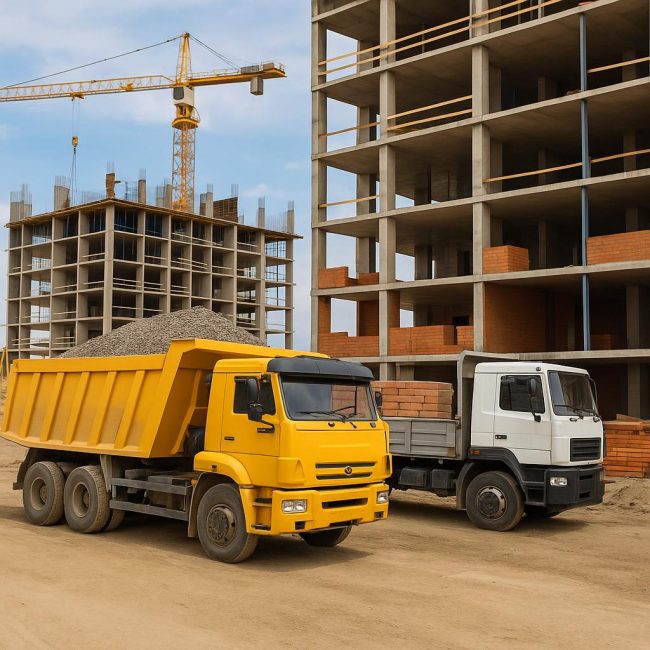
Construction is a complex, multi-stage process in which every detail matters. Logistics remains a key factor influencing deadlines, budgets, and quality of work. It's the competent cargo transportation Ensure the uninterrupted flow of materials and equipment to the site. Without coordinated transportation, construction can be delayed or even completely disrupted.
To understand the importance of transportation management, it's enough to remember that dozens of types of cargo must be delivered throughout the construction process: from heavy bulk materials and concrete to finishing tiles and furniture. Each stage requires its own approaches, transportation solutions, and control methods.
- Stage 1. Preparatory: delivery of bulk materials and concrete
- Stage 2. Construction and installation work: transportation of bricks, blocks and metal structures
- Stage 3. Engineering networks and communications: cables, pipes, equipment
- Stage 4. Finishing materials: tiles, plasterboard, paint
- Stage 5. Final: delivery of furniture and equipment
- How to optimize cargo transportation at a construction site
- Why smart logistics impact the bottom line
- Result
Stage 1. Preparatory: delivery of bulk materials and concrete
At the start of construction, the main logistics task is to ensure the timely delivery of large-sized and bulk materials: sand, crushed stone, and cement.
Transportation Features:
- dump trucks and concrete mixers are used;
- It is important to adhere to the delivery schedule, as downtime of equipment or workers is expensive;
- When delivering concrete, its setting time is taken into account, so the route must be optimally planned.
Mistakes to Avoid:
- lack of backup transport (if one dump truck breaks down, the construction must not stop);
- purchase of materials without taking into account places for unloading and storage.
Stage 2. Construction and installation work: transportation of bricks, blocks and metal structures
Once the foundation is ready, the stage of erecting the supporting structures begins. Here, the delivery of bricks, aerated concrete, blocks, and metal elements plays a key role.
Key nuances of transportation:
- Bricks and blocks require careful fixation to avoid breakage;
- for metal beams and trusses, special equipment with long platforms is used;
- It is important to coordinate delivery times with crane operating schedules to avoid downtime.
Advice: It is better to combine several loads into one shipment to reduce transportation costs, but at the same time not overload the site with excess inventory.
Stage 3. Engineering networks and communications: cables, pipes, equipment
At this stage, transportation becomes more diverse. Pipes of various diameters, cable coils, ventilation systems, and heating and water supply equipment are used.
Difficulties of transportation:
- Cable drums require special fixation;
- long pipes (6–12 meters) are transported on special lowboys;
- Sensitive equipment such as boilers or pumps require secure packaging and careful delivery.
PracticeIt's often advantageous to engage contractors who supply and install equipment on a turnkey basis, including delivery. This relieves the customer of some of the logistical burden.
Stage 4. Finishing materials: tiles, plasterboard, paint
Once the walls are up, attention turns to the interior work. Here, logistics must take into account the fragility and specificity of the finishing materials.
- Tiles and glass: transported in rigid boxes, with a minimum of handling.
- Drywall: requires dry transport and quick unloading to avoid damage from moisture.
- Paint and mixtures: transported in closed vehicles while maintaining temperature conditions.
During this period, delivery errors are especially painful: a delay in the delivery of tiles or flooring can disrupt the schedule of an entire floor.
Stage 5. Final: delivery of furniture and equipment
The final stage of construction involves not only handing over the property but also its furnishings. The delivery of furniture, appliances, and small equipment requires particular care.
Features of furniture transportation:
- use soft fasteners and packaging to avoid scratches;
- transport to floors taking into account the dimensions of elevators and doorways;
- The work of loaders and lifting equipment is often required.
Technique: air conditioners, elevator systems, kitchen equipment are transported separately, with mandatory cargo insurance.
How to optimize cargo transportation at a construction site
- Planning a scheduleIt's best to create a detailed delivery schedule that takes into account the construction stages.
- Selecting reliable contractorsRegular delays in delivery can cost the carrier more than their services.
- Transport reserveHaving an additional vehicle helps avoid downtime.
- Comprehensive servicesLogistics companies often offer a full cycle of services: from loading to warehousing and unloading.
- InsuranceThis is especially important when transporting expensive equipment or furniture.
Why smart logistics impact the bottom line
Any construction project depends on precise coordination: materials must arrive exactly when they're needed. If bricks are delivered too early, they take up valuable space and require security. If they're delivered too late, the crew's work is halted. Therefore, proper cargo transportation management is more than just delivery; it's a strategic tool for managing the construction process.
Thanks to well-thought-out logistics, it is possible to:
- reduce costs;
- minimize downtime;
- maintain the quality of materials;
- speed up the commissioning of the facility.
Result
Organizing transportation at a construction site is a science in itself. Each stage of construction—from pouring the foundation to installing furniture—has its own nuances, risks, and requirements. The better the logistics, the more reliable and faster the construction process.
The right choice of contractors, quality control of transportation, insurance, and planning help transform a complex process into a manageable one. Ultimately, competent cargo transportation becomes the invisible foundation of a successful construction project.