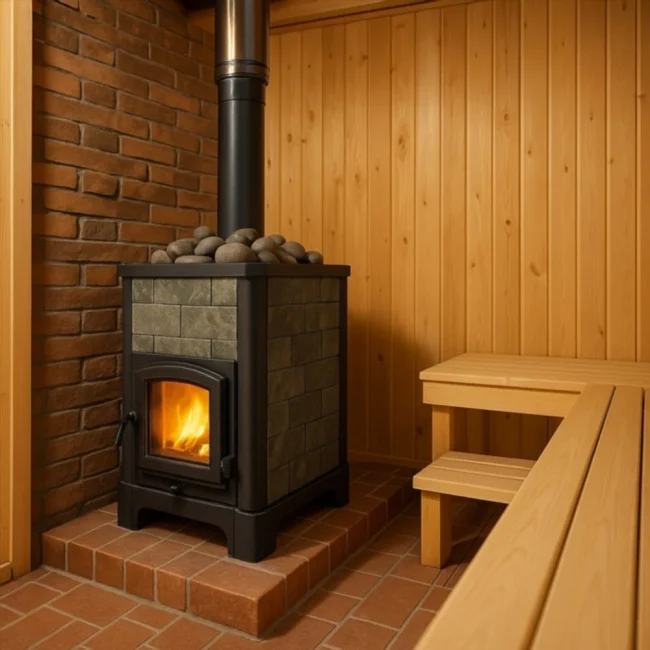
In a Russian banya, warmth isn't just comfort; it's part of the ritual. And the heart of this ritual is the stove. Its design, material, power, and proper installation determine not only the temperature in the steam room, but also the quality of the heating of the walls, the lifespan of the banya itself, the level of safety, and, of course, the enjoyment of the bathing experience. In this article, we'll take a detailed look at the different types of banya stoves, how they work, what to consider when choosing, and what nuances to consider during installation.
- The purpose of a stove in a bathhouse
- Classification of sauna stoves by fuel type
- Wood-burning stoves
- Electric ovens
- Gas ovens
- Types of furnaces by design
- Stove with a closed stone chamber
- Open heater
- Stove with a water tank
- Materials for making a sauna stove
- Oven power: how to calculate it correctly
- Correct installation of a sauna stove
- Preparing the base
- Distance to the walls
- Chimney device
- Ventilation
- Popular models and brands
- Facing and aesthetics
- Operating and maintenance rules
- 10. Safety first
- Conclusion
The purpose of a stove in a bathhouse
The stove in the bathhouse performs several functions at once:
- Air heating— quickly and evenly heats the room to a comfortable temperature.
- Steam generation— if a heater is present, it allows you to obtain finely dispersed steam.
- Heating water— especially in cases where the stove is equipped with a built-in or remote tank.
- Drying the room- important for extending the life of wood finishes.
- Formation of the atmosphere— the sound of crackling wood, the smell of wood and the feeling of heat make a bathhouse a bathhouse.
Classification of sauna stoves by fuel type
Wood-burning stoves
The most traditional and popular option. They provide soft, natural warmth and fill the air with the pleasant aroma of burning wood.
Advantages:
- autonomy (does not require electricity or gas);
- high heat transfer;
- the ability to burn different types of wood.
Flaws:
- requires constant monitoring;
- it is necessary to install a chimney and ash pan;
- Fire protection is needed.
Electric ovens
A modern and convenient option for city baths or saunas. Operates on 220V or 380V power.
Advantages:
- ease of installation;
- does not require a chimney;
- automation of operation is possible (timer, thermostat).
Flaws:
- depends entirely on electricity;
- higher operating costs;
- do not create “live heat” like wood-burning ones.
Gas ovens
Rarely used in home saunas, but are relevant for commercial properties or private homes with gasification.
Advantages:
- economy;
- high efficiency;
- fast heating.
Flaws:
- mandatory connection to a certified gas main;
- complex installation and safety requirements.
Types of furnaces by design
Stove with a closed stone chamber
This type of stove provides a higher temperature in the steam room and retains heat for a long time. The stones are heated inside the stove body, and steam is released through a special door.
Suitable for:
- traditional Russian bath with wet steam;
- advanced users who appreciate real heat.
Open heater
Located on top of the stove body, it allows for rapid water delivery and steam generation. It heats up quickly and cools down just as quickly.
Suitable for:
- Finnish saunas;
- those who value speed and simplicity.
Stove with a water tank
Can be built-in or remote. A convenient solution for country saunas without running water—it allows you to heat water for washing.
Types of execution:
- tank on the side or back - uniform heating;
- the tank is on top - it boils faster, but can interfere with the steam release;
- A remote tank with a heat exchanger is safer and more convenient.
Materials for making a sauna stove
- Cast iron- retains heat well, is resistant to corrosion, durable, but heavy and fragile.
- Steel- heats up and cools down quickly, is prone to fading, especially when using thin-walled metal.
- Brick— a traditional material for stationary sauna stoves. It provides gentle heat but requires professional installation and time to warm up.
Oven power: how to calculate it correctly
The calculation of a sauna stove's power depends on the steam room's volume and the room's insulation. The average formula is:
1 kW = 1 cubic meter of steam room volume
In this case, it is worth considering additional adjustments:
- if the steam room is poorly insulated, add 15-20%;
- if there are stone or glass surfaces, add 10-15%;
- For a brick or timber bathhouse with stone cladding, add 20%.
For example: if the volume of the steam room is 10 cubic meters, with brick walls and poor insulation, then a stove with a power of at least 13–14 kW is needed.
Correct installation of a sauna stove
Preparing the base
- for metal furnaces, a concrete slab or brick platform is sufficient;
- for brick - a full-fledged foundation.
Distance to the walls
- from the walls to the stove - at least 50 cm;
- when using thermal insulation (foil-clad basalt, minerite) - can be reduced to 25–30 cm;
- It is necessary to protect the walls with heat screens.
Chimney device
- It is better to use a sandwich pipe (double pipe with insulation);
- output strictly vertically with a minimum number of bends;
- It is mandatory to install a spark arrestor and a deflector at the outlet.
Ventilation
Without ventilation, even the best stove may not be able to heat evenly. It's important to consider:
- supply valve at the floor (for fresh air intake);
- exhaust - at the ceiling or under the ceiling.
Popular models and brands
Given the Russian climate and bathhouse traditions, the following manufacturers have become the most widespread:
- Teplodar- affordable and reliable wood stoves.
- Harvia— a Finnish brand specializing in premium electric and wood-burning stoves.
- Vesuvi— domestic cast iron and steel models with high heat output.
- Ermak— wood-burning stoves with a wide range of functions: closed heaters, water heaters, remote fireboxes.
Facing and aesthetics
A stove is not only a source of heat but also a decorative element. Stoves are often lined with:
- stone tiles (talc chlorite, serpentine)— accumulate heat well and give an aesthetic appearance;
- stainless steel- modern look, hygienic;
- brick- classic, durable and neat appearance.
Operating and maintenance rules
- clean the ash pan regularly;
- use only dry firewood;
- do not overload the heater - this will impair air circulation;
- clean the chimney once a year;
- Monitor the condition of the metal - if the firebox burns out, the stove will need to be replaced or repaired.
10. Safety first
- Before installation, be sure to read the technical data sheet and SNiP standards;
- use only certified materials;
- Observe fire safety regulations;
- Equip the bathhouse with a fire shield, a fire extinguisher and a bucket of sand.
Conclusion
Choosing and installing a sauna stove is a responsible task, directly affecting the comfort, safety, and enjoyment of your sauna experience. A properly selected stove can last for decades, delighting owners with fast and even heating, gentle steam, and reliable operation. Whether you prefer a classic wood-burning stove, a convenient electric stove, or a modern gas stove, the key is to choose wisely and follow all installation standards. Only then will your sauna become a true haven of health and relaxation in your home.