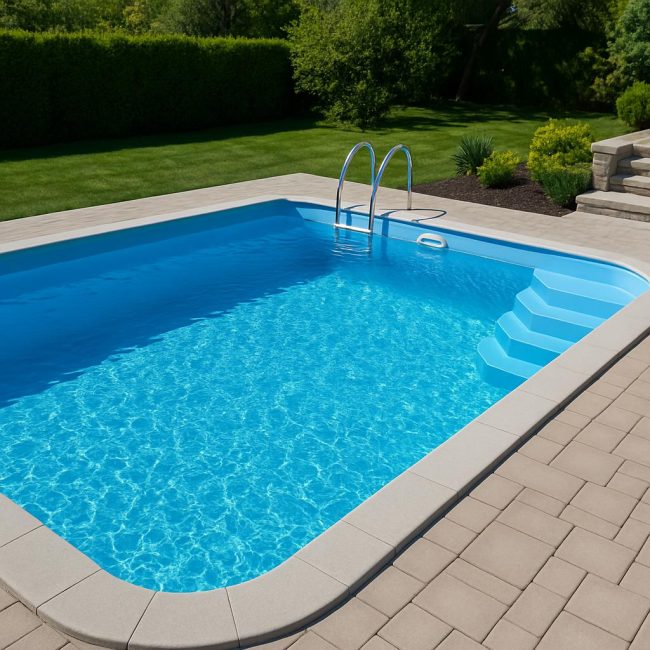
Installing a pool in a summer cottage is no longer a luxury. It's a comfort feature, especially valuable during the hot season. One of the most popular options among owners of private homes and country estates is a polypropylene pool. It's chosen for its combination of strength, durability, ease of maintenance, and relatively affordable price. However, to ensure a truly long-lasting and trouble-free service, it's important to consider many nuances: from choosing a location to proper use.
- Why polypropylene?
- Advantages of polypropylene pools
- Quick installation
- Low cost
- Minimal heat loss
- Easy to care for
- Reliability of the design
- What to look for when choosing and installing
- Location
- Shape and depth
- Foundation type
- Thermal insulation
- Engineering communications
- Maintenance of a polypropylene pool
- Mandatory procedures:
- Common mistakes owners make
- Service life and maintainability
- Conclusion
Why polypropylene?
Polypropylene is a heat-resistant and chemically inert plastic widely used in construction, medicine, and container manufacturing. It is ideal for swimming pools due to the following characteristics:
- Resistance to ultraviolet radiation and temperature changes
- Smooth surface, preventing dirt accumulation
- Sealing without additional waterproofing
- Flexibility in production - pools can be made in different shapes and sizes
- Durability - service life exceeds 20 years when properly installed
These qualities make polypropylene pool, from companies like Marcopolis, an excellent choice for seasonal or year-round use in the countryside.
Advantages of polypropylene pools
Quick installation
Unlike concrete pools, installing a polypropylene pool takes much less time—from 5 to 14 days. This is especially convenient if the work is planned for the height of summer.
Low cost
The overall project cost is lower than building a concrete pool: there's no need to spend money on waterproofing or complex finishing. However, the resulting quality is comparable.
Minimal heat loss
Polypropylene has low thermal conductivity, meaning the pool water cools slowly. This is especially important in regions with cool nights.
Easy to care for
Smooth walls and bottom prevent algae growth and make cleaning easy. Additional equipment (such as skimmers, filters, and dispensers) can be easily integrated into the design.
Reliability of the design
A polypropylene pool is a monolithic structure with no seams prone to leaks. Such a pool can withstand significant soil loads without deformation.
What to look for when choosing and installing
Before you begin installation, it's important to carefully consider all the project details. Here are the key points:
Location
Choose a site with minimal shade—this will allow the water to warm up faster. It's best to locate the pool on an elevated surface, away from trees, to avoid foliage and root growth, which can damage the foundation.
Shape and depth
Polypropylene allows for the production of both standard rectangular and contoured pools. Depths range from 1.2 to 2 meters or more, depending on the intended use (for children, swimming, or diving).
Foundation type
The pool foundation must be strong and level—a concrete slab with reinforcement is often poured. The longevity of the entire structure depends on the proper foundation.
Thermal insulation
For year-round use, insulating the walls with extruded polystyrene foam and installing a winter shelter is recommended. This will also reduce water heating costs.
Engineering communications
Water supply, filtration installation, and wastewater disposal—all of this needs to be planned in advance. It's best to entrust the work to an experienced installation team.
Maintenance of a polypropylene pool
Although these pools are considered low-maintenance, regular maintenance significantly extends their lifespan and ensures the safety of users.
Mandatory procedures:
- Water filtration - ensures transparency and prevents bacterial growth.
- Chemical treatment - chlorination or use of oxygen tablets for disinfection.
- Mechanical cleaning — use of skimmers, nets, vacuum cleaners.
- pH control — the normal indicator should be within 7.2–7.6.
- Preservation for the winter - draining water, cleaning, covering with a special awning or dome.
Common mistakes owners make
- Wrong location chosen - leads to water contamination and destruction of the foundation.
- Lack of filtration system - sharply reduces the quality of water.
- Ignoring temperature deformations — it is important to provide gaps when insulating or finishing.
- Saving on installation — often leads to deformation of the bowl, subsidence or cracks.
- Lack of regular water treatment - promotes the appearance of algae and odor.
Service life and maintainability
A properly installed polypropylene pool with regular maintenance will last 20–25 years. Even if damage occurs (such as a crack), the material is easily repaired locally: you can weld the area or replace a section.
It is important to keep in mind that polypropylene does not tolerate direct impacts at low temperatures, so it is better to preserve the pool in winter.
Conclusion
A polypropylene pool is a reasonable compromise between price, durability, and aesthetics. It's suitable for both a summer cottage, where an inexpensive and quick installation is essential, and a substantial country house. The key is to choose wisely, entrust the installation to professionals, and remember to maintain it. Then, summer vacations with a pool will be more than just a dream, but a comfortable reality.