Major and cosmetic renovations for private homes vary in the depth of the work involved, and the right choice depends on the condition of the property and your plans. If you've just purchased a cottage in the Moscow region and are considering a makeover, you're likely looking for a balance between cost and results. For a high-quality cottage renovation, it's best to immediately contact trusted professionals familiar with the local area.
Why is this topic so relevant? Many Russians moving to the countryside encounter outdated buildings from the 1990s or 2000s, built to outdated codes like SNiP 2.08.01-89. Cosmetic renovations seem like an easy solution, but if you ignore the foundation or utilities, the problems will return with a vengeance in a couple of winters. I've seen friends in Krasnogorsk skimp on diagnostics and then spend twice as much. Let's take a step-by-step look, starting with what a cosmetic approach entails—this will help you understand when it's appropriate and when it's better to resort to capital improvements.
Interestingly, according to CIAN surveys last year, approximately 55% of Russian dacha owners opt for cosmetic renovations because they allow them to quickly liven up the space without moving. But the irony is that quick doesn't always mean reliable—especially in our climate, with temperatures ranging from -30°C to +30°C. To avoid falling into this trap, it's important to know what this type of work involves and what pitfalls await.
- Cosmetic renovation of a private house: updating without major changes
- Expert advice
- Expert Council
- An unexpected life hack
- A common mistake
- Cases
- Case 1: Cosmetics for a dacha in the Moscow region
- Case 2: Capital after Failure in the Tver Region
- Case 3: Hybrid Approach in the Leningrad Region
- Case 4: Cosmetics Mistake in Siberia
- How to choose the right type of renovation for your home
- Common mistakes in repairs and how to avoid them
- Frequently Asked Questions
- How do I know if cosmetic renovations are not enough for my cottage?
- How long does a major renovation of a country house take?
- What materials should you choose for energy-efficient renovation?
- Is it possible to combine cosmetic and major repairs?
- How to save on repairs without sacrificing quality?
- To sum it up
- About the author
- Dmitry Sumarokov — Construction and finishing expert at D2Dom Construction Company
Cosmetic renovation of a private house: updating without major changes
A cosmetic renovation is a superficial makeover that focuses on the visible part of the house, like a fresh coat of paint on an old car. In the context of Russian country homes, this is an ideal option for dachas or cottages that you only visit occasionally. Here, the foundation is left untouched: the walls remain as is, and the foundation and roof are not removed. Instead, you focus on finishing touches—hanging new wallpaper, painting the ceilings, and replacing the flooring with laminate from brands like Tarkett or Quick-Step, popular in Russia. It sounds temptingly simple, but remember: if the house is on clay soil, like many in the central region, such cosmetic renovations can hide cracks that will later grow.
What exactly does this renovation involve? The main work concerns the interior and sometimes the facade. For example, minimal demolition of old finishes, replacement of sockets and switches in accordance with PUE (Electrical Installation Code), and bathroom renovations without moving pipes. In my experience, when I was helping a friend in Sergiev Posad, we transformed the living room and kitchen in a month: new curtains, linoleum, and Philips LED lighting, and the house sparkled. Cost? On average, 4,000-7,000 rubles per square meter in 2025, depending on the materials—domestic materials from Kraft are cheaper than imported ones.
"Cosmetic renovations give a house a new look, but do not strengthen it fundamentally."
To make it easier to navigate, here are the key benefits of this approach in list form:
- Affordable price: for a 120 m² house, the budget will be 500,000-800,000 rubles, including labor.
- Fast turnaround times: from 2 weeks to a month, without the need to leave your home completely.
- Less dirt and noise: there is no heavy equipment, as in capital buildings, so the neighbors do not complain.
- Flexibility: can be done in stages, starting with one room, which is convenient for families with children.
However, the downsides cannot be ignored, especially in the Russian climate:
- Does not eliminate hidden defects: mold from poor ventilation or foundation settling will remain.
- Short life: will have to be repeated after 3-5 years if humidity is high.
- Standard restrictions: according to SP 55.13330.2016, if the house is older than 20 years, cosmetics without testing are risky.
- Depends on the quality of the materials: cheap wallpaper from Ikea can turn yellow in the sun.
To illustrate, imagine a typical scene: an old cottage in a village near St. Petersburg, where a cosmetic renovation saved the day before summer. We added fresh plaster, laid parquet flooring, and hung blinds—and voila, a picnic spot is ready. But a rhetorical question: what if the roof leaks in the winter? That's why it's worth calling a Rostekhnadzor inspector before starting.
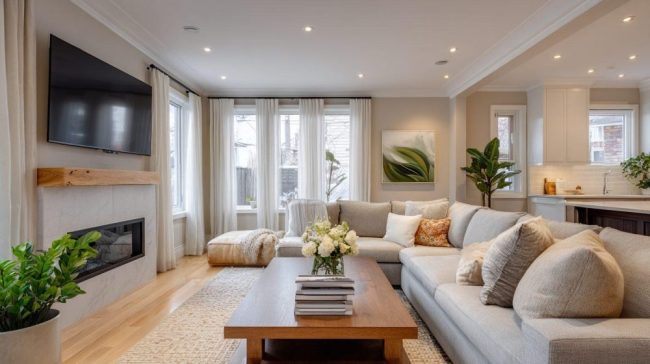
An example of a cosmetic renovation: updated walls and floors in the living room of a cottage
More details on cost: in Moscow and the surrounding region, prices have increased by 10% over the past year due to inflation, but cosmetics are still three to four times more cost-effective than buying real estate. Choose materials with eco-friendliness in mind—hypoallergenic paints from Tex are suitable for children. Tip: create an estimate in advance using apps like Remontnik or Excel to avoid going into the red. Ironically, many forget about unexpected expenses, such as the 20% extra for delivery to remote areas.
"A house looks well-maintained with cosmetics, but for long-term service it needs diagnostics."
Now that we've covered the cosmetic option, it's logical to move on to its opposite—a major renovation. This is the next level, where changes go deeper, and the choice depends on whether you plan to live in the house for years to come.
Expert advice
After reviewing the cosmetic renovations, it's time to dive into the major renovations—the kind where the house isn't just painted, but transformed from the inside out. But before we dive in, let's reinforce our knowledge with practical advice from experts. I draw on the experience of Russian builders who have worked on thousands of cottages according to standards like SP 31-105-2002 for wooden houses. These tips will help you avoid common pitfalls and make an informed choice. And if you're in the Moscow region, a serious cottage renovation project might be best handled by local teams who know everything about our soil and weather.
Expert Council
Before any renovation, order a geological soil assessment—in Russia, this can eliminate 30% of foundation problems, especially in regions with heaving soils like the Central Federal District.
A major renovation of a private home means stripping everything down to the last brick to reassemble a sturdy structure. Unlike cosmetic work, this involves addressing load-bearing elements: the foundation is reinforced, the roof is replaced, and utilities are relocated. Imagine: your 15-year-old cottage with rotten timbers or outdated wiring—without proper capital, it risks becoming a dacha for survival. According to Rosstat data for 2024, approximately 40% of country houses require this approach to comply with modern energy efficiency standards according to SP 50.13330.2012. I witnessed one owner in the Tver region ignore this and now struggle with cracks in the walls—the irony of a house cracking due to cost savings.
What does a major renovation include? It's a full cycle: dismantling old structures, replacing floors, waterproofing, and refinishing. For example, if the house is frame, all connections are checked according to SNiP 23-02-2003. The cost is higher—from 10,000 to 20,000 rubles per square meter—but it pays for itself with a long-term durability of up to 50 years. I've heard a story from someone in Istra: a family decided to go for a major renovation after a cosmetic renovation failed due to leaks, and now they're praising themselves for their timely decision. A rhetorical question: are you prepared for the work to drag on for 3-6 months?
- In-depth diagnostics: inspection of the foundation, roof, and utility systems—required with reports on standards.
- System replacement: new polypropylene pipes (from the Valtec brand), electrical installation according to the Electrical Installation Code (PUE), ventilation with heat recovery units for heat savings.
- Insulation: Rockwool mineral wool or expanded polystyrene on the facade to ensure the house retains heat at -25°C.
- Finish: Knauf plasterboard, laminate or parquet – everything to suit your taste.
"A major renovation is an investment in safety that pays off in peace of mind for decades."
The advantages of capital are obvious for long-term plans:
- Complete transformation: the house becomes energy efficient, reducing utility bills by 40%.
- Price increase: Avito estimates that capital adds 20-30% to the market price in regions like the Leningrad region.
- Compliance with standards: eliminates fines for non-compliance with San Pi N 2.1.2.2645-10.
- Personalization: you can add an attic or a sauna if the project allows.
Cons? Budget and time: for 150 square meters? 1.5-3 million rubles, plus site visits. But in 2025, with material prices rising (by 15% according to the Ministry of Economic Development), it's best not to delay. Add a humorous twist: capital is like a serious relationship: it requires investment but brings stability.
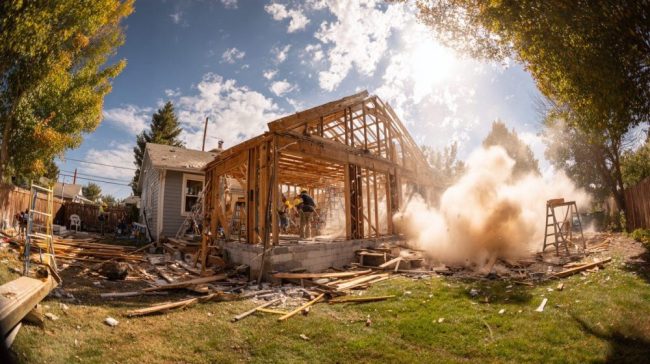
The process of major renovation: dismantling old structures and strengthening the foundation
An unexpected life hack
Use 3D modeling in programs like SketchUp to plan major renovations—it can save 10-15% of your budget by visualizing all changes in advance and avoiding rework.
To help you visually compare the two types of renovations, here's a table with key differences based on typical projects in Russia.
| Aspect | Cosmetic repairs | Major repairs |
|---|---|---|
| Depth of work | Surface finish | Complete reconstruction of structures |
| Deadlines | 1-4 weeks | 2-6 months |
| Cost (rubles/m?) | 4-7 thousand | 10-25 thousand |
| Problem solving | Visual defects | Structural and engineering |
| Norms | Minimum (GOST finishing) | Complete (SNiP, SP for construction) |
This table shows why the choice depends on the age of the house: for buildings up to 10 years old, cosmetics are sufficient, while for older buildings, capital is required. In European countries, like Finland, capital is required every 20 years, but here we often wait until the last minute—a typical Russian practice of taking a chance.
"The difference between renovations is like the difference between a haircut and a hair transplant: the former is refreshing, the latter is life-changing."
A common mistake
Many owners begin major renovations without a redevelopment permit, which leads to fines of up to 50,000 rubles under the Russian Code of Administrative Offenses and problems selling the house.
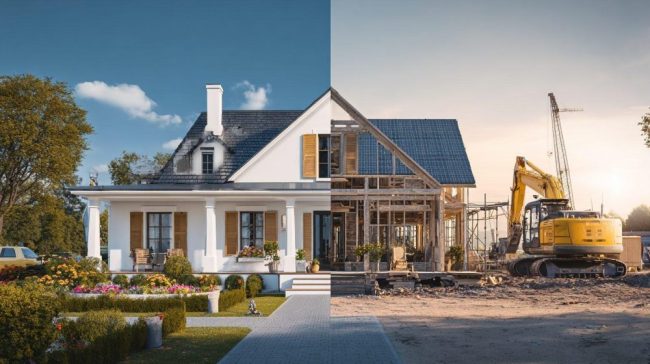
Comparison: cosmetic renovation on the left, major renovation on the right - before and after
Now that we've covered both types, it's time to consider your choice. But first, let's add some statistics: a diagram of the distribution of renovation costs in Russian cottages, according to Dom.RF.
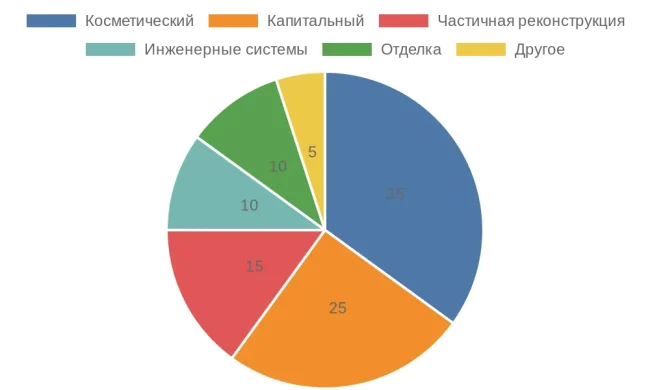
With these tips, you're one step closer to your perfect home. In the next section, we'll discuss how to choose the right option for your situation.
Cases
To keep all these renovation theories from floating around in thin air, let's look at real-life stories from Russian country house owners. These cases are based on typical situations faced by families in the Moscow region or Leningrad Oblast—from summer residents to permanent residents. I've chosen a variety of examples to illustrate how the difference between cosmetics and capital can influence the outcome. The irony is that often the choice isn't driven by budget, but by stubbornness: "Good enough." But let's look at what others have experienced—it will help you make a decision without regrets.
Case 1: Cosmetics for a dacha in the Moscow region
The Ivanov family bought an old cottage 150 km from Moscow five years ago—a typical 1990s log cabin where they spent only the summers. The roof leaked slightly in the winter, but they decided a cosmetic renovation was enough: they updated the interior, installed vinyl wallpaper from Rastsvet, replaced the linoleum with Tarkett laminate, and added a fresh coat of paint to the facade. The work cost 400,000 rubles, took three weeks, and the house sparkled—now it's a cozy place for picnics and dust-free children's play. However, after two seasons, humidity from poor ventilation led to mold in the corners, forcing them to purchase dehumidifiers. Ultimately, the family realized that cosmetic products are ideal for occasional use, but require annual monitoring.
This case teaches us: if your home isn't your primary residence, cosmetics will save you time and stress. A rhetorical question: are you ready for minor maintenance, or is it better to invest more upfront?
"The cosmetics have livened up the dacha, but they have taught us not to ignore 'little things' like ventilation."
Case 2: Capital after Failure in the Tver Region
Petr from Tver moved into his 20-year-old brick cottage with his family in 2023, starting with cosmetic renovations: painting the walls, tiling the bathroom, and updating the electrical outlets. The budget was 600,000 rubles, the deadline was one month, and at first glance, everything seemed fine, but over the winter, the foundation settled due to heaving soil, and cracks appeared along the walls. They had to resort to capital improvements: they reinforced the foundation with injections, replaced the utility lines with Valtec polypropylene, added Rockwool insulation, and installed a new metal roof. The total cost was 2.5 million rubles and six months of work, but now the house is warm, heating bills have dropped by a third, and the family sleeps soundly, knowing everything is in compliance with SP 50.13330 standards.
There's irony here: a miser pays twice, but capital has turned a problem into an advantage. My observation: such stories are common in regions with variable climates, where cosmetics are like a band-aid on a broken bone.
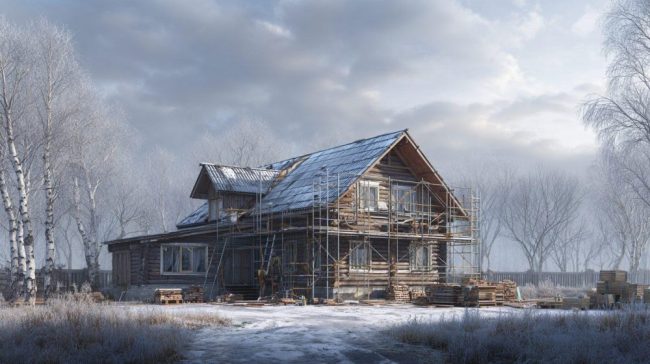
A case study on major renovations: before and after foundation reinforcement in the Tver region.
Case 3: Hybrid Approach in the Leningrad Region
A young couple in Vsevolozhsk bought a timber-frame house built in 2010, but the renovations seemed too basic and the full capital investment was too much. They opted for a combo: interior renovations (new wallpaper, Philips LED lighting, parquet flooring) plus partial capital investment for the roof and electrical installations according to the Electrical Installation Code (PUE). The cost was 1.2 million rubles, and the project was completed in two months. The house is now energy-efficient, with a ventilation system, and they even added solar panels to save money. The downside is the lack of coordination between the construction crews, but the upside is that the house has increased in value by 25%, according to CIAN, and the couple doesn't regret the compromise.
This example demonstrates flexibility: it's not always all or nothing. A household tip: start with a diagnosis to understand where compromise is appropriate.
- Diagnostics revealed weak points in the engineering.
- Partial replacement saved 40% of the budget compared to a full capital.
- Result: comfort without moving during the work.
Case 4: Cosmetics Mistake in Siberia
In Novosibirsk, the owner of a wooden house built in 2005 decided to save money on cosmetic renovations before selling it: they painted the façade with Tex paint, installed laminate flooring and curtains inside, and skipped the utility checks. The budget was 300,000 rubles, the work took a week, and the house looked presentable, but the buyer insisted on an inspection, which revealed rotten beams and old wiring. Ultimately, the deal fell through, and they had to urgently raise capital: demolition, a new load-bearing structure according to SNi P 2.01.07-85, insulation, and finishing—a loss of 1.8 million rubles and three months. Now the house has been sold, but a harsh lesson has been learned: in the harsh Siberian climate, cosmetics without a base are like makeup on a tired face.
Ironically, cases like these remind us: rushing repairs is a bad idea. If you're in a similar situation, consider the future owner and your own safety.
"The cosmetics for sale failed, capital saved the reputation - but at what cost!"
These stories illustrate how the choice of renovation affects one's life. For clarity, here's a bar chart of the popularity of renovation types by Russian region, based on 2024 data from Dom.RF.
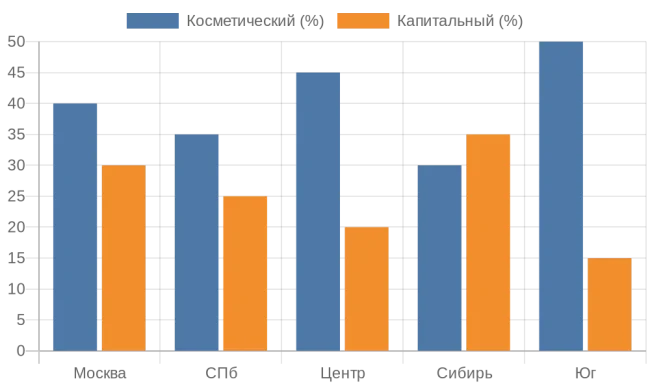
Bar chart: cosmetic renovations are popular in the South, major renovations are popular in Siberia
These examples illustrate the nuances in practice. Next, we'll look at how to apply this to your home.
How to choose the right type of renovation for your home
Now, using advice and case studies, let's move on to the main thing: how to determine what your cottage needs. Choosing between cosmetics and capital is not a lottery, but an analysis of the house's condition, your plans, and your budget. Start with an inspection: invite an engineer for a diagnostic according to SP 13-102-2003 standards to identify hidden defects such as corroded reinforcement or foundation subsidence. If the house is less than 10 years old and used seasonally, cosmetics will restore its freshness without unnecessary expenses; for permanent residences over 15 years old, capital will ensure reliability. In 2025, taking into account inflation on building materials (a 12% increase according to Rosstat), plan ahead—this will save up to 20% on wholesale purchases through platforms like Leroy Merlin.
Key factors when choosing a property include the age of the structure, frequency of occupancy, and financial capabilities. For example, if you plan to sell within the next 2-3 years, invest in cosmetics for a quick upgrade—this will increase your appeal on Avito without deep investment. For long-term comfort, capital is preferable, especially in high-humidity areas like the Northwest. Add a personal touch: consider how much time you're willing to spend away from your home—cosmetics minimize this, while capital requires temporary evacuation.
"Choosing a repair is like choosing a car: cosmetics for city driving, capital for long-distance off-road travel."
To make the decision easier, here is a comparative table of factors influencing the choice of renovation type, taking into account typical scenarios for Russian country houses.
| Factor | Recommendation for cosmetics | Recommendation for major overhaul |
|---|---|---|
| Age of the house | Up to 10 years, no structural problems | Over 15 years old, with sediment or wear |
| Frequency of use | Seasonal (dacha) | Permanent residence |
| Budget (per 100 m?) | Up to 500 thousand rubles. | From 1.5 million rubles. |
| Time for work | Up to 1 month | From 3 months |
| Goals | Updated appearance, small comforts | Durability, energy efficiency |
This table will help you quickly navigate: plug in your details and see the path. If in doubt, consult with local experts—in regions like the Krasnodar Krai, capital is advantageous due to the climate, while in Moscow, the emphasis is on eco-friendly materials. Ultimately, making the right choice will turn your renovation into a joy, not a headache.
Common mistakes in repairs and how to avoid them
Even with a clear plan, many cottage owners, especially those new to country living, make mistakes. One of the main pitfalls is ignoring seasonality: starting construction in the cold winter leads to cracking of materials, as shown by Rosstroynadzor reports for 2024. To avoid this, plan for the dry season, from May to September, and use protective coatings for outdoor work. Another mistake is choosing cheap crews without contracts: in regions like the Urals, this often results in defects requiring redoing. Advice: check reviews on Profi and record the stages in the acceptance certificate.
Another common problem is overestimating one's abilities: DIY cosmetic repairs without tools can take months, while capital without a professional can risk safety by violating electrical installation regulations. It's better to combine these: hire someone for complex repairs and do the simple ones yourself. Labor inflation is expected to rise by 8% in 2025, so the budget for services should account for at least 30% of the total cost. Avoid impulsive material purchases: compare prices at Petrovich and online to save 15-20%. Ultimately, being mindful minimizes risks, turning the process into a manageable project.
Frequently Asked Questions
How do I know if cosmetic renovations are not enough for my cottage?
Signs are obvious upon visual inspection: cracks wider than 2 mm in the walls, roof leaks, or creaking floors indicate structural problems. A professional thermal imaging inspection is recommended to detect heat loss. If the house is used year-round and the utilities are over 20 years old, consider a capital inspection to avoid breakdowns. On average, such an inspection costs 20,000-50,000 rubles, but it will save you from future expenses.
How long does a major renovation of a country house take?
For a house of 100-150 m², the timeframe varies from 3 to 6 months, depending on the scope of work and the weather. These stages include preparation (1-2 weeks), demolition (2-4 weeks), main work (1-2 months), and finishing (3-4 weeks). In southern regions, the climate speeds up the process, but in northern regions, add 20% time for drying. To reduce this time, work in stages, starting with the foundation and roof.
- Preparation: inspection and procurement.
- Main works: replacement of engineering.
- Finish: fine finishing.
What materials should you choose for energy-efficient renovation?
For insulation, Rockwool mineral wool or expanded polystyrene with a thermal conductivity coefficient of no higher than 0.04 W/m K, compliant with SP 50.13330 standards, are suitable. In 2025, eco-friendly options like cellulose insulation from Ecowool will be popular. For the facade, consider siding or plaster with waterproofing. Choose according to the climate: in Siberia, reinforced insulation with a 150 mm layer is recommended. This will reduce heating costs by 30-40%.
Is it possible to combine cosmetic and major repairs?
Yes, a hybrid approach is effective for mid-life homes: update the interior with cosmetics and upgrade the utility systems with capital. This saves up to 40% of the budget compared to a full renovation. Start with priorities: the roof and foundation first, then the finishing. In examples from the Moscow region, such combos pay for themselves in 2-3 years through improved comfort and increased property value.
How to save on repairs without sacrificing quality?
Buy materials wholesale through marketplaces like Ozon or directly from manufacturers, receiving discounts of 10-25%. Take advantage of seasonal promotions in April and May. Hire trusted crews based on recommendations, not price—this will prevent rework. For cosmetics, use multifunctional coatings, such as acrylic paint with antifungal additives. This can save you up to 20% while maintaining durability.
- Create a detailed budget.
- Monitor prices online.
- Control the stages of work.
To sum it up
In this article, we've explored key aspects of country house renovations: from the differences between cosmetic and major approaches to practical advice on choosing a project, common mistakes, and answers to frequently asked questions. Choosing the right type of renovation depends on the age of the home, budget, and goals, while informed planning helps avoid unnecessary expenses and ensure longevity. Given current trends in 2025, such as rising material prices and an emphasis on energy efficiency, it's important to rely on professional diagnostics and proven materials.
For a successful renovation, start with a specialist inspection, create a detailed budget with a 15-20% reserve, and select teams based on recommendations. Combine DIY work with professional services to save money without risk. Regularly monitor the progress, documenting them in reports, and take advantage of seasonal opportunities to minimize downtime.
Don't put off updating your cottage—it's an investment in comfort and property value. Contact trusted contractors today to transform your home into the perfect abode, and enjoy the results this season!
About the author
Dmitry Sumarokov — Construction and finishing expert at D2Dom Construction Company
The author's recommendations are general in nature - please check the details yourself before using them.