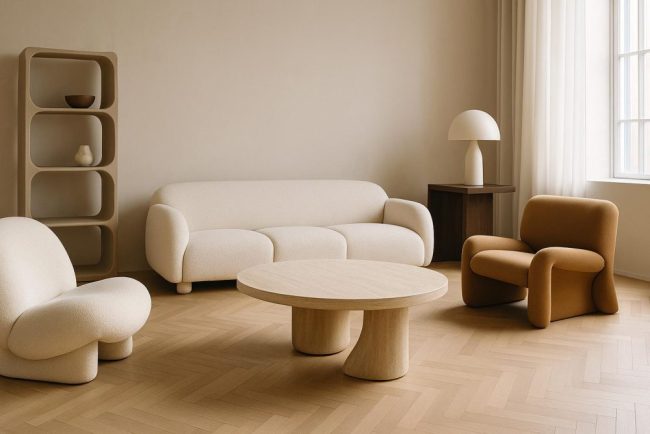
In recent years, we've seen a shift in the way we perceive furniture: it's no longer seen as simply a collection of functional objects designed to fill a space. Modern interiors are increasingly becoming visual statements, reflecting taste, worldview, and attitude. Designer furniture plays a key role in this process, shaping the aesthetic language of a space and setting its mood.
- What is designer furniture in the modern sense?
- How does designer furniture influence the perception of space?
- Forms the character of the interior
- Creates associations and emotions
- Changes the scale and geometry of space
- Why choose furniture from the manufacturer?
- ✨ Examples: when furniture speaks for the entire interior
- Design not as a luxury, but as a standard
- Conclusion
What is designer furniture in the modern sense?
If earlier the phrase designer furniture Once associated exclusively with luxury brands and exorbitant prices, today the concept has expanded. It encompasses not only items created by global design stars, but also the products of small studios and factories that work with original forms, thoughtful designs, and expressive materials.
The main features of designer furniture:
- an unconventional but functional approach to form;
- attention to materials and their tactility;
- working with color, geometry, light;
- minimalism or, on the contrary, spectacular expressiveness - but always with an idea;
- a balanced combination of aesthetics and ergonomics.
How does designer furniture influence the perception of space?
Forms the character of the interior
A single statement piece can set the tone for the entire space. For example, a sculptural coffee table, an organically upholstered chair, or an asymmetrical console table can act as the focal point of the composition, a visual accent, and a focal point for the eye.
Designer furniture is distinguished by the fact that it talks to the interior — even in a laconic setting, such an object enlivens the space and gives it individuality.
Creates associations and emotions
The shape of furniture directly influences associative perception: smooth lines convey comfort and relaxation, strict rectangular shapes convey order and structure, and vintage motifs convey warmth and nostalgia.
Contemporary designers often imbue objects with emotional meaning: furniture becomes not only functional but also communicative—it tells a story or evokes a certain mood.
Changes the scale and geometry of space
Carefully chosen designer pieces can visually expand or structure a room. For example, a wall-mounted unit without legs "lightens" the walls, a low chair increases the height of the ceilings, and rounded shapes soften sharp angles and create a sense of fluidity.
Thanks to this, designer furniture becomes not just a part of the interior, but instrument of spatial plasticity.
Why choose furniture from the manufacturer?
One of the persistent trends of recent years is the move away from overpaying for logistics, branding, and intermediaries. More and more people prefer to buy designer furniture directly from the manufacturer, receiving a unique piece without the markup of a "big name."
The advantages of this choice:
- Access to the original design — Factories collaborate with young and experienced designers, creating items that are comparable to their Western counterparts.
- Quality control — direct interaction with the manufacturer provides greater transparency in the selection of materials and the assembly process.
- Relevance — new collections appear faster, and the design is lively and modern.
- Local identity — Domestic manufacturers are increasingly turning to cultural codes and architectural contexts, making furniture not just beautiful, but also “their own.”
✨ Examples: when furniture speaks for the entire interior
- The chair as an art object — in a minimalist room, one expressive armchair with a futuristic back is enough to set the tone.
- A dining table with character — unconventional legs or an unusual combination of textures (for example, metal and stone) transform a familiar area into the central part of the apartment.
- Storage as decoration — open shelving units with complex geometry simultaneously zone the space and function as a visual composition.
Design not as a luxury, but as a standard
Modern consumers increasingly perceive interior design not as a temporary solution, but as lifestyle-shaping environmentDesigner furniture helps create a space that's thoughtful, aesthetically pleasing, and emotionally comfortable—all while staying within a reasonable budget.
Conclusion
Modern aesthetics aren't about luxury, but about quality of perception. Designer furniture is no longer a rarity, but an affordable way to fill a home with content, atmosphere, and individuality. Today, we can afford not just to "furnish" a space, but to make it expressive and intelligent. And designer furniture is one of the most effective tools in this process.