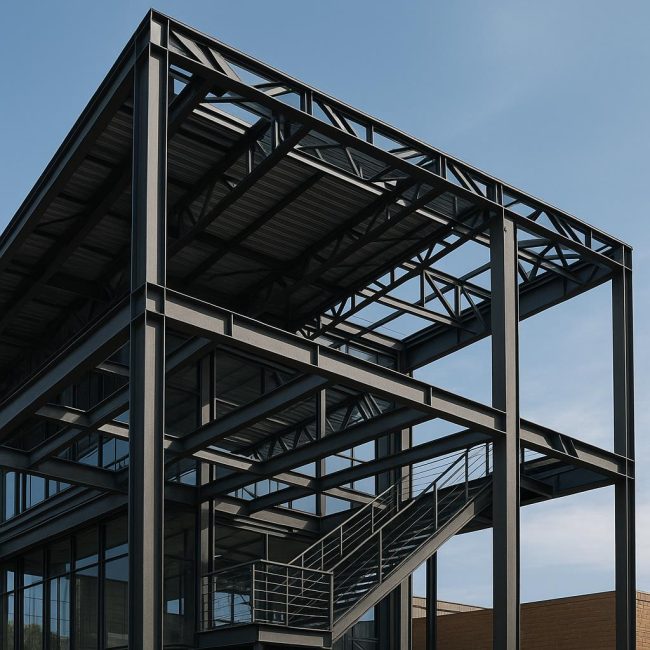
Modern construction is now unimaginable without metal. It's used to create building frames, façade elements, ceilings, and even decorative details. But custom metal structures have become especially popular, allowing architects and developers to solve problems that standard solutions simply can't address. That's why they are now considered the foundation for even the most ambitious projects.
- What are metal structures and how do they differ when custom-made?
- Advantages of using metal structures
- Where custom metal structures are in demand
- Industrial buildings
- Public facilities
- Residential construction
- Landscape and small architectural forms
- Architectural possibilities: from simplicity to futurism
- Production technologies and modern trends
- Individual projects: application examples
- Economic aspect
- Prospects and development of the industry
- Conclusion
What are metal structures and how do they differ when custom-made?
Metal structures are frame and auxiliary elements made of steel, aluminum, or other metals used in construction. These can include virtually anything: from load-bearing trusses and ceilings to decorative facade panels and fencing.
Custom manufacturing plays a key role: unlike mass-produced solutions, custom structures are tailored to a specific project. The architect has freedom to choose the shape, size, configuration, and finish. This approach allows the structure to be adapted to the site's features, climate conditions, and even the style of the surrounding buildings.
Advantages of using metal structures
The use of metal structures has long been the norm for industrial construction, but in recent years they have also been actively used in the residential sector. There are several reasons for this:
- Durability and reliability. Steel has a high load-bearing capacity, which makes it possible to construct large spans without additional supports.
- Durability. Modern metal protection technologies (galvanizing, powder coating) ensure resistance to corrosion.
- Installation speed. The factory-prepared parts allow the building frame to be assembled like a construction set.
- Architectural freedom. The flexibility of technology makes it possible to create unique shapes, from rectilinear to curvilinear solutions.
- Cost-effectiveness. With proper design, a metal frame can reduce material costs and construction time.
Where custom metal structures are in demand
Industrial buildings
Factories, warehouses, and hangars are traditional applications. Custom metal structures allow us to tailor the specific equipment, load requirements, and logistics to suit your needs.
Public facilities
Sports complexes, shopping centers, and exhibition pavilions are hard to imagine without large-scale metal trusses and columns. Not only strength but also a striking appearance are important here.
Residential construction
Frame houses, attics, staircases, and railings—metal structures are increasingly appearing in private interiors. They are especially popular in contemporary styles such as high-tech or loft.
Landscape and small architectural forms
Canopies, gazebos, bridges, pergolas—custom metal solutions help harmoniously integrate such structures into a garden or park.
Architectural possibilities: from simplicity to futurism
Custom metal structures offer designers a wide range of options. For example:
- Large spans. It is possible to create a hall of tens of meters in area without columns, which is especially important for sports arenas or concert halls.
- Complex facades. Metal elements allow the installation of facades of unusual shapes – wavy, spherical or asymmetrical.
- Combination of materials. Metal combines well with glass, wood and concrete, making it possible to create buildings in the style of minimalism or industrial modernism.
- Mobility. Some structures are designed to be collapsible, which is relevant for temporary pavilions and exhibition complexes.
Production technologies and modern trends
Today, metal structures are manufactured using high-precision laser cutting, bending, welding, and automated quality control. This allows us to create even the most complex shapes.
Key trends include:
- Light alloys. Using aluminum and stainless steel to create structures that are resistant to aggressive environments.
- Energy efficient solutions. Built-in elements for solar panels, ventilation and lighting systems.
- Aesthetics are a priority. Metal structures are increasingly used not only as a frame, but also as a decorative element.
Individual projects: application examples
- Country houses. Unique staircases, canopies and railings highlight the style of the building.
- Office buildings. Custom metal structures are used for panoramic facades and curtain wall systems.
- Shopping centers. The frames of the large atriums and galleries are custom-made to highlight the scale of the building.
- Bridges and crossings. Non-standard designs take into account the load and fit harmoniously into the urban environment.
Economic aspect
Although custom-made metal structures may seem more expensive than standard solutions, they often prove more cost-effective in the long run. The reason is simple: precise load and dimension calculations help reduce material overruns, shorten construction time, and lower operating costs.
In addition, custom solutions eliminate the need for alterations and modifications that often arise when using standard designs.
Prospects and development of the industry
Interest in metal structures is growing every year. Architects increasingly consider them as the basis for bold projects, and clients value them for the opportunity to emphasize the individuality of their buildings.
In the future, we expect even greater adoption of digital technologies: 3D design, load modeling, and automated manufacturing will make the process even more accurate and faster.
Conclusion
Construction has long since moved beyond standard solutions, and today, an individual approach is becoming the standard. Custom metal structures — are more than just a way to create a reliable framework; they're an opportunity to realize the most ambitious ideas. They offer architects creative freedom, developers time and money savings, and property owners uniqueness and durability.