Choosing modern lighting fixtures for your home and garden isn't just a matter of illumination; it's an opportunity to transform the space, create a special atmosphere, and set accents. The right lighting solutions can make your interior cozier and your garden more mysterious and inviting. This article offers practical ideas and recommendations to help you choose and install the right models, ensuring your home and garden remain vibrant and safe, even at night.
- The main types of modern lighting fixtures for home and garden
- Ceiling and pendant models: central lighting of the space
- Wall sconces and street lamps: light for zoning and decoration
- Floor lamps and table lamps: mobile light sources
- Landscape and garden lighting: decorating your property
- Key criteria for choosing lighting fixtures
- Power, lamp type, and color temperature: the basis for comfortable light
- Protection class (IP): safe for outdoor use
- Materials and design: durability and aesthetics
- Top 10 Interior and Landscape Lighting Ideas
- Accent lighting of the facade and architectural elements
- Create cozy relaxation areas with soft light
- Functional lighting of paths and main areas of the site
- Instructions for self-installation of lighting fixtures
- General safety rules and preparatory work
- Algorithm for installing wall and pendant lamps
- Frequently asked questions about choosing and installing lighting fixtures
The main types of modern lighting fixtures for home and garden
Ceiling and pendant models: central lighting of the space
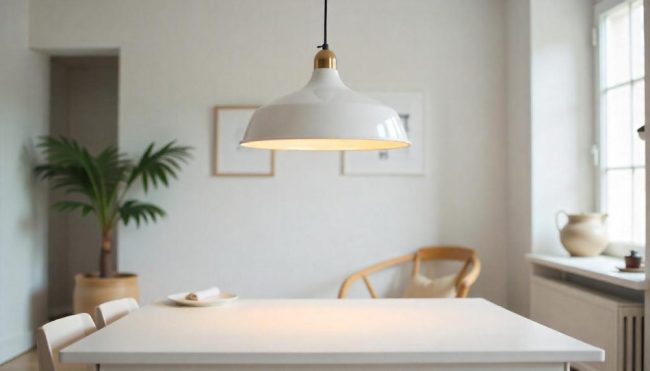
Ceiling lights and chandeliers are the foundation of any room's lighting. They provide bright, even light, essential for a comfortable stay. Modern designs of these models often incorporate LED technology, which is energy-efficient and durable. Pendant lights are ideal for high ceilings, creating a focal point. They can be used in living rooms, kitchens, or hallways. It's important to choose the right size and shape to ensure the lighting fixture fits the room's space. Some models allow you to adjust the height and direction of the light, adding functionality.
Wall sconces and street lamps: light for zoning and decoration
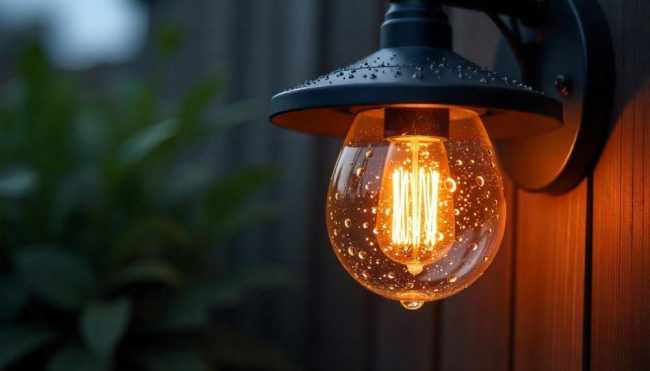
Wall sconces and outdoor lanterns provide practical lighting and decorative accents. They help zone a space, highlight architectural elements, or create an intimate atmosphere. When choosing models for outdoor use, it's important to consider their weather resistance. Common types include decorative sconces with glass or metal shades for soft lighting, solar-powered outdoor lanterns that don't require a power outlet, motion-sensor luminaires for energy savings, and classic or contemporary lanterns that enhance the beauty of a façade and garden paths.
Floor lamps and table lamps: mobile light sources
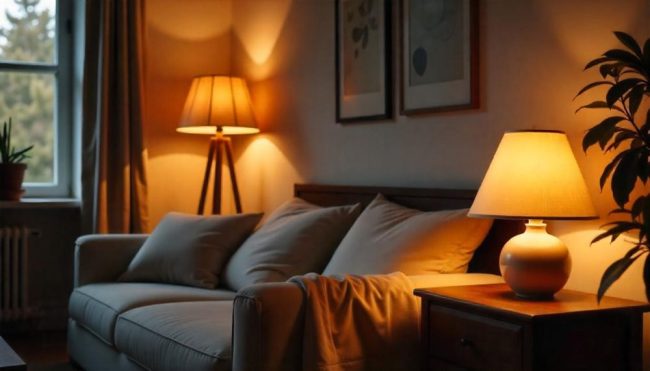
Floor lamps and table lamps are portable light sources that can be easily moved to suit your needs. They're ideal for creating accent lighting in relaxation or work areas. Floor lamps with fabric or paper shades provide a soft, diffused light, while adjustable models allow you to direct the light exactly where needed. Table lamps are indispensable on a desk or bedside table, providing just the right amount of light for reading or working. Their designs range from minimalist to complex and ornate, allowing you to find a perfect fit for any interior.
Landscape and garden lighting: decorating your property
Landscape lighting creates a unique atmosphere in a property, highlighting its beauty and ensuring safety at night. They can be built into paths, installed among flowerbeds, or illuminate trees and fountains. Such designs transform a garden or park area into a magical place. When choosing, it's important to pay attention to the protection rating (IP), which indicates resistance to moisture and dust. Solar-powered lights are ideal for the garden, as they are energy-independent and easy to install. Popular types of garden lights and their uses are listed below.
| Type lamp | The main thing appointment | Recommended places placements |
|---|---|---|
| Ground lamps | Illumination of paths and flowerbed borders | Along the garden paths, near the flowerbeds |
| Hanging garlands | Decorating gazebos, pergolas, and house facades | On the branches of trees, around the gazebo |
| Bollards | Boundary marking, territory zoning | Along the driveway, near the stairs |
| Spotlights | Bright illumination of key objects | At the entrance to the house, to illuminate the fountain |
Key criteria for choosing lighting fixtures
Power, lamp type, and color temperature: the basis for comfortable light
Choosing lighting fixtures begins with understanding the technical parameters that directly impact comfort and ease of use. Wattage determines energy consumption, and LED lamps provide bright light at minimal cost. The type of bulb—LED, halogen, or incandescent—affects the lifespan and quality of the light. Color temperature, measured in Kelvin, is equally important: warm white light (2700-3000K) creates a cozy atmosphere in relaxation areas, cool white (4000-5000K) is suitable for work areas, and neutral (3500-4000K) is optimal for general lighting in most rooms. Properly selected lighting is gentle on the eyes and helps create a pleasant ambiance.
Protection class (IP): safe for outdoor use
For outdoor lighting and installation in wet areas, the IP (Ingress Protection) rating is crucial. This rating determines how well the fixture is protected from solid particles and moisture. Outdoor lighting requires models with an IP44 rating or higher, which are protected from splashing water and small solid particles. For installation directly on the ground or in a fountain, the recommended ratings start at IP67-68, which provides complete protection from dust and short-term immersion in water. Ignoring this rating can lead to rapid failure of the fixture and pose a safety risk. Therefore, when choosing fixtures for your garden or summer cottage, be sure to pay attention to the IP rating.
Materials and design: durability and aesthetics
The materials used directly impact the durability and appearance of a lighting fixture. Durable and corrosion-resistant materials such as stainless steel, aluminum, and high-quality plastic are ideal for outdoor use. These materials can withstand temperature fluctuations and harsh weather conditions. The design should match the overall style of the home and landscape. Whether it's modern minimalism with clean geometric shapes, classic wrought iron lanterns, or rustic wooden models, the right choice will allow the lighting fixture to seamlessly integrate into the decor. Glass or transparent plastic elements provide good light transmission, while matte textures create soft, diffused lighting.
Top 10 Interior and Landscape Lighting Ideas
Accent lighting of the facade and architectural elements
Creating a dramatic and memorable image for a country house begins with a well-designed lighting composition on the façade. Accent lighting highlights the most striking architectural elements: columns, arches, relief masonry, or decorative pediments. Directional lighting can visually alter the building's proportions, highlight the entrance, and create a sense of spaciousness. To achieve these goals, there are several proven techniques used by professional designers and architects.
- Floodlighting: Install powerful yet compact spotlights at the base of the house, pointing upward to evenly illuminate a large area of walls and highlight the texture of materials.
- Concealed Lighting: Mount LED strips under eaves, along window openings, or on staircases to create a floating effect and soft glow that looks incredibly modern.
- Local accents: Use low-wattage in-ground lights (either recessed or spiked) to highlight a stand-alone tree, a beautiful shrub, or a small architectural feature in the garden, such as a fountain or statue.
- Dynamic scenarios: implement a smart lighting system that allows you to change the intensity and even the color of the lighting depending on the season, holiday, or simply your mood, turning your façade into a constantly changing work of art.
This approach not only enhances the aesthetic appeal, but also emphasizes the status of the owners, demonstrating impeccable taste and attention to detail.
Create cozy relaxation areas with soft light
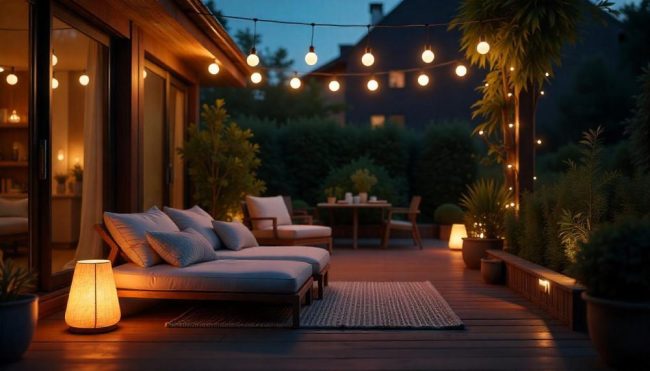
Transforming an ordinary terrace, gazebo, or garden nook into a relaxing spot requires a special approach to lighting design. Soft, diffused, and warm lighting is key to creating a relaxing and intimate atmosphere, conducive to leisurely evenings and pleasant conversations. Harsh shadows and glaring bright lights are completely unacceptable, as they ruin the tranquil atmosphere. Hanging garlands of globes or lanterns over the seating area are an ideal solution—their twinkling resembles stars and creates a romantic mood. Low table lamps with fabric or paper shades on tables and pedestals provide enough light for conversation without interfering with the view of the night sky. Adjustable floor lamps can illuminate a specific area, such as a reading lounger, while recessed lighting in steps or railings ensures safety while preserving the magic of the evening. The key is to avoid a single, powerful light source, instead using many small, warm spots that will create deep, soft shadows that add volume and mystery to the space.
Functional lighting of paths and main areas of the site
Functional site lighting addresses clear practical needs: ensuring safe movement around the property, spatial orientation, and comfortable use of key areas after dark. Its key principle is discreet efficiency, where light does its job without drawing undue attention or creating eye discomfort. Low bollards or recessed ground lights are ideal for marking the boundaries of garden paths and stairs, creating clear lines of light and guiding movement. Driveways and parking areas should be equipped with more powerful fixtures, such as wall-mounted lights on posts, to ensure good visibility and comfortable maneuvering. Illumination of the porch, gate area, and front door is a necessary safety feature; motion-sensor lights, which turn on automatically and save energy, are often used for this purpose. A properly designed system makes life at the dacha not only convenient but also truly comfortable at any time of day.
Instructions for self-installation of lighting fixtures
General safety rules and preparatory work
Any electrical installation work requires strict adherence to safety rules, as neglecting them can lead to dire consequences. The first and most important rule is to completely de-energize the circuit at the distribution board and check for voltage using a special indicator screwdriver or multimeter before beginning any connection work. Be sure to warn household members to ensure that no one accidentally re-energizes the circuit while you're working. Preparatory work includes not only gathering the necessary tools (drill, screwdrivers, indicator, pliers) but also carefully studying the instructions included with the light fixture and creating a layout plan for the fixtures. For outdoor models, plan the cable routing in advance, including its installation method (in a trench, on a facade using clips), and ensure the circuit is equipped with a residual-current device (RCD) that will trip in the event of a current leak. Remember that working with electricity is not something to be done in a hurry or carelessly, so if you have the slightest doubt about your abilities, it's best to immediately contact a qualified electrician.
Algorithm for installing wall and pendant lamps
Mounting a permanent light fixture on a wall or ceiling may seem complicated at first glance. Once the wiring is in place, the entire process boils down to a few clear and sequential steps. Following this algorithm guarantees a reliable and safe result.
- Marking and attaching the base: Place the light fixture's mounting bracket against the wall at the desired height, using a level to align it, and mark the mounting locations with a pencil. Drill the holes, insert the anchors, and securely fasten the bracket with screws.
- Connecting the wires: Route the wires from the wall through the special opening in the housing. Carefully connect them to the wires from the light fixture according to the color coding: typically, blue (neutral) to blue, brown or red (live) to brown, and yellow-green (ground) to yellow-green. Use self-clamping terminals (Wago) for the connections, or twist them securely and insulate them with special caps.
- Fixing the lampshade and assembly: Carefully tuck the wires inside the housing to avoid pinching them. Then, secure the main decorative part of the lamp to the installed strip using the included screws or clips.
Proper lighting for your home and garden opens up endless possibilities for transforming your space. Combining practical, functional lighting with decorative and accent lighting not only ensures safety and comfort but also creates a unique, cozy atmosphere. Feel free to experiment with ideas, choose high-quality fixtures, and enjoy the magic of light in your personal oasis.
Frequently asked questions about choosing and installing lighting fixtures
How to choose the right IP protection rating for a street light?
Models with an IP rating of IP44 or higher are suitable for outdoor use, providing reliable protection against splashes of water and dust. For areas near fountains or irrigated flowerbeds, the recommended rating starts at IP67, ensuring complete sealing of the housing.
Can LED string lights be used for permanent outdoor use?
Modern LED string lights are designed for use in all weather conditions and are perfect for decorating gazebos or facades. It's important to choose products with a protection rating of at least IP44 and avoid mechanical damage during installation.
What to do if the solar light does not turn on at night?
The most common cause is insufficient battery charging due to placement in the shade or a dirty panel. Wipe off any dust from the solar panel and move the device to an open area with maximum daylight.