A reliable roof requires not only high-quality installation and the right materials, but also effective waterproofing. This is especially important in a variable climate, where heavy rains, snowfalls, and thaws alternate within a single season. For example, roofers in Moscow are increasingly faced with the need for enhanced moisture protection due to high precipitation, frequent temperature fluctuations, and wind loads. In this article, we'll explore which waterproofing technologies actually work, which materials have proven themselves, and how to avoid common mistakes.
- Why is roof waterproofing necessary?
- Main types of waterproofing technologies
- Roll waterproofing
- Liquid waterproofing (mastics and penetrating compounds)
- Membrane waterproofing
- Which technologies really work in Russian conditions?
- Common mistakes in waterproofing
- Is it worth saving on waterproofing?
- Conclusion
Why is roof waterproofing necessary?
Waterproofing performs two main functions:
- Protection of supporting structures and insulation from moisture. Moisture that gets inside can lead to rotting of wooden rafters, the appearance of mold and the destruction of insulation.
- Increasing the service life of the roofing cake. Even high-quality tiles or membranes will not work effectively if there is no protective layer against water.
Without proper waterproofing, the roof loses its tightness, leaks occur, the humidity level in the room increases, and thermal insulation is damaged.
Main types of waterproofing technologies
Modern methods are conventionally divided into three categories: roll materials, liquid compositions and membrane solutions. Let's look at each one in more detail.
Roll waterproofing
This is one of the most common and affordable methods. It is used primarily on pitched roofs and in low-cost projects.
Typical materials:
- Roofing felt (bitumen). The cheapest and most outdated option. Vulnerable to UV radiation and cracking.
- Stekloizol and euroruberoid. More modern bitumen-polymer materials on fiberglass or polyester offer improved flexibility, durability, and resistance to temperature fluctuations.
Advantages:
- Easy to install.
- Availability.
Flaws:
- Short service life (10–15 years).
- Heavy weight when layered.
Liquid waterproofing (mastics and penetrating compounds)
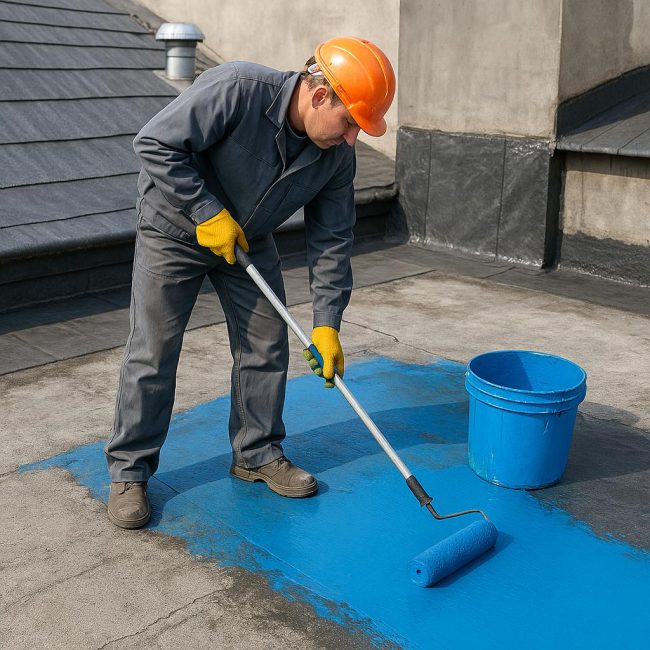
These are polymer or bitumen mastics that are applied with a roller, brush, or spray. Once dry, they form a flexible, cohesive film.
Types:
- Bituminous mastics. Cheap, but they age quickly.
- Polyurethane and acrylic mastics. More expensive, but have high strength, adhesion and a long service life.
Advantages:
- One-piece seamless coating.
- Excellent sealing even in difficult areas (junctions, protrusions, ventilation shafts).
- UV resistance (with the addition of appropriate components).
Flaws:
- Increased requirements for foundation preparation.
- Sensitive to weather conditions during application.
Membrane waterproofing
The most modern and effective solution used for both flat and pitched roofs. Membranes come in:
- PVC membranes. Flexible, elastic, with a reinforcing mesh. Hot-air bonding.
- TPO membranes. A thermoplastic elastomer that combines the advantages of PVC and rubber.
- EPDM membranes. Synthetic rubber, characterized by high elasticity and durability.
Advantages:
- Highest water resistance.
- Durability up to 30–50 years.
- Possibility of installing “operable” roofs (for example, with a terrace or landscaping).
Flaws:
- High price.
- Special installation technologies and an experienced team are required.
Which technologies really work in Russian conditions?
Based on the practice of private and industrial facilities, several universal solutions can be identified:
- For a private house with a pitched roofTwo-layer waterproofing: a vapor barrier on the inside and a roof membrane (diffusion or superdiffusion) on the outside. The membrane protects the insulation from external moisture while allowing water vapor to pass through.
- For flat roofingModern membranes (PVC, TPO, EPDM) are the only alternative, especially when constructing commercial buildings, offices, or warehouses. Polyurethane mastic with a reinforcing mesh can be an alternative.
- For repair of old roofsMastic coatings allow you to quickly and affordably restore the roof's seal, extending its lifespan by 5–10 years.
Common mistakes in waterproofing
- Use of vapor-impermeable film instead of diffusion film. This leads to the formation of condensation inside the insulation.
- Lack of ventilation gaps. Even the highest quality membrane will not help if moisture does not escape.
- Violation of membrane installation technology. Errors in welding seams or insufficient fixation lead to leaks.
- Use of inexpensive roll materials in areas with high humidity.
Is it worth saving on waterproofing?
Clients often try to cut costs at this stage, believing that the roofing material provides the primary protection. This is a dangerous misconception. A roof is a system, and every layer is important. Skimping on waterproofing can result in the need for repairs to the entire structure within 2-3 years, especially during heavy precipitation and winter thaws.
Conclusion
Waterproofing is not just an auxiliary element, but a fully-fledged component of the roofing system. Modern technologies allow for highly watertight and durable roofing, but only with the right choice of material and adherence to installation procedures. Based on weather conditions, the specific features of the property, and your budget, you can find the optimal solution—from simple roll materials to innovative membranes. And in any case, it's important to remember: when roofing, reliable moisture protection is essential for the longevity of the entire building.