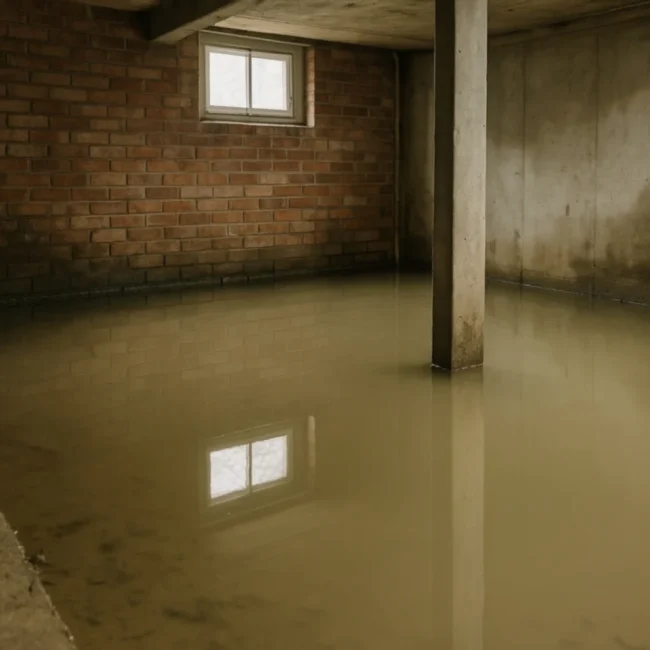
Water in the basement of a private home is a problem faced by many homeowners. Accumulated moisture not only causes inconvenience but can also lead to serious structural damage, a deteriorating indoor climate, and mold growth. To effectively address this problem, it's important to understand its causes, potential risks, and available methods for elimination and prevention. In this article, we'll take a detailed look at why water accumulates in the basement, how to identify the source of the problem, and how to resolve it once and for all.
- Reasons for water appearing in the basement
- High groundwater level
- Ineffective or absent drainage system
- Mistakes in foundation construction
- Damage to water pipes or sewerage systems
- High humidity and condensation
- Why is water in the basement dangerous?
- How to determine the source of water
- Ways to fix the problem
- Water drainage organization
- Installation of a drainage system
- Foundation waterproofing
- Installation of pumping equipment
- Improving ventilation
- Preventing basement flooding
- Folk remedies and temporary solutions
- When to contact specialists
- Conclusion
Reasons for water appearing in the basement
Basements can flood for a variety of reasons. These can be divided into external (related to the environment and climate) and internal (caused by construction or operational errors).
High groundwater level
If a house is built in a lowland or on a site with a high groundwater level, during spring snowmelt or heavy rains, water can seep into the basement through the foundation, slab joints, and cracks.
Ineffective or absent drainage system
Without a properly designed foundation drainage system, moisture will linger near the house and eventually seep inside.
Mistakes in foundation construction
Violations of concrete pouring technology, poor waterproofing, the absence of a blind area or its improper installation often lead to the basement being unprotected from moisture penetration.
Damage to water pipes or sewerage systems
Leaking pipes in the walls or floor of a basement can cause localized flooding, especially if the water supply system is old or improperly installed.
High humidity and condensation
Sometimes water appears not as a trickle or flood, but as condensation, especially in poorly ventilated areas. This can lead to drips of water on the basement walls, floor, and ceiling.
Why is water in the basement dangerous?
Ignoring the problem can have serious consequences for the home and the health of residents:
- Destruction of the foundation.Constant moisture in concrete or brick structures leads to their cracking, destruction and loss of load-bearing capacity.
- Mold and mildew.High humidity promotes the growth of mold, especially on wood and plaster elements. This not only impairs the appearance but can also pose a health risk.
- Damage to property.If the basement is used as a warehouse, all the things stored there (tools, furniture, food) quickly deteriorate.
- Deterioration of the microclimate in the house.Moisture from the basement rises and affects the humidity in living spaces, causing dampness and a musty smell.
- Rising heating bills.Wet rooms are more difficult to heat. High humidity increases heat loss.
How to determine the source of water
Before addressing basement water, it's important to determine its source. A visual inspection is often insufficient. A series of steps is necessary:
- Inspect the walls and floor.If water is leaking from cracks in the foundation, there is likely an external cause.
- Check the pipes.Make sure that the pipes and drains inside the premises are intact.
- Observe the time it takes for moisture to appear.
- In spring and after rains, groundwater levels are likely to rise.
- Constant moisture in dry weather - there may be internal sources.
- Check the ventilation.Sometimes humidity is caused by poor air exchange.
Ways to fix the problem
Methods for combating basement water depend on the source of the problem and the nature of the flooding. Let's look at the main solutions, from simple to more complex.
Water drainage organization
If the cause is precipitation or melting snow, the first step is to direct the water away from the house.
- Build a blind area.A concrete or asphalt blind area 80–100 cm wide with a slope away from the walls is a simple but effective solution.
- Gutters and drains.Timely drainage of rainwater from the roof is a must.
- Storm drainage.Underground pipes that drain water away from the site will help prevent excessive soil moisture.
Installation of a drainage system
To combat groundwater, drainage is often used:
- Ring drainage.Drainage pipes are laid around the house at a depth below the basement floor level, with a slope towards the collection well.
- Deep drainage.Used in areas with high groundwater levels, this is a more complex and expensive system that requires professional design.
Foundation waterproofing
- External waterproofing.This is done during house construction or major renovations. Roll materials, bituminous mastics, and penetrating compounds are used.
- Internal waterproofing.Suitable when outdoor work is not possible. Coating mixtures and penetrating waterproofing compounds are used.
- Injection waterproofing.It is used to seal cracks in already constructed walls: special resins are injected under pressure, sealing the damage.
Installation of pumping equipment
If it is impossible to avoid water ingress, a forced drainage system is installed:
- Drainage pump.It is installed in a pit at the lowest point of the basement and automatically pumps out water when it accumulates.
- Fecal pump.Used if water contains large particles or dirt.
Improving ventilation
To combat condensation and high humidity:
- Provide supply and exhaust ventilation.
- Install dehumidifiers.
- Use building mixtures with moisture-resistant additives.
Preventing basement flooding
Once the underlying problem has been resolved, it is important to take preventative measures to avoid it occurring again:
- Regular cleaning of gutters.Clogged gutters and pipes are one of the common causes of torrential flooding.
- Monitoring the condition of the blind area and foundation.Cracks should be repaired in a timely manner.
- Site maintenance.The slope of the site must ensure that water flows away from the house.
- Groundwater level monitoring.Particularly important during seasonal fluctuations.
Folk remedies and temporary solutions
If it is not possible to carry out major repairs, you can temporarily reduce the water and humidity levels:
- Sand and gravel.Filling the basement floor with sand and gravel helps absorb water and improve drainage.
- Lime and salt.They are used to temporarily dry the air and eliminate odors, but do not solve the problem comprehensively.
- Homemade drainage ditches.They help to divert water to a sump with a pump.
When to contact specialists
Sometimes it's impossible to solve a problem on your own. Reasons to call specialists include:
- systematic flooding even in dry weather;
- obvious destruction of the foundation;
- ineffective drainage and waterproofing;
- the need for injection or deep insulation.
An engineering and geological survey of the site, a drainage project, and professional installation are the key to reliably eliminating the problem.
Conclusion
Water in the basement is a warning sign that shouldn't be ignored. It won't disappear on its own and will only worsen the condition of the building and the health of the residents. The sooner the cause is identified and action taken, the less costs and consequences. Using modern waterproofing materials, drainage systems, and pumping equipment can reliably protect the basement from moisture. And prevention and regular monitoring will help put flooding issues to rest once and for all.