For many, the dream of owning a home in the countryside is associated not only with peace and quiet and beautiful views, but also with comfort no less than that of a city apartment. However, developers and future homeowners, in their rush to erect walls and a roof, often forget that it's the utility systems that make a home comfortable. Electricity, heating, water supply, and sewerage are the foundations without which a country house would remain just a shell.
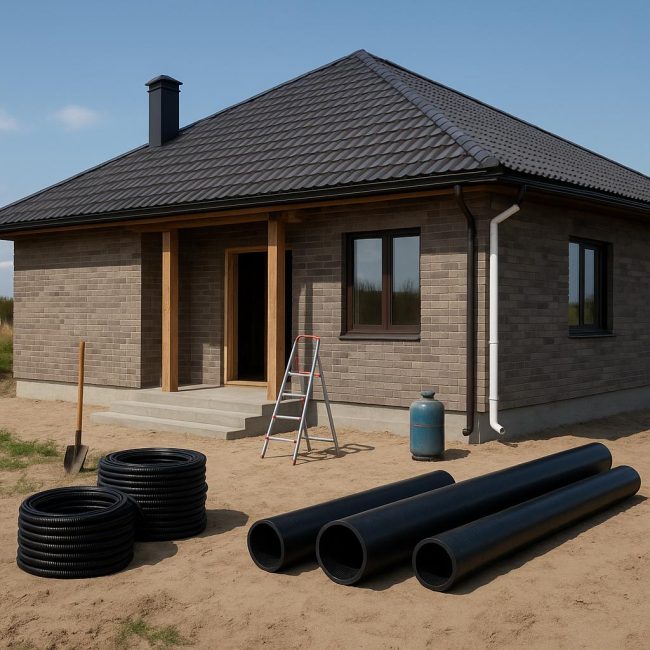
Even at the initial design stages, it's important to consider the materials and technologies that will ensure the durability and uninterrupted operation of systems. For example, when installing water supply systems, HDPE pipes from a Tyumen manufacturer, which are easy to install and have proven themselves in private construction.
- Why engineering systems are more important than finishing
- Electricity supply: the basics
- Water supply: autonomy and durability
- Sewage: choosing between a septic tank and a treatment plant
- Heating: warmth in the house all year round
- Ventilation and air conditioning
- Errors in the design of engineering systems
- Conclusion
Why engineering systems are more important than finishing
In practice, many homeowners first try to build the shell, put on the roof, and then tackle the interior. But experienced architects always advise starting with the utilities.
- No electricity It is impossible to use household appliances and modern security systems.
- Without water the house becomes more of a weekend getaway than a permanent residence.
- No sewerage Comfort is lost, and alternatives such as cesspools quickly become irrelevant.
- Without heating Life in the house in winter becomes a test.
Therefore, engineering systems are that invisible, but vital part of the house that determines its real value and convenience.
Electricity supply: the basics
The first thing a homeowner considers is how to install electricity. It's important to consider:
- Connection power. For a country house with a heating boiler, electric stove and a smart home system, the standard 5–7 kW is no longer sufficient.
- Network reliability. Power surges are common in villages, so it's worth considering installing stabilizers and an emergency generator.
- Safety. All cables must be of high quality and rated for the load. Skimping on electrical costs can lead to a fire.
Water supply: autonomy and durability
Having running water in your home is key to comfort. There are several connection options:
- Centralized water supply. Rarely found in new settlements.
- Well. The most common option. It's important to select the correct depth and pumping equipment.
- Well. A more cost-effective method, but with lower productivity.
The main question is what pipes to use for the system. Metal pipes are gradually becoming a thing of the past: they are susceptible to corrosion, require complex installation, and do not withstand frost well. PVC and metal-plastic pipes are popular, but have limited service life. HDPE pipes, which are flexible, freeze-resistant, and easy to install, are becoming more popular.
Sewage: choosing between a septic tank and a treatment plant
The second most important issue after water is wastewater disposal. Today, there are two main solutions:
- Septic tank. A simple settling and filtration system. Suitable for seasonal use. Requires periodic pumping.
- Local wastewater treatment plants (LOS). Modern stations provide almost complete water purification and can be used year-round. They're more expensive, but more environmentally friendly and convenient.
Sewage system installation also involves the choice of materials. For external pipelines, HDPE or PVC pipes are again used, as they are resistant to moisture and corrosion.
Heating: warmth in the house all year round
If the house is designed for year-round occupancy, a heating system becomes vital. Possible options:
- Gas heating. The most profitable, but requires a gas pipeline and significant investments at the connection stage.
- Electric heating. Easy to install, but expensive during continuous use.
- Solid fuel boilers. Suitable for areas without gas, but require regular refilling of fuel.
- Combined systems. For example, gas + electricity or firewood + electronics, which allows for savings and increases reliability.
Here it is important not only to choose a boiler, but also to think through the piping, home insulation, and automation system.
Ventilation and air conditioning
In a country house without ventilation, moisture quickly accumulates, leading to mold. Systems include:
- Natural ventilation. Based on air movement through shafts, it is not effective enough in modern airtight buildings.
- Forced. Includes air handling units, recuperators, and air conditioners. Provides a stable microclimate year-round.
Errors in the design of engineering systems
Often owners make the same mistakes:
- They save on materials and installation.
- Climate conditions are not taken into account.
- Systems are developed after the walls have been erected, which requires changes to the design.
- They install temporary solutions that don’t last for several seasons.
Conclusion
Building a country house involves more than just erecting walls and a roof; it also involves creating a reliable "foundation of comfort" in the form of utility systems. Electricity, water, sewerage, heating, and ventilation are essential for a fulfilling life.
A wise choice of materials, consideration of the climate, and thoughtful design can make a home truly cozy and durable. While the interior can be modified over time, it's better to plan the utilities once and for all, so you can enjoy comfort for decades to come rather than deal with breakdowns.