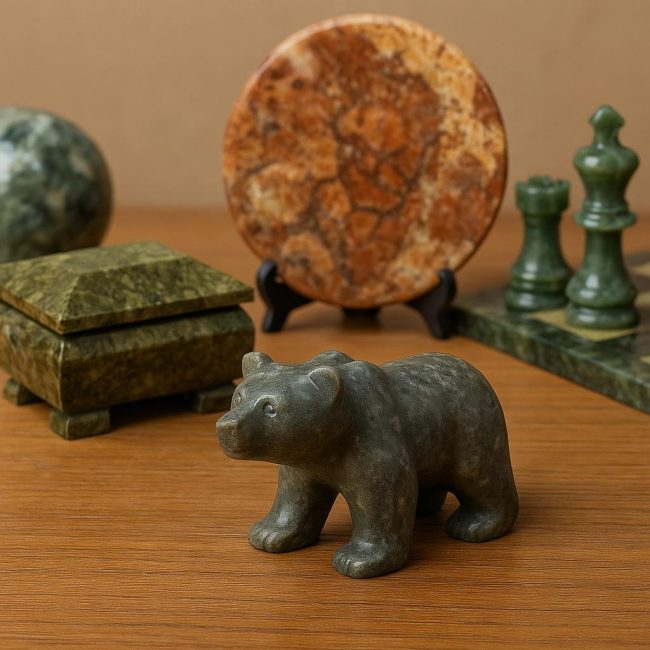
In a world where mass production leaves less and less room for individuality, items with a special "character" are increasingly valued—pieces that combine beauty, durability, and natural uniqueness. These are the qualities embodied in stone souvenirs, the selection of which can be viewed on the Ural Souvenir website. These items simultaneously serve as decoration, a memorable symbol, and a carrier of the energy of natural materials. Thanks to the variety of stone types and processing techniques, such souvenirs can reflect both the cultural specifics of a region and the individual tastes of the buyer.
Unlike faceless plastic trinkets churned out by the thousands, stone pieces always remain unique—even in mass production, the vein pattern, color, and texture of each piece will vary. This is what makes stone souvenirs so appealing to tourists, collectors, and nature lovers alike.
- Why stone is the ideal material for memorial items
- What types of stone souvenirs are there?
- Figurines and sculptures
- Chess and board games
- Boxes and stands
- Souvenir plates and panels
- Jewelry and amulets
- Geography and origin: what stones are used
- How to distinguish a real stone souvenir from an imitation
- When and to whom to give stone souvenirs
- Summary: Why you should pay attention to stone souvenirs
Why stone is the ideal material for memorial items
Stone has accompanied humans throughout history: it was used to build temples, craft jewelry, symbols of power, and even writing. As a souvenir, it has several undeniable advantages:
- UniquenessIt is impossible to find two absolutely identical pieces of natural stone, making each piece truly unique.
- DurabilityThe stone does not fade, dry out, or deform over time. Such souvenirs can be passed down through generations.
- AestheticsNatural patterns, shades, polishing, or, conversely, rough textures create visually appealing forms.
- Symbolic significanceIn many cultures, stones are associated with earth energy, stability, protection, and strength.
- Eco-friendlinessUnlike plastic, stone does not pollute the environment and does not require chemical treatment.
What types of stone souvenirs are there?
The selection of stone souvenirs is striking in its diversity—both in functionality and artistic design. The most popular categories are:
Figurines and sculptures
These can be animals, symbolic characters, zodiac signs, or mythological creatures. Such items are especially often purchased as amulets or talismans.
Chess and board games
Sets made of onyx, marble or malachite are not only a leisure element, but also an elite interior object.
Boxes and stands
Functional jewelry storage or stationery items are often made from jasper, rhodonite, or serpentine and decorated with engraving.
Souvenir plates and panels
Wall hangings with natural patterns or carvings can convey the cultural characteristics of a region.
Jewelry and amulets
Bracelets, pendants, and charms with a "stone" are the most versatile and popular type of souvenir, especially among tourists.
Geography and origin: what stones are used
Many regions are famous for their breeds and local workshops. For example:
- Caucasus - serpentine and jade, often used for stone carving.
- Ural — malachite, jasper, rhodonite. Stone carving has been known here since the 19th century.
- Altai - charoite, which is considered one of the rarest and most beautiful Russian stones.
- India and Pakistan - marble, lapis lazuli, onyx, from which miniature columns and architectural copies are made.
It is important to note that the extraction and processing of stone in these regions is not only a craft activity, but also carries a cultural connotation—stone cutters often use traditional designs and forms.
How to distinguish a real stone souvenir from an imitation
Today, you'll find products made of resin, plaster, and other materials that imitate natural stone on the market. To avoid making a mistake when purchasing:
- WeightStone is always noticeably heavier than plastic or plaster.
- TemperatureReal stone is cold to the touch, especially indoors.
- PatternNatural veins and inclusions are not repeated and appear asymmetrical.
- ProcessingHand polishing or carving often leaves slight irregularities.
- It is worth considering that authenticity is especially important if the souvenir involves contact with the body (for example, an amulet), or if it is purchased as an expensive gift.
When and to whom to give stone souvenirs
Stone souvenirs are a versatile gift. They can be presented as:
- Memory of the trip — especially if the stone was mined or processed in this region.
- Corporate gift — prestigious tabletop items look solid.
- A token of attention or a talisman - figurines with symbolic meaning.
- Interior decor — in the form of boxes, candlesticks, panels.
In addition, there is a whole category of "energy" gifts—for example, figurines made of shungite or quartz—which are positioned as means of protection from negative influences or for improving well-being.
Summary: Why you should pay attention to stone souvenirs
Stone souvenirs are more than just beautiful objects. They're a way to express taste, an interest in culture, and a desire for durable, meaningful objects. They can't be produced in millions—and that's their value. Even a small figurine conveys more than just aesthetic appeal: it embodies the energy of the rock, the warmth of the artisan's hands, and the meaning imbued within it.
Many artisan workshops, including those working with sheet and block stone, actively uphold traditions, making souvenirs not only authentic but also affordable. These items fill the interior with warmth and serve as reminders of a place, event, or person.