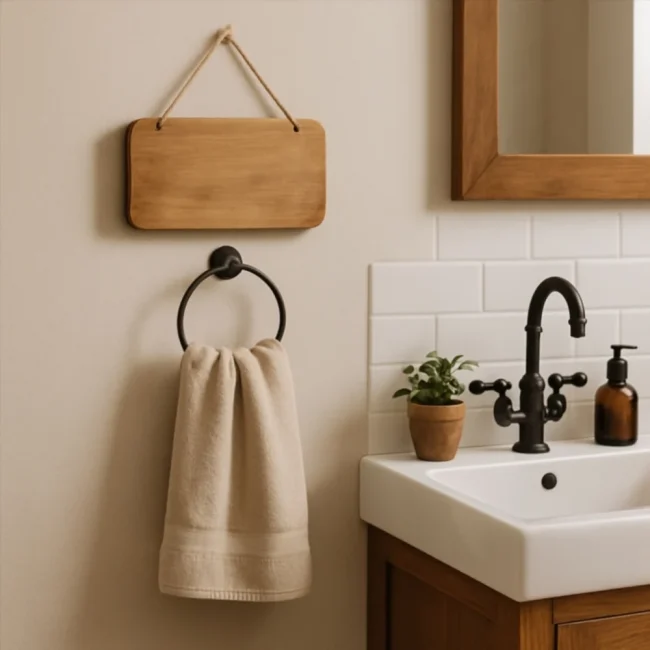
In everyday life, we often overlook the little details that create a cozy and orderly atmosphere in the home. One such detail is a "Hand Towel" sign. This seemingly insignificant interior element can play a significant role not only in providing comfort but also in organizing the space, especially in bathrooms, toilets, and kitchens. Today, such signs have become not only functional but also decorative elements that emphasize the style and thoughtfulness of a home's decor. In this article, we will examine in detail the purpose, types, materials, placement options, and stylistic features of "Hand Towel" signs, as well as provide recommendations for selection and placement.
- The meaning of the "Hand Towel" sign in the interior
- Types of signs: shapes, styles and designs
- By shape and size
- By mounting method
- By design style
- Materials of manufacture
- Tree
- Metal
- Plastic
- Ceramics and glass
- Fabric and leather
- Where to place the "Hand Towel" sign
- In the bathroom
- In the kitchen
- In the guest bathroom
- In the laundry room or utility room
- A personal touch: handcrafted signs
- Ready-made solutions: what to look for when buying
- Practical tips for care and renovation
- Conclusion
The meaning of the "Hand Towel" sign in the interior
At first glance, such a sign may seem unnecessary in a home. However, its presence has a number of advantages:
- Organization of spaceEspecially in large families or homes with multiple bathrooms, a sign helps clearly identify the purpose of certain textiles, eliminating confusion.
- Guest convenienceIn a home where guests often visit, such elements create a sense of thoughtfulness and comfort. Guests don't have to guess which towel to use.
- HygieneA separate hand towel helps maintain sanitary standards, especially if a sign clearly indicates its purpose.
- Aesthetics and styleModern designer signs come in a variety of styles, from minimalist to retro, making them a great addition to any interior.
Types of signs: shapes, styles and designs
The modern market offers a wide variety of "Hand Towel" signs. They vary in a number of ways:
By shape and size
- Classic rectangular– the most common option, laconic and universal.
- Round or oval– suitable for interiors in vintage or Scandinavian style.
- Curly– in the form of hands, drops of water, towels, etc. – original and eye-catching.
By mounting method
- Suspended– using cord, ribbon, or chain. Easy to install and no drilling required.
- Self-adhesive– attached with double-sided tape, convenient for smooth surfaces.
- On screws or self-tapping screws– more secure fastening, especially for massive signs.
By design style
- Minimalism– strict lines, monochrome palette, clear font.
- Country and Provence- aged wood, calligraphic font, floral patterns.
- Loft– metal, rough textures, industrial design.
- Modern and high-tech– glass, plastic, bright accents.
Materials of manufacture
The sign can be made from a variety of materials, which determines both its aesthetics and durability.
Tree
- Suitable for interiors in rustic, Scandinavian and Provence styles.
- Can be painted, tinted, laser engraved or hand painted.
- Eco-friendly and warm to the touch material.
Metal
- Often used in loft or vintage style interiors.
- Durable, moisture-resistant, suitable for placement in the bathroom.
- They can be painted, engraved, or with a three-dimensional inscription.
Plastic
- Lightweight and inexpensive, often used in rented spaces.
- Wide choice of colours and shapes, but less aesthetic value.
- Moisture resistant and easy to clean.
Ceramics and glass
- Stylish and decorative, they emphasize the sophistication of the interior.
- Suitable for classic and modern solutions.
- Fragile, require careful installation.
Fabric and leather
- They are used in textile versions of signs or tags on the towels themselves.
- They often have a decorative function, especially in guest bathrooms.
Where to place the "Hand Towel" sign
Proper placement of a sign is key to its functionality. Let's look at the main locations where it would be appropriate:
In the bathroom
- Above the towel holder or ring.
- On the wall next to the sink.
- On a cabinet or stand under the sink.
In the kitchen
- Next to the sink if a separate hand towel is used.
- On the front of the cabinet where clean textiles are stored.
In the guest bathroom
- Especially appropriate for new visitors to the house.
- Creates an impression of order and concern for hygiene.
In the laundry room or utility room
- If your home has a separate laundry room where towels are often stored and dried, labeling it will help keep things tidy.
A personal touch: handcrafted signs
If you're looking for uniqueness and individuality, you can order or make your own sign. To do this, you'll need:
- Base: board, piece of plywood, metal, plastic or ceramic tile.
- Tools: marker, wood burner, paint, brushes, laser engraver (optional).
- Fasteners: rope, glue, screws, magnet or Velcro.
This option allows you to create a piece that fits perfectly into your interior. The plaque can also be personalized with initials, a last name, a room name, or a decorative design.
Ready-made solutions: what to look for when buying
When choosing a sign, please pay attention to the following criteria:
- Resistance to moisture and temperature— especially important for rooms with high humidity.
- Contrast and readability of the inscription— the sign must be visible and easily perceived.
- Fastening- it must be reliable, but not damage the wall finish.
- Matching the interior style— the sign should be part of the overall composition, and not stand out from it.
- Hygienic material— It is important that the sign can be easily wiped or washed.
Practical tips for care and renovation
Even such a small detail requires care so as not to spoil the impression of the interior:
- Periodically wipe the plate from dust and moisture.
- If you find chips, abrasions or darkening, replace or update the inscription.
- Don't forget to refresh decorative elements: bows, cords, holders, if used.
Conclusion
A "Hand Towel" sign is a simple yet elegant way to organize space and add a touch of coziness to your interior. It combines aesthetics and functionality, especially when chosen tastefully and in keeping with the space's features. Such a seemingly small element can highlight your attention to detail and care for your home, making it not only beautiful but also truly comfortable to live in.