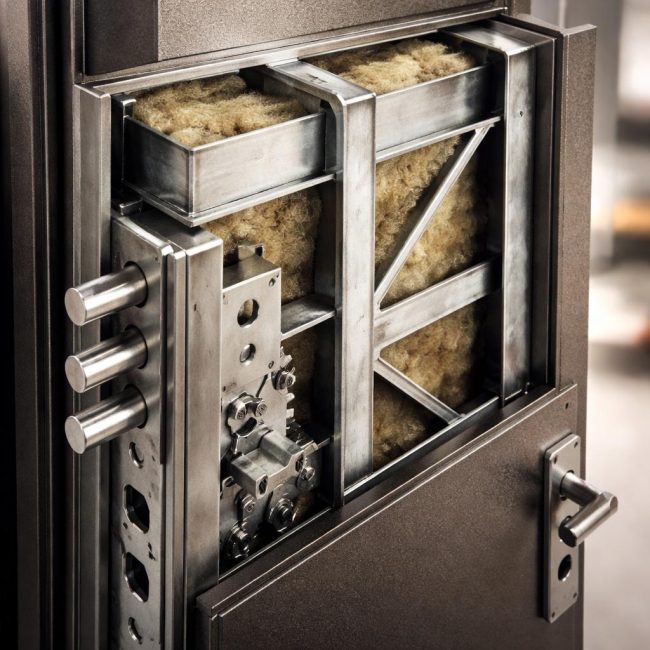
Apartment security doesn't start with an alarm or even locks—it's primarily determined by the design of the door itself. Modern apartment entrance doors may look virtually identical, but their level of protection can vary dramatically. The main differences are hidden within: in the thickness of the metal, the type of steel sheet, and the number and placement of the reinforcement ribs.
Understanding these parameters allows you to avoid overpaying for marketing and at the same time choose a truly reliable design that can withstand mechanical stress, attempts to open it, and daily use for many years.
- Why metal thickness is more than just a number in specifications
- Optimal thickness for an apartment
- One sheet or two: how a door leaf is constructed
- Single-sheet construction
- Double-leaf construction
- Stiffeners: hidden safety cage
- What are stiffeners?
- Types of ribs
- Steel grade and production method
- Cold rolled steel
- Hot rolled steel
- Frame and profile: the basis of strength
- What to look out for:
- Door weight: an indicator of reliability or a marketing ploy?
- Balance of Parameters: What Really Matters
- Errors in assessing characteristics
- Focusing only on metal thickness
- Ignoring the box
- Underestimating editing
- The influence of design on noise and heat insulation
- When to choose a reinforced structure
- A practical checklist for choosing
- Result
Why metal thickness is more than just a number in specifications
The first thing buyers pay attention to is the thickness of the steel sheet. Manufacturers specify it in millimeters, and a difference of even 0.3–0.5 mm can significantly impact the strength of the structure.
Optimal thickness for an apartment
For apartment doors, the following range is considered reasonable:
- 1.2–1.5 mm — the minimum acceptable level for the budget segment
- 1.5–2.0 mm — the optimal option for most city apartments
- 2.0 mm or more - reinforced models designed for increased loads
It's important to understand: excessive thickness doesn't always mean better protection. 3 mm or more increases the door leaf's weight, putting more strain on the hinges and frame, which can lead to distortion if installed incorrectly.
One sheet or two: how a door leaf is constructed
A classic metal door consists of a steel frame and outer sheets.
Single-sheet construction
- One outer sheet of metal
- The interior space is filled with insulation
- More common in budget models
The disadvantage is that without an internal metal sheet, the rigidity of the structure is lower, especially if the ribs are not made well enough.
Double-leaf construction
- External and internal steel sheets
- A frame with stiffening ribs between them
- Increased resistance to deformation
This design significantly increases the strength of the canvas and makes it difficult to open by squeezing.
Stiffeners: hidden safety cage
If the thickness of the metal is responsible for resistance to direct impact, then the stiffening ribs ensure the spatial stability of the entire structure.
What are stiffeners?
These are metal profiles inside the door leaf, welded to steel sheets. They prevent:
- web deflection
- distortion of the structure
- deformation under force action
Types of ribs
- Vertical - increase resistance to spinning
- Horizontal - increase torsional resistance
- Combined (honeycomb or cross-shaped) - provide maximum rigidity
The more thoughtfully they are arranged, the more stable the door will be in operation.
Steel grade and production method
The quality of the metal itself is no less important.
Cold rolled steel
- Stronger and denser structure
- Flat surface
- Better resistance to deformation
This is the preferred option for apartment doors.
Hot rolled steel
- More affordable
- Less precise geometry
- Slightly lower strength
Suitable for budget solutions, but inferior in terms of durability.
Frame and profile: the basis of strength
The door frame is made of a metal profile. Its thickness and shape determine the structure's ability to withstand loads.
What to look out for:
- Profile thickness is not less than 1.5 mm
- The presence of a closed loop
- High-quality welds without voids
A poorly executed frame will negate even a thick outer sheet.
Door weight: an indicator of reliability or a marketing ploy?
Buyers often focus on weight. The logic is simple: heavier means stronger. However, weight is determined not only by the thickness of the metal, but also by:
- type of insulation
- decorative panels
- number of locks
- the presence of reinforcements
A door that's too light (less than 60 kg) for standard dimensions can indeed raise concerns. However, excessive weight without a well-designed door is no guarantee of safety.
Balance of Parameters: What Really Matters
When choosing a door, you need to consider a combination of factors:
- The thickness of the outer sheet is not less than 1.5 mm
- The presence of internal stiffening ribs
- Double-leaf construction for increased strength
- High quality frame and welding
- Compliance with burglar resistance class
The absence of even one of these points reduces the overall reliability.
Errors in assessing characteristics
Focusing only on metal thickness
A thick sheet without ribs may sag.
Ignoring the box
If the box is made of a thin profile, wringing is possible even with a strong canvas.
Underestimating editing
Incorrect installation reduces burglary resistance, regardless of the characteristics.
The influence of design on noise and heat insulation
Although the main purpose of a metal door is protection, its internal structure also affects comfort.
- The presence of ribs creates additional air chambers
- Double-leaf design reduces vibration
- The rigid frame reduces canvas movement
As a result, the door is not only resistant to loads, but also more effectively insulates the room from the noise of the entrance.
When to choose a reinforced structure
Increased requirements are relevant if:
- the apartment is located on the first or top floor
- the entrance has free access
- the house is located in an area with high risks
In such cases, it is justified to choose a model with a metal thickness closer to 2 mm and a reinforced rib system.
A practical checklist for choosing
Before purchasing, it is worth asking the seller specific questions:
- What is the thickness of the outer and inner sheet?
- How many stiffening ribs are there and how are they located?
- What grade of steel is used?
- What is the thickness of the door frame?
- What burglar resistance class is confirmed by the certificate?
If the answers are vague or the characteristics are not supported by documentation, it is better to consider an alternative.
Result
The thickness of the metal, the number of steel sheets, and the stiffening rib system are the foundation of a door's strength. But a truly reliable structure only becomes possible with the proper combination of all elements: high-quality steel, a well-designed frame, a reinforced frame, and professional installation.
When choosing a door, it's important to look not at individual numbers, but at the overall engineering logic of the product. Only a comprehensive approach ensures protection, geometric stability, and durability for many years of use.