Designing a child's room is a unique opportunity to combine functionality and creativity. Parents are increasingly realizing that their surroundings influence their child's psyche and development, shaping their worldview and habits. Walls are becoming a crucial element, as they set the mood and atmosphere of the interior. Wallpaper can transform a space into a place for play, learning, and relaxation. Andrea Rossi collections offer an intriguing solution, combining aesthetics with practicality, creating a harmonious environment for children.
- The impact of color on perception
- Images and themes in the interior
- Textured surfaces and sensory development
- Space zoning
- Wallpaper as a creative medium
- The role of parents in choosing an interior
- Practicality and ease of care
- Environmental safety
- Individual approach
- Aesthetics and functionality in balance
- Conclusion
The impact of color on perception
Color is one of the main factors influencing emotional state. Soft shades of green and blue promote relaxation, setting the child up for a restful sleep. Yellow and orange accents stimulate activity, lift mood, and foster curiosity. Neutral colors, such as beige or gray, create a basic background to which vibrant details can be easily added. It's important that the palette is balanced and doesn't cause fatigue during prolonged periods in the room.
Images and themes in the interior
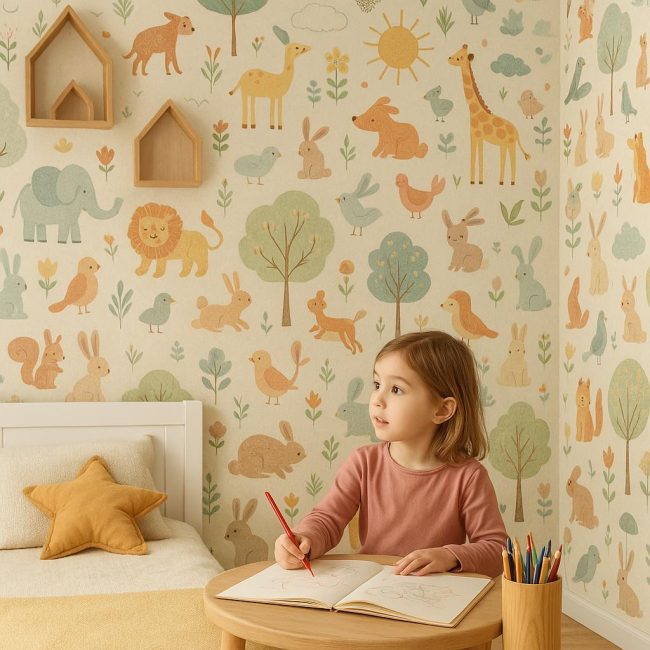
Images of animals, plants, fairy tale characters, or world maps stimulate cognitive interest and develop the imagination. Thematic wallpaper helps children expand their horizons and develop their first knowledge of nature and culture. For example, a world map on the wall not only decorates the interior but also provides a forum for discussions about new countries. Such visual elements transform walls into a unique educational resource, seamlessly integrated into everyday life.
Textured surfaces and sensory development
Wallpaper with a subtle texture enhances sensory perception. By exploring the surface texture with their fingers, children develop fine motor skills and learn to distinguish shapes. Tactile sensations become an important part of perceiving the world around them. Modern materials are also safe and durable, which is especially important for active children.
Space zoning
A child's room often combines several functions: play, study, and relaxation. To delineate these spaces, you can use different wallpapers or color combinations. Bright patterns are ideal for the play area, calm pastel shades for the relaxation area, and neutral and subtle motifs for the study nook. This technique helps the child better navigate the room and forms the right associations with each part of it.
Wallpaper as a creative medium
Wallpaper that allows children to participate in the design of their home is popular today. This can include coloring pages on the walls, or surfaces for drawing with chalk or marker. These solutions foster creativity and give children freedom of expression. They also help update a room's decor without major investment: the designs can be changed depending on their mood or age.
The role of parents in choosing an interior
Choosing a room's design together becomes not only a practical process for the family but also an opportunity for communication. Parents can guide their child, suggesting options that suit their interests and temperament. This interaction builds trust and develops the child's taste. It's important to give the child a voice so they feel responsible for their space.
Practicality and ease of care
Children play actively, explore, and aren't always gentle with their walls. Therefore, practical solutions like washable wallpaper or scratch-resistant coverings are the best choice. This helps maintain a fresh look and makes cleaning easier. Parents can focus on parenting and playtime together, rather than on constant renovations.
Environmental safety
A child's health directly depends on the quality of the materials in their environment. Eco-friendly wallpaper without toxic additives ensures a safe microclimate. Natural finishes allow walls to "breathe," prevent mold, and have a beneficial effect on the room's atmosphere. This is especially important for children with sensitive respiratory systems or allergies.
Individual approach
Every child is unique, and their room should reflect their personality and interests. For one, this might be images of dinosaurs, for another, space or sports themes. When choosing a design, it's important to consider the child's interests and personality, as this is how you create a space that will become a source of inspiration. To achieve this, parents can use collections offering a wide variety of nursery wallpaper, with options for every age and personality.
Aesthetics and functionality in balance
The ideal interior combines beauty and comfort. Wallpaper helps achieve this balance, serving not only as a decorative element but also as a teaching tool. It influences perception, stimulates the imagination, and fosters a sense of style and harmony. At the same time, its practicality and durability make it an indispensable solution for children's rooms.
Conclusion
A child's room is more than just a space; it's a world in which they grow, learn, and develop. Wallpaper plays a key role in creating this world: it sets the mood, develops the imagination, and helps shape their individuality. A well-chosen design guarantees harmonious development and happiness for the child, and creates the foundation for warm memories that will last a lifetime.