Well water supply is a popular and effective way to provide drinking water to private homes and cottages. Recently, such systems have become increasingly popular, allowing property owners to access clean water without relying on centralized water supply systems. However, this approach requires extensive knowledge and the right approach to ensure the long-term and safe operation of the system. In this article, we'll examine the basic principles of well water supply, as well as common problems that may arise during its installation.
The essence of water supply through a well
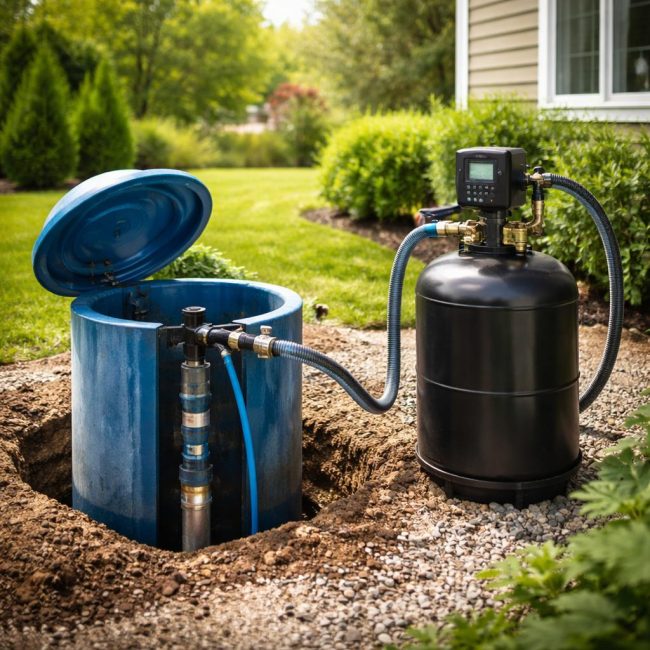
A well water supply system involves drilling a well to collect groundwater, installing pumping equipment, and connecting the water to the home or outbuildings. The main advantage of this method is independence from centralized water supply systems, as well as higher levels of water purification, as it passes through natural filters—layers of soil and sand. At the same time, proper operation of the system is crucial to ensure that the water is not only accessible but also safe for consumption.
One of the main considerations when installing a well water supply is choosing the type of well. Two types are most commonly used for private homes: artesian and Cenomanian wells. Artesian wells draw water from deep underground aquifers, while Cenomanian wells draw water from more surface sources. Each type has its own characteristics, both in terms of cost and water quality.
How does a well water supply system work?
Once the well is drilled, pumping equipment is installed to deliver water from the source to the home. It's important to select the right pump for the well's characteristics, including its depth, diameter, and capacity. This equipment must provide the required pressure and volume of water to meet the household's needs, whether for household use, irrigation, or drinking water.
When using a well for water, it's important to consider its yield—the rate at which water flows from underground sources. Pumping equipment and additional treatment systems, such as filters to remove mechanical impurities, iron, sulfates, and other contaminants, are selected based on this.
Scenarios for using water supply through a well
Well water supply systems are used in a variety of scenarios, such as summer cottages, private homes, farms, and even industrial facilities that require water supply to remote areas. However, each of these applications has its own unique characteristics.
For a summer cottage or country house, a well typically doesn't need to be too deep, as water is needed in moderate quantities. A pumping station capable of supplying drinking and irrigation water is sufficient. Larger country estates or farms require higher water loads and demands, necessitating more powerful pumping units and water treatment systems.
For summer cottages and private homes, shallow wells are often drilled to draw water from upper aquifers. These wells are less expensive, but ensuring a high-quality water supply requires the installation of more complex filtration systems. When organizing water supply systems on farms or in industrial facilities, water supply requirements can be significantly higher, requiring more powerful and reliable solutions.
Limitations and nuances of use
One of the main limitations of well water supply is the dependence on groundwater quality. Wells cannot always provide water of the required quality, and in some cases, complex purification systems will be required, which can be expensive to maintain. It's also important to consider that aquifers can dry up or deteriorate over time, requiring additional costs for drilling new wells or upgrading existing ones.
Another important consideration is compliance with sanitary and environmental standards. Wells should not be located near sources of pollution, such as cesspools or landfills, as this can affect water quality. Well water systems require regular water quality monitoring to prevent contamination and disease.
Common misconceptions and mistakes
One common misconception is that well water is always clean and safe to drink. This is far from always the case, especially if the well is located in an area with contaminated aquifers. In such cases, problems with elevated iron, manganese, or other contaminants may arise, requiring the installation of filters and treatment facilities.
Another mistake is underestimating the importance of regular maintenance of pumping equipment and the water supply system. Failure to replace filters, clean the pump, and perform other preventative maintenance on time can lead to reduced system performance, decreased pressure, or even equipment failure.
Conclusion
Well water supply is a convenient and independent solution for providing clean water to private homes and cottages. However, for the system to operate effectively, many factors must be considered, including well type, equipment, water quality, and water supply needs. Proper selection and operation of a well water supply system will help ensure a reliable and safe water supply for years to come.