When renovating or building, it's important to choose the right wiring to ensure the safety and durability of the system. One of the most pressing issues for builders and electricians is choosing between VVGng and Nym cables. Both types of cables offer specific advantages and features that are important to consider when choosing. In this article, we'll take a detailed look at the differences between these cables, the situations in which they are best suited, and the criteria to consider when using them.
What are VVGng and Nym?
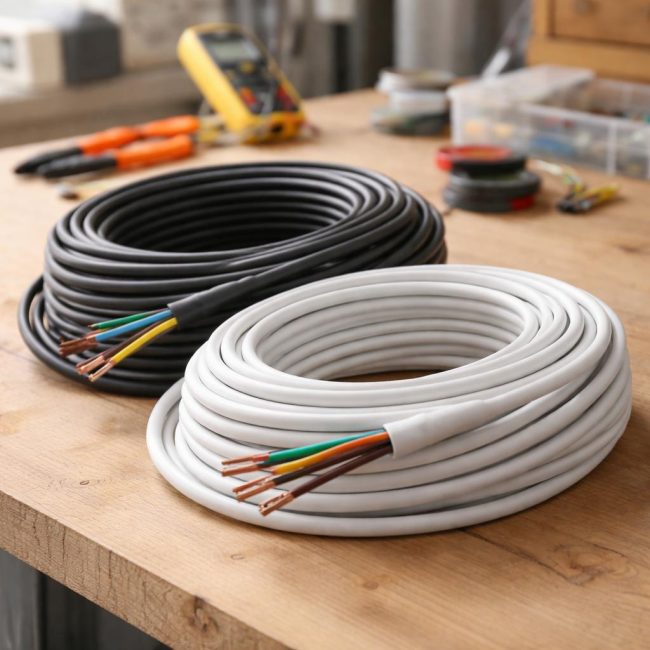
First, it's important to understand what these abbreviations mean. VVGng cable is a wire with copper conductors, PVC insulation and sheath, and is non-flammable (the "ng" indicates low flammability). This cable is used in dry and damp rooms, as well as in areas with a low fire risk. It is one of the most common types of wiring, especially for installation in rooms with normal humidity.
On the other hand, Nym (or NYM) cable is also a multi-core wire with PVC insulation, but it is designed for use in buildings and structures under both normal and harsh operating conditions. Nym is resistant to mechanical damage, moisture, and temperature, making it a versatile choice for a variety of applications. The main difference between Nym and VVGng is their resistance to external influences and application options.
Selection principles: what to consider when comparing?
- Place of application
First and foremost, the choice between VVGng and Nym depends on the installation location. If the wiring is intended for use in dry rooms with minimal loads, VVGng is perfectly suitable. However, for challenging operating conditions, such as rooms with high humidity or areas prone to mechanical damage (e.g., hallways, basements, or industrial areas), Nym is a better choice.
- Resistance to external influences
Nym offers superior protection against external influences. Its sheath is more resistant to mechanical damage, and its insulation is more resistant to various aggressive factors. This makes it more suitable for outdoor wiring and installation in harsh climates. VVGng, on the other hand, is often used for indoor wiring, where mechanical stress on the wire is limited.
- Electrical load
Both cable types can handle varying levels of electrical load, but it's important to consider the specifications for each type. VVGng is typically used for standard household applications, while Nym is often chosen for locations with higher current-carrying capacity requirements.
How does this work in practice?
- VVGngWidely used in residential and public buildings for internal wiring. It is ideal for environments where harsh environmental conditions are not expected. This cable is excellent for powering lighting, household appliances, and low-power devices.
- Nym, in turn, is preferable for outdoor wiring, including wiring in difficult conditions - for example, at construction sites, in boiler rooms, in industrial premises where exposure to chemicals, moisture or frequent mechanical damage is possible.
Advantages and disadvantages
- Advantages of VVGng:
- Low cost
- Good flexibility
- Easy to install
- Suitable for dry rooms and normal household conditions
- Disadvantages of VVGng:
- Limited protection from external influences
- Not suitable for external wiring or areas with high humidity
- Benefits of Nym:
- Higher protection from external influences
- Resistance to moisture and chemicals
- Wide range of applications, including outdoor wiring
- Disadvantages of Nym:
- Higher cost
- Less flexibility compared to VVGng
Nuances of application
The choice between VVGng and Nym should be made based on the expected load on the wiring, operating conditions, and even climatic conditions. For example, if the project involves wiring along external walls or in rooms with high humidity, Nym is best. For standard household wiring in dry rooms, VVGng is perfectly suitable.
Common misconceptions
One common misconception is that VVGng is only suitable for dry rooms and should never be used in damp areas. This isn't entirely true. If the wiring is installed in a moderately humid area where it won't be exposed to direct moisture (for example, a well-ventilated basement), VVGng may be adequate. However, in high-humidity environments or areas prone to mechanical damage, Nym is a better choice.
Conclusion
Both cable types—VVGng and Nym—have their own characteristics and are used depending on operating conditions. It's important to remember that the choice between them depends on the specifics of your project: Nym is ideal for outdoor and harsh environments, while VVGng is the better choice for standard indoor wiring.