Synthetic materials are increasingly being used in modern construction and engineering systems to ensure durability, watertightness, and environmental safety. One such solution is geomembranes (HDPE, LDPE), a catalog of which can be found at [https://www.geomembranes.com/]. These film-based waterproofing materials are characterized by high strength, chemical resistance, and a wide range of applications. These materials have become an integral part of engineering structures, from solid waste landfills to decorative ponds in private yards.
- What are geomembranes and why are they important?
- Main areas of application of geomembranes
- Environmental protection: solid waste landfills and chemical storage facilities
- Waterproofing of reservoirs and canals
- Industrial and road construction
- Hydropower and dams
- Protection of tunnels and underground structures
- Advantages of HDPE and LDPE geomembranes
- General advantages:
- Differences:
- Installation and operation of geomembranes
- Conclusion
What are geomembranes and why are they important?
Geomembranes are thin but durable polymer-based roll films. Two types are most common: HDPE (high-density polyethylene) And LDPE (low density polyethylene)They vary in flexibility, mechanical strength, and resistance to aggressive substances, allowing you to select the optimal solution for specific tasks.
Geomembranes (HDPE, LDPE) are used as a waterproof barrier, preventing liquid or gas leakage into the environment. This makes the material widely used in the construction of hydraulic, industrial, and environmental facilities.
Main areas of application of geomembranes
Geomembranes are used in dozens of applications. Below are key areas where they are particularly effective:
Environmental protection: solid waste landfills and chemical storage facilities
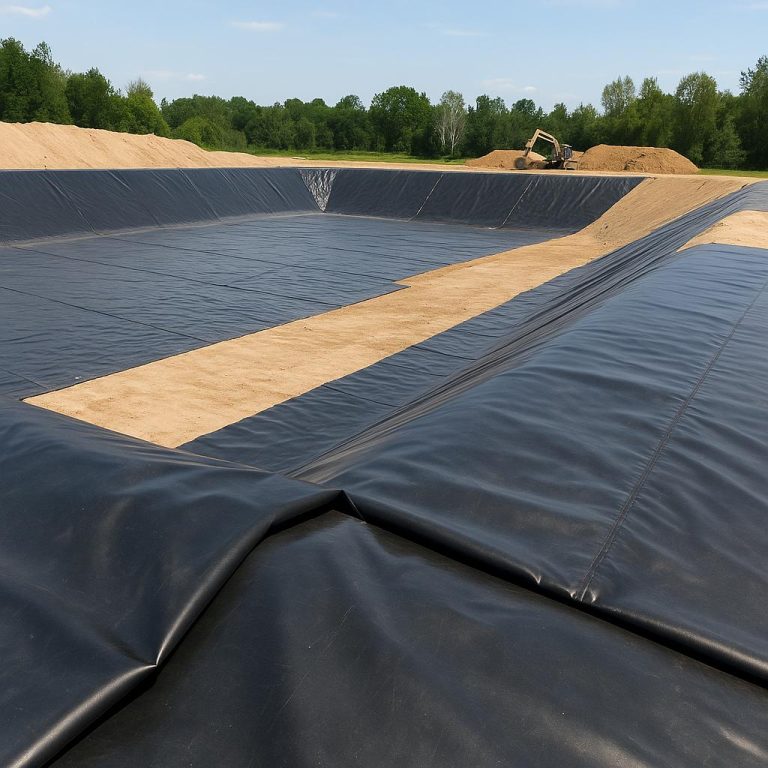
One of the most important functions of geomembranes is to prevent soil and groundwater contamination in solid waste landfills, sludge, and settling basins. The geomembrane is laid on the bottom and sides of the excavation pit, creating a sealed reservoir. Even aggressive leachates containing heavy metals are prevented from penetrating the soil thanks to the barrier properties of HDPE.
In addition, geomembranes are used in the construction of storage facilities for liquid waste, including wastewater from chemical and food industries, manure storage facilities in agricultural enterprises, and tailings storage facilities in the mining industry.
Waterproofing of reservoirs and canals
Artificial reservoirs, ponds, swimming pools, and irrigation canals require effective waterproofing. Geomembranes allow for the creation of durable and watertight reservoirs, preventing water leakage and bank erosion. Unlike clay or concrete, the membrane allows for quick installation and reliable protection without the need for complex construction work.
HDPE geomembranes with a textured surface additionally improve adhesion to the soil, which is important for slopes and sloping areas.
Industrial and road construction
In road construction, geomembranes are used as an element of multilayer pavement structures. They prevent capillary rise of moisture, protect the road base from erosion, and improve the durability of the road. In industry, membranes are used to waterproof foundations, chemical processing plants, and fuel and oil tanks.
In projects where there is a risk of contact with aggressive substances, HDPE is preferred, as it is more resistant to ultraviolet radiation and acids.
Hydropower and dams
Geomembranes are becoming an essential element in the construction of dams, hydroelectric power plants, and reservoirs. Their use not only creates a watertight barrier but also significantly reduces construction costs by eliminating the need for massive concrete structures. Geomembranes easily adapt to the terrain, simplifying design.
Protection of tunnels and underground structures
Waterproofing underground structures is another important application for geomembranes. When constructing subways, underground passages, and utility tunnels, it's essential to prevent groundwater infiltration. Using geomembranes allows for a reliable and effective solution to this problem.
Advantages of HDPE and LDPE geomembranes
The choice between HDPE and LDPE depends on the operating conditions. Both types offer a number of common and unique advantages:
General advantages:
- 100% waterproof;
- chemical resistance;
- long service life (up to 50 years or more);
- high tensile and puncture resistance;
- ease of installation and welding.
Differences:
- HDPE has higher mechanical strength, is resistant to ultraviolet radiation and aggressive chemicals, but is less flexible.
- LDPE It is more elastic and easy to lay on uneven surfaces, but is inferior in terms of durability and strength.
Thus, HDPE is chosen for landfills and tanks with aggressive liquids, and LDPE is chosen for decorative objects or places with a large number of bends.
Installation and operation of geomembranes
Geomembrane installation requires adherence to specific technologies. Hot welding using automated equipment is typically used. This ensures the tightness of the seams and the integrity of the structure.
It is important to follow the following principles:
- preliminary preparation of the base (leveling, removal of stones and roots);
- use of geotextiles as a substrate;
- checking the tightness of the seams after installation;
- protection against mechanical damage during operation.
Periodic inspections and damage prevention can extend the life of the membrane and reduce the risk of leaks.
Conclusion
Geomembranes (HDPE, LDPE) are a vital tool in the arsenal of a modern engineer, builder, or environmentalist. Thanks to their unique physical and chemical properties, they provide reliable protection against moisture and aggressive environments, while also preventing environmental pollution. Their application spans dozens of areas, from landscaping private properties to strategic industrial facilities. Selecting high-quality materials and proper installation are key to the durability and efficiency of the entire structure.
If you are working on a project that requires tightness and protection, it is worth paying attention to geomembranes (HDPE, LDPE) — a universal and reliable solution to any engineering problem.