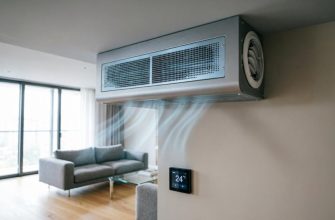
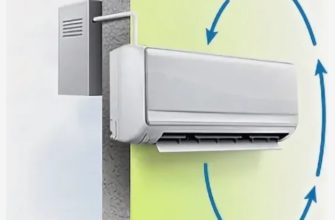
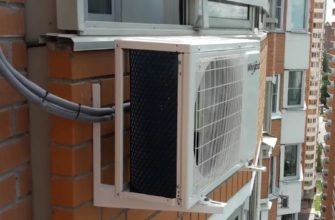
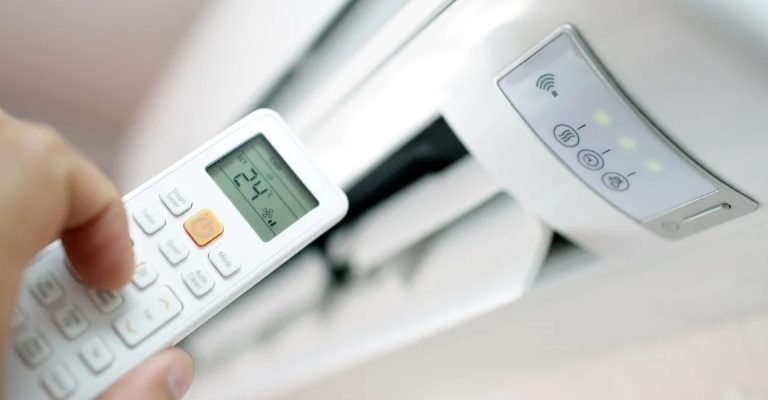
The standard operating principle of an air conditioner is based on a fan drawing warm air from the room and then directing it to blow onto the evaporator heat exchanger, which is cooled by freon. The refrigerant absorbs the heat, which is then released through the system to the outside. Cooled air flows back into the room.
While operating on the same principle, an air conditioner can be switched to heating mode. We'll discuss how to do this in this article. We'll cover in detail the classification of air conditioners, their design, selection guidelines, and maintenance nuances.
At the end of the article, a rating of popular models and answers to frequently asked questions are provided.
- Classification of air conditioners
- Window models and monoblocks
- Split system
- Multi-split systems
- The structure, diagram, modes and operating principle of air conditioners
- Operating modes
- What type of air conditioner to choose, how to maintain it
- Rating of popular air conditioning models
- The best floor-to-ceiling models of the past seasons
- Hyundai H-ALC3-18H
- Shivaki SFH-184BE/SUH-184BE
- The best inverter split systems of 2023 on Yandex Market
- Electrolux EACS/I-09HM/N3_15Y
- Mitsubishi Heavy Industries SRK20ZSPR-S / SRC20ZSPR-S
- Panasonic CS/CU-BE25TKE
- The best mobile all-in-one PCs of 2023 on Yandex Market
- Electrolux EACM-10HR/N3
- Timberk T-PAC09-P09E
- Zanussi ZACM-12SN/N1
- Video materials
- Answers to frequently asked questions
Classification of air conditioners
To understand the classification of equipment, let's first define what an air conditioner is in the general sense. This definition refers to climate control equipment used to maintain a set air temperature in an enclosed space.
According to the installation type, air conditioners are of 3 types:
- Household, installed in an apartment, private house, small office.
- Industrial, for installation in enterprises, retail outlets, government institutions.
- Automotive, for installation on vehicles.
All three types of air conditioning equipment operate on the same principle. We're interested in household models, which have their own classification.
Step-by-step instructions for self-help installing an air conditioner in an apartment or a private house.
Window models and monoblocks
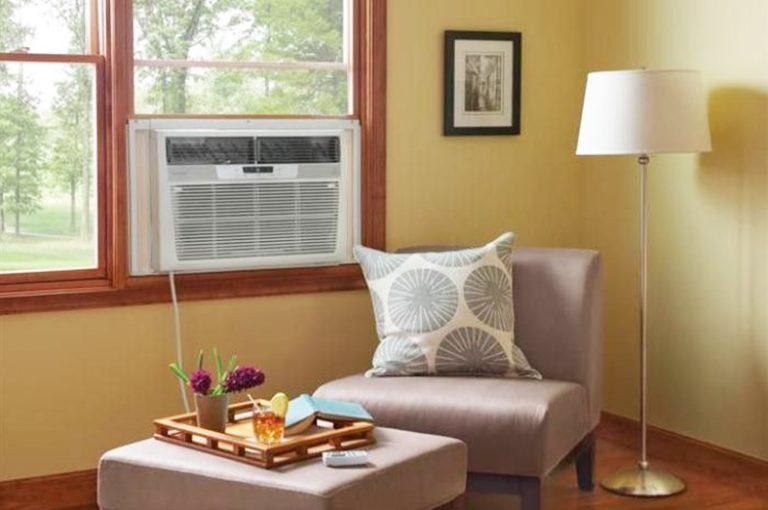
Compact technology created for air conditioning one roomStationary window models are designed for installation in a window opening in place of glass or a transom.
A corrugated duct is used to exhaust hot air outside. The hose is usually routed through a window or a prepared hole in the wall.
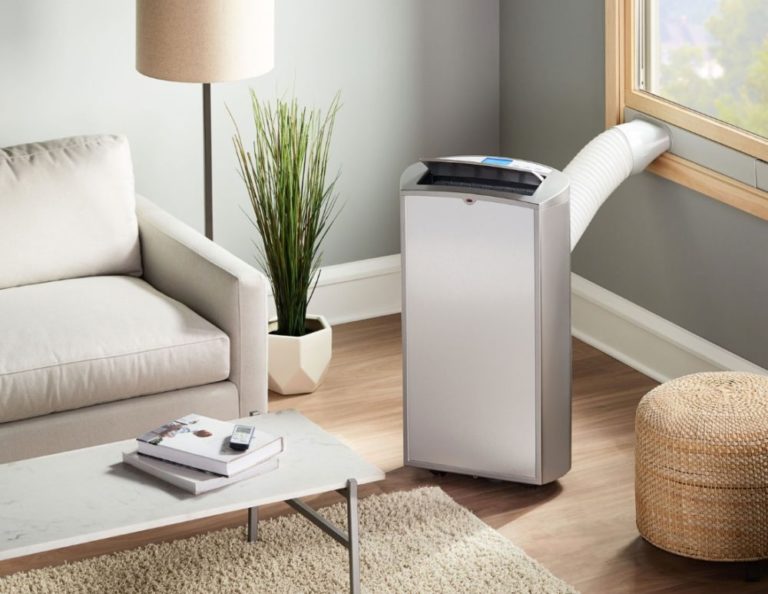
Mobile and window air conditioners are inexpensive and consist of one unit.
The disadvantages include a high noise level. The sound of the compressor running can be heard in the room.
Split system
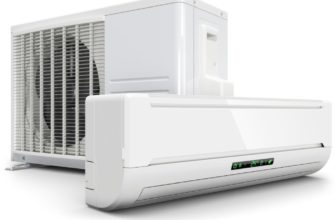
Climate control equipment consists of at least two blocks - external and internalThe compressor and fan are located outside, reducing indoor noise levels. The indoor unit is equipped with silent operating components.
Split systems are characterized by multifunctionality and increased productivity, which makes the equipment popular for installation in residential premises.
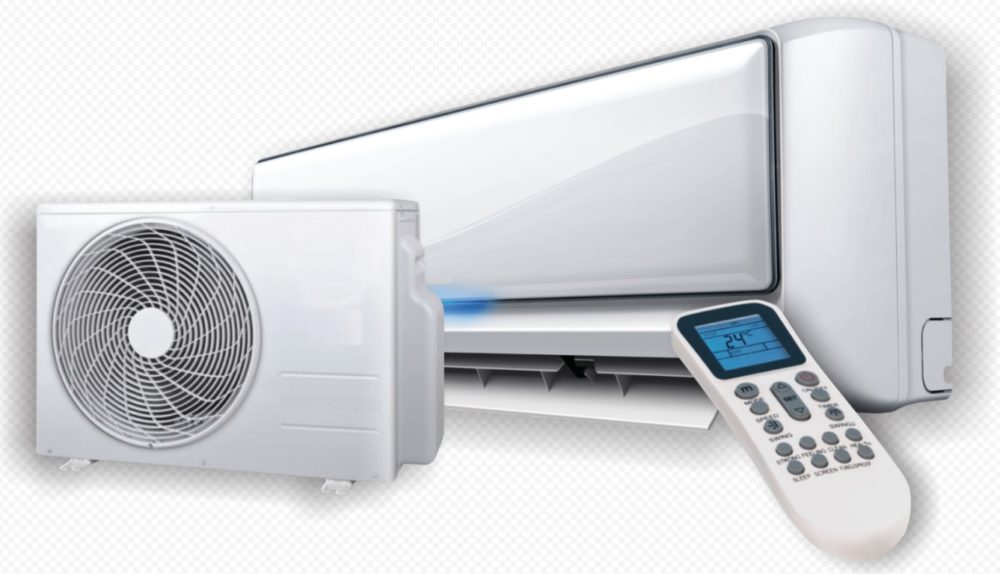
There are 4 types of split systems:
- Wall-mounted. Mounting the units on the wall is convenient for saving space.
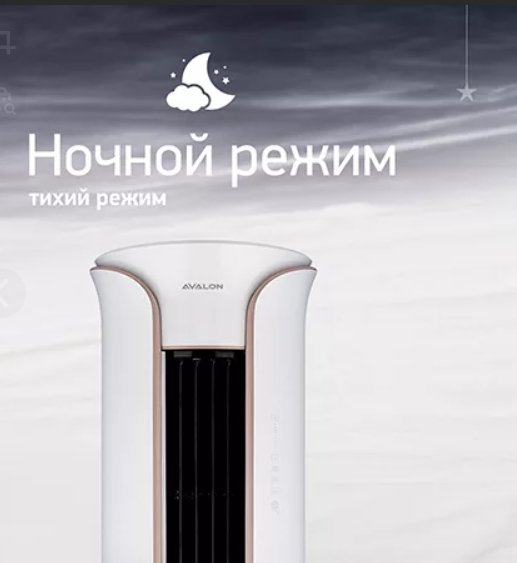
- Floor-standing and column-mounted units. Units take up space, but are easier to install and distribute air more evenly throughout the room.
- Floor-to-ceiling. Units can be installed on the floor or under the ceiling.
- Ducted. The units are connected to each other by air ducts. Long ducts are installed under suspended ceilings in large apartments and houses.
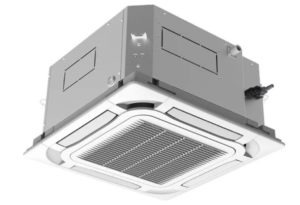
- Cassette. Split systems have cassettes installed instead of air ducts to supply air through the opening of the indoor unit.
Cassette split systems are in demand at enterprises where it is necessary to blow cold air air work objects. It is relevant for household use. wall, floor and channel equipment.
Multi-split systems
The equipment is a split system, but it is different number of indoor unitsThere is still only one outdoor module with a compressor.
It is connected to it 2, 3 or more indoor units, the number of which is determined by the power of the equipment.
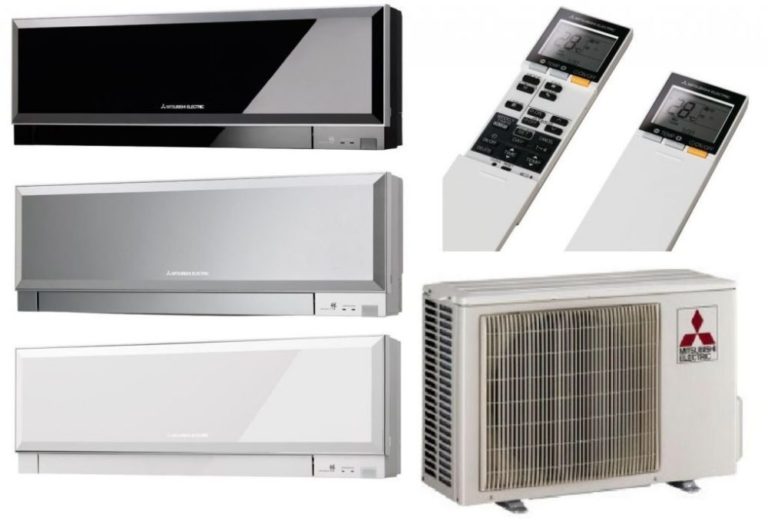
Multi-split systems are more cost-effective and technically efficient. Only one module will be exposed to the building's exterior, requiring a single hole to be drilled in the wall.
Indoor units can be placed in each room, but they will all operate in the same mode.
The structure, diagram, modes and operating principle of air conditioners
To understand how an air conditioner works, let's look at the main components of the air conditioning system. In window and portable models, these components are installed within a single unit.
In split and multi-split systems, the working units are distributed in the external and internal modules.
Indoor unit complete set:
- automation;
- air filters;
- evaporator;
- fan for blowing air over the evaporator heat exchanger.
Outdoor module package:
- compressor;
- automation;
- capacitor;
- four-way valve;
- fan;
- filter drier;
- condensate drain pipe.
The indoor and outdoor units are connected by a pipeline and electrical cable. A drain pipe is routed outside to remove condensate. The system is filled with freon.
The design of a mobile and window air conditioner is similar, but the condensate is removed into a separate tank or onto a hot condenser for instant evaporation.
The next step is to understand how a traditional air conditioner works:
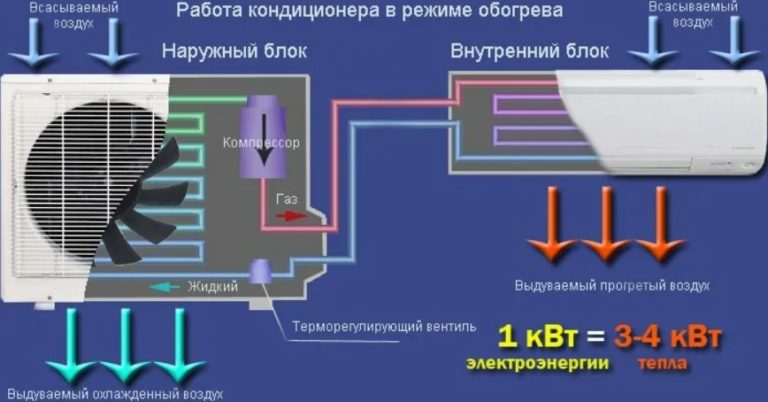
- The compressor compresses the refrigerant and forces it in a gaseous state under pressure from the evaporator to the condenser.
- Gaseous freon in the condenser is cooled by air and condenses.
- As the refrigerant passes through the throttling unit, its pressure and temperature drop sharply. Some of the liquid freon transforms into a gaseous state.
- The cooled refrigerant is directed into the evaporator heat exchanger, which is blown by a fan. The air absorbs the coolness and enters the room. Part of the liquid freon, absorbed from the room's air, boils, turns into a gas, and is directed into the compressor. The cycle repeats.
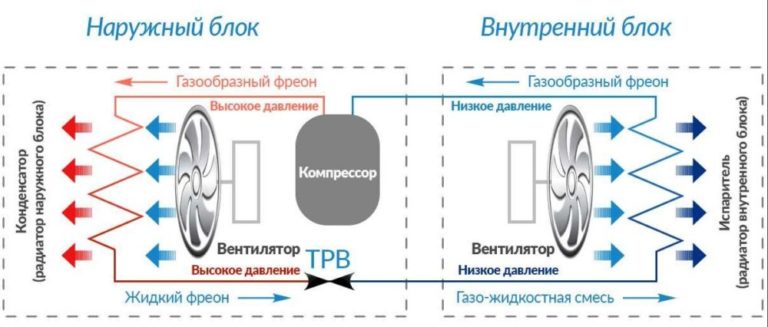
Traditional air conditioning systems operate on an on/off switch. When the set temperature is reached, the equipment automatically switches off.
Switching to standby mode wears out working components. Power consumption increases due to starting currents.
The operating principle of an inverter air conditioner differs from that of traditional climate control equipment. absence of on/off cycles.
After reaching the set temperature parameters, the compressor with the fan reduces speed. Less electricity is consumed, the working units last longer.
Traditional and inverter split systems operate on the principle of air recirculation. The units process air flows drawn in by the fan from the room.
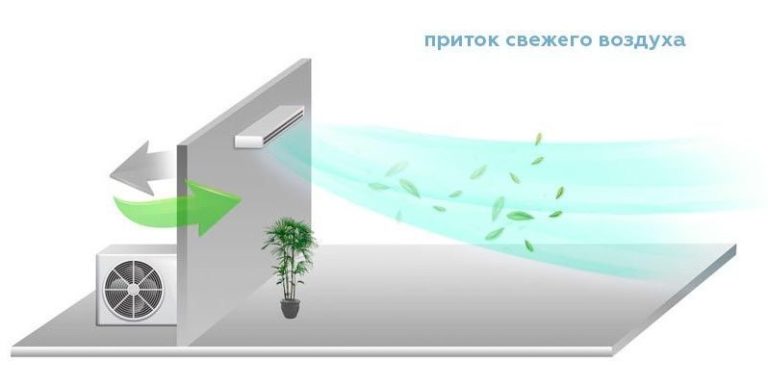
Supply air systems are designed to bring fresh air from outside into the building. The outdoor unit draws in outside air with a fan and directs it into an insulated duct.
Inside the mixing chamber, fresh air is combined with room air, passes through a filter, and is directed into the room. The flow is simultaneously cooled or heated by the compressor, depending on the selected operating mode.
Operating modes
Cooling mode is the default setting for all air conditioners. Manufacturers offer additional options to expand their functionality.
In the air dehumidification mode, the operating principle of the cooling equipment is used, but the fan speed is reduced.
The cooled evaporator heat exchanger, exposed to warm room air, doesn't have time to release all of its coolness into the air flow. This increases the condensation effect, which is discharged through the drain pipe to the outside rather than entering the room as vapor.
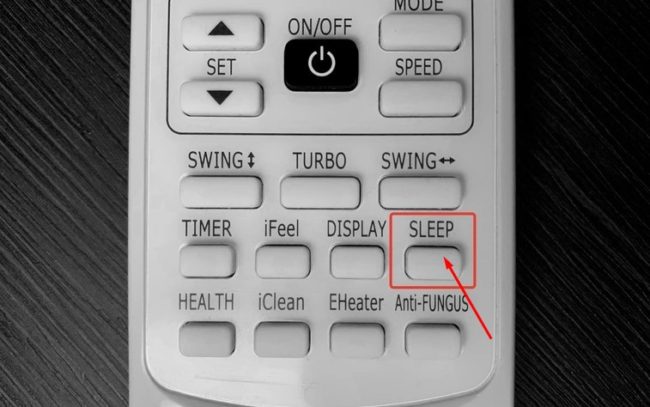
Budget models in dehumidification mode continue to partially cool the room due to the compressor running.
This option is not suitable for winter use, when it's necessary to reduce indoor humidity without heat loss. The advanced "dryer" is installed in expensive air conditioners.
The unit is made of a hybrid heat exchanger with a valve that regulates the refrigerant pressure in the condenser.
The freon, divided into two parts, cools one half of the heat exchanger while simultaneously heating the other. As the fan blows over the evaporator, the air maintains a temperature balance.
The ventilation mode is typically installed in all models and resembles a fan. The compressor stops pumping freon, and only the fan moves air with its blades.
What type of air conditioner to choose, how to maintain it
Choose the type of air conditioning equipment based on what you want to get from it. For a small room or a rented apartment, window model or monoblock.
Prefer a split system for your own apartment and private houseInstall equipment for each room so that it operates in an individual mode.
The disadvantage of a split system is the need to install several outdoor units to air condition each room.
It's more economical to install a multi-split system. The disadvantage is internal modules will operate in the same mode.
Don't skimp on the following parameters:
- the presence of coarse and fine filters will clean the air from allergens, dust and microbes;
- a compressor power selected according to the area of the room to be cooled with a small reserve will result in an increase in the service life of the equipment;
- in terms of noise level for home use, comfortable equipment with a value of 25-32 dB;
- Inverter air conditioners consume less electricity and last longer.
You can change the dead batteries in the remote control yourself.
Rating of popular air conditioning models
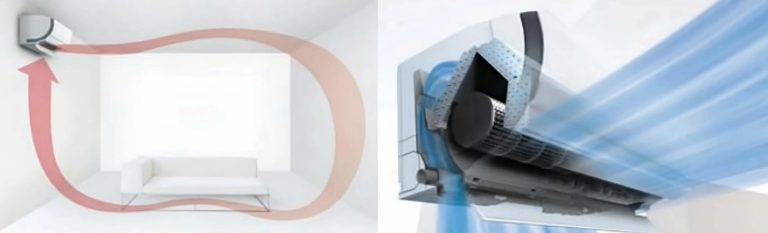
Floor-to-ceiling split systems and monoblocks are the most popular among consumers.
The equipment can be seen installed in private homes, apartments, offices and other public spaces.
The popularity of this equipment is explained by its multifunctionality, high performance, and ease of operation.
The best floor-to-ceiling models of the past seasons
In a private home or apartment, floor-to-ceiling air conditioners are most often installed. These units are designed for domestic use.
Manufacturers have provided a list of convenient functions that are most in demand for ensuring a comfortable microclimate in living spaces.
Floor-to-ceiling units are equally popular with office owners. Using compact, efficient split units allows for organized workspaces.
The ranking features air conditioners that have proven themselves to be reliable. These models are gradually being phased out of the market, but are still available in retail outlets.
Hyundai H-ALC3-18H
The equipment is designed for air conditioning residential and office spaces. It operates in both cooling and heating modes.
The cooling and heating capacity (5.3 kW/5.9 kW) is sufficient to service a room with an area of 52 m2.
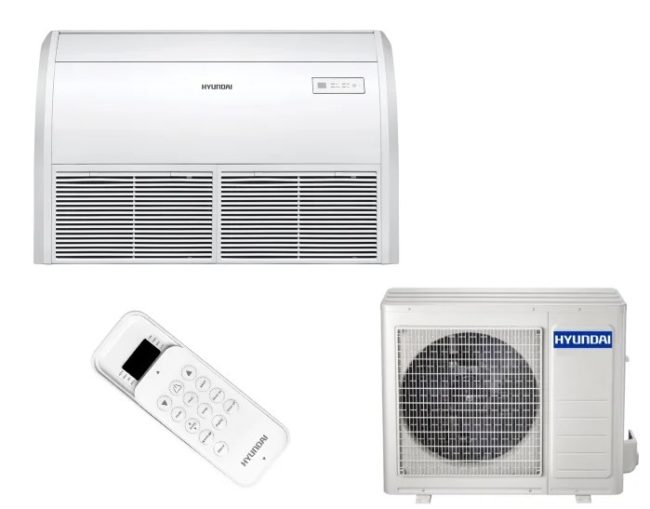
The manufacturer has provided the most practical features: adjustable air flow, dehumidification/ventilation mode, automatic temperature control, and noise reduction. A self-diagnostic system and an "Anti-Ice" function are also included.
Pros and cons:
- Low noise level of the indoor unit 34-41 dB.
- Large air conditioning area.
- Heating operation at minimum outdoor temperature - 15OWITH.
- There is no supply of fresh air.
- Small manufacturer's warranty of 1 year.
- There is no air purification system.
The split system has nothing superfluous, only useful functions. The equipment took first place in the rating for price/quality ratio. The average price of the model is 64,450 rubles.
Shivaki SFH-184BE/SUH-184BE
The manufacturer managed to combine two important qualities in the equipment: high performance and compact units.
The model is designed to air condition 53 m2 area. Works equally well in an apartment, a private house, an office, and a small retail outlet.
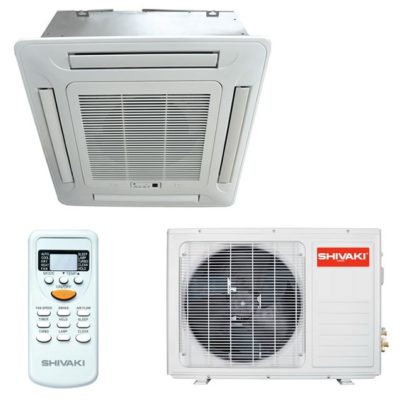 Cooling/heating capacity: 5.3 kW/5.9 kW. Indoor units of other types, but of corresponding power, can be connected to the outdoor unit.
Useful features include dehumidification, ventilation, a timer, and air flow adjustment. It also features an economy mode, self-diagnostics, and an anti-ice system.
Advantages and disadvantages:
- Universal outdoor unit.
- Low operating noise of the indoor unit 38-44 dB.
- Possibility of operation in heating mode at outside temperature of -7OWITH.
- There is no air filtration system.
- There is no provision for air intake from the street.
- Not enough features, according to demanding users.
The durable split system was highly rated by apartment and home owners. The average cost 44,000 rubles.
The best inverter split systems of 2023 on Yandex Market
New products always attract buyers, but technology that has recently entered the market has been little tested in practice.
This rating features models that users have already tested and rated. Inverter split systems satisfy the needs of even the most demanding and discerning consumers with their useful features.
The equipment is up to 50% more energy efficient in operation compared to traditional air conditioners.
Electrolux EACS/I-09HM/N3_15Y
The model is designed to air condition a room with an area of 25 m2The external and internal units can be connected via lines up to 20 m long, allowing for convenient placement on the building's walls.
In winter, the split system is capable of cooling and heating at outdoor temperatures down to -15OWITH.
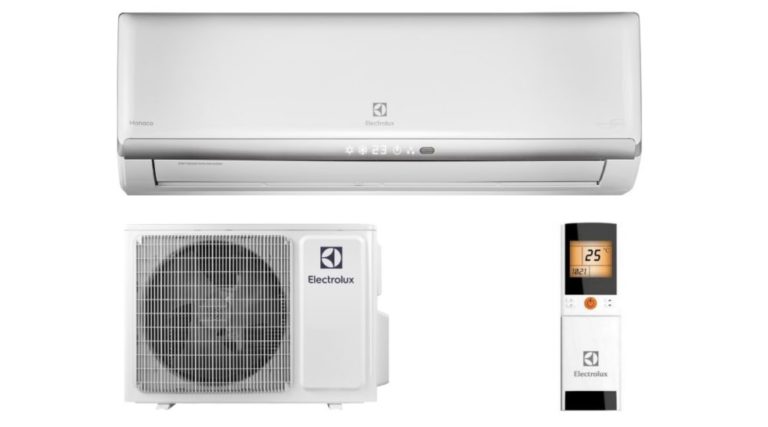
At full power, the device consumes 775 watts of power per hour of operation. In economy mode, power consumption drops to 120 watts.
The presence of a deodorizing filter is positively assessed by owners of apartments and houses where the air needs to be cleared of cigarette smoke and other unpleasant household odors.
Advantages and disadvantages:
- Economical energy consumption.
- Possibility of operation at low outdoor temperatures.
- The noise level of the operating unit does not exceed 23 dB.
- The remote control buttons are not backlit.
- The price of the new product is too high.
Equipment is being sold at a discount on Yandex Market. for 37,900 rublesThe initial price of the model after its appearance on the market was set at 53,700 rubles.
Mitsubishi Heavy Industries SRK20ZSPR-S / SRC20ZSPR-S
Powerful equipment is capable of creating an air flow of 10.1 m3/min. The external unit is designed to operate in extreme conditions at temperatures of -15OWITH.
In heating mode, the equipment operates when the temperature outside is down to -20OEnergy consumption in cooling mode reaches 790 W/hour. When switching to heating mode, the split system consumes 545 W per hour of operation.
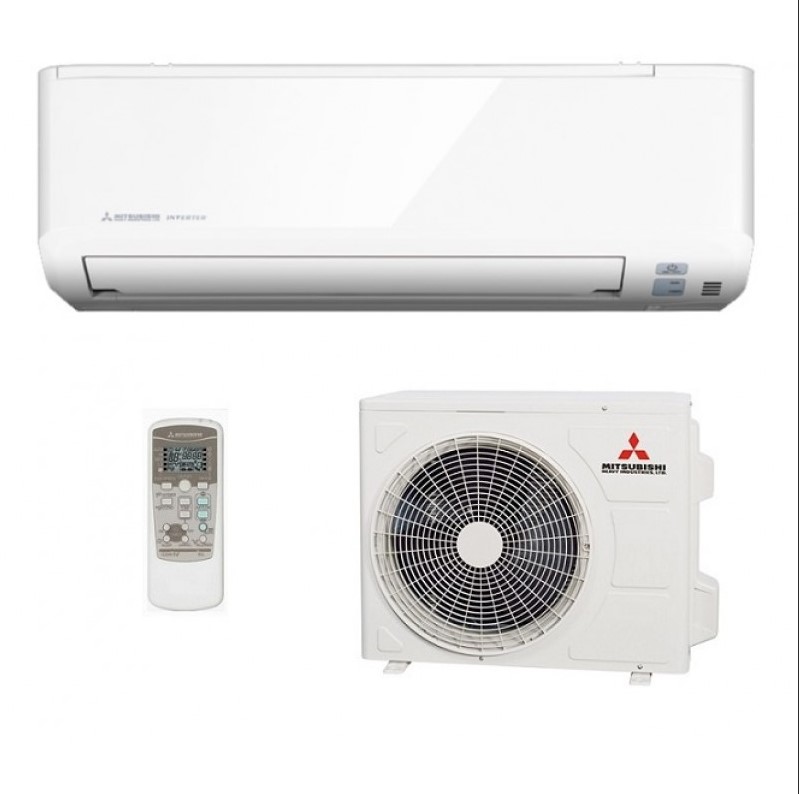
The model is suitable for home and office use, but there is one caveat: the operating unit reaches 45 dB.
The equipment will create discomfort in the library, recreation room and other places where silence is desired.
Pros and cons:
- The ability of the outdoor unit to operate at extremely low temperatures.
- Durable compressor.
- 3 years manufacturer's warranty.
- Noisy block.
- Overpriced.
Users rated the model 5 stars on Yandex Market. The equipment is sold at price 74,900 rubles.
Panasonic CS/CU-BE25TKE
The manufacturer offers a series of air conditioning units with a capacity of 2-5 kW. The split system's reliability is confirmed by a 3-year warranty.
The manufacturer also provides a 5-year warranty on the compressor. The outdoor unit is designed to operate in outdoor temperatures down to -15°C.OWITH.
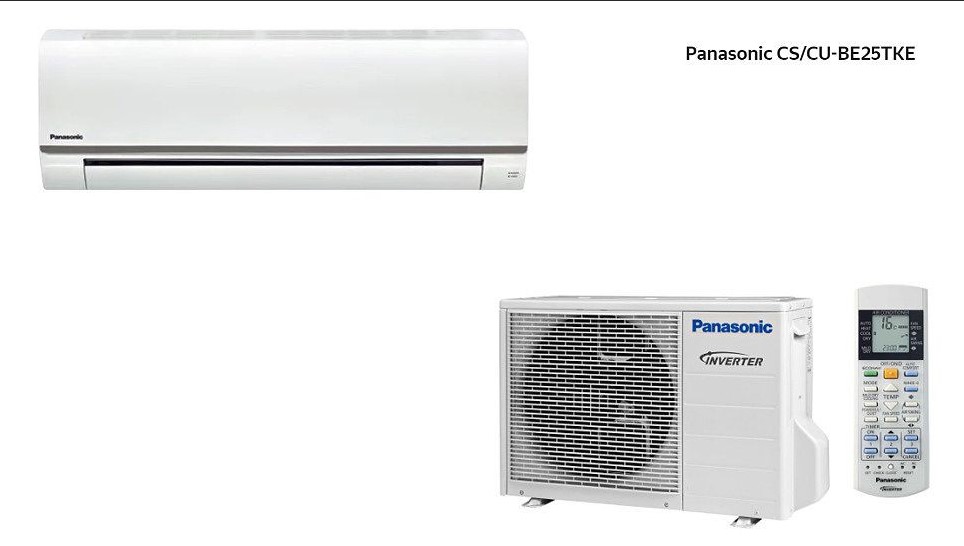
In cooling mode, the equipment operates until the temperature inside the room drops to +5OWITH.
The air conditioner's build quality is high, as is its ease of use. The unit operates at maximum noise level at 37 dB.
When the load is reduced to minimum values, the noise level decreases to 20 dB.
Advantages and disadvantages:
- Availability of Wi-Fi module.
- Night mode, self-diagnosis function.
- High-quality air filtration.
- Overpriced.
- Not always available on Yandex Market.
The average cost of smart Japanese technology is 67,860 rubles.
The best mobile all-in-one PCs of 2023 on Yandex Market
In terms of operational functions and ease of use, mobile equipment is inferior to full-fledged split systems.
However, demand for equipment is growing among summer residents, owners of small apartments and private houses.
The mobile all-in-one unit requires no complex installation. This appliance is ideal for cooling rental spaces.
Electrolux EACM-10HR/N3
The model is designed to air condition a room with an area of 25 m2The manufacturer has provided cooling, heating, dehumidification and ventilation modes.
The compressor unit weighs 27 kg and can be easily installed in any available space in the room. Features include single-stage air purification, night mode, self-diagnostics, and intensive cooling.
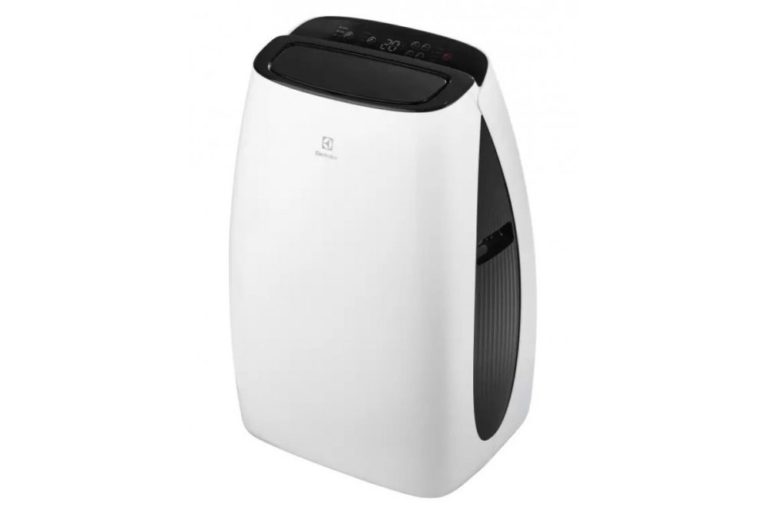
An indicator will indicate when the tank is full of condensate. Air is purified through a filter that requires periodic rinsing under running water.
The presence of a timer allows the user to regulate the operating time and set convenient parameters.
Advantages and disadvantages:
- The kit includes a corrugated air duct.
- The unit is equipped with wheels and can be easily rolled across the floor.
- Availability of night mode.
- The bulky unit takes up space in the room.
- The noise level of the operating compressor is 75 dB, which creates discomfort in the room.
The average price of an all-in-one PC on Yandex Market is 35,900 rubles.
Timberk T-PAC09-P09E
The mobile unit is designed to create a favorable microclimate in a room with an area of 25 m2Built-in cooling, dehumidification and ventilation functions.
The user can make settings using the remote control or touch buttons on the unit. The unit is equipped with wheels for easy movement between rooms.
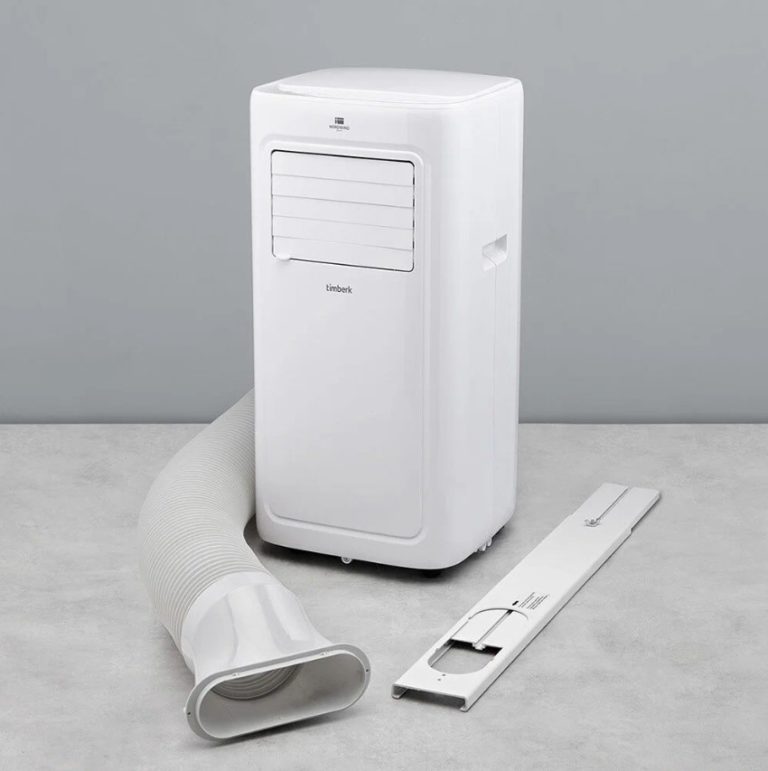
The built-in removable air filter should be washed under running water as it gets dirty.
To remove hot air, the corrugated pipe must be properly routed outside according to the manufacturer's recommendations to achieve the fastest possible cooling of the room.
Pros and cons:
- Powerful air flow of 5.3 m3/min.
- Touch button control.
- Complete with mounting bracket with corrugated air duct.
- High noise level 60 dB.
- Short wire for connection to the socket.
- Intensive cooling is possible at an outside temperature of at least +31OWITH.
The mobile device is available on Yandex Market 21,200-23,990 rubles.
Zanussi ZACM-12SN/N1
A powerful mobile unit will cool a room up to 35 m2, while its weight does not exceed 24 kg. The compressor creates an air flow of 5.83 m3/min.
A self-cleaning function and a dehumidifying mode are included. The power cord has been extended to 1.9 m, making it convenient to plug into a wall outlet without an extension cord.
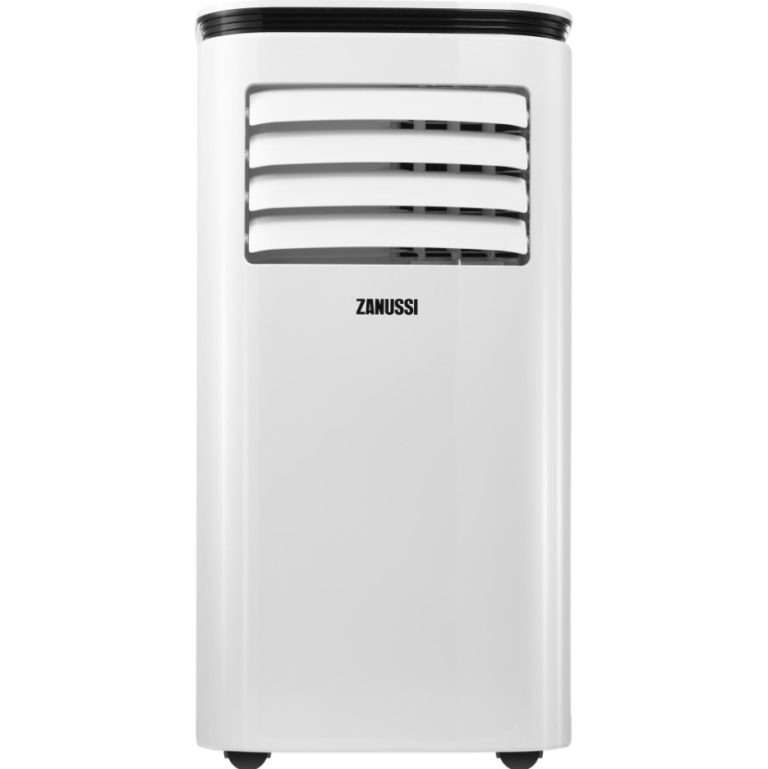
A dust filter is installed to purify the air. Condensate drips onto a hot condenser and evaporates immediately. The user can set the duration of the modes using a timer.
Advantages and disadvantages:
- Electronic and mechanical control.
- Large cooling area.
- When the all-in-one unit is not working, the room temperature continues to be shown on the display.
- Poorly designed and weak fastening of the corrugated air duct to the frame.
- The block must be installed with an indentation of 50 cm from the building’s structural elements.
The price of a monoblock on Yandex Market varies from 30,990 to 43,200 rubles.
Video materials
Answers to frequently asked questions
The indoor unit draws air from the room through openings on the front panel and then recirculates it back into the room after processing. Models with an air supply function are designed to be connected to an external air source, such as a ventilation system.
The operating principle is as follows. Air drawn from the room by the fan is directed into the unit to blow air over the evaporator heat exchanger. The evaporating freon absorbs heat and releases it outside. The cooled air returns to the room.
Technically, an air conditioner and a split system are the same equipment. In terms of configuration, an air conditioner may consist of a single unit. Mobile units are installed indoors. A split system has at least two units—an outdoor unit and an indoor unit.
After the warm air cools, condensation forms in the heat exchanger area due to the temperature difference.
An open window increases the load on the compressor and fan while the air conditioner is running. These components wear out faster, increasing energy consumption.