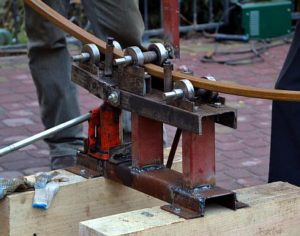
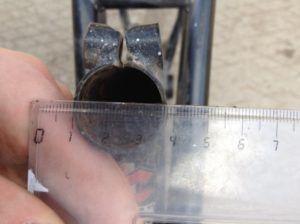
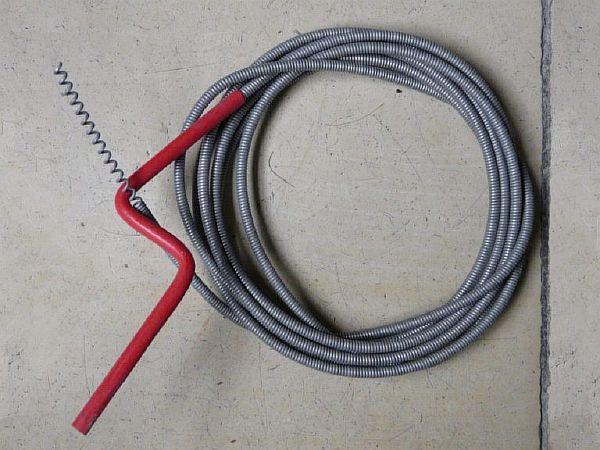
To cut threads, the die or die stock is securely clamped in a holder with a handle. To make it easier for the tool's cutters to make the first cuts, a chamfer is removed from the edge of the workpiece. The die is centered on the workpiece and, using the handle, is smoothly screwed onto it. All working surfaces must be lubricated.
Repairs or utility line replacements are impossible without cutting into the pipeline. Welding was previously used for this task, but it's quite labor-intensive, and using welding equipment on a pipeline requires a high level of qualification.
Welding could be used for rolled metal pipes, but what happens when you need to join two pipes made of different materials? This is where threading and joining comes in. What threading is, how it's performed, and what tools can be used will be discussed in detail in the material below.
Types of threaded connections
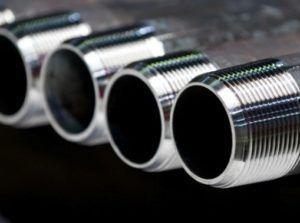 First of all, it's worth noting that no special skills are required to perform these tasks. However, it is important to be able to distinguish between the different types of threads on a pipe. For example, it's important to distinguish between inch and metric knurling, and left-handed and right-handed. While there are many different types, these are the most commonly used—inch and metric.
The distinctive characteristics of the inch and metric types are as follows.
Inch thread type on pipes:
- All items are measured in inches.
- The presence of a profile in the shape of an isosceles triangle with an angle of 55 degrees at the upper corner.
- The pitch is large. Consequently, this profile is larger and this type of cutting is characterized by greater strength.
Metric type:
- All elements are measured in millimeters.
- The profile is distinguished by the shape of an equilateral triangle.
- Smaller step.
Cutting on water supply pipes is done in inch units, while for fasteners, measurements are taken in mm.
Below we will consider what types of carving there are.
- Right-handed. This means the nut is tightened onto the bolt clockwise.
- Left. In this case, the nut is tightened in the opposite direction.
High-quality cutting of a pipe can only be achieved if the drill or rod size for making the hole is selected accurately.
Advice: Experts recommend selecting a rod with a volume 0.003 cm smaller than the external thread dimensions.
Each pipe thread is characterized by individual parameters, which are regulated by GOST 621181.
For example, according to GOST requirements, a tapered thread is distinguished by the protrusion of the threads. These regulations also define the groove during cutting. GOST 621181 also defines the cutting profile.
Required equipment
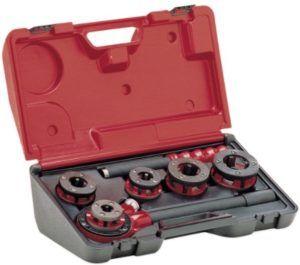 Only a special tool is used for cutting. This tool is called a pipe cutting kit.
This pipe kit typically consists of:
- pairs of dies or die stocks used for processing pipe materials of different diameters;
- A holder with a ratchet (although it may not). A die or stamp is inserted into it.
This kit may also include some additional tools, such as pliers, a clamp, and so on.
We will talk about all these tools in more detail later.
Hand tools - tap
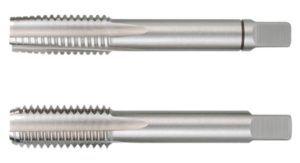 Tapping a pipe thread is used to create threads inside products. This type of equipment consists of screw-shaped tools. A tap cuts flutes in a pipe. This tool is equipped with a shank that is attached to a machine or tapping tool. Taps come in various sizes, types, and gauges.
When cutting, a set consisting of a pair of taps is used. They differ in the cutting depth. For example, the first number is used for roughing, and the second number is used for finishing.
Using the plate
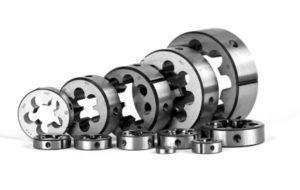 Cutting dies are also called dies. This cutting device is essentially a nut with holes in it. These holes create the edges for the cuts.
Depending on the shape of the cutting dies, there are:
- round;
- sliding;
- cut;
- whole.
Using a device such as a die, you can quickly prepare any type of tubular product for connection.
The die must be aligned strictly perpendicularly with the end face of the tubular product. Misalignment can result in thread stripping or a change in thread diameter. In either case, the final result will be unsatisfactory.
It's recommended to work smoothly and without jerking when using the die. While using this tool, periodically lubricate the cutters and the surface of the threads.
After completing the final turn, the die must be returned up and the threads must be run through again.
Using the club
A die stock is no less effective than a die stock. This cutting tool is a more modern and versatile tool. It consists of a holder with grooves that accommodate replaceable cutting tools, which can be easily replaced if they become dull during use.
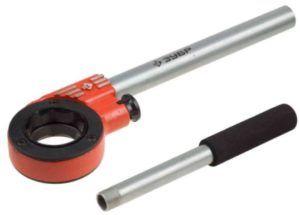
A distinctive feature of this carving device is the minimal effort required by the operator. It's also worth noting that working with this device is much safer than with other similar tools. This is because the die holder is equipped with internal guides, which significantly improve the precision of the machine's operations.
Ratchet die heads
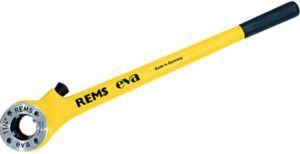 These thread rolling mechanisms deserve special attention. A ratchet is typically found on more advanced models. This design allows the tool to be used by turning the handle in only one direction.
Using these thread rolling machines is simple. The end of the pipe is seated in the holder's guide. The thread is cut using a clockwise rotation. During production, remember to lubricate the surface.
Once the cutting is complete, the die is turned back and the area being processed is passed over again.
Using a power tool
A power cutting tool differs from its hand-held counterparts in that it has an electric motor.
This allows thread cutting to be completed in the shortest possible time. Power tools also allow for quick and efficient operation. Moreover, the process requires minimal physical effort.
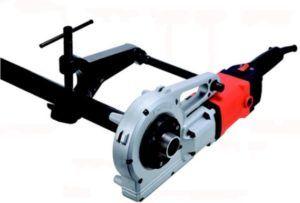
To begin working with a power tool, simply clamp the nozzle in the clamp and press the "start" button. Cutting is completed in seconds. The workpiece doesn't need to be secured in a vice; the power tool itself is attached. This makes these tools particularly portable and convenient.
Cut on the outside
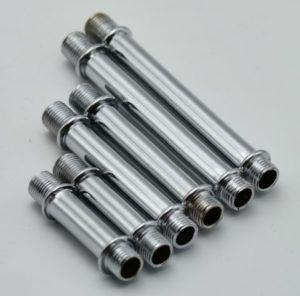 External threads on pipes are manually cut using dies. If these are sliding mechanisms, they must be positioned in the die assembly so that the numbers on the thread assembly parts align with the corresponding numbers on the frame.
Otherwise, the work will be of poor quality. A stop screw is used for fastening. A steel plate (a cracker) is placed between it and the die to prevent it from cracking when pressed.
Round devices are attached to a light-duty handle with several stop screws.
When working manually with sliding dies, it's possible to achieve a threaded cut, which occurs when there are small differences in the rod diameter. However, when working manually with solid dies, this is unacceptable. For example, if the rod diameter is too small, the cut will be incomplete.
Cut from the inside
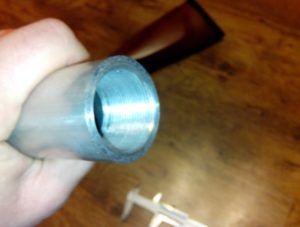 Cutting internal threads on pipes is done manually using taps, which are “seated” in a tap wrench.
When forming an internal knurling, it's important to know that the tap has a chamfering side. This is its end. This is necessary for this job. The middle section of the mechanism is the calibrating section. It determines the direction. The tail section has a square-section head, which serves to support the tap in the handle when working on the internal part.
Basic cutting positions
Joints on water supply pipes are made by knurling the ends of the pipes using a special cutting machine. The ends of the pipes are then fastened together using connecting pieces.
Watch the video
The short knurling length cannot exceed half the coupling length. For permanent joints using shaped components, a short knurling is used. This type of joint can only be dismantled by cutting it.
The dimensions of the short and long types of threads produced by a special apparatus vary depending on the diameter of the pipe assortment.
To save metal, thin-walled pipes are used in gas and heating networks. Since the wall thickness in this case is thinner than that of a water supply pipeline, the critical wall thickness for thread rolling must be no less than that recommended for these pipes.
Stages of action
Threading small and large diameter pipes follows the same principle. After a certain number of turns, the thread-cutting mechanism is turned in the opposite direction. This is necessary to clear the working area of metal shavings.
Having prepared the grinder for work, you should process the section of the metal pipe with corrosion or with old threads.
Next, proceed to chamfering the dies, otherwise they will be difficult to screw on. The area where the knurling will be located must be lubricated with oil.
After this, turn the thread-cutting tool holder clockwise. This is recommended to clear the work area of any remaining chips. Finally, remove all remaining sawdust and oil from the work area.
To determine whether the work has been completed correctly on a large or small diameter pipe, it is recommended to screw the part prepared for installation onto the pipe. This will determine whether the thread is of sufficient size and how well it has been made. Only after a thorough inspection can installation work proceed.
The main reasons for marriage
Even the highest-quality pipe threading machine doesn't guarantee a flawless finish. However, if a flaw occurs, the product cannot be used. For these reasons, all work performed by a threading machine must be performed with extreme care and skill.
- Using a low-quality machine for the job. The entire cutting kit must also be of good quality. For example, rust on parts of the kit will undoubtedly result in poor quality work. Likewise, any dull part of the kit will ruin the workpiece. Therefore, it's best to choose a high-quality machine for the job; this is the only way to achieve the expected end result.
- If threading is performed without chamfering the pipes and without using lubricant, the die will not seat properly, which will undoubtedly affect the final result. Not only is it important to pay attention to the chamfer, but without lubricant, cracks in the threads can be expected, and the threads will be cut with stripped threads.
- You shouldn't apply too much force, as this method of work may result in the cutting being broken.
- Unacceptable difference in the dimensions of the rolled tubular product and the die or stock.
Clearly, these steps aren't difficult for a seasoned professional. However, a home DIYer with little experience needn't worry. If you carefully read all the instructions and work slowly and carefully, a high-quality result is guaranteed.