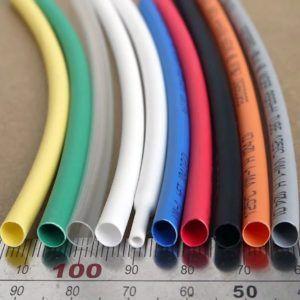
Heat shrink tubing is a heat-shrinkable tube made of thermoplastic polymers. It changes its dimensions when exposed to hot water, air, or an open flame. Its main feature is a high transverse compression ratio relative to longitudinal compression. The tube can shrink in diameter by 2-6 times, while its length will decrease by no more than 20% or even less. It is designed for electrical insulation and mechanical protection of all types of connections.
Heat shrink tubing is an innovative insulation method used in electrical work. This material is far superior to traditional electrical tape, as it creates a uniform, completely hermetic electrical insulation layer.
In this article, we'll answer questions like how to heat heat shrink tubing, its technical characteristics, and the tools you can use to heat it.
Main characteristics
Heat shrink tubing is a special insulating element that, when heated, changes its diameter, indicated in millimeters (mm), reliably protecting and insulating the base placed inside from damage.
Heat shrink tubing is made from thermoplastic polymer materials with high heat-resistant properties.
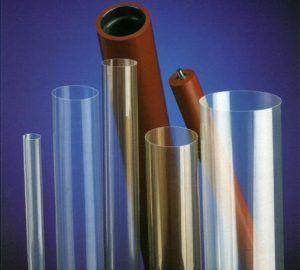 There are certain requirements that apply to heat shrinkable elements:
- elasticity;
- resistance to high temperatures;
- non-flammability;
- resistance to aggressive environments;
- rapid deformation;
- tensile strength – 15 MPa and higher;
- elasticity - the ability to increase by 300% of the original size.
The most popular insulators are tubes that can deform at temperatures from 55 to 120 degrees Celsius, but there are products that can withstand heat up to +300 C.
The properties of this thermal insulation allow it to completely follow the contours of the object to be insulated when heated.
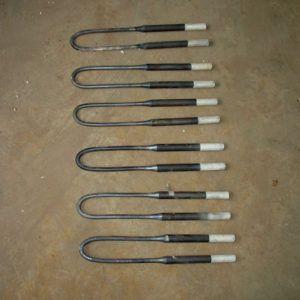 Thermal insulation elements are mainly used for electrical insulation of contacts, wires, and terminals, but in some cases this material is used to protect metal products from corrosion.
Application area:
- electricity;
- cable production;
- protection of equipment used in electrical installation work;
- installation, repair of connecting couplings;
- marking of wiring during insulation by using elements of different colors;
- in nuclear energy as an addition during installation work.
In addition, it is used to protect wires from destruction and to insulate objects in all areas of production.
Open flame shrinkage – pros and cons
An open flame is a lighter, candle, match, or other fire source. When considering open flames for heating, there are a few nuances to consider:
- Thermal insulation may be subject to severe deformation when exposed to strong heat;
- If the flame is not removed in time, the heat shrink may simply burn out;
- White, colored heat shrinkable element, may become sooty when heated.
The main problem with flame shrinking is that the heat source is always located below, and to evenly heat the insulator, the joint must be constantly rotated. This is the only way to ensure uniform heating.
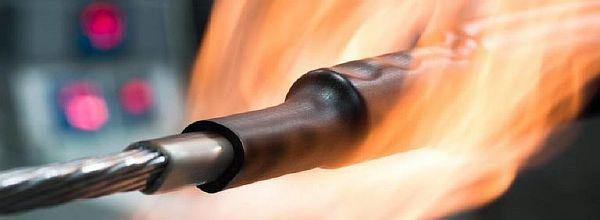
In addition, it is necessary to strictly maintain the distance from the structure to the open fire. It should not be less than 3-4 cm, it is at this distance from the flame that the temperature indicator is the highestDo not use gas torches or turbo lighters to heat the heat-shrink tubing, as this will immediately ruin it.
Using different methods for heating
There are several heating methods, each of which can produce effective heat treatment. However, there are also some that are not recommended.
The most accessible, yet controversial option is lighter or matchesThis option can be used if there is no other heat source available. This method can only shrink a small section of wire with a small cross-section. It is not suitable for larger structures.
If we're talking about large pieces, heating them will take a long time, and the resulting joint will be of poor quality. And how many times will this process need to be repeated if several large cross-sections need to be processed?
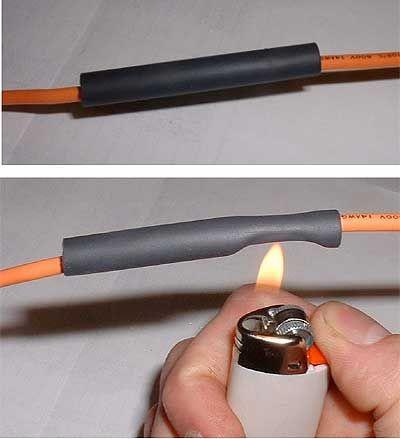 The same can be said about a lighter. Some DIYers try using a regular hair dryer, which every homeowner has, for shrinking. However, it's important to remember that this device can't produce the required temperature, so proper shrinkage of the insulation won't be achieved.
Important! Depending on the brand of material, the heating temperature is 90-150 degrees.
A household hair dryer produces a stream of hot air at 700°C (1,500°F) from its nozzle. While using a narrow nozzle can heat a small, narrow-diameter section, the hair dryer will likely fail to work properly, resulting in poor-quality and unreliable insulation. Keep in mind that some heat shrink tubing can be compressed at temperatures as high as 350°C (570°F).
The result of such work may be a loose fit of the material to the insulated area, which can easily be penetrated by moisture, so it is worth using a special tool.
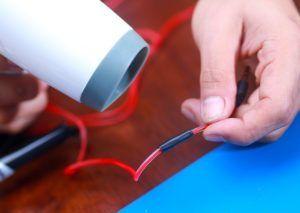
Heat shrink tools
In fact, there are only five heating tools for construction. Let's take a look at them:
- high-temperature construction hair dryer for heat shrink tubing;
- special butane-based burners;
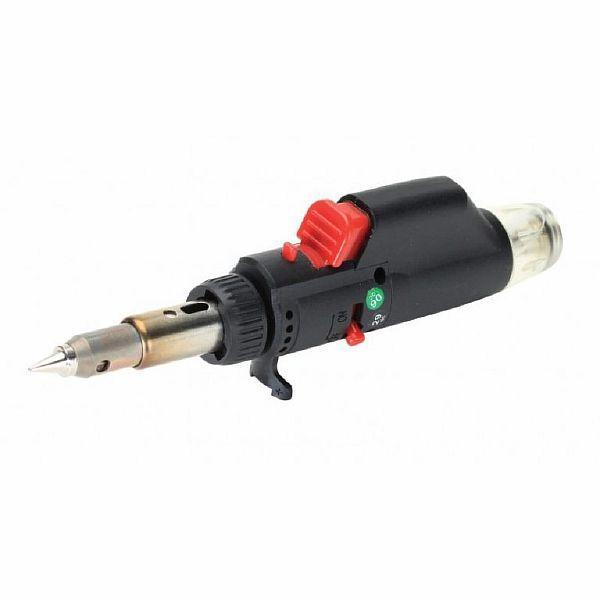
- gas soldering irons;
- propane torches;
- infrared device.
The most optimal option for heating heat-shrinkable, thin-walled elements is a building hair dryerIts temperature settings can be adjusted, and special attachments can be purchased for even heating.
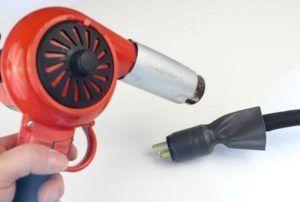 Its disadvantage is that heating of thick-walled material will take a long time and the compression quality will be unsatisfactory.
Before you start heating with a hair dryer, you need to hold the heating area with your hand so that the strong air flow from the nozzle does not cause the element to move from its place.
An infrared burner does not have these disadvantages, as heating occurs in a matter of minutes, without a strong air flow.
Important! When using infrared radiation, it is worth knowing that black or dark-colored elements absorb heat faster, so there is a high risk of burning through the thermal insulation when heated.
Gas torches are convenient to use because the flame has several functions. It's important to understand that shrinking should be done with the softest flame. How do you know if a flame is soft? Adjust the torch so that all flames are yellow. The same parameters should be used when using a gas soldering iron.
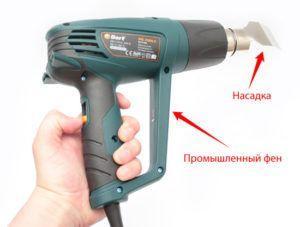
Interesting to know! Since this thermal insulation is used everywhere, including in mechanical engineering, the question arises: how to heat heat-shrink tubing for fuel lines? There is one crucial limitation: do not use open flame of any kind for heating. It's better to use a heat gun or an infrared heater for insulating fuel lines.
A propane torch is the most suitable tool for compressing thick-walled thermal insulation elements.
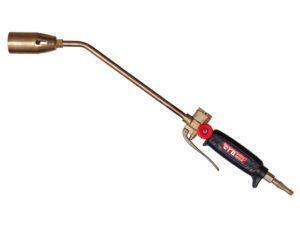
The correct choice of heat shrink equipment depends on the following factors:
- Thermal insulator size;
- Wall thickness;
- Material of manufacture.
Before choosing a particular heating method, study the characteristics of the material you plan to use.
Watch the video to learn how to use heat shrink tubing, how to heat it, and more.
Why is heat shrink better than electrical tape?
There are two main reasons why heat-shrink tubing is preferable to insulating tape:
- By using thermal insulator you don’t have to worry that it will lose its required properties over time;
- Electrical tape sticks to the insulated surface and leaves a dirty mark. As for heat shrink tubing, choosing the right color can create an aesthetically pleasing finish for any product. Removing the material is easy: simply cut the heat shrink tubing lengthwise.
- A very convenient material if the contacts are very close to each other and wrapping them with electrical tape is problematic - there is not enough space.
Due to their positive qualities, heat-insulated tubes have become so popular and are used in many fields of activity.
Types of pipes, how to choose by characteristics
There are several types of heat shrink tubing, differing in design and operating characteristics:
- Adhesive heat-shrink tubing has an adhesive layer on the inside. This is a very popular insulation material because it completely seals joints when heated, resulting in a reliable connection. This tubing has a shrinkage rate of 300%, allowing it to insulate objects with a diameter much smaller than the tubing itself. Adhesive heat-shrink tubing can be cut if it's not possible to fit it completely around an element, and then heated; the inner layer creates a hermetically sealed seam.
- Thick-walled heat-shrinkable tubing is made of polyolefin. It's a very affordable insulator, easy to use, and much less expensive than adhesive-backed tubing. This heat-shrinkable tubing comes in a wide range of colors and can be categorized as:
- without combustion suppression;
- flame retardant heat pipes.
The second option is used as heat shrink tubing in electrical engineering, the military, and hazardous industries. These heat shrink tubings are self-extinguishing if not exposed to continuous open flame, as non-flammable materials are used in their production.
- Specialized heat-insulating tubes are used in specialized facilities for additional insulation. There are several subtypes of this material:
- Fluorescent - used in poorly lit rooms, these tubes absorb light energy during the day and begin to emit it at night;
- high-voltage elements – used in insulation work, during installation of high-voltage networks;
- Teflon – used in chemical industry production;
- Corrugated – used to insulate tool handles and electrical appliances.
- Fabric heat-shrink tubing is flame-resistant, halogen-free, and made of braided fiber. It is used to prevent abrasion and mechanical damage to wires and plastic pipes. When heated, the fabric insulation shrinks by half, allowing for the insulation of irregularly shaped items.
These are the most common types of heat shrink insulation used in all areas of production.
Watch the video for heat shrink recommendations, heating methods, etc.
Which products are best to use and why?
Experts recommend using polyolefin tubing. Why is this one preferred over other heat-shrink tubing options?
The fact is that, thanks to the material they are made from, these tubes have the following characteristics:
- resistance to chemical influences;
- non-flammability and fire resistance;
- tensile strength;
- good shrinkage.
This is a reliable product manufactured using the latest technology and in accordance with production process requirements. They are produced in any configuration and for various types of thermal insulation.
Installation
Before installing heat shrink tubing, the surface must be prepared by cleaning and degreasing. The tubing must be cut so that the edges are smooth and free of burrs.
Heating should be done without exceeding the manufacturer's recommended temperature range. Otherwise, the tubing will seat unevenly. Heat the heat-shrinkable insulation from the center, gradually moving toward the edges.
Correct shrinkage is:
- Absence of unevenness and waves;
- Perfectly smooth surface;
- No swelling.
We've taken a detailed look at how to heat shrink tubing at home—there are plenty of options, and everyone can find the right one for them.