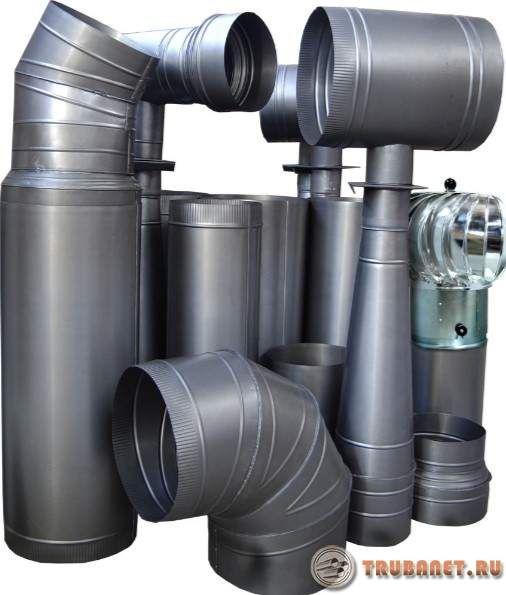
 The lightness, strength, and durability of plastic ventilation materials encourages consumers to move away from metal alternatives.
But, despite all this, skeptical people raise doubts: is it true that plastic is as durable as metal?
Plastic ventilation pipes, the dimensions and features of which should be studied before installation, offer a wide range of excellent characteristics. These properties make these products extremely popular.
A ventilation system made from this material can last over 50 years. It's the ideal choice for rapid air circulation.
The purchase and installation costs of plastic pipes are much lower than those of metal ones. Their aesthetic appearance and ease of maintenance are also particularly noteworthy.
Pipes in such systems:
- not prone to color change;
- are not subject to corrosion;
- easy to install;
- durable;
- reasonable price;
- flexible.
A ventilation system is a complex process of air exchange within a room. It works like this: the air in the room (be it a living room, an office, or a production facility) is displaced by clean air from outside.
Only now can the ventilation system be considered not only the process of air exchange itself, but thanks to modern systems, air conditioning, ionization, cooling and heating, humidification and dehumidification, and other useful functions are also added.
The ventilation system also includes the entire so-called "material part": ventilation devices, hoods, fans, as well as pipes (which, in turn, are divided into round or square/rectangular sections), which are also an element of this system.
- Sizes and prices
- Ventilation system with a diameter of 12.5 cm
- How to calculate dimensions and cross-section
- Section
- Ventilation ducts
- Flat air ducts
- Connecting elements and fittings
- We select the material from which the pipes will be made
- Advantages of plastic ventilation systems
- Where ventilation and exhaust are required
- Combined air ducts
Sizes and prices
Let's take a look at common sizes and prices. Rectangular duct sizes: 11 x 5.5 cm; 12 x 6 cm; 20.4 x 6 cm. Round duct diameters: 10 cm; 12.5 cm; 15 cm.
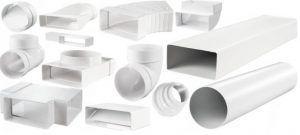
According to GOST, air ducts are manufactured with internal cross-sectional dimensions ranging from 10 to 200 cm. The traditional ventilation size for a kitchen hood is similar to that of a rectangular hood.
Rectangular and round air ducts typically cost 400 rubles or less, and can be purchased at any hardware store.


Round and flexible air ducts are available from construction companies. A flat PVC duct system starts at 100 rubles.
The price for the flexible and plastic version is approximately 320 rubles.
Ventilation system with a diameter of 12.5 cm
The main task of ventilation is to ensure outflow or tributary air. High strength is not required for these products, but their low weight is ideal for this task.
Watch the video
[sociallocker]
This is very important when installation is not on a load-bearing wall, but on a decorative partition or above a suspended ceiling.
Pipes with a diameter of 125 mm are used in standard 5-meter lengths. Longer lengths are difficult to install and transport. 125 mm pipes are most often used for ventilation systems in residential buildings.
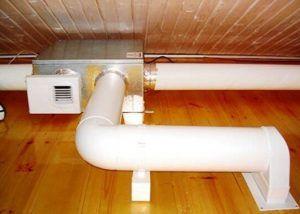
Rolled tubular materials are joined very easily - they are simply inserted into the socket of another workpiece.
The airflow capacity in this case is 400 m3/h. This is the optimal value for domestic use, providing the necessary air circulation without creating unnecessary noise during operation.
How to calculate dimensions and cross-section
Various fittings are produced for laying, which make it possible to connect several sections into a single whole.
Watch the video
[sociallocker]
Sealants help to seal the joints, preventing air from escaping at the joints.
This type of structure is secured with fasteners, which are available in a wide variety.
When selecting plastic ventilation pipes and their dimensions, it's recommended to consider the type, purpose, and length of the structure itself. The type, cross-sectional area, length, and placement are determined at the design stage.
During the design stage, the performance of all system components is calculated. Failure to do so can lead to problems such as insufficient air circulation or excessive noise during operation.
Watch the video
[sociallocker]
The cross-sectional area of a channel for an air velocity of three meters per second is calculated using the formula: S = 0.9 x L. In this formula, S is the cross-sectional area, and L is the air velocity indicator.
Using the proposed formula, you can calculate the hood dimensions that will allow you to work with high productivity.
An incorrectly selected diameter will lead to rapid component failure, and repairs to those connected to the system will be costly.
Section
Watch the video
[sociallocker]
When installing plastic ventilation ducts, the cross-sectional dimensions must be precisely selected. They are a crucial characteristic in this case. This selection is made based on the network's layout.
For example, if the main floor and ceiling are separated by a small distance, a flat-oval duct is recommended. Its design is not much different from a round system.
Air purification is just as intense. However, it's important to note that the oval-shaped plastic structures don't create the necessary airflow resistance, resulting in easy airflow and the engine not operating at high loads.
The only downside would be this is a high costHowever, this is justified by the necessity of using this particular form based on the structural features of the room.
Ventilation ducts
Plastic ventilation ducts fit harmoniously into the interior design of the room.
The presence of a canopy adds elegance and sophistication. This element allows you to conceal not only flat but also round ducts.

They're used not only in the home. This type of box is often used to construct exhaust ducts in offices and small commercial spaces.
Video
TO merits can be attributed.
- Smooth surface outside and inside.
- High strength index.
- High connection rate.
- Simple and easy to clean surface.
- Presentable appearance.
TO disadvantages This design is characterized by its high cost compared to galvanized and flexible options. This also includes limitations in the diameters of the PVC ducts that can be manufactured.
Flat air ducts
Rectangular plastic pipes are used for laying flat plastic systems.
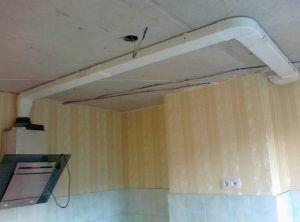
Their purpose is as follows.
- Creation of supply and exhaust networks for small and medium-sized spaces.
- For the construction of a flat outlet channel.
- For connection of exhaust and ventilation equipment.
Design features.
- Made from environmentally friendly, high-quality material that is non-flammable.
- Wide range of operating temperatures (from -30 to +70 degrees).
- Low resistance to air flow.
- Long service life.
- Slight noise during operation.
- Economical use of space between the ceiling.
- Wide range of choices when searching for the size and rating of flat rolled tubular materials.
Connecting elements and fittings
Plastic ventilation is easy to assemble, thanks to fittings that greatly simplify the process.
The air duct network is constructed into a single modular structure using connecting parts, similar to a children's construction set.
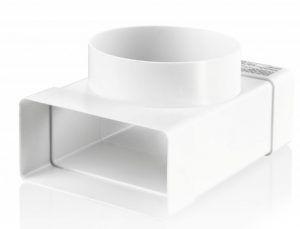
These modules are divided into the following types:
- ConnectorsThey are designed for directly connecting parts of the same type and size. For example, a 6x12 cm rectangular plastic air duct with a similar 6x12 cm one (SKP 612). Also available are elbows for attaching networks of the same type and size at an angle (KKP 12.5 or KRP 612).
- GearboxThey are installed for the same type of network, but of different sizes.
- AdapterThis part is used to fasten different sections of different sizes.
- Splitter (tee). It is installed to divide the system into separate branches.
- Flange and cover plateSuch elements are installed when attaching the system to the ventilation opening.
- Holder. Mounted for fastening to walls and other surfaces.
The modular network fittings fit perfectly together and do not cause any difficulties during installation.
Watch the video
[sociallocker]
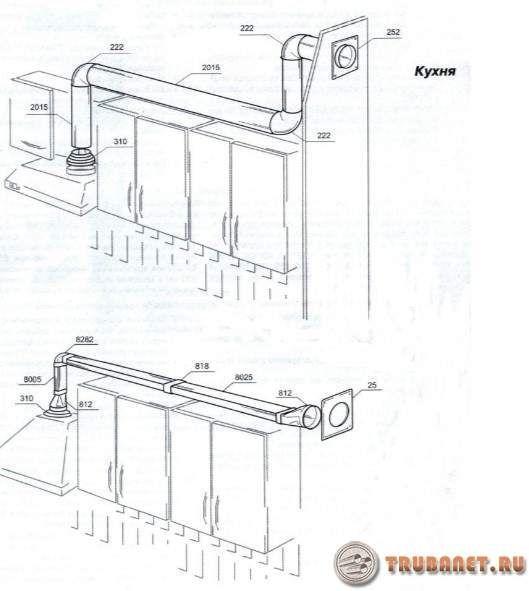
Fittings don't detract from the structure's appearance in visible areas. Connecting elements help conceal the ductwork in niches or run it discreetly above a kitchen cabinet, for example.
Fittings in a ventilation network made of rectangular rolled pipes allow it to be placed inside a plasterboard partition or behind suspended ceilings without any particular difficulty.
Properly selected pipes allow you to create a beautiful and reliable modern ventilation system. Thanks to the numerous positive properties of plastic, it will provide long-lasting, efficient, and trouble-free service.
We select the material from which the pipes will be made
 So, let's imagine a situation. You've moved into a new house. Ventilation in the home is a crucial issue.
There are several types of air ducts: plastic and metal (including metallized, galvanized and others).
Homeowners are increasingly choosing metal pipes.
This is understandable: the material is less wear-resistant than plastic, difficult to process, weighs a lot, and if not securely fastened, it can even pose a danger to others.
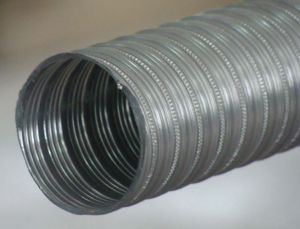
Therefore, metal air ducts are primarily used in non-residential buildings and various industrial settings. Plastic ventilation pipes are the most popular material for domestic systems.
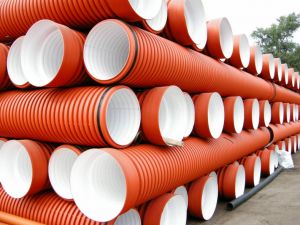 Moreover, the plastic used for air ducts also varies. The most common materials are PVC (polyvinyl chloride), polypropylene, polyethylene, polyurethane, and some other materials of similar types and compositions.
Advantages of plastic ventilation systems
Don't worry about the internal condition of your ventilation systems – many people are afraid that plastic pipes retain a static charge, and as a result, dust, dirt, fluff, debris, insects, and light household waste become electrified and settle on the internal surface of the ventilation duct.
Video
But in reality, there's no thick layer of dirt or dust there, because manufacturers are preoccupied with the safety of those who will use their products. How so, you ask?
It's all very simple - one of the most important processes in the production of products is the so-called "antistatic" treatment.
Simply put, plastic pipes are treated with an antistatic agent both inside and out to prevent particles from sticking to the inner surface. Customer safety is a top priority for air duct manufacturers!
And another "myth": homeowners are afraid that plastic can melt under high temperatures and even "drip" in your kitchen, posing a health threat to those living in the apartment.
Well, this option seems completely fantastic, and here's why: first of all, the minimum temperature threshold that plastic ventilation pipes can withstand is at least 80 degrees Celsius.
No matter how hard you try, you won't be able to create such high temperatures in your kitchen unless, of course, you endanger your health and the health of your loved ones, for example, by lighting a small fire in the kitchen.
Moreover, all manufacturers also care about your safety, so in addition to antistatic treatment, they also treat their products with a layer of special fire-resistant compounds.
Moreover, modern plastic production has reached the point where special fire-resistant compounds are used not only in the processing of finished plastic, but also in its actual creation!
This means that the plastic product already contains a fire-resistant layer of material, which will ensure safety for you and your ventilation!
Where ventilation and exhaust are required
Now let's discuss where ventilation systems and hoods should be installed in a residential space. A hood/ventilation system is required. in the kitchen (in the dining room) and in the bathroom (and also in the toilet, if the bathroom is separate).
Video
The logic is clear: hot air (which will always be there, since the stove and many electrical appliances are in operation), food odors, burning, soot, unpleasant odors, and others must be removed from the kitchen.
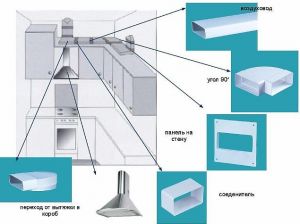 In the kitchen, you can use air purifiers with various filters (including carbon filters, etc.), as well as a hood, which you install directly above the stove (gas/electric) and vent through a pipeline to the main ventilation system.
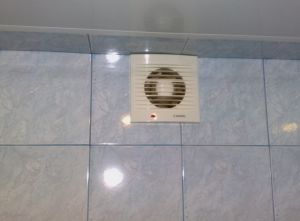
Bathrooms and toilets should be free of humid air and unpleasant odors, so ventilation is also essential here. No additional ventilation devices are required in the bathroom, but a ventilation outlet is essential.
Combined air ducts
It is recommended to carefully wash the air intake grille and clean it from any accumulated dust once every two weeks.
By the way, when installing ventilation, you do not necessarily have to use only plastic or only metal air ducts.
Firstly, these can be combined options - with metal units such as couplings, clamps or directly the air intake grilles themselves.
And secondly, there is another common type of ventilation pipes - corrugationsThe corrugated pipe is not used as a single pipeline, but rather as another element of the transition unit type.
Simply put, if, due to circumstances and the location of appliances in your kitchen, the ventilation opening is not located above the stove and hood, but to the side of them, then corrugated pipe will be just the thing for you.
Video
A distinctive feature of the corrugated pipe is its versatility and the "spring" principle, which allows you to smoothly connect pieces of pipe with the corrugated pipe, turning them as you like and without making angles greater than 90 degrees.
After all, if you create too right an angle during installation, this will result in a serious loss in the air exchange process.
Every 90-degree angle not only slows down the air flow, but also significantly reduces the performance of the ventilation process itself – by 10-15% or more!
Your goal is to simplify your ventilation installation as much as possible and create ideal conditions for air exchange. So, corrugated pipe is an excellent "helper" for connecting plastic elements.
So, when choosing between metal and plastic ventilation pipes for a living space, we'll definitely choose plastic. As for the shape, the choice is yours, but 90% of homeowners choose round ducts!