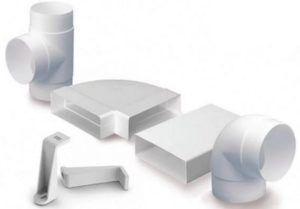
 Plastic ventilation pipes for exhaust systems are considered the main element of the ventilation system. They are used to form a channel that supplies fresh air and removes stale air.
The modern market offers a vast variety of exhaust ducts. Each type offers unique technical characteristics. The numerous advantages have placed plastic exhaust ducts at the forefront of consumer demand. The key functional advantages of plastic exhaust systems are:
- Resistance to moisture and chemicals. Similar metal systems cannot boast this property.
- Light weight. This eliminates unnecessary loads and simplifies installation when creating a plastic ventilation network.
- Strength and tightness of the structure.
- Resistance to ultraviolet radiation.
- Possibility of operation in a wide temperature range.
- Good sound insulation.
- Easy care.
- Attractive appearance of the plastic ventilation system.
- Durability.
When discussing plastic ventilation systems, it's important to highlight the wide range of these products available. They are made from polyurethane, polyvinyl chloride (PVC), and polypropylene (PPR).
- Types of ventilation pipes and their sizes
- Advantages and disadvantages of plastic air ducts
- Flat plastic systems
- Diameters
- Air ducts on the roof
- Main elements of the ventilation system
- Selecting the right design
- Camouflage options
- Types of kitchen hoods
- What is the difference between a range hood and a ventilation system?
- Installation rules
- Types of fans
Types of ventilation pipes and their sizes
Rectangular plastic ducts are most often used for installing domestic air supply ducts and range hoods. They are widely used in industry where chemically saturated air must be removed. Rectangular plastic ducts are easily assembled from prefabricated structural components.
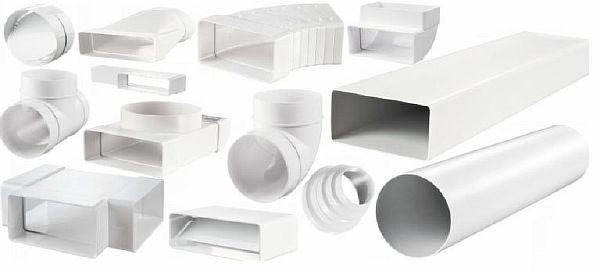
Round ventilation ducts are also very common. They differ greater efficiency, than rectangular ones. This is because the airflow in this design is less resistant than in rectangular designs. This factor should be taken into account when calculating the exhaust system's capacity.
Round plastic ventilation pipes with the following diameters are widely used in everyday life: 100, 125 and 150 mm.
Rectangular ventilation pipes are primarily used in residential buildings. They are often positioned so that the duct can be concealed under a suspended ceiling. Standard rectangular pipe sizes for this purpose are 60x120 and 60x204 mm. In addition, non-standard sizes of 110x55 mm are also used.
The diameter of round products is the value specified above. GOST allows the installation of round products with diameters from 100 to 2000 mm.
Flexible plastic exhaust nets come in round and rectangular shapes, and as the name suggests, they are flexible, meaning they can be easily change shapeThe size of a structure made from this material can range from 15 to 20 meters.
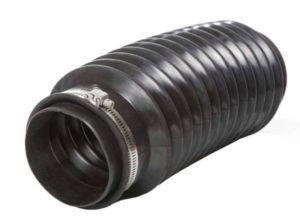 The distinctive feature of flexible ducting is that it can be installed on structures with complex shapes. Any other air duct system would require a large number of shaped components. Corrugated ducting, however, can change its direction independently.
In industrial spaces, corrugated pipes are used as auxiliary materials for the construction of specific areas. These pipes are installed only in a stretched state. The bending radius cannot be smaller than the diameter of the pipe itself. If you're wondering whether corrugated pipes are suitable for exhaust systems, this article covers this in detail.
Advantages and disadvantages of plastic air ducts
Undoubtedly, the list of advantages of these products is impressive. The most important among them is considered to be strength and light weightThis also includes ease of installation. Furthermore, they are corrosion-resistant and environmentally friendly.
Another undeniable advantage is the lower cost when compared to steel analogues.
Watch the video
It should be highlighted separately installationThe plastic structure is easy to assemble yourself, which cannot be said about metal types.
The advantages in this case could go on and on. But the disadvantages are practically nonexistent. cons They are considered to have low fire resistance. For these reasons, most companies prefer metal alternatives.
Flat plastic systems
Flat exhaust ducts combine economical use of ceiling space, low noise, easy installation, and a long service life.
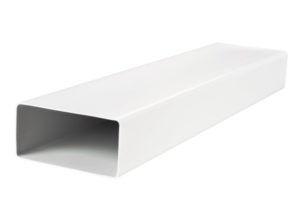 Flat products are used for supply ventilation in small spaces. They are very easy to install because they don't require expensive specialized equipment.
The design features of flat channels are as follows:
- They are made from environmentally friendly materials that do not support combustion.
- Possibility of operating flat systems in a wide temperature range.
- No resistance to the moving air flow.
- Long service life.
- Excellent sound insulation of these materials.
- A wide range of flat product sizes.
Diameters
When installing plastic exhaust ventilation pipes, it's important to accurately calculate the design and diameter. Keep in mind:
- The ventilation diameter must match the diameter of the hood outlet. A smaller diameter pipe will reduce the system's performance. This creates additional resistance and increases noise. The motor will also operate at increased speed, which will increase wear. For example, a 120 mm plastic pipe should be used for a 120 mm hood. The diameter of all necessary components must be measured precisely, and this should be done before purchasing materials.
- A round, rigid PVC duct with a diameter of 125 mm is considered ideal for ventilation performance. 100 mm plastic ventilation pipe for range hoods is also considered ideal for this type of material. A third popular option for kitchen ventilation systems is the 150 mm range hood pipe. 100, 125, and 150 mm pipes are easy to install and can last for more than ten years without maintenance. 100, 125, and 150 mm ducts are slightly larger than other similar products, but are more efficient due to their low airflow resistance.
When installing 100, 120, and 150 mm channels, special attention must be paid to ensuring the joints are tight. L-shaped adapters are recommended for these pipes. These elements are secured with a special sealant.
- Plastic ventilation pipes designed for exhaust systems with a cross-section of 200 mm are most often used in industry, for example, in chemical laboratories. A 200 mm duct is also used for smoke exhaust and effective removal of polluted air at construction sites.
Because it withstands temperatures from -30 to +95 degrees Celsius, a 200 mm pipe manufactured according to GOST standards is a high-quality product, demonstrating a number of excellent characteristics.
Air ducts on the roof
Plastic ventilation pipes used for roof exhaust systems require strict adherence to installation procedures. Furthermore, such structures must be installed on the roof in accordance with SNiP (Building Code) standards and other relevant documents.
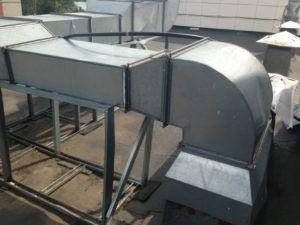 It's easiest to install intake ducts when the roof is still under construction. If the system needs to be installed on a finished home, it's important to plan the installation so as to minimize damage to the roof surface. Otherwise, the structure could end up damaging the sheathing and rafters, or the roof's watertight integrity.
When choosing a range of pipes for a roof, you should not give preference to options that are too thin, otherwise the structure will not withstand the wind load.
Main elements of the ventilation system
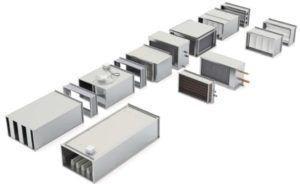
The composition of any system depends on its type. However, mechanical types are most commonly used. The following elements can be found in this design.
- Air ducts.
- Fans.
- Diffusers.
- Filters.
- Lattice.
- Sound absorbers.
- Heaters.
A key component of the systems described is the ventilation valve, which incorporates an adjustable air damper. The valve's primary function is to regulate air flow within a specific section of the network and stop the supply of air when the system is in off mode.
You can purchase plastic ventilation pipes and range hood components at the Leroy Merlin home improvement store. However, before installation and purchase, it's important to perform precise calculations and determine the system type.
Leroy Merlin is a hypermarket where you can find any building material. All its products are distinguished by their high quality. Leroy Merlin offers a wide selection of exhaust system products from trusted manufacturers at affordable prices.
Throughout its existence, Leroy Merlin has received nothing but positive reviews from customers. The store is also valued for the efficiency and speed of its sales consultants. By contacting any consultant, you can always count on a quick and effective solution to any problem related to choosing the right product.
Selecting the right design
The choice in this situation is influenced by many factors, and according to these characteristics, systems are divided into:
- By the method of changing air pressure. This issue is simple. There are systems that use mechanical action (fan) and natural action (draft);
- By purpose. These are exhaust and supply types. The former removes dirty air, while the latter supplies clean air that can be heated and humidified;
- Zonal, that is, division by service area. These are local channels and general exchange;
- According to the design - ductless and ducted.
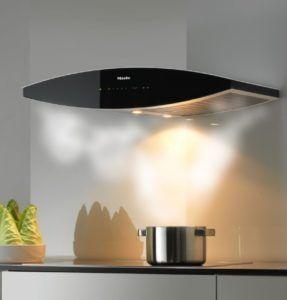 When deciding on the choice of design, it should be taken into account that a hood with a round cross-section, is less noisy, but it may not fit perfectly into the overall design. However, if you need a highly efficient design, this is the one to choose.
Rectangular plastic hood ventilation pipes are very easy to install. They are ideal for installation in both commercial and residential kitchens.
The rectangular cross-section of the pipes allows for installation in hard-to-reach areas. It's easy to install even under a suspended ceiling.
The peculiarity of the rectangular section is that it is an atypical constructionHere, the width can be four times its height. The structure can be assembled by hand from rectangular-section timber. In a kitchen, such an extension will fit perfectly into the overall interior design.
The only drawback that should be taken into account when choosing is a slightly increased noise level of an air duct with a rectangular cross-section.
Camouflage options
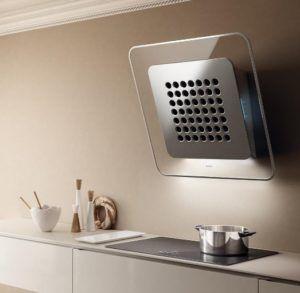 Kitchen ventilation systems don't always look presentable. Therefore, they are often concealed. Galvanized piping complements high-tech styles. In other cases, the ventilation system is often concealed. There are many ways to do this. Here are a few:
- Plasterboard or plastic box.
- Suspended and stretch ceilings.
- Installation in kitchen furniture.
Watch the video
Each person will decide for themselves what to choose, based on their financial capabilities and taste preferences.
Types of kitchen hoods
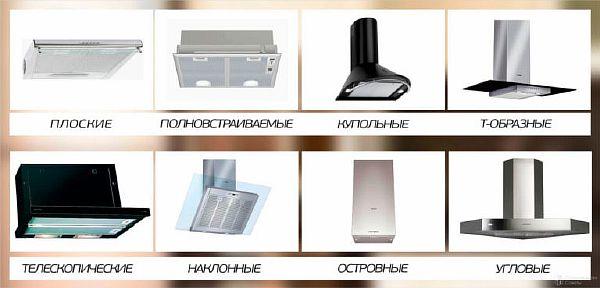
This line of equipment is classified into the following types.
- Flat wall-mounted units. These are mounted above the cooktop. A cabinet can be placed above these units, as there's no need to connect it to the exhaust duct. These options are low-power and are already considered obsolete.
- Built-in options. This type of equipment is installed in a wall-mounted cabinet, with only the exhaust surface visible. They are characterized by good performance and a metal filter.
- A dome hood is somewhat similar to a fireplace chimney. The latest versions of this line feature glass or natural wood finishes. This type has become the most popular due to its diverse technical characteristics.
To avoid making mistakes when choosing kitchen equipment, you need to consider many factors. For example:
- Method of operation.
- Filter.
- Performance.
- Noise level.
- Dimensions.
- Control method.
Of course, salespeople will help you choose. However, it's important to remember that their offerings are often adjusted to push out stale merchandise.
What is the difference between a range hood and a ventilation system?
Many people equate the terms "ventilation system" and "hood." However, this is fundamentally incorrect. A hood cannot replace a ventilation network. They must be installed in tandem.
Watch the video
A check valve is essential in such a chain. This link is responsible for the efficient operation of both systems. The valve's grille has a hole through which air can pass when the exhaust system is turned off.
Installation rules
To achieve a correct and high-quality result, many nuances must be taken into account. Some selection considerations have already been outlined. Here are a few more rules without which creating this network is impossible:
- There should be no sagging in the exhaust network, and it should also be stretched to the maximum extent possible, otherwise a large amount of pressure will be lost.
- The entire structure will have to be grounded because static electricity accumulates in it.
- Care must be taken to ensure that the air vent is not damaged.
- When passing through a wall, you'll need to use adapters and metal sleeves. If the adapters are accidentally damaged, they must be replaced immediately.
- Smaller bending radii will result in lower pressure.
- All connections are treated with sealant.
Watch the video
Types of fans
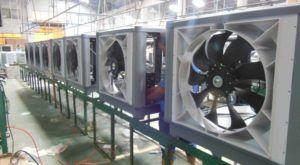 Various types of fans are used for forced ventilation of air masses.
- Duct. It is built directly into the ventilation system.
- Silent devices. The name says it all. These devices operate completely silently.
- Household devices that prevent the return of exhaust air.
- Centrifugal mechanism. These types are used in industry.
- Axial. These mechanisms are the easiest to install and are the most efficient.
Plastic ventilation pipes for exhaust systems are in high demand across various industries. When installed correctly, they can provide long-lasting service, maintaining comfort and, for example, safety in industrial settings.
Watch the video


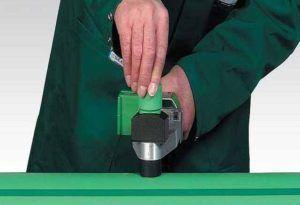
In the text of the article, and in particular in Section 4 (Diameters), you conclude that "...Round plastic ventilation pipes designed for 120 mm exhaust hoods are considered ideal in terms of performance.?!?..." However, unfortunately, the industry does not produce round plastic ventilation pipes with a diameter of 120 mm. (The standard is for pipes of 100, 150, 200, etc. mm). However, there are many hoods with an outlet diameter of 120 mm. The question is, what solution do you propose for this situation? (The option with flexible aluminum air ducts is not suggested.)