When installing heated floors, it is assumed that there is a substrate that will facilitate the efficient operation of the system.
It should not be neglected when installing a structure with heating, as it has many functions, the main one being reducing heat loss.
The most popular type of backing is foil.
- Is foil necessary for underfloor heating?
- Pros and cons
- Types of foil backings
- Folgoizol
- Basalt insulation
- Mineral wool
- Foamed polyethylene
- Polystyrene foam with foil
- Multifoil
- Which type of thermal insulation is better to choose and why?
- Laying foil under underfloor heating
- Preparatory activities
- Installation on cement screed
- Laying on wood
- Video materials
Is foil necessary for underfloor heating?
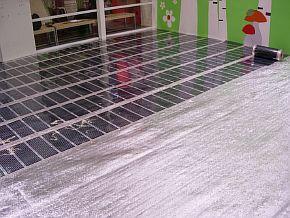
A foil-lined underlayment is an essential part of underfloor heating installations today. Insulation with a foil layer most effectively retains the heat generated by the heating system and distributes it evenly.
This helps save heat resources, increases the potential of the heating system and the speed of heating the room, which in turn affects the service life of the floor.
For your information! It's believed that using foil-lined material in an electric oven is unsafe, but this is a misconception. Today, there are many protective and insulating materials available.
The structure of a foil-clad underlayment includes a core and foil. The core can be made of basalt, mineral wool, polystyrene foam, or polyethylene. Most of these thermal insulation products have a bubble-like structure. The surface of foil for underfloor heating can be aluminum or metallized.
Pros and cons
As mentioned above, foil-coated backing is an excellent energy-saving material. While foil has a number of other advantages, it also has its drawbacks.
| Pros | Cons |
| Does not affect the floor height, since the foil material is only 2-10 mm thick. | The high cost is the main disadvantage. |
| It is not difficult to install, so even an inexperienced person can handle the job. | It is not recommended to use a mineral substrate with a metallized layer for heated floors, as toxic substances are released during the heating process. |
| It has soundproofing and waterproofing properties. | Using this type of underlay in rooms with high humidity significantly reduces its service life. A foil-coated product covered with film is recommended. |
| Withstands heating up to +90 degrees and more. | Dissolves upon direct contact with cement. |
| Most foil products are equipped with markings, which simplifies the process of laying out the heating elements. | |
| There are models with an adhesive layer, which makes installation easier. | |
| Reduces heat loss and promotes its uniform distribution. |
It should be noted that the foil product is durable and long-lasting when properly installed and used.
Types of foil backings
Currently, a large number of models of insulation with foil are sold; they have different bases and are intended for different construction works.
Watch the video to see how different types of substrates work, reflect thermal radiation, and more.
Folgoizol
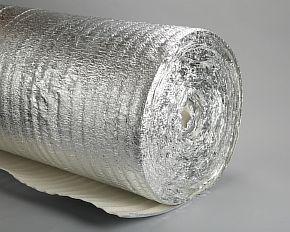
Underlayment for heated floors made of foil insulation is most often used in the construction of baths and saunas. The main advantage of foil insulation is its resistance to water and sudden temperature changes. It also has a long service life because it is resistant to rot.
The material is environmentally friendly, has enhanced soundproofing properties, and can withstand mechanical loads. However, due to its high cost, it is rarely used as insulation for residential buildings, with the exception of luxury homes.
Basalt insulation
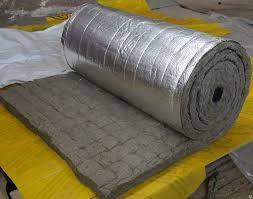
Basalt wool is the leading insulation material. It has low thermal conductivity and tolerates temperature fluctuations well, ranging from -200 to +700 degrees Celsius. This type has a reflective surface, is fire-resistant, and is easy to install.
Although the insulation is not susceptible to heating, it is not recommended to use it in a heated floor pie, as it may release harmful substances when heated.
Mineral wool
Mineral wool with a foil layer has excellent thermal insulation properties and is also fireproof. However, it contains components that release harmful substances when heated, making it unsuitable for use in heated systems.
It's also not suitable for areas with high humidity, as the wool loses its properties when saturated with water. It's recommended for industrial settings.
Foamed polyethylene
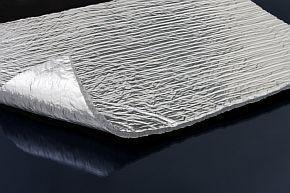
Foamed polyethylene sheeting with a reflective surface is considered the most popular type of insulation. Foil-faced polyethylene is suitable for both hydronic and cable-based underfloor heating systems.
Foamed polyethylene offers excellent flexibility and increased strength. The material is moisture-resistant, chemical-resistant, absorbs noise well, and does not promote microbial growth. This type of foam has a long service life.
The front side of the foamed polyethylene product is covered with a metallized Mylar film. The reflective surface ensures even heat distribution, while the foamed base with air cells prevents heat from escaping into the concrete screed.
For your information! Foamed polyethylene is sensitive to ultraviolet radiation, but the finishing coating protects it from sunlight.
Polystyrene foam with foil
Foil-coated polystyrene foam is a popular thermal insulator for underfloor heating systems, both hydronic and electric. It is chemically inert and quite durable.
Furthermore, it can withstand temperatures from -180 to +180 degrees Celsius, although such temperatures are not required in everyday life. The product does not rot, does not promote the growth of harmful microorganisms, and therefore does not pose a risk to human health.
Multifoil
Multifoil is a multilayer fabric. The foil-clad aluminum layer contains air-filled chambers, and the base is made of polyethylene or polypropylene film. The bubble layer helps minimize heat loss.
The insulation of this model is not affected by moisture, has a high thermal insulation potential, and increases the efficiency of the heating system.
Which type of thermal insulation is better to choose and why?
When choosing foil material for heated floors, it is necessary to consider:
- heat-reflecting properties;
- thermal conductivity coefficient;
- resistance to high temperatures;
- presence of sound insulation;
- environmental safety;
- reaction to moisture;
- prostate in styling;
- fire safety indicators.
Video: Methods of reflecting thermal energy, how insulation works
The price of underfloor heating insulation is also important. For example, aluminum-coated polyethylene foam or polystyrene foam underlay with a reflective layer are affordable.
However, purchasing multi-foil or foil-insulated insulation will require a significant investment. Mineral or basalt insulation, although inexpensive, is not suitable for underfloor heating.
Furthermore, the thickness of the foil layer plays a significant role. If a conventional coating is used as a reflective layer over the heat-insulating material, the product's efficiency is significantly reduced. The lower the quality of the reflective surface, the easier it is for heat to pass through.
For your information! Products intended for wall or ceiling insulation should not be used with heated floors. This would expose them to mechanical stress, which could damage their properties. Therefore, only insulation intended for floors should be installed.
It is also important to consider the following when choosing thermal insulation material:
- More often, for heated floors, the product is used in tiles;
- Foil mats are used to make floating screeds; they are laid between the joists.
Laying foil under underfloor heating
Installation work for installing underlay on a floor with a heating system includes several stages.
Preparatory activities
Before installing foil-lined underlayment for underfloor heating, prepare the tools you'll need. You'll need:
- with a knife or scissors;
- tape measure;
- with aluminum tape.
In addition, you should purchase the required amount of the selected type of foil insulation.
Installation on cement screed
The installation of the underlayment under the heating device looks like this:
- The subfloor is cleared of dust and debris. Any unevenness or cracks in the slab are filled with a special solution, which must be allowed to dry before installing the underlayment.
- The reflector is prepared - it is cut to the required length.
- The material is laid starting from the corner of the room, close to the wall, with the reflective surface facing up. Adhesive is applied to the base of the mats in dots.
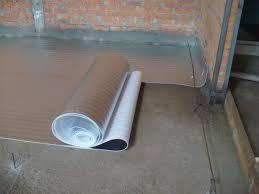
- The following strips are laid out end to end.
- Seams are sealed with aluminum tape to prevent cracks from forming and ensure high-quality thermal and moisture insulation.
Afterwards, you can move on to laying the heating system and floor coverings (linoleum, parquet, laminate).
For your information! When installing a cable or water system, you can use any type of insulation: with or without foil, and for infrared systems, only those with a foil coating.
Furthermore, when pouring a concrete screed over a cable or hydronic underfloor heating system, the quality of the aluminum foil underlayment is significantly reduced. When concrete comes into contact with the foil, it corrodes it, thereby losing its properties.
Laying on wood
If the base is made of wood, it's best to use insulation with self-adhesive film. If you have a regular underlayment, you can use double-sided tape for fixing.
The work process is as follows:
- Prepare the base: remove dust and debris. The surface can be sanded.
- To preserve the wood better, it is treated with an antiseptic.
- Once the primer has dried, the insulation is unrolled, usually in a roll, and cut to the required size. The material is laid reflective side up, the protective film is removed, and the insulation is pressed onto the floor. The strips are laid end to end, ensuring there are no gaps.
- The joints are sealed with foil tape.
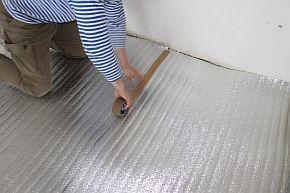
- Heating elements and flooring material are being installed.
Underlayment is a mandatory layer in a heated floor system, especially when building a private home or in ground-floor apartments. Using foil-faced insulation will significantly improve the system's performance.