Underfloor heating mats (slabs) are the underlayment that retains heat from the heating elements and provides good thermal insulation for the system. High-density polystyrene foam (28-30 kg/m³) is typically used for these mats.
Water-heated floors are currently a popular type of heating, both in apartments and private homes.
However, not everyone knows that the efficient functioning of the system is directly related to the correct selection of thermal insulation.
Insulation mats are considered the most suitable and practical insulation for underfloor heating systems. We'll discuss them in detail in this article.
- The purpose of mats
- What materials are used to make mats?
- Benefits of using mats
- Types of thermal insulation mats for underfloor heating
- Expanded polystyrene boards
- Roll foil insulation
- Polystyrene foam mats with foil and film
- Insulation with bosses
- Recommendations for choosing mats
- Tips for installing thermal insulation
- Overview of manufacturers and models
- Video materials
The purpose of mats
The main goal when installing hydronic underfloor heating is to minimize heat loss, and this is precisely what the mats accomplish. Laying the heating system directly on the base will be useless, as most of the heat will escape downward.
This is precisely what heat-reflecting mats are designed for. They prevent cold air from entering the room while preventing heat from escaping. They also prevent mold and condensation from forming.
Let's look at the main functions that the heat-insulating underlay performs in the "pie" of a warm water floor:
- Soundproofing - if the layer is 2 cm, noise absorption is up to 23 dB;
- Waterproofing - in the presence of a special film layer;
- Thermal insulation - directs warm air upwards, which reduces the cost of heating the house;
- Uniform heat distribution throughout the room. This is important for hydronic floors, where heat is distributed unevenly due to the presence of straight and curved pipes in the circuit;
- Helps to withstand operational loads due to high strength.
Furthermore, the mats simplify the installation of the underfloor heating system due to the textured layer or markings on the surface. Special fasteners and grooves on the sides speed up and simplify the installation process.
What materials are used to make mats?
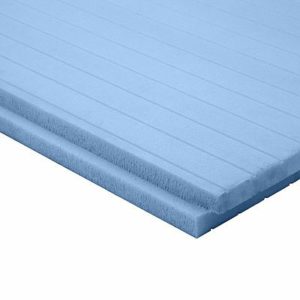
Today, mats are made from various materials, but the most modern models are made from extruded polystyrene foam, as it has:
- low vapor permeability - water vapor passes through it, and the material does not accumulate liquid;
- low thermal conductivity - which helps retain heat;
- high density - can withstand enormous loads, made from raw materials with a density of 40 kg/m3.
In addition, the substrate is not afraid of rodents.
Please note! The material density plays an important role when constructing a water-based floor, as the structure is heavy, weighing up to 200 kg per square meter.
The insulation is the bottom part of the "pie" and bears the main load, so its strength is important when constructing a water-heated floor.
Benefits of using mats
These mats are a modern thermal insulation product manufactured using the latest European technologies and meeting the latest quality and safety requirements. They combine all the advantages of existing insulation materials without the disadvantages associated with other thermal insulators.
The positive aspects of mats:
- high performance:
- increased thermal and sound insulation;
- the ability to lay the floor "pie" in any way - with or without screed;
- not subject to deformation during long-term use;
- easy to install - equipped with a locking mechanism;
- have markings (most models) - simplifies the process of laying the contour;
- do not rot and do not form a favorable environment for the growth of microorganisms;
- do not absorb water;
- do not harm humans - do not emit toxic substances;
- can withstand high temperatures - from +180 to -180 degrees;
- service life up to 50 years.
Please note! Polystyrene is flammable without treatment, so flame retardants are added during the production of insulation made from it, making the product non-flammable.
Such products are marked "C".
Types of thermal insulation mats for underfloor heating
There are several types of mats that professionals recommend for installing hydronic underfloor heating systems. Each model has its own characteristics and is designed for specific conditions.
The cost and size of the substrate directly depends on the type and popularity of the manufacturer.
Expanded polystyrene boards
Polystyrene foam mats are an excellent option for insulating hydronic underfloor heating systems; they can even be installed on cold subfloors. They come in several types:
- Foam plastic is the simplest and cheapest option. When choosing foam plastic for underfloor heating, consider its density; it should be at least 35 kg/m³. If it's lower, the underlayment won't withstand the load of a hydronic heating system.
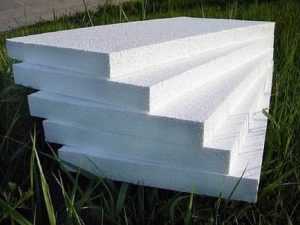
- Extruded polystyrene foam is a high-quality and durable underlayment. Because the material has a rigid core, it not only insulates but also acts as a subfloor leveler. Penoplex is considered the best choice in this segment; its thickness ranges from 2 to 10 cm. Its cellular structure offers increased strength, making it able to withstand heavy loads.
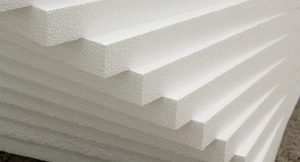
Installation of extruded slabs is simplified by the presence of locking joints. Some models have surface markings, which facilitate installation of the circuit. Pipes are secured with clamps that simply push into the substrate.
For your information! To improve the thermal insulation properties of the slabs, a rolled insulation material covered with a foil layer is often laid on top.
Roll foil insulation
Foamed polyethylene is used as a base for foil-coated mats for heated floors, with thicknesses ranging from 3 to 10 mm. It is a simple and inexpensive insulating material. It is sold in rolls, making it easy to transport.
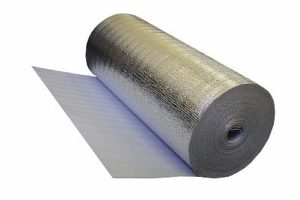
This underlayment is available in several types: penofol, isolon, and ecofol. All are equipped with an aluminum foil or polymer film interlayer. This layer directs warm air in the desired direction and distributes it over the surface.
Foil-faced roll insulation for underfloor heating is only loosely classified as a mat, as it offers low thermal insulation. Therefore, its scope of application is quite limited. Foil-faced insulation is recommended for use when a hydronic system is planned as a supplemental heating system, and the floor is already insulated with other insulation.
These mats are not recommended for installation on ground floors or above cold rooms, as their effectiveness will be negligible. Furthermore, installing heating elements on this type of insulation presents some challenges.
After all, securing underfloor heating pipes requires special fastening components: staples, clamps, or reinforcing mesh. The product is placed in the joint, with the foil surface facing up, and for a better seal, the seams are sealed with special tape.
Despite its modest performance, it's worth noting that the use of rolled foil insulation is, in some cases, indispensable and the only possible method of insulation—if the ceilings in the room are low and every centimeter is crucial.
Polystyrene foam mats with foil and film
Thermal insulation in the form of polystyrene mats with a foil or film layer is produced:
- The slabs are equipped with a locking device. They are 2–5 cm thick and 100 cm wide.
- In the form of panels, bonded together into a single sheet with a film coating. The standard roll size is 5 meters.
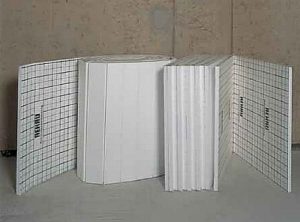
When installing slabs in a water-based floor system, they should be joined together using waterproof tape. If a panel-type floor is used, it is simply laid on the subfloor.
Some models have a self-adhesive layer, making them easier to connect. The surface of many insulating materials has special markings for pipe placement—in 50 or 100 mm increments. This grid facilitates pipe installation.
To secure the water heating circuit, plastic brackets or reinforcement are used; it is laid on top of the flooring.
The use of such a substrate allows for the simultaneous creation of not only good thermal insulation, but also waterproofing of the base before installation of the water device.
Insulation with bosses
Studded insulation is a modern thermal insulation product, specifically designed for water-heated underfloor heating systems. The studded insulation backing is made of expanded polystyrene with a density of at least 40 kg/m³, which ensures the product's load-bearing capacity. Standard sheet thicknesses are 40–50 mm.
The slabs are equipped with protrusions (bosses) formed using a special stamping technology called hydropilating. The shapes of the bosses include circles, cylinders, cubes, and polygons.
The distance between them is uniform, and their standard height is 20–25 mm. This size of boss is perfectly suitable for securing pipes with a diameter of 20 mm, and it securely holds them in place.
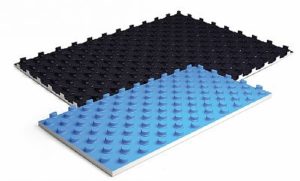
For your information! The use of heat-insulating mats with bosses in the construction of hydraulic heated floors eliminates the possibility of pipe displacement during installation work and when laying screeds.
The film coating on different models of heat insulators with studs varies. Some models lack this coating entirely, but this doesn't affect the product's quality.
The slabs are equipped with special locking grooves, which facilitates installation and ensures a reliable seal. This creates a single sheet of concrete that can be filled with any type of screed. Another advantage is excellent sound insulation, reducing noise levels to 25 dB.
Recommendations for choosing mats
When choosing an insulating lining for hydronic underfloor heating, consider the technical specifications. Let's take a look at them:
- degree of waterproofing;
- the ability to withstand any loads - static or dynamic;
- Technical features of the premises. Avoid purchasing the cheapest, lowest-quality products.
When choosing, you must adhere to a number of rules:
- It is better to give preference to products with a foil or laminated layer - this will ensure waterproofing of the structure and the efficiency of the system;
- It is necessary to take into account the diameter of the pipes and the step of their laying - they must be compatible with the given parameters of the mat;
- The thickness must be selected taking into account the level of insulation of the base - while also taking into account the thickness of the screed and floor covering, so that the height of the structure does not exceed the permissible size.
If there is no need for additional insulation, then the thinnest mats with bosses will be sufficient; they will facilitate the installation of the circuit.
To purchase quality products from a trusted manufacturer and avoid buying homemade products, you should demand that the seller present certificates.
Roll underlayment does not have a high degree of waterproofing, so it should not be purchased for placement on the ground floor, or for installation in apartment buildings where neighbors live below.
Because if the circuit leaks, it won't be able to hold back the water, and it will seep downwards. Polystyrene sheet mats with foil backing are suitable for water-heated floors; they have enhanced waterproofing properties.
When constructing hydraulic floors, the material's density and the load it can withstand are of great importance. Polystyrene and foil-clad insulation boards also excel in this regard. These types of insulation are ideal if the system is being used as the primary heating source.
However, the rolled product is recommended for structures that act as an additional heating device, as it has a low density.
Tips for installing thermal insulation
Before laying the mats, a number of preparatory steps are required. Calculate the floor power and the area the heating circuit will occupy.
Then, you need to decide on the pipe laying pattern: “spiral” or “snake”.
When starting work on installing insulation, the following rules must be observed:
- Regardless of the type of mat chosen, a waterproofing layer is required. The base can be covered with a standard film, or a coating or penetrating insulation can be used. Additionally, the entire perimeter of the room should be covered with damper tape.
- The mats are placed on top of the waterproofing and the sheets are connected using locking elements (if any).
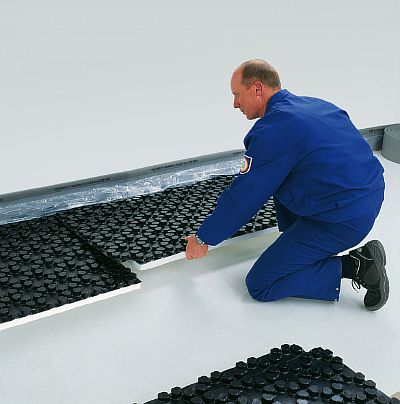
- When using thin and lightweight slabs, they need to be secured to the floor. Glue is suitable for this, but metal fasteners are strictly prohibited, as they will damage the waterproofing layer and the strength of the product.
- When laying flat underlayment without locking joints, the joints are sealed with waterproof tape. If the slabs have a foil-coated layer, the tape should also be foil-coated.
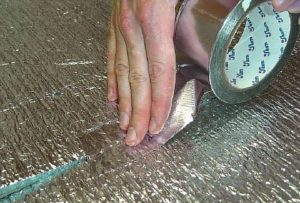
- The foil side of the backing should face up.
The layout of the water circuit can only begin after the insulation has been installed over the entire floor surface.
Overview of manufacturers and models
Today's market offers a wide variety of insulating mats for underfloor heating installations from Russian and international companies. However, the following manufacturers hold the leading positions:
German company Oventrop — produces high-quality products with enhanced performance characteristics. The company's product range includes pre-studded profile mats, dry-installation slabs, and polypropylene film-coated products in both folded and rolled formats.
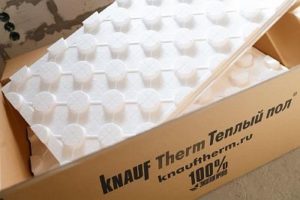
Knauf (Germany) is a popular company that produces high-quality boards.
German company Rehau — its thermal insulation products are particularly popular. The company's product range includes polystyrene foam mats with a studded core, equipped with a thermal and sound-insulating layer.
Energoflex (Russia) — specializes in several models of thermal insulation with applied grid markings (50 mm pitch) for circuit installation:
- slabs with a foil surface and mats with bosses made of foamed polystyrene;
- a thin rolled product with a foil layer.
Russian company Ecopol Its products boast excellent thermal insulation properties. The company specializes in producing smooth slabs and mats with bosses for fastening underfloor heating pipes, equipped with locking devices and a waterproofing film.
"Format" (Russia) — manufactures high-strength polystyrene foam boards in two types: laminated and non-laminated. The products are manufactured on German equipment using self-extinguishing raw materials.
When choosing a mat for a warm water floor, experts recommend paying attention to the following models:
Expanded polystyrene boards Knauf Industries — dimensions 1200 x 600 mm. The product has large bosses that securely hold 16 or 20 mm pipes. The sheets are equipped with a locking mechanism and markings for contour installation.
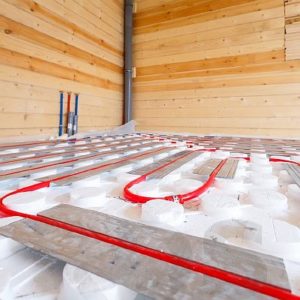
Mats with protrusions Rehau Varionova — polystyrene panels measuring 1400 x 800. The price of the underlayment fully reflects its quality. A water circuit with a diameter of 14–17 mm can be installed at 50 mm intervals.
Foam shield WF 16-50 — has a cellular-porous structure with a density of 25 kg/m³. This provides excellent thermal insulation. The sheet size is 1000 x 1000 x 50 mm. The structure is equipped with protrusions and openings that securely secure a 16 mm diameter pipe.
NP-35 from Oventrop — mats with knobs, recommended for installing self-leveling floors and concrete screeds. They offer enhanced thermal and sound insulation.
As you can see, mats play a vital role in the design of hydronic floors. They're inexpensive, but the benefits are enormous. They increase the system's efficiency and service life, and improve home comfort.