Fum tape is Ftoroplast Usealing MMaterial. Made from vacuum-dried fluoroplastic, it is a narrow, thin strip. This sealant is flexible and resistant to high temperatures, excess pressure, aggressive chemicals, acids, and alkalis. It is used to seal joints under pressure, such as in gas or water supply systems.
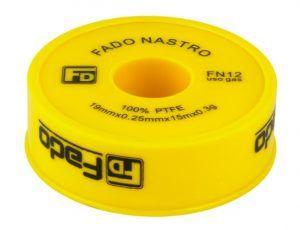 The answer to the question of whether FUM tape can be used for gas connections is yes, but with certain conditions:
- threads cleaned of metal shavings and degreased;
- the diameter of the pipes to be connected is no more than ¾ inch;
- low working pressure;
- Do not use in connections that are subject to strong vibration.
- Work with high-quality, certified yellow gas tape.
It was only in the middle of the last century that FUM tape for gas pipes was developed, made from Teflon by rolling out a cord.The abbreviation FUM stands for fluoroplastic sealing material. It is used as a deformed filler and also as a thread lubricant, which improves sealing.
Types of sealing tapes
The film is differentiated by color. FUM tape for gas is yellow, while for all other connections it is white. Yellow tape is intended for low-pressure gas supply systems.
This material is produced on a spool up to 10 meters long. It is successfully used for threading pipe threads in pressure systems, including plumbing, gas, and heating systems.
Its purpose in connections is as a deformable filler that acts as a thread lubricant, helping to improve sealing. This sealant is available in three types:
- Type 1 – for use in pipeline systems for transporting aggressive liquids, applied using purified petroleum jelly;
- Type 2 – for pumping strong oxidizers, which prohibits the use of an additional sealant in the form of oils;
- Type 3 – used for transporting relatively clean liquids and gases; the use of lubricants is excluded.
FUM tape for plumbing differs from tape for gas pipe connections. The thickness of plumbing sealant is 0.075–0.2 mm, while for gas it is 0.1–0.25 mm, with a width of 10 to 20 mm. It is wound onto reels, which are highlighted in yellow when used for gas applications.
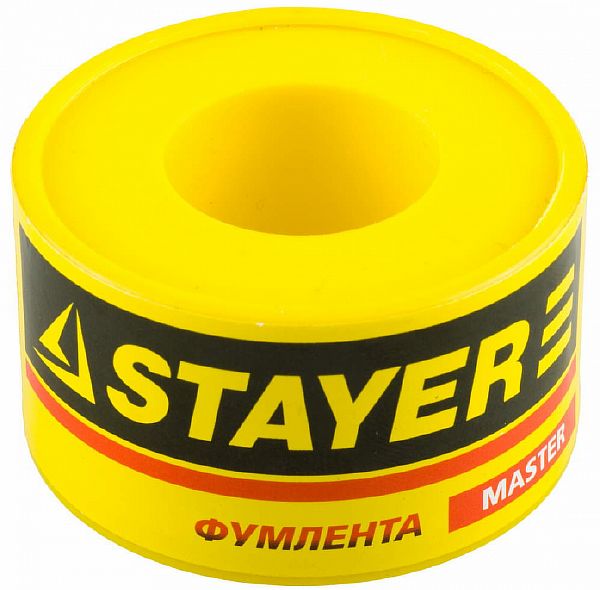
For gas networks with low pressure, the use of plumbing tape is permitted.
Main technical properties of sealing tape
Fluoroplastic is stable in chemical environments and retains its properties over a wide temperature range.
Physical properties of gas tape:
- Reduced friction coefficient. The fluoroplastic seal, in addition to being flexible, is slippery, making fittings easier to screw on.
- Thermal stability, operating temperatures from -70°C to +260°C without degradation or loss of sealing properties. Furthermore, fluoroplastics are highly effective dielectrics.
- Strength and ductility. Seals made from this material operate reliably at pressures up to 10 MPa and can withstand short-term loads of up to 42 MPa, such as those caused by hydraulic shocks in pipeline systems. The service life of the seal made of FUM tape (fumki) is determined to be 13 years.It degrades more quickly when exposed to light, but this isn't the case here; it's simply a factor to consider when storing the material.
- Chemical resistance. It is not subject to degradation by acids and alkalis, due to the uniform distribution of fluorine atoms across the surface of the product. Solvents capable of destroying this sealant have not yet been invented. It is resistant to decay.
- Density –1.2 g/cm³.
The material is non-flammable, rot-resistant, and versatile. Its inertness allows it to be used in drinking water pipelines and tanks.
Gas tape can be used in plumbing, but plumbing tape cannot be used in a gas system.
FUM gas tape is best suited for sealing plastic and metal-plastic pipes and thin-walled fittings. Therefore, it is used in gas piping installations in apartments and small sections of pipelines. Flax is used for sealing main lines, such as those supplying gas to the house.
Household gas is very dangerous. To ensure a reliable pipe connection, it's best to leave work using PTFE tape to an experienced professional. They'll know how to apply the tape correctly and do a high-quality job. A beginner shouldn't attempt such a responsible task.
Let's take a closer look at how to properly use FUM tape for plumbing pipes or gas.
How to apply FUM tape to a pipe thread
This operation is always performed on external threads. If repairs involve replacing a fitting, the pipe threads must be thoroughly cleaned of dirt and rust, degreased with acetone or white spirit, and air-dried for approximately 10-12 minutes. Below, we've provided a detailed procedure for using FUM tape to ensure maximum efficiency of the pipe threaded connection:
- the seal must be wound onto the thread from its rear end;
- the FUM tape is applied in the direction of its descent, that is, its end should be located in the direction of screwing on the fitting;
- Winding is done with tension that ensures a tight grip on the pipe thread profile. It is better to allow the tape to break than to wind it loosely;
 FUM tape is applied to the thread in 3-4 layers to connect small fittings. For maximum permitted sizes (up to 150 mm), the number of layers can be up to 20-25;
- the thickness of the winding should be slightly greater than when using flax fiber, since the winding is destroyed when the fitting is screwed on, and the remains tightly fill the gaps in the thread, creating a reliable seal;
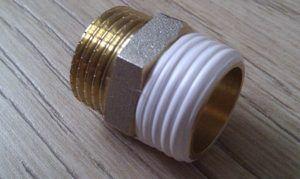
The threads are notched in the axial direction to prevent the sealing material from turning when the fitting is screwed on.
If there are no such notches, you need to make them yourself.
FUM pipe tape is a modern and widely used method for sealing joints in pipelines for various purposes. FUM cord products, which have appeared in recent years, offer no significant advantages in either application technology or efficiency.
To understand how to use FUM tape for gas pipes, you need to consider the characteristics of the material and apply it accordingly.
Checking connections
A long gas pipeline is tested section by section. The section from the gas entry point to the appliance valves is insulated. The pipes are pressurized to excess pressure—25% higher than the operating pressure. If the pressure drops, there's a leak somewhere.
In this position, check each connection point separately using a gas leak indicator or soap solution.
In the first case, the device alerts you to a leak with an audible, visual, or digital signal. If you apply the soapy solution to a poorly sealed joint, bubbles will appear. The joint must be disassembled and the work done again.
It is prohibited to check for gas leaks with an open flame (matches, candles, etc.) – this can lead to tragic consequences.
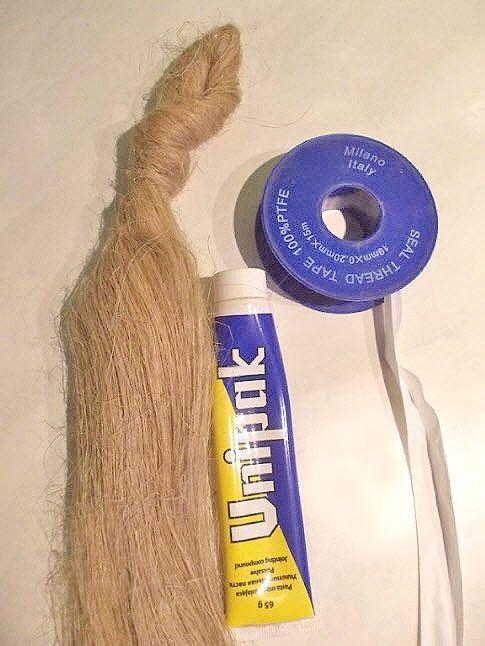
Alternative materials - flax tow
Various seals are used, including bast fibers in the form of strands and various sealants.
One of the first sealing materials to find widespread use in pipeline installation was tow. This term, still used today, refers to strands of flax fibers wound around the external threads of pipes.
It's important to carefully wind it in turns, filling the entire thread profile. For a more reliable seal, the tow winding is coated with additional materials, from thick paint to specially formulated sealants.
We have already noted that, despite their relatively high efficiency, connections using paint become practically inseparable, and pipeline systems are difficult to repair.
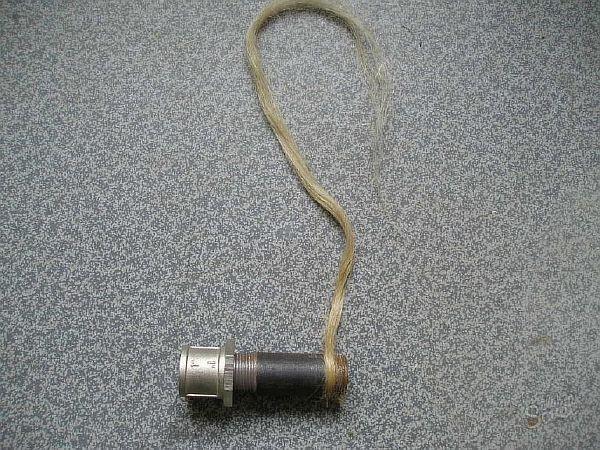 The advantages of sealing joints with plumbing tow are as follows:
- the ability to adjust the connection according to its location – the fitting can be turned in the opposite direction at an angle of up to 45 degrees without losing its insulating properties;
- sufficiently reliable tightness and ability to absorb moisture;
- the joint is resistant to mechanical influences;
- easy dismantling of the joint.
The disadvantages include a tendency to decompose as a result of putrefactive processes, since the material is classified as an organic product.
Liquid FUM or anaerobic sealant
This is a polymer resin. A slow-curing, single-component product. This gel sealant not only improves the tightness of the connection but also significantly enhances its ability to withstand mechanical stress. This is especially important in pipeline systems due to constant vibration and water hammer.
Essentially, this connection follows the "set it and forget it" principle. However, you'll have to remember when disassembling it, as it can only be disassembled after heating it with a blowtorch.
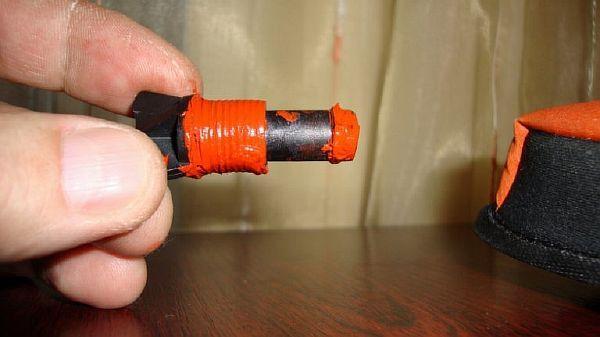
The sealant hardens upon contact with air or the mating surfaces of the threaded connection, acting as an adhesive and turning the assembly into a monolithic part.
It is used as a sealant for metal threaded connections. It is flexible and resistant to temperature fluctuations and vibration. Liquid FUM is a viscous blue or red liquid with a slight odor.
The most common method of classification is by color and there are two main positions of this division:
- Blue – represents medium-strength sealants. They can significantly reduce the rate of thread loosening. In practice, even the slightest loosening of a joint would require prolonged exposure to severe alternating loads. However, when using blue sealants, threads can still be turned, albeit with great difficulty.
- When using red sealants, this operation without heating is impossible. This gel simply bonds the structure. It is used for pipelines in areas subject to strong vibrations (from pumping equipment) and where water hammer is possible.
Technical specifications:
- density – 1.09 g/cm³;
- operating temperature – -55° +180°;
- pressure – up to 50 bar;
- soluble in acetone and trichloroethane.
Replaces flax and FUM tape in water and gas pipelines, in systems with petroleum products and chemicals, except oxygen.
The curing time at +20°C for pipes up to 1 inch in diameter is 15-35 minutes, and for larger diameters, up to 1 hour. After this time, the joint cannot be loosened by hand. Intermediate curing takes 2-3 hours. The final result is achieved in 12-24 hours. At lower temperatures, the curing time increases and additional heating is required.
The sealant reliably seals the threads and protects them from corrosion.
Directions for use
The threaded connection must be thoroughly cleaned and degreased.
Apply a thick layer of sealant to the external threads of the parts to be joined. Apply a lighter layer to the internal threads, spreading it evenly over the entire thread surface. Connect the parts in the usual manner. Remove excess sealant. Leave until completely sealed. If necessary, the connection can be easily disassembled and then reassembled. In this case, there is no need to remove old residue before applying sealant.
Modern synthetic materials are easy to use. The process of sealing threaded connections is quick and easy.
Conclusion
FUM tape for gas pipes is one of the main methods for sealing joints during pipeline installation. The methods for using FUM tape for gas pipes described here take into account all the main properties of the material, but do not preclude the contractor's creative approach to this important task. It is important to understand, however, that the gas main is a source of increased danger.