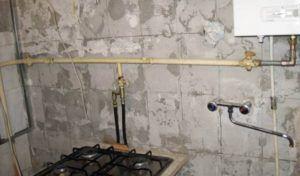
 Many modern kitchens have a serious drawback: they are characterized by gas pipes that are too open and clearly visible in the kitchen or hallway.
Such a kitchen addition is difficult to conceal or disguise. While the apartment owners can hide the plumbing according to technical regulations, the gas line must always remain accessible.
This article is dedicated to how to easily, beautifully, and most importantly, safely hide a gas pipe in the kitchen.
- What do the regulations say about concealing gas pipelines?
- We choose the best method to hide the pipeline
- Building a plasterboard box to hide a gas pipe
- Kitchen furniture for decorating gas equipment
- Railing system to hide pipelines
- How to decorate a gas pipe in the kitchen
- Painting or painting
- Conclusion – which option to choose?
What do the regulations say about concealing gas pipelines?
Many have undoubtedly seen the various tricks that neighbors, relatives, and friends resort to during renovations to hide gas pipes. The internet offers even more options. However, only a few methods may suit your design. Moreover, some decorative techniques are generally prohibited for use inside residential spaces.
For example, it is prohibited to shorten, cut, reposition, or transport kitchen gas equipment on your own. Such actions require permission from the gas service, and dismantling and relocating systems must be performed by professionals.
Failure to comply with this rule can lead to significant consequences for kitchen owners if a violation is discovered. At best, they will be fined for unauthorized use, after which they will be forced to correct the violation. At worst, poor workmanship can lead to a gas leak, which could result in an explosion and the death of residents.
So, is it possible to hide a gas pipe in the kitchen yourself? Of course it's possible, but many homeowners avoid drastic options, preferring to conceal the pipeline in various ways.
Among the various solutions for covering unwanted protrusions, it's important to remember building codes and regulations, which contain a number of prohibitions. For example, it is strictly prohibited to:
- hide gas pipes in any shafts;
- cover with a permanent box;
- Mount it into the wall, reducing accessibility.
It is possible to formulate basic requirements that will ensure safety and simultaneously transform the space.
- Firstly, the space should not become completely closed to prevent a critical concentration of natural gas in the event of a possible leak.
- Secondly, if the object is closed, then free access to it is always necessary if a specific odor appears and to check the state of the system.
- Thirdly, it is dangerous to use damaging materials when concealing.
We choose the best method to hide the pipeline
Before choosing a method for solving the problem of how to hide a pipe in the kitchen, it is necessary to pay attention to several conditions:
- where is the kitchen located;
- its design;
- kitchen size;
- resources for hiding.
By analyzing the relationship between these characteristics, you can easily understand which of the algorithms described below is suitable for your kitchen.
Building a plasterboard box to hide a gas pipe
If you're wondering how to cover a gas pipe in the kitchen, you'll likely hear the advice: use a drywall box. Drywall does offer a number of significant advantages: it's relatively inexpensive, easy to install and use, can be constructed in any shape and size (for both vertical and horizontal pipes), and requires no special skills or tools for installation.
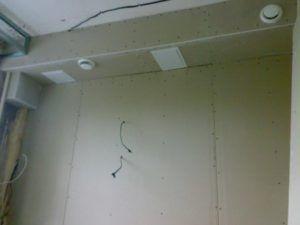
Building a drywall box in the kitchen is a good option for covering a gas pipe. It's simple enough that anyone can do it without assistance. Below is a detailed step-by-step guide.
- Secure the metal profiles. The future frame will be formed on their base. The key is to insert vertical crossbars between the profiles to create additional stiffening ribs.
- Mark the necessary parts on the surface of the drywall sheet in accordance with the dimensions of the frame, while leaving a few millimeters for overlapping one sheet with another at the corners.
- Attach the cut-out drywall pieces to the profiles using screws and a power screwdriver. Make sure the screw heads are countersunk into the surface of the frame so they don't stand out and spoil the finished look.
- In addition to fastening plasterboard sheets at the corners with an overlap, it is recommended to use joint tape at the joints, which gives the structure the effect of uniformity and integrity.
- After completing the installation work, you should move on to the final stage of decoration: fill the surface of the box, paying special attention to the joints and recesses from the screw heads.
- Now the drywall box is no different from a regular wall. It can be painted to match the kitchen wall, tiled, or wallpapered.
- A pipe closed in this way may contain a gas meter or valve, which must be accessible 24/7. Therefore, it's important to consider a means of easy access in advance—for example, a small door or an inconspicuous removable panel.
First, there's a direct failure to comply with safety regulations. Complete isolation will prevent emergency services from quickly reaching the source of a gas leak in the kitchen, which could lead to serious problems.
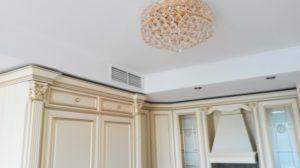
Secondly, the presence of a door or window perpetuates this complexity. A third problem is the excessive bulk of the plasterboard frame, which "eats up" the space of a small kitchen.
Kitchen furniture for decorating gas equipment
An excellent option for covering a gas pipe in the kitchen is to use cabinets to conceal unwanted elements that spoil the look. This solution largely eliminates the drawbacks of a drywall box, due to its greater openness, easy inspection of utilities, and compliance with safety regulations.
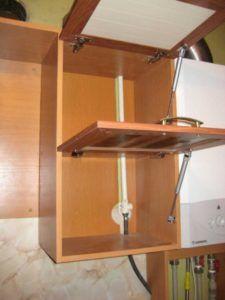 The most important advantage of this decorating method is its versatility: overhead hanging elements will allow you to hide horizontal pipes from prying eyes, while convenient kitchen cabinets will conceal vertical pipes coming from neighbors.
Modern methods of manufacturing kitchen units based on sketches and the apartment owner's requirements give even more scope for imagination and ideas on how to cover a gas pipe in the kitchen.
To reduce wasted space, custom-made cabinets may be designed without back panels, where the gas line would be located. Another solution is to create special cutouts in the walls for the utilities running along the kitchen walls.
If you have a gas water heater in your kitchen, then it can also be easily closed by kitchen furniture, but this does not fully comply with safety regulations, since in an isolated space the consequences of a gas leak are more serious.
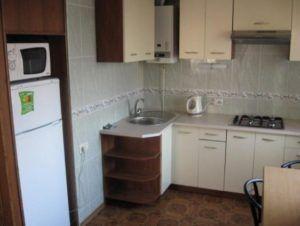
In this case, there is a simple solution - make the speaker cabinet open at the top, and make the closing door from a lattice material that is both decorative and at the same time not sealed.
Railing system to hide pipelines
A railing system is a convenient and incredibly functional way to conceal gas pipes in the kitchen. Once an annoying and space-sapping device, it now offers additional benefits to the homeowner.
Any horizontal pipe can be transformed into such a multifunctional element, as long as it runs relatively close to the main cooking area. To implement this decorative method, the surface must be thoroughly cleaned and then painted with bronze or silver paint to give it a shiny appearance.
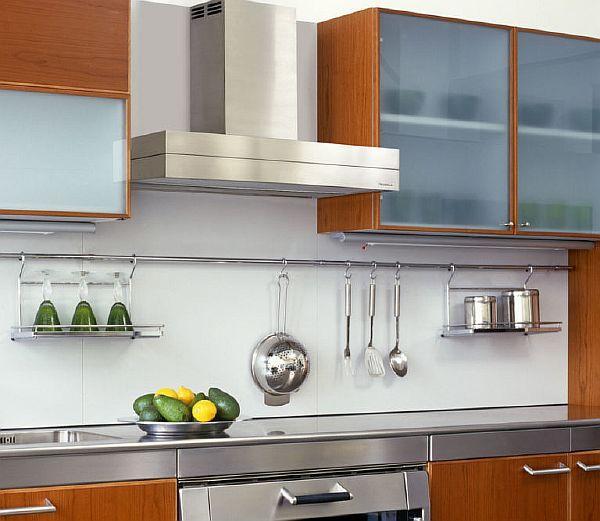
Once the top layer has dried, elegant hooks for kitchen utensils are placed on the cylinder. Avoid overloading the base with heavy pots and pans.
How to decorate a gas pipe in the kitchen
The previous methods involved significant financial and labor investment. If you don't want to undertake a major kitchen renovation, you can hide the unwanted pipe behind some decorative elements.
Painting or painting
Regularly painting your kitchen gas piping is important not only for the beauty of your kitchen design but also for the safety of your homeowners and the preservation of the metal. If you can combine business with pleasure, this is the way to go.
The best way to decorate is to paint it the same color as the kitchen wall. Blending with the surroundings, the main wall no longer draws attention to itself, becoming an organic part of the interior.
- Before starting painting, stop the gas supply to the area being treated;
- try to remove the old paint as best as possible before repainting;
- prime the work surface for painting;
- cover with the selected decorative coating.
A well-executed paint job can effectively draw attention away from an undesirable structure. Often, instead of concealing the flaw, people choose to highlight it.
This is precisely the purpose of various kitchen painting techniques. The choice of method depends entirely on the design. You can paint the pipe to match the pattern of the kitchen backsplash tiles or use a technique similar to wallpaper.
Conclusion – which option to choose?
After describing the methods for hiding a gas pipe, the question of which one is better to choose still remains unanswered.
Decorative methods that pose a risk to life and health should be avoided. However, if kitchen pipes are covered with drywall, the likelihood of hazardous situations will be minimized with careful and prudent work.
The same applies to the use of kitchen cabinets, where the gas pipes and water heater will also be hidden from view. Painted, stained, or railed options are somewhat simpler and more cost-effective, but they leave the system visible, which may be undesirable for some.
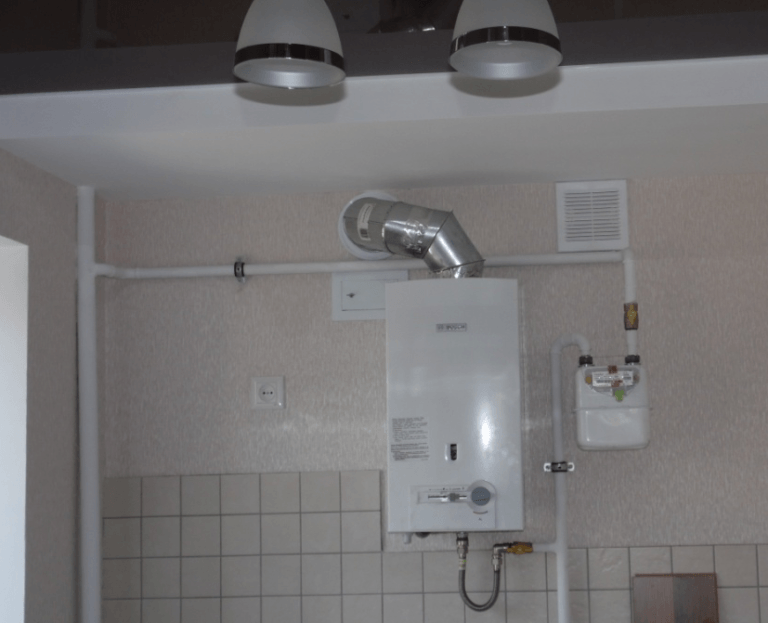

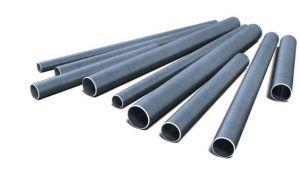
The gas pipes are neatly hidden in the upper cabinet. This method is safer if the top and bottom of the cabinet are open to allow ventilation.