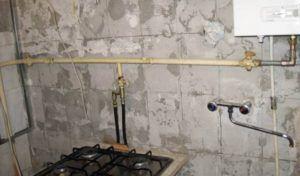
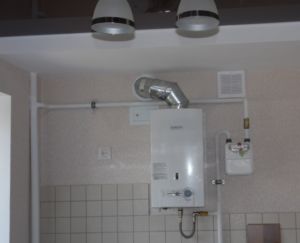
 It is possible to provide an autonomous hot water supply in a private home using special gas equipment, which is a flow-through water heater with a capacity of 2 to 17 liters per minute.
This practical and inexpensive device is more cost-effective to operate than connecting to a centralized hot water supply system.
However, before installing a gas water heater in a private home, you need to understand the specifics of its installation and placement.
- Installation of a water heating device in a private home
- The process of dismantling old equipment
- How to install a water heater in a private home
- Carrying out commissioning works
- Installation requirements
- Model selection
- Obtaining permission to use a water heater in a private home
- Consequences of not having permission
Installation of a water heating device in a private home
The most common location for installing a water heater is the kitchen, as this room ideally suits the requirements for a water heater installation. This room is well-ventilated, has ample space, and allows for a chimney vent to the outside. However, sometimes the unit can be installed in other rooms as well.
To determine whether it is possible to install a gas water heater in a bathroom, it is worth knowing the dimensions of this room.
The minimum room size for installing a water heating system must be at least 15 cubic meters, and in most apartment buildings, such installation is impossible without significant remodeling.
In your home, the room where the bathtub is located can be almost any size – which means you can install a water heater.
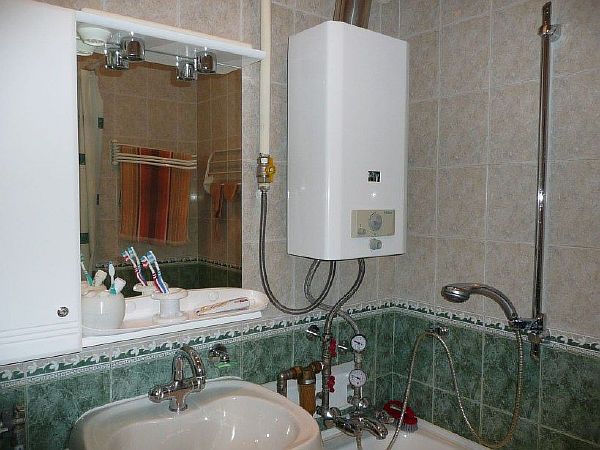
Most of the work involved in installing new equipment and removing existing equipment can be done independently. However, connecting the appliance to the gas supply should be entrusted to a professional.
An insufficiently qualified operator may violate one of the instructions or connection rules, increasing the risk of an emergency situation occurring during the operation of the column.
We invite you to familiarize yourself with the information on how to produce connection of storage and instantaneous water heaters,and also Which water heater is better? Which one should you choose based on its pros and cons?This article provides information on which type of heater to choose and why, along with step-by-step instructions with diagrams and a video tutorial on DIY installation.
The process of dismantling old equipment
Before dismantling old water heaters, you should prepare suitable tools and materials. These include an electric drill, wrenches (open-end and adjustable), fasteners, fittings and valves, hose, tape, and sealant.
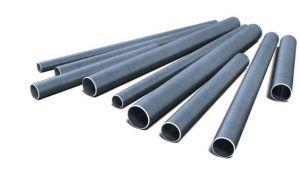
The same list also includes a water supply pipe. Its diameter is usually specified in the appliance's instructions. You should also prepare filters, tools for soldering and cutting plastic pipes, Mayevsky taps, and a corrugated pipe that should match the size of the boiler inlet.
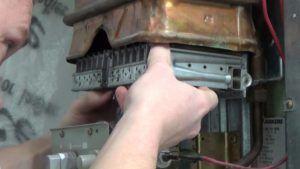 To remove the equipment, perform the following steps:
- Close the valve on the hose that leads from the gas pipeline to the old water heater;
- Remove the hose retaining nut. To avoid damaging the pipe, secure it with a wrench;
- Separate the hose from the equipment;
- Close the valve on the supply water line.
The next step in dismantling involves disconnecting the heater from the chimney. Now it's enough to remove the unit from its wall mounting bracket. After that, proceed to installation.
How to install a water heater in a private home
Whether installing a new water heater or replacing an old one, all work must be completed under several conditions. First, a new chimney is installed and the utility lines are laid. Then, the hood's efficiency is tested, and installation of the equipment begins.
Watch the video
- Determining the room and the specific location where the water heater needs to be installed;
- Marking the wall and drilling holes;
- We install dowels, the number of which is determined taking into account the maximum weight of the heater filled with water;
- Hanging a column and installing filters that ensure water purification and increase the service life of the equipment;
- Connection of Mayevsky taps;
- Cutting a pipe and installing a fitting or tee in it;
 Installation of taps and soldering of connecting elements;
- First, connect the column to the house's cold water supply pipe using a hose and a sealant (tow).
- Check the tightness of the connections by turning on the water to check for leaks. If a problem is detected, the seal must be repacked and the nuts tightened. After this, the draft in the smoke exhaust system should also be checked, which is normally between 1.95 and 29.40 Pa. This value is affected by the room parameters.
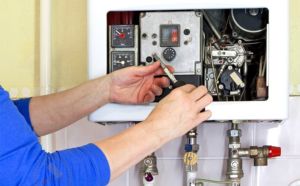
The final step should only be performed by a specialist. First, connect the corrugated pipe to the water heater and flue duct, and the gas pipe to the faucet.
The water heater is secured to the wall using dowels, screws, or clips. Now connect the gas pipe to the water heater, seal the joints, and test them for tightness with a soap solution.
If the joint is not sealed, then by coating it with a soap solution this immediately becomes visible due to the appearance of bubblesA tight seal is achieved by tightening the union nut. During the initial startup of the entire system, a check is performed. tightness of the entire installation and its adjustment.
Carrying out commissioning works
Even knowing how to properly install a water heater in the kitchen, connecting the equipment to the gas, its start-up and adjustment should be entrusted only to to specialists.
Attempting to install and operate a water heater yourself is dangerous not only because it could create an emergency but also because the device's operating characteristics may not meet the required specifications. This latter issue can lead to increased gas consumption and a reduced service life.
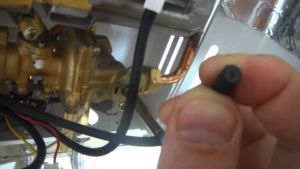 Commissioning work for a water heater is similar to similar actions for a gas boiler and consists of the following stages:
- Control of equipment installation and connections;
- Connection to the power grid (if required by the design of the device);
- Checking the tightness of all connection elements with gas communications at operating pressure;
- Putting the equipment into operation;
- Burner settings;
- Testing in various operating modes.
Having a specialist perform commissioning allows the equipment to operate more efficiently. This means using gas as economically as possible and making the water dispenser even more cost-effective to operate. Furthermore, a properly configured device lasts longer.
Installation requirements
When choosing a location for the equipment, consider the ability to install a hood and vent combustion gases to the outside. Another factor influencing the choice of installation location is the ease of connecting utilities. A third factor is the fire safety of the enclosing structures on which the water heater is installed.
If the wall is made of fire-hazardous materials, such as wood or plastic, it is recommended to install a metal sheet or other insulating material between it and the appliance, extending 100 mm on each side of the appliance. Installation of a gas water heater on wooden structures is not recommended.
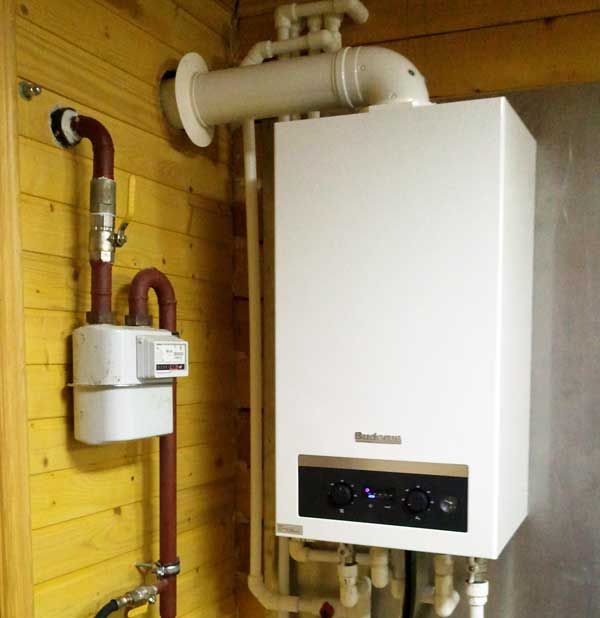
For safe operation, it is advisable to comply with each requirement from the following list:
- the premises in which special equipment is to be installed must be non-residential and have a volume of at least 15 cubic meters (at least 2 meters in height and an area of 7.5 square meters);
- the room must have a window for ventilation;
- water pressure in the cold water supply pipeline should not be below 0.1 atm.;
- the minimum distance from the side of the device to the wall is 150 mm, from the front panel to the nearest object - 600 mm, from any surface of the water heater to the gas stove - 100 mm;
- Water supply is provided by pipes or flexible hoses with a diameter of at least 13 mm and a length of no more than 2500 mm.
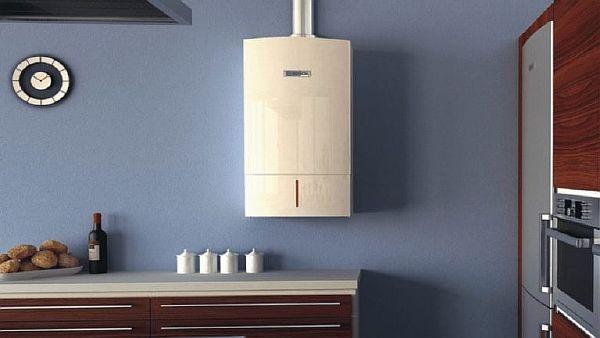
The minimum diameter of the smoke exhaust system's intake duct is 12 cm. The same parameter for the pipe that removes gas from the water heater must be no less than 11 cm. The length of this same part ranges from 0.3 to 2.0 m, and the slope must be greater than or equal to 2 degrees.
Watch the video
Model selection
Whether a homeowner knows how to properly install a gas water heater or plans to hire a professional for installation, choosing the right model is an important step in preparing for installation. First, determine the appliance's manufacturer.
Watch the video
Having decided on a manufacturer, pay attention to the following characteristics:
- power on which the hot water consumption depends;
- level of safety of using the device;
- ignition method;
- the presence of additional functions in the column.
The capacity of a gas water heater is measured in kW, and the flow rate, which depends on this capacity, is measured in l/min. The capacity is selected based on the number of residents in the home.
For a family of 5–6 people, a 26–28 kW unit is recommended. A larger family requires a 34 kW unit, and for a couple living in a small house, a 15–20 kW model is sufficient.
 When assessing the safety of a device, ensure it has automatic shut-off functions in the event of water or energy shortages, lack of draft, gas leakage, or flame extinction. To achieve this, the device must have special devices monitoring all operating parameters.
These include ionization, combustion, flow, draft, overheating, and low pressure sensors. If a dispenser is missing even one of these sensors, it cannot be considered safe.
Depending on the starting method, gas equipment can be piezo-ignited (an option that requires connection to the electrical network), generated by a spark from batteries, or from a small generator.
Among the additional functions it is worth noting automatic adjustment of flame power, necessary to compensate for fluctuating water pressure. An important option is the presence of an LCD display showing operating parameters.
Obtaining permission to use a water heater in a private home
There are regulations that must be followed if you decide to install a water heater in a private home. First, you need to obtain permission from the relevant authority. The homeowner will need to draw up a building plan and have the chimney inspected for functionality (and obtain a certificate).
The next step is submitting an application to the Gorgaz office for the conversion of a private home. Once permission is received, specialists can be called in to install the appliance.
Gas workers are required to first approve the work plan and perform the following actions:
- make a cut into the gas pipe;
- install a gas meter;
- hang a column (if this work has not already been done by the owner of the house);
- paint the gas pipe with yellow paint, which is accepted for marking gas communications.
Once all work is completed, a gas service specialist must be called to configure and commission the water heating system. The meters must then be sealed. The final step is obtaining permits for the use of specialized equipment from the fire department and the technical supervision authority. A project of the installed meter must also be submitted to the Technical Inventory Bureau (BTI) for documentation adjustments if the building is an apartment building.
Consequences of not having permission
Connecting to the gas supply without the necessary permits and operating a gas water heater will result in a fine. The amount of the fine depends on the connection method.
If the illegally installed equipment is connected to a connection after the meter, the violation is less severe, and the fine will be between 10,000 and 15,000 rubles. If the water heater is connected before the meter, the fine will be even higher.
If a connection is discovered before the meter, the gas supplier has the right to sue the consumer for "material damage." Such legal action could result in a fine or criminal liability.
Watch the video
All this leads to the following conclusion: gas water heaters cannot be connected without permission. However, if obtaining permission is a problem, it's worth considering heating water using other methods. For example, using an electric water heater, which is much easier to install and doesn't require any approval.