 Few people have encountered insufficient water pressure in their apartment's water supply system, a phenomenon for which standards are practically not enforced anywhere. This is especially common on the top floors of multi-story buildings.
However, let's look at the regulatory documents - according to the standard, the minimum pressure level at the outlet of the tap in the network must be at least 0.3 atmospheresAt this pressure, the toilet cistern will gradually fill, allowing you to leisurely wash your hands and pour water into the kettle.
However, any housework will have to be postponed until better times. To solve this problem, you can use a pump to boost the water supply pressure or follow the other recommendations outlined in this article.
- Why is it important to know the water pressure and what problems can arise due to high pressure in the pipeline?
- Regulatory documents for private and multi-apartment buildings
- These values are according to SNiP standards
- Features of water supply in an apartment building
- Tee wiring in the apartment
- Collector wiring in the apartment
- Mixed schemes
- Installation of a plumbing system in a country house
- How to determine the pressure in a water supply system – a modern and traditional method
- Low water pressure – where to turn
- What devices can increase the pressure in an apartment's water supply?
Why is it important to know the water pressure and what problems can arise due to high pressure in the pipeline?
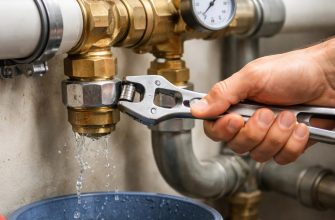
 In today's modern household and sanitary conditions, the pressure in an apartment's water supply pipes largely determines the comfort of living. Knowing this value will prevent breakdowns in the water supply system, preventing damaged valves or couplings, leaks in threaded connections, and other problems.
These defects can occur due to high pressure in the pipeline. If you don't know this value, you won't be able to take proactive measures to correct these defects.
And they can manifest themselves in abundance under excess pressure in the system. Of course, knowledge alone means nothing; it should lead to specific actions that prevent undesirable consequences.
It's important to remember that household appliances are very sensitive to pressure. For example, a Jacuzzi or massage shower may simply not function if the pressure is below 4 atmospheres. A dishwasher or washing machine may not wash dishes or clothes if the pressure in the system is below 2.5.
The pressure in an apartment's water supply system must be taken into account when purchasing household appliances and plumbing equipment. In some cases, this pressure may deviate from the standard, resulting in a wasted purchase and the associated frustration and disappointment.
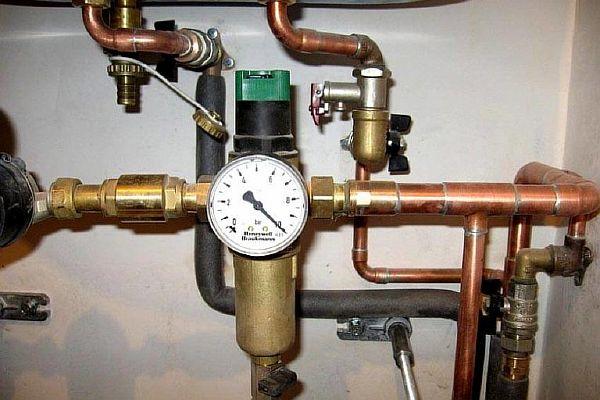
These are quite compelling reasons to install a pressure monitoring device – a pressure gauge – in the water supply network.
Regulatory documents for private and multi-apartment buildings
First, you need to figure out how water pressure in the pipeline is measured. According to the established system, it is measured in units called bars.
It corresponds to the force required to lift a column of water to a height of 10 meters. However, a more common unit in Russia is the "atmospheric unit," which is equal to one bar.
In urban systems, the standard pressure is 2.5-4 atmospheres. This is sufficient to adequately supply water to multi-story buildings.
For those living in private homes, pressure calculations must be done independently. There are no specific standards, and the specific characteristics of the system are the only guide. The standard water pressure in a private home with a pumping station is 1.5–2.9 atmospheres.
At this pressure, all household appliances, including dishwashers and washing machines, can operate successfully. Only hot tub enthusiasts will need to increase the pressure to 4 atmospheres. At higher pressures, many devices may malfunction or give inaccurate readings.
However, in gushing artesian wells, this pressure can reach 10 atmospheres, at which point the water supply system cannot function. In such cases, pressure reducers are installed to reduce the natural pressure to 6.0-6.5 atmospheres.
These values are according to SNiP standards
Standards for pressure values are given in accordance with SNiP 2.04.01.85.
As stated in this document, according to the standard, the value should be within the range from a minimum of 0.3 to a maximum of 6.0 atmospheres for cold water and from a minimum of 0.3 to a maximum of 4.5 for hot water.
It cannot be said that the lower limit of water pressure will be sufficient, it is simply a lower limit value.
We invite you to download “Building regulations and rules for internal water supply and sewerage of buildings - SNiP 2.04.01-85” - Building codes and regulations for internal water supply systems SNIP-2-04-01-85
Watch the video
Features of water supply in an apartment building
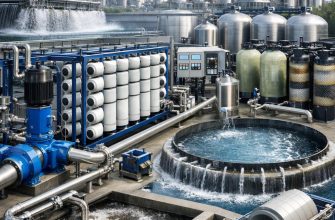
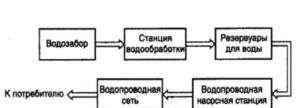
Centralized water supply systems in urban areas consist of several technological cycles:
- Water intake. For drinking water, it can be constructed from a sufficiently full-flowing river or a system of artesian wells.
- A water treatment plant that filters and precipitates solids, as well as disinfects the water of bacterial components and harmful chemicals. Upon exiting, the water undergoes quality control in a dedicated laboratory.
- Water prepared for use is accumulated and stored in special large reservoirs.
- Prepared water is collected from the storage tanks by a water pumping station and distributed further.
- The water supply network is connected to the house distribution networks and is supplied to the apartment distribution systems via risers.
In-apartment water supply systems can have various configurations. Let's look at them to gain a clearer understanding.
Tee wiring in the apartment
This method of forming water pipes in apartments is still used today.
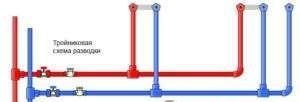
It includes the following main elements:
- A distribution pipe connected to a riser. A ball valve at the inlet is a mandatory component.
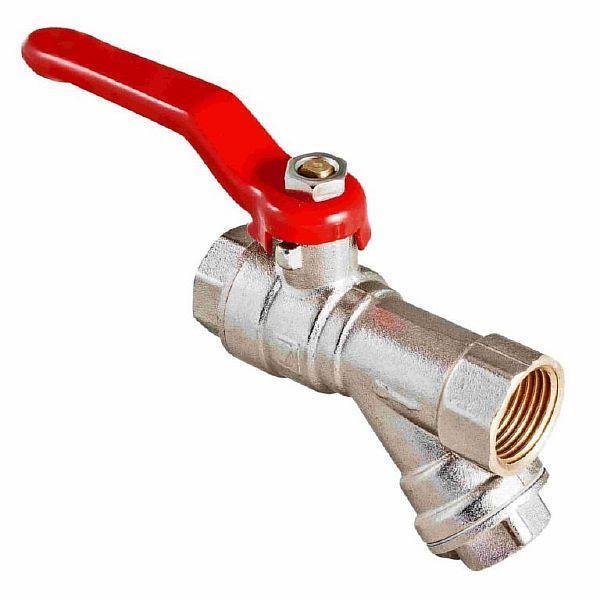
A coarse filter is essential. It traps impurities in the water on its mesh. Without it, pipes quickly clog and obstruct flow, often causing pressure drops.
The filter requires regular cleaning. The frequency depends on the degree of contamination, which you determine yourself during operation.
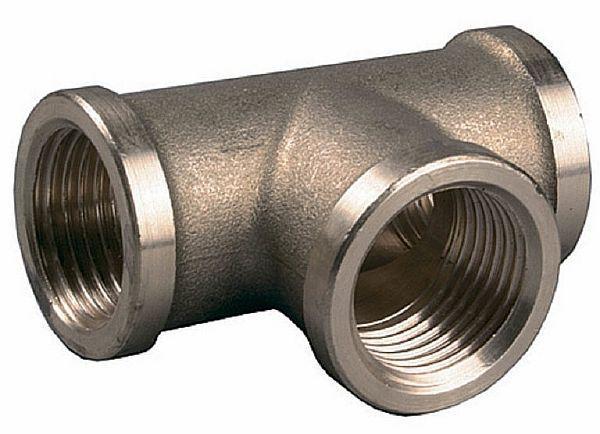
- During the installation of the water supply system, tees are cut into the distribution pipe, from which various plumbing fixtures and household appliances are connected.
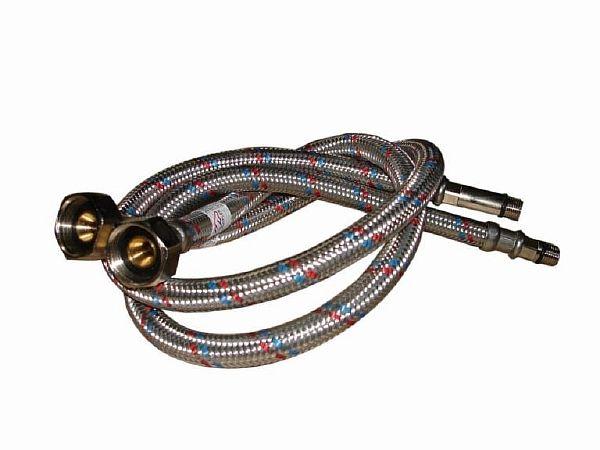
- Flexible hoses are used to connect baths, showers and other water intake points.
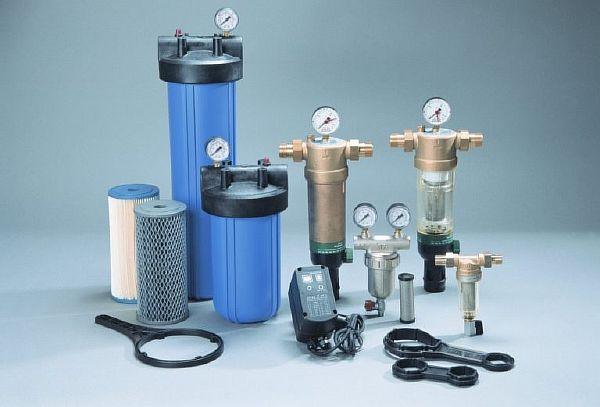
- When connecting many types of household appliances, manufacturers recommend installing an additional fine water filter in the water supply.
The advantage of this type of plumbing system layout is the minimal need for pipes and fittings.
But the disadvantages are also quite significant:
- When repairing and maintaining the distribution system, it is necessary to turn off the water at the central tap, as a result of which it is impossible to use the other water intake points;
- When several taps are opened at the same time, the pressure in the water supply network drops sharply, making it difficult to use water.
Collector wiring in the apartment
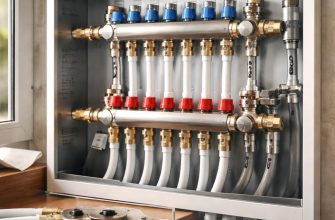
A slightly different layout is achieved using a manifold. In this case, the same feeder pipe is connected to the riser, but it doesn't participate in water flow distribution, ending in a manifold.
It is a body from which branch taps are installed to various points of consumption, including plumbing equipment and household appliances.
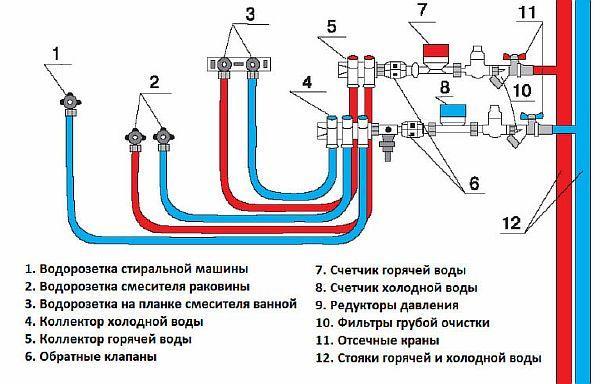
With this type of water supply distribution system, the pressure in the various branches of the network will be the same.
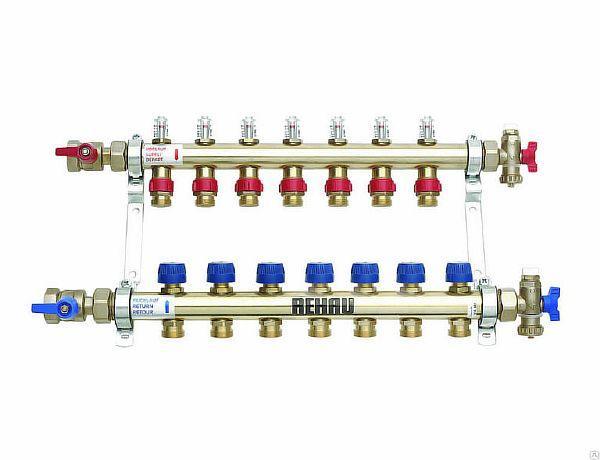 Additionally, the comb allows individual branches to be shut off for repairs or maintenance, while the others continue to operate normally.
A manifold layout allows for individual water supply adjustments for each point of consumption, depending on its characteristics. It's advisable to use a pressure switch. If a particular appliance has higher water quality requirements, additional filters can be installed upstream of the device.
The disadvantages of the manifold system include the need for a relatively large number of pipes. However, this is offset by the reliability and ease of use of the pipeline.
Mixed schemes
They are used when it is necessary to install complex, branched, and long pipelines, to avoid the need to extend pipes over significant distances.
To do this, a second supply pipe is installed through a tee at the inlet and another comb is connected to it to organize the distribution.
Such complex systems can be used in large country houses and cottages.
Installation of a plumbing system in a country house
The key to water supply in a private home is identifying the source. Even if a centralized water supply is available, relying on it with caution.
During the irrigation season, water demand is so high that there is usually a shortage. Meanwhile, the pressure in the city water supply drops so low that it is practically impossible to use it for its intended purpose.
Alternative water sources may include other water intakes, such as:
- wells;
- wells;
- natural bodies of water – lakes or rivers.
Regardless of the choice, in each case, technically complex devices will be required, requiring a certain investment of money, time, and effort.
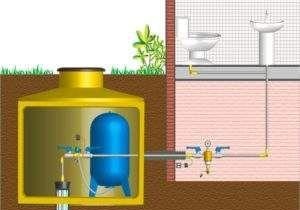 In a normal water supply system, the homeowner will have to individually go through all the procedures that apply to a centralized water supply:
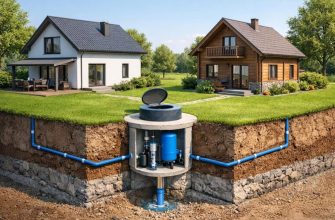
- Water is collected using a pump; the bucket method is not considered. Depending on the demand, units ranging from 0.7 to 3 kilowatts are used.
- To supply water to the house, it is necessary to install a separate water supply system using metal or plastic pipes, installed below the frost line. It is advisable to additionally insulate the pipes to protect them from extreme cold.
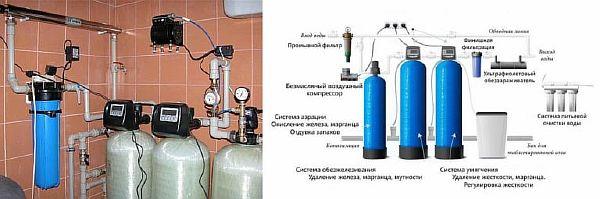
- A water purification system that includes iron removal, softening, and biological and chemical treatment for disinfection. In some cases, ozonation and ultraviolet irradiation are also used. Consultation on the required treatment is available at your local water utility laboratory. To do this, after drilling and pumping the well, water samples must be taken and submitted for analysis. These results will provide insight into the required treatment methods and the suitability of the water for domestic and industrial use.
- To operate the well, its walls must be reinforced with concrete rings or other available means - plastic pipe, brickwork, wooden frame.
A special pit, called a caisson, is constructed for the well, the walls of which are also reinforced using readily available means. The caisson houses the well's power equipment—a pump or pumping station, and control and regulation instruments.
- After this, you can begin installing the plumbing system. If the house has 2-3 residents, a tee-type system can be used, but for complex, branched water supply systems, a manifold system is better. The procedure and equipment required are the same as described above.
If irrigation is provided on the plot of a country house, and this is usually the case, it is organized in a separate circuit, bypassing the water purification stage.
How to determine the pressure in a water supply system – a modern and traditional method
Knowing your water pressure is essential if you have complex household appliances. In some cases, they are sensitive to this pressure, and either too little or too much can lead to failure.
To accurately determine the water pressure in an apartment building's water supply system, it is necessary to use measuring instruments. If the pressure in the system is unstable, it should be checked before each use of critical appliances.
There is a simple way to check if the pressure is sufficient: a three-liter jar, with normal pressure and a fully open tap, fills with water in 7 seconds.
Watch the video
Low water pressure – where to turn
Watch the video
Low blood pressure can have various causes, and before making a complaint, it's important to accurately determine the source of the problem. The following steps may be recommended:
- By interviewing residents of nearby buildings, determine the water pressure in each of them. If problems with this indicator are present in neighboring buildings, the problem lies with the main water supply and the city water utility should be contacted.
- You should check with your neighbors on the riser; if they're also experiencing low pressure, then the clog is in the riser. The riser is managed by the utility company, so they're the ones to blame.
- If there is a problem with the water pressure on the neighboring floors, then the cause lies in the poor condition of the building's distribution network, which is also the responsibility of the utility company.
- Insufficient water pressure from the taps inside the apartment may indicate a blockage in the internal pipes, which is the apartment owner's concern.
- There's poor water pressure in one of the faucets in your apartment. In this case, you'll have to replace the faucet, tap, or aerator screen yourself.
Let's recall the beginning of our article, where we cited SNiP standards that stipulate the lower permissible pressure limit is 0.3 atmospheres. And who among the utility workers cares that even washing hands becomes a problem under these conditions?
What devices can increase the pressure in an apartment's water supply?
There are several ways to improve plumbing when the water pressure is insufficient. Before increasing the water pressure in your apartment, make sure the pipes are in good condition to withstand the procedure without any problems.
In cases where utility companies are unwilling to address the issue of increasing pressure under any pretext, the matter becomes more complicated, since additional equipment can only be installed with their permission.
Watch the video
If the project is resolved, a pump can be used to increase the pressure in the water supply. If there is no water in the tap, a pumping station with a pressure accumulator must be installed, but this is only possible if there is water in the neighbors' water supply below.
If there's water at the tap, a standard pump is used to increase the pressure. Consumers install it at the water supply inlet to their apartment.