VGP pipe is a steel electric-welded pipe for domestic and main gas and water pipelines: INodo — IN, Gazo — G, Pwire - PIt does not deform under high temperatures, is durable, and wear-resistant. To prevent corrosion, VGP is manufactured according to GOST 3262 from galvanized steel.
Steel water and gas pipes are most often used for laying heating mains and water lines. Plastic pipes are not always acceptable, as they are prohibited in the gas industry.
We'll explain what a pipe is, what the abbreviation VGP stands for, what types there are, and how they are labeled. You'll learn about manufacturing technology and which pipe to choose for a specific application, based on its key characteristics.
VGP pipe
What does the VGP pipe marking mean? It's a type of rolled metal profile with special characteristics. These include a reinforced seam, which allows it to operate and pump fluids under high pressure.
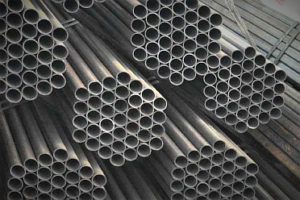
Marking and decoding
The abbreviation "VGP" is used for marking. VGP stands for "water and gas pipe." It's clear that it's intended for gas and water mains. Another common designation is "DU," which stands for "nominal bore."
Let's look at an example of how to decipher the marking VGP DU50 - rolled metal with a diameter of 2 inches, if VGP DU25 - 1 inch.
In addition, you can find the following designations:
- "P" stands for high-precision product;
- "P" - presence of thread;
- "D" - long thread;
- “N” - unrolled thread;
- "M" - coupling;
- "C" - galvanized coating.
For pipelines with a diameter greater than 159 mm and a wall thickness of 3.5 mm, markings are placed on each product. If the diameter or wall thickness is smaller, or the rolled metal has a light surface, the markings are provided on a label located on the package.
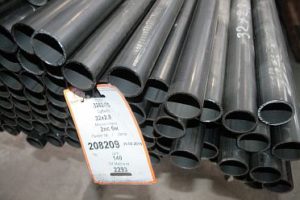
Permanent paint is used to mark gas and water products. The mark is placed 20–500 mm from the edge and is highlighted with a brightly colored paint.
The marking indicates the diameter and length of the VGP product, steel grade, trademark or name of the manufacturer.
The presence of the inscription “Country of Origin” on the label means that the product was manufactured for export and is of high quality.
GOST
The range, quality, and other characteristics of water and gas pipelines are specified in State Standard 3262-75. This document outlines their functional features and application possibilities.
Brief information from GOST:
- galvanized types are 3% heavier than “black” ones;
- weight discrepancies may be up to 8%;
- permissible curvature 2 mm per 1 m.
Particular importance in the description of VGP pipes is given to the nominal bore (DN) and wall thickness. These parameters, plus the diameter, must comply with GOST standards. Standard bores according to GOST 3262-75 are 6, 8, 10, 15, and 20 mm.
In addition, according to the standards, a number of requirements are imposed on VGP rolled metal products:
- No swelling or chipping;
- There should be no delamination or cracks at the ends;
- Cutting the product strictly at a right angle, the permissible discrepancy is 2 degrees;
- Cutting burrs maximum 0.5 mm.
According to GOST, minor defects are possible: ripples or dents, but they should not affect the operational characteristics of the product.
VGP pipelines have hygienic certificates, which are issued after passing a sanitary and epidemiological examination.
Classification of water and gas pipes
Carbon steel is the raw material for gas and water pipes. The pipes are cylindrical, with standard lengths of 4–12 meters. They are sorted by material, production method, and processing.
There are two types of rolled metal products:
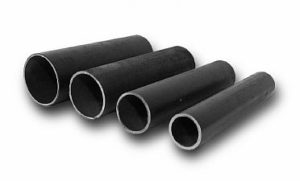
- Black – made of black steel, with a surface without a protective coating. Accuracy rating is normal.
- Galvanized steel has a 30-micron zinc coating, which increases service life. These models more closely comply with GOST requirements in terms of length, wall thickness, and outside diameter, and they have high corrosion resistance.
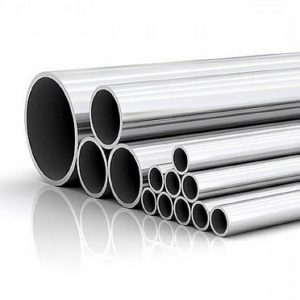
Galvanized products weigh more than ungalvanized ones. They also differ in size, determined by the nominal bore. The outside diameter remains the same; the only difference is the wall thickness, and therefore the nominal bore. Wall thickness ranges from 2 to 5.5 mm, and the outside diameter ranges from 10 to 165 mm.
The VGP pipeline can be electric-welded or seamless:
- Seamless – made from seamless steel. They are manufactured using either hot-rolled or cold-rolled methods. Cold-rolled models are more durable.
- Electric-welded pipes are made from rolled sheets by welding or forming. There are straight-seam pipes, where the seam runs along the pipe, and spiral-seam pipes, where the seam runs in a spiral.
In addition, water and gas pipeline rolled metal products are found:
- without thread;
- with threads on both edges, which are applied by rolling or cutting.
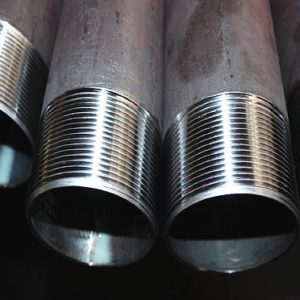
The wall thickness of rolled tubular products made of "black" metal varies, and this is what influences their division into:
- lungs;
- ordinary;
- reinforced.
Light types are used at pressures of no more than 25 kgf/cm2, reinforced types – 32 kgf/cm2.
Advantages and disadvantages of using
The water and gas pipeline is a universal product, its advantages:
- high quality steel;
- Increased corrosion resistance - this is achieved due to the fact that the products are galvanized, this layer protects them from rust formation;
- the presence of reinforced seams in “black” models;
- high strength index with low weight;
- resistance to high pressure - which increases service life;
- variety of choice - light, regular, reinforced;
- variety of carvings - custom-made possible;
- strict compliance with GOST standards - mandatory hydro-cyclone testing is carried out;
- high quality at a low price;
- large selection - seamless, hot-rolled, electric-welded, cold-rolled;
- variety of fittings - couplings, tees;
- low expansion coefficient - does not deform under the influence of temperatures;
- has good thermal conductivity;
- permitted for use in pressure structures;
- hermetically sealed - can be used to deliver gas and acids.
High thermal conductivity leads to cooling of the transported raw materials. To prevent this, additional thermal insulation is recommended when using water and gas pipeline metal products.
The only drawback is the presence of welded seams, or rather, their poor quality welding.
Manufacturing technology
Galvanized and non-galvanized pipes are made of carbon steel, meeting the strict requirements of GOST 1050. They are manufactured on automated lines, ensuring high-quality products.
There are two manufacturing methods:
- seamless - by rolling or pressing;
- with a seam - a seam is made using electric welding.
Seamless types have no seam. They are manufactured using two methods: cold or hot. Hot-formed models are produced from a solid blank by hot deformation.
Cold-formed products are produced using the following methods:
- cold rolling method;
- by pulling.
All cold-rolled products undergo hydraulic testing, chemical treatment, and heat treatment. They offer increased strength, reliability, and durability compared to hot-rolled products.
The technology for producing welded types is as follows:
- preparation of steel blanks (strips) - long metal strips manufactured according to GOST standards using the hot rolling method;
- bending steel strips into pipes using specialized equipment;
- electric welding of the resulting joint.
For welded water and gas pipes, the seam must be reinforced, as it is the most fragile area. Therefore, it must be examined by x-ray.
Where it is applied
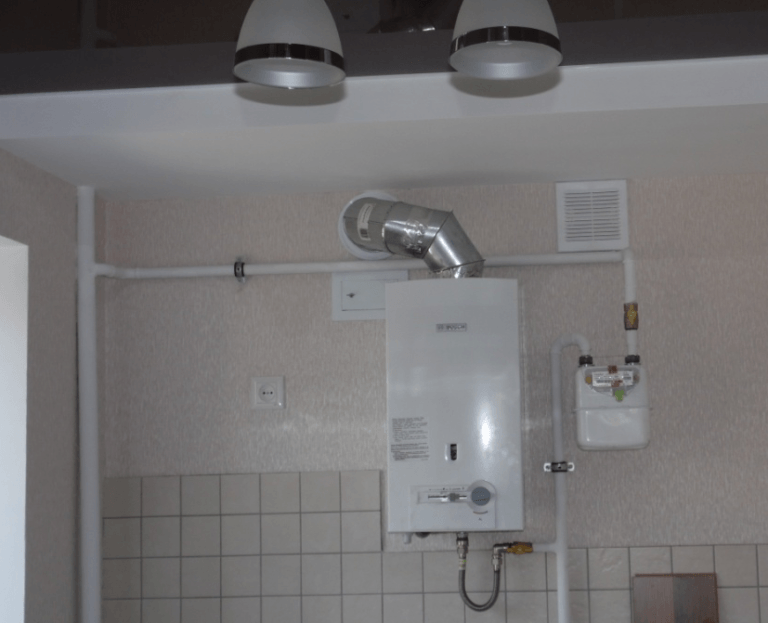
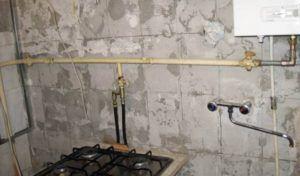
Water and gas pipelines are used in cold and hot water mains, low-pressure gas pipelines, and heating systems. In water mains, VGP pipes are connected by welding or threaded connections.
In addition, water and gas pipeline rolled metal is used in the agricultural sector and in the oil production industry.
In addition, steel pipelines are used in the manufacture of metal structures - fences, small architectural forms.
How to choose, what to pay attention to
It is recommended to purchase water and gas pipelines from reputable companies. When purchasing, consider the intended use, classification, technical specifications, and operating conditions. These factors are specified in GOST standards, the metal products reference book, and are described in our article above.
Particular attention should be paid to the raw materials and manufacturing method. Galvanized types are less susceptible to corrosion and therefore last longer.
To assist those wishing to purchase VGP pipes, size standards have been established:
- It is considered a measured length - from 4 to 12 meters;
- There is an unmeasured one, but it must be within the framework of the measured one.
All products undergo quality control, but at the customer's request, a re-analysis is performed in a dedicated laboratory. Each pipe is visually inspected again for curvature, and one product per batch is checked for quality.
If you are not confident in your abilities in this area, it is better to trust the experts in the matter of choice.
Market prices
When purchasing, be aware that the price is quoted per unit of weight, not per unit of length; typically, the price is per ton. It's also important to understand that galvanized products weigh 3% more than black ones.

Prices for steel models are determined based on technical properties, including the internal diameter and wall thickness. Lightweight models with thin walls are less expensive than medium-weight or thick-walled models.
The overall price may be adjusted depending on the batch size. The larger the batch, the lower the price.
Installation Features
When installing VGP rolled metal products, specialists use the following methods:
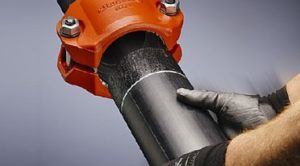
- The pipeline is connected with couplings using special machines. This method is used only on standard pipes.
- The connection is made by electric welding.
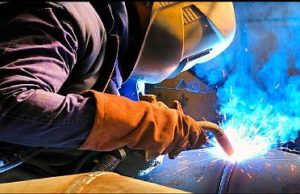
To sum it up, although polymer products are widely used today, water and gas pipes are irreplaceable and continue to be widely used, especially in the housing and utilities sector.