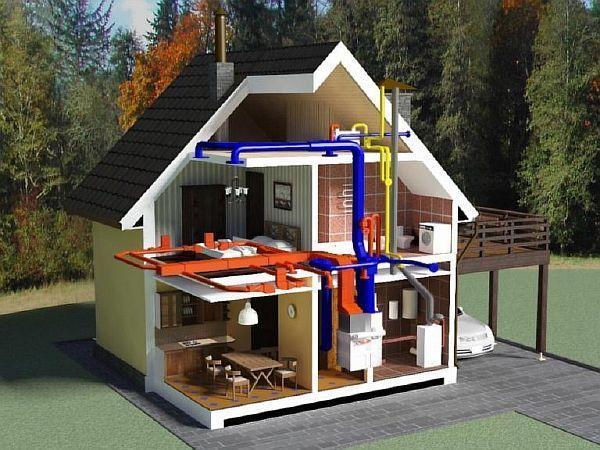
 Heating in a private home or cottage is vital for both the residents and the building itself, extending its lifespan. For this purpose, a heating system is installed, often DIY-made, using a one-pipe or two-pipe system.
Moreover, it is necessary to include several types of heating, in case of interruptions with one or another type of fuel or emergency failure of the system.
In this article, we've covered all the relevant topics. Here you'll find various diagrams and instructions, video tutorials on the components of a heating system, how to calculate it, and much more useful information.
- Types of heating in a private home
- Choosing a heating method for a private home
- Elements of the heating system
- Boiler
- Heating pipelines
- Radiators for heating systems
- Autonomous radiators
- Expansion tank
- Circulation pumps
- Shut-off and control equipment
- Protective devices
- Which heater should I choose?
- Heating system calculation
- Heating systems – one-pipe and two-pipe systems, which is better, and what determines the choice of system
- Which circulation is optimal and why – forced or natural?
- Installing a heating system in a private home yourself
- Which pipes and what diameter should I choose?
- Connecting the boiler yourself
- Do-it-yourself heating system pressure testing
- Typical installation errors
Types of heating in a private home
Heating a country house is done in several ways:
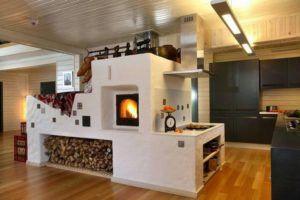
- Traditionally, a stove-based heating system is used, using a solid-fuel stove fueled by wood, coal, peat, and other combustible materials. Dried animal waste (dung), which is the primary source of heat in steppe regions, is also used today.
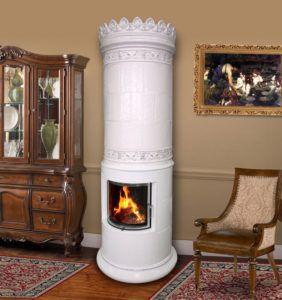 Stoves come in a variety of designs, depending on the traditions of different cultures. In Europe, open fireplaces are widespread. They are fueled by wood, and heat is distributed throughout the structure by convection. To save energy, often not all rooms are heated, but only those that are absolutely necessary.
In southern Europe, dedicated heating systems were often not installed at all. The source of heat during the cold season was the kitchen stove used for cooking, and living quarters were located on the upper floors.
Heating devices appeared later, when heat began to be distributed evenly throughout the home using piping. The initial cause was smoke from combustion products, often with tragic consequences. Therefore, the idea arose to separate the heat source from the living space and install a special channel—a chimney—to allow smoke to escape.
- Air heating is achieved by a source that heats the air via its own surface or in specially designed ducts. Hot air is distributed by natural convection. Air is drawn in from the floor, and the heated air rises according to the laws of physics. An example of this heating method is the Buleryan stove, which has become popular due to its efficiency and effectiveness. It's worth noting that the efficiency of such units reaches 90%, a level unmatched by many other devices. Air heating stoves are most often used to heat utility spaces, such as greenhouses. In some cases, they are installed as a backup fuel unit in private homes.
Piped systems can also be used to distribute heat throughout a large residential building. However, the large pipe diameter required for such radiators makes them difficult to operate.
- The days of burning petroleum products to generate energy are gradually becoming a thing of the past. Electric appliances for private homes are the first in a series of replacement methods. The clear practical advantages of clean energy have not yet become widespread, which can be explained by its high cost compared to gas systems. The main methods of using electricity to generate heat are:
- Central electric boilers heat the coolant, which circulates through the system's pipeline, heating the building with radiators.
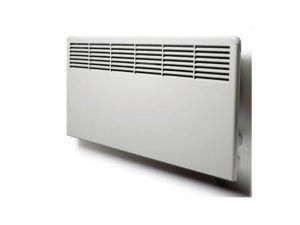
- Electric convectors generate heat using electric heaters directly at the point of consumption. In this case, the heating level can be adjusted. These units use forced air circulation, which reduces the temperature and prevents oxygen from burning. Electric convectors are significantly less expensive to operate than a central boiler, but operating costs are roughly the same.
- Infrared heating is achieved by placing a special film on the ceiling. The narrow-band waves it produces heat the objects in the room, not the air. The device consumes a small amount of electricity and is an economical form of heating. The thermostats used only optimize the system's operation and help reduce costs. At the same time, infrared heating system equipment it's quite expensive, and installation will require the assistance of a specialist. The emitters are also used for underfloor heating, with the film placed under the final coating.

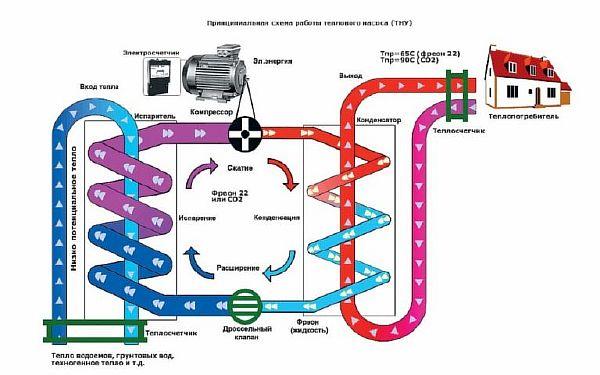
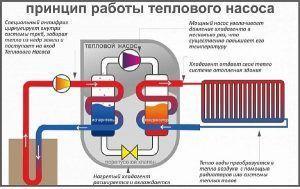
- Heat pump heating is not yet widely used. The main reason is the high labor intensity of installation and the significant cost of the device. The operating principle is the same as a refrigerator, but it extracts heat rather than cold. While heating costs are minimal during operation, the significant cost can be a deciding factor in failure.
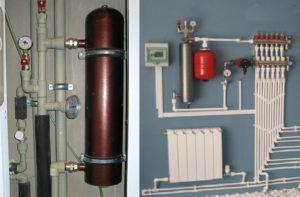
- Induction boilers heat water very quickly. quickly and efficientlyHowever, calling the device a boiler would be a stretch. The water in it is heated by a metal filler placed in a pipe, when high-frequency current passes through a coil wound around it. The control circuit uses an inverter, which regulates the heating level. This device should only be used with forced circulation in the heating system. Therefore, its control system includes a lockout feature that prevents it from turning on when the circulation pump is inoperative. An attractive feature of this heating device is the fact that cannot be the object of attention of regulatory organizations.
 A hydronic heating system involves heat exchange through radiators through which water moves. Traditionally, water was used, hence the name. Nowadays, various liquids (antifreeze, antifreeze) that resist freezing within specific temperature ranges have replaced it. This is especially relevant when installing heating systems in private homes that are used periodically. A wide variety of heating devices are used.
The types of heating used in private homes vary widely, but it should be noted that the most cost-effective is the use of gas boilers with water circulation systems.
If the area is not gasified, solid fuel stoves remain the main source of thermal energy generation.
Choosing a heating method for a private home
In Russia, many factors influence the choice:
- climatic conditions of the construction region;
- availability of a particular fuel;
- availability of heating units of the required type on the market;
- personal preferences of the developer.
If there's no gas pipeline in the construction area, you can build a gas tank and install gas heating appliances. However, this requires a company that installs the equipment and supplies propane and butane for it. The cost of this type of gas supply is lower than using mains gas.
When choosing a system type, more than one is usually chosen. While fuel supply interruptions are possible, heating should not be a problem. Therefore, wood-burning stoves or liquid fuel units, such as diesel, are installed alongside a gas or electric boiler. This ensures heating is guaranteed even during any interruptions.
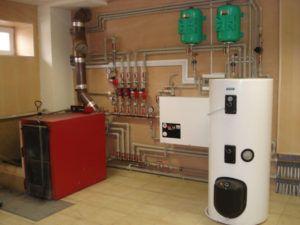 In addition, many users enjoy sitting by an open fire and, in addition to the main units, install fireplaces, hearths, and other similar devices.
This applies to the device for generating thermal energy. However, efficient heat distribution within the room is also important. In private homes, radiator-based hot-water heating is most often used. Recently, underfloor heating devices have been increasingly integrated into such systems as an auxiliary element.
This increases heating efficiency and reduces the temperature in the radiator circuits. As a result, less oxygen is burned in the air, improving the living conditions in the home.
Modern systems typically have multiple circuits, with separate temperature controls for each circuit. The return flow is typically controlled automatically, with hot water added from the boiler or cold water from the expansion tank to achieve the required system temperature.
Heating systems for two-story houses have certain advantages. The significant rise of the coolant in this case ensures spontaneous, natural circulation. This eliminates the need for a circulation pump in the piping, and the expansion tank can be installed directly in the boiler room rather than in the attic.
Such devices are filled with a significant amount of water, so they warm up slowly. To overcome this drawback, it is recommended to use a circulation unit. Its power is low, typically no more than 90 watts, and it can be turned on intermittently.
Elements of the heating system
The heating system consists of several components, without which it is impossible to create it.
Watch the video
In this section, we will examine heating elements in detail, including their purpose, technical specifications, and the functional features they offer.
Boiler
Depending on the type of energy source used, there are several types:
-
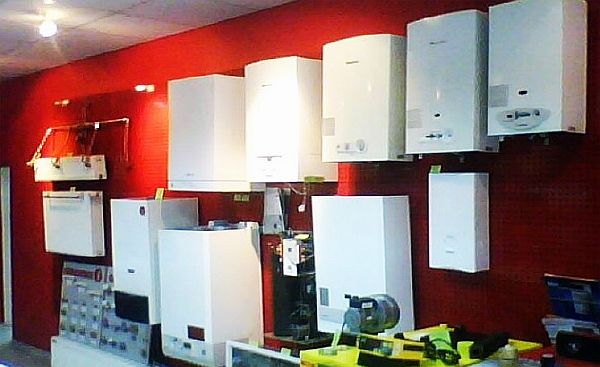
- On gas - They are distinguished by significant productivity and efficiency. They are recommended for use if access to mains gas is available.
-
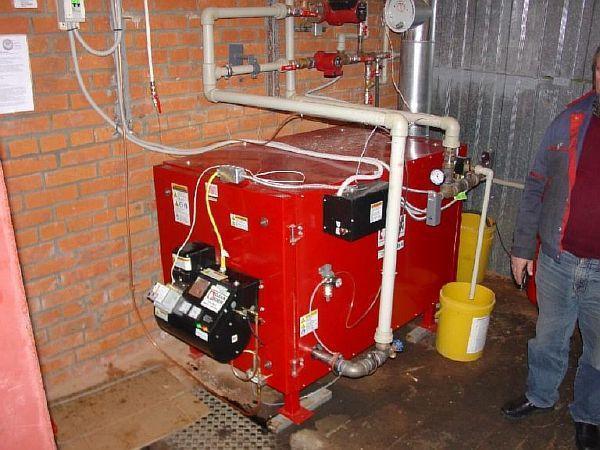
- Diesel They run on inexpensive diesel fuel made from petroleum products, and the use of waste oil is permitted. This makes them highly efficient. A disadvantage is the need to place the heater in a separate, ventilated outbuilding. Otherwise, the smell of fuel or combustion products will inevitably be present in the home during combustion.
-
- Electric They will be the cleanest in terms of heat generation. However, they are not economical and are vulnerable to energy supply instability. Their use is justified when using backup capacity powered by alternative fuels.
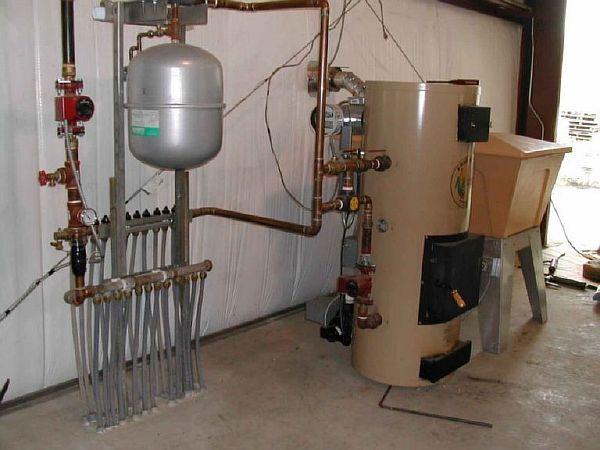
- Solid fuel They can operate on any type of fuel, including coal, wood, pellets, peat, and other similar fuels. They are affordable for all fuel types, characterized by significant heat output and low prices.
- Combined They can use a variety of energy sources—gas, solid or liquid fuel, and electricity. They are especially suitable for areas prone to power outages.
Heating pipelines
Heat distribution in the house is carried out through an internal pipeline that delivers the coolant to the batteries in the form of radiators.
 In water systems, this role is performed by pipes. Pipes can be made of various materials:
- Metal pipes are made of low-carbon steel or copper. Their main drawbacks are their limited service life (for steel) and the significant cost of copper.
- Plastic pipes reinforced in various ways. Polypropylene or cross-linked polyethylene are most commonly used. However, pipes reinforced with solid aluminum provide the best performance. According to manufacturers, their service life is up to 50 years. Furthermore, the use of metallization increases the service life of other steel heating components by preventing atmospheric oxygen from entering the coolant.
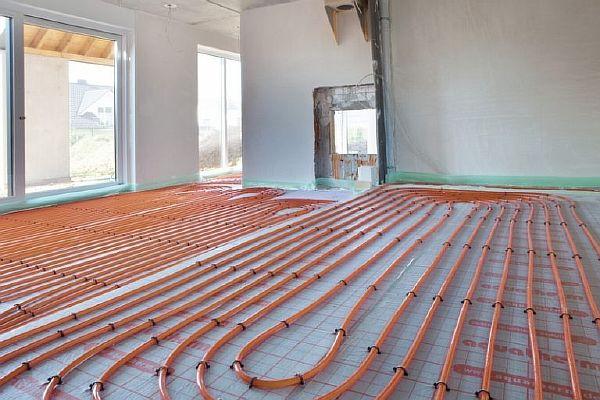
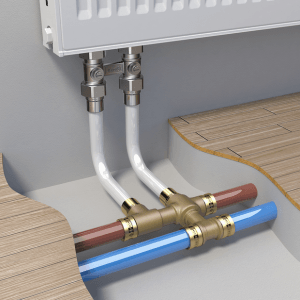
In the currently fashionable underfloor heating systems, plastic pipes are used in coil form, which allows for seamless joints. Repairing a pipe hidden in the floor requires a significant amount of construction work when replacing or repairing underfloor heating.
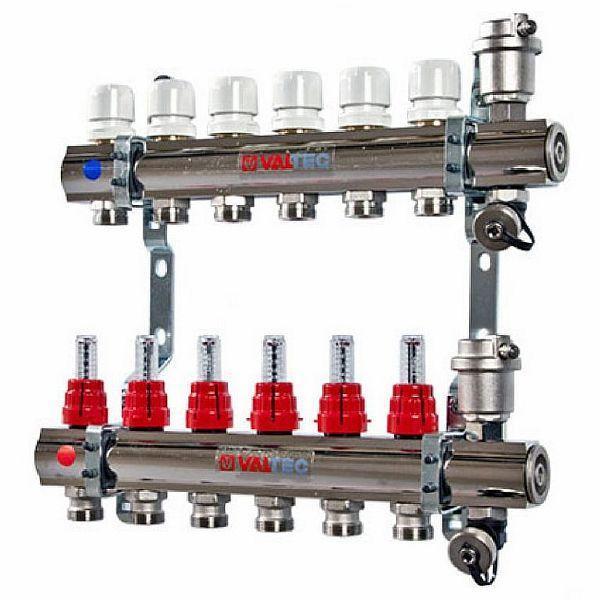
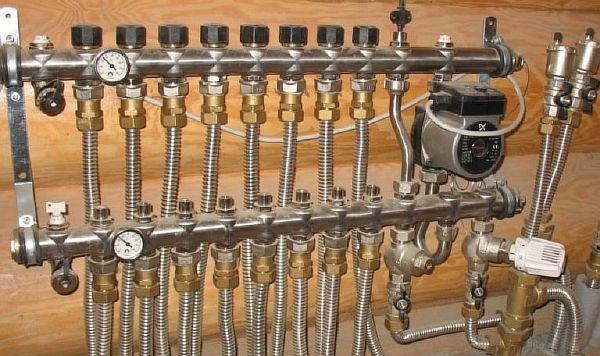
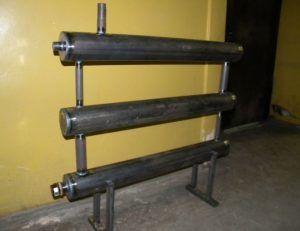
The individual circuits of the heating system are combined into a single control and regulation center called a manifold.
Radiators for heating systems
Naturally, the primary focus is on the radiators through which heat is transferred to the surrounding space. Therefore, the primary consideration is the thermal conductivity of the material and the exchange surface area. Radiators are classified as:
-
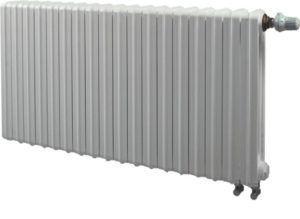
- The classic option is – cast iron radiators, well-known since Soviet times. They are durable and completely undemanding of the coolant quality. However, their drawback is low thermal conductivity. Cast iron radiators will only reach 40 degrees Celsius on the outer surface when the water temperature is at least 70 degrees Celsius.
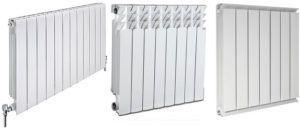
- Radiators have become a popular variety made of aluminumThis material has good thermal conductivity, and products made from it are very efficient. A disadvantage of aluminum radiators is the high requirement for coolant purity. Contamination quickly renders the unit inoperable. Therefore, heating systems require the use of various filters, which significantly increases costs. These radiators cannot withstand high pressure, so they are not used in industrial applications.

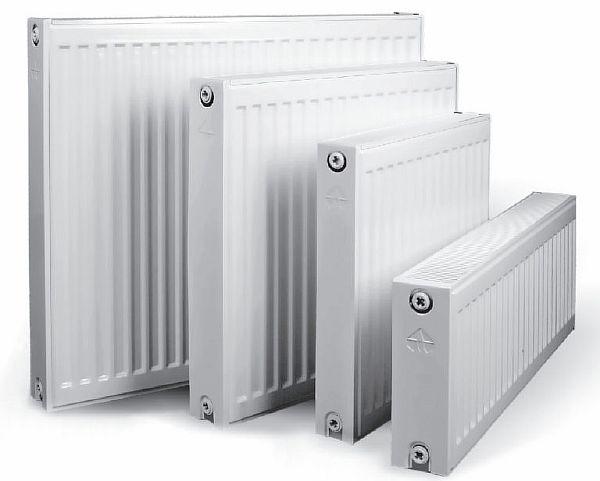
- Widely used steel radiators Due to their significant efficiency, they come in panel and tubular varieties. Steel radiators are among the most cost-effective options, yet they are quite aesthetically pleasing, making them widely available. Their service life is approximately 25 years, which is considered a good value. Meanwhile, tubular steel radiators are considered a premium product.

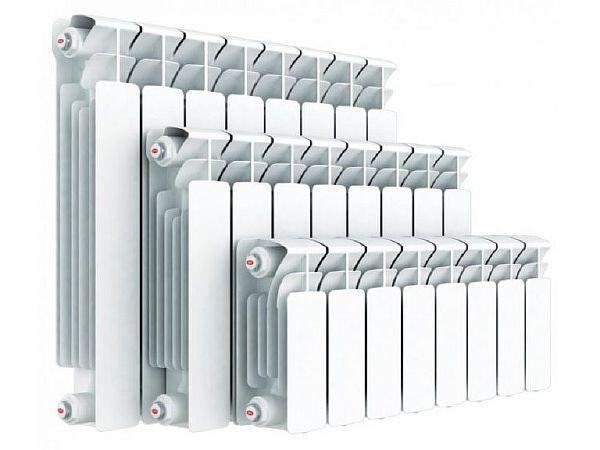
- Heating radiators bimetallic They have very high efficiency, due to the use of aluminum in their construction alongside steel. Despite all their positive qualities, their use is limited by their high cost.

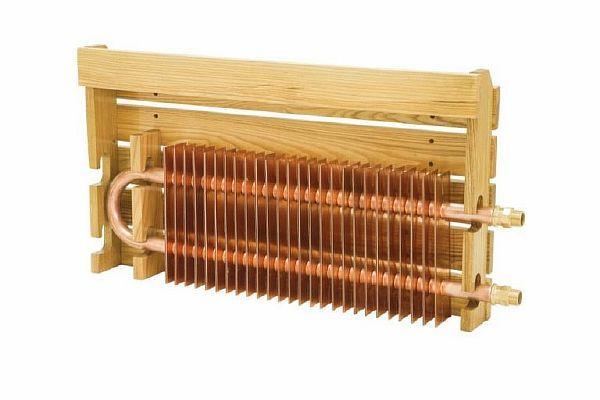
- Copper In terms of functional qualities, radiators are perhaps the most efficient. They create no resistance to coolant flow, thanks to the high thermal conductivity of copper, maximizing heat transfer to the atmosphere. They effectively resist hydraulic shock. Their only significant drawback is their high cost.

- Following the dictates of the times, radiators are also produced from plasticThese are quite attractive and effective products at a budget price and are durable. Traditionally, given the material's characteristics, there is a significant limitation: the water temperature should not exceed 80 degrees.
Autonomous radiators
These radiators are powered by the electric grid and are used to maintain a specific microclimate in a hotel room. They can be wall-mounted or floor-standing. The body of this radiator is filled with oil.
A recent addition to the heating appliance arsenal are quartz heaters. They are made of a nickel-chromium alloy (nichrome), which has a high resistance and therefore heats up when a current passes through it. The heating element is hermetically sealed in a casing made of sintered quartz sand.
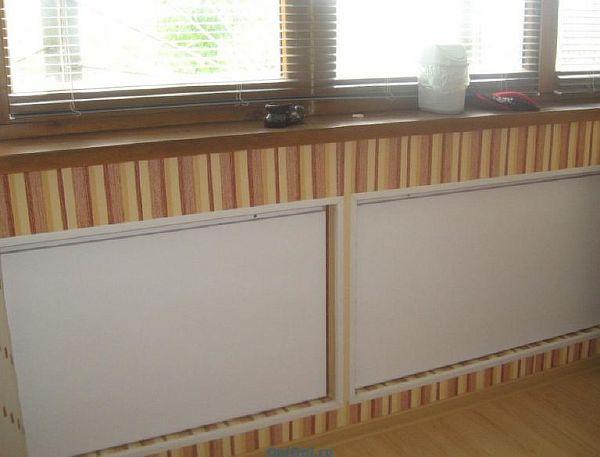
Expansion tank
It's a standard tank, the volume of which should be approximately 10% of the total water volume in the pipeline. When the boiler starts, the liquid heats up, causing its volume to increase. Therefore, a tank is used that can accommodate this increase.
Heating systems can be open or closed. In the former case, the tank has no lid, allowing the liquid level to fluctuate freely. It's logical to install it at the highest point of the heating system, and its typical location is in the attic.
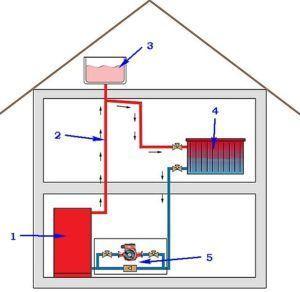
In addition to compensating for the coolant volume, an open expansion tank also serves to bleed air from the pipeline. With this arrangement, significant heating of the coolant in the tank is inevitable, leading to intense evaporation. In this situation, this device will be the only place to top up the coolant.
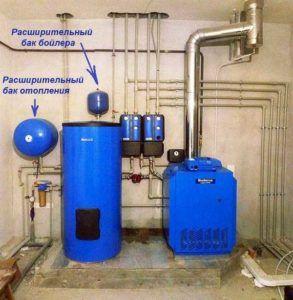 In closed-type circuits, the expansion tank is sealed and can be installed anywhere in the heating network. Ideally, it should be placed in the boiler room, where all other equipment is located. Sealed membrane tanks are used here.
However, recently, it has become common to install additional expansion tanks. For example, the system operates more reliably if such a device is mounted on the boiler.
This reduces the overall load on the heating network. An additional tank is also installed in close proximity to the heat source, which in some cases is located in the kitchen. In this location, the tank is mounted under the ceiling. It's not the most aesthetically pleasing, but it's reliable.
Circulation pumps
These units are used to create forced circulation of the coolant through the heating system pipes. Their purpose is to accelerate its flow, which promotes increased heat transfer.
Using circulation pumping stations simplifies the regulation process in the heating network and eliminates the need to place the fuel boiler at the lowest point of the distribution system.
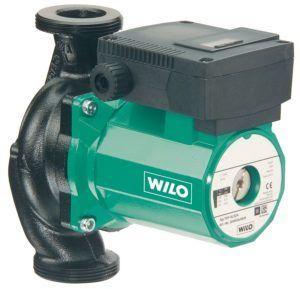 The pressure generated must have sufficient power to overcome the hydraulic resistance of heating elements – pipes, radiators and other obstacles.
Pumps come in two types: dry and wet. Wet pumps are used in residential construction. They operate virtually silently, allowing them to be installed directly in the home.
When designing multi-circuit heating systems, the use of a pump is provided for in each individual branch.
If repairs are necessary, a bypass is provided to allow coolant circulation without the need for a pumping station. This allows for quick replacement of a failed unit.
The service life of modern circulation systems is comparable to that of a heating system.
Shut-off and control equipment
The following are used as such:
- Ball valves are used to shut off the flow of coolant through pipes. They are used in two positions—closed and open—and are not used to regulate flow.
- Regulating valves control the flow rate in pipes. They are usually located on the return pipe. They can operate manually or automatically, triggered by a temperature sensor. Electric-powered valves are used for this purpose.
- Specially designed valves for bleeding airlocks in heating systems. They can operate independently, releasing airlocks as they form.
Protective devices
In heating system circuits, they are represented by pressure valves and temperature sensors. The former are mechanically operated and do not require any energy.
They are triggered when the pressure (in the boiler) is exceeded, opening the discharge when it is exceeded.
Temperature sensors and thermostats are triggered when the temperature rises to a critical level, turning off the heating device or sending a signal to the automatic control system to turn on the cold water supply.
Which heater should I choose?
How to choose a boiler for a private home's heating system to ensure warmth and reliable operation. We've already covered the main types of boiler equipment, their advantages and disadvantages. What other criteria can influence the choice of type and design?
- The fuel to be used depends on its availability. There's no point in buying a gas boiler if there's no gas line nearby. Wood heating is the cheapest and most reliable option, but it turns the owner into a fireman. Diesel or electric units are also worth considering.
- Boiler placement options in the home. Wall-mounted or floor-standing options are available.
- Boiler design – it can be single-circuit or double-circuit.
The construction market is filled with imported and domestic boiler equipment. Manufacturers from Germany, Slovakia, France, Italy, and the Czech Republic traditionally hold leading positions.
Some of them have been present on the boiler equipment market for over a century. However, it's worth considering equipment from domestic manufacturers, which, in some cases, is more reliable than imported equipment and easier to repair.
When purchasing a boiler, pay special attention to the condition of the accompanying technical documentation, which includes:
- warranty book;
- certificate of conformity;
- sanitary inspection report;
- operating permit.
It's important to understand that there are many counterfeits on the market, especially of well-known brands. When purchasing a boiler, it's advisable to consult with an experienced specialist.
Don't limit yourself to using just one boiler. If one unit fails or there's a fuel shortage, a second, backup solid fuel boiler should be used as a temporary replacement for heating a private home.
The unit's capacity must provide heating to a comfortable temperature. Maintaining a stable temperature also requires certain costs, depending on the level of insulation in the home. Gone are the days when coolants were cheap and high consumption was of little concern.
Today, insulation from the outside and inside, the use of sealed double-glazed windows and tightly closing doors are considered mandatory.
The value of heat loss for different buildings is taken as follows:
- In the amount of 130-200 W/m for houses without insulation;
- 90-110 W/m, if the building was constructed in the 80s or 90s of the last century with insulation according to the standards of that period;
- 50-70 W/m for houses with good double-glazed windows, carefully insulated and built from the late 90s.
To determine the required compensating power of the unit, the specified standards must be multiplied by the total area of the heated premises.
The required boiler power can be roughly determined based on 1 kW per 10 m3 of heated area.
By choosing a double-circuit gas boiler for your heating system, you can solve the problem of not only heating your home, but also hot water supply.
Gas boilers are the most efficient today, both in terms of savings and operational safety.
An electric boiler can leave consumers with a significant surprise in their electricity bills. Furthermore, the capacity and technical condition of the village's power grids don't always provide the required amount of power. The entire village could be left without power.
Diesel boilers are very inconvenient to operate, requiring a separate building due to the inherent odor of diesel fuel. They also require increased attention due to the large amounts of soot and ash they produce.
Heating system calculation
Like all thermal calculations, this one is quite complex when executed thoroughly. However, we will present a very simple methodology that allows us to determine the necessary parameters with a fairly high degree of accuracy.
Video
The initial data for the calculation are the following parameters:
- Heated area. Only data for rooms where heating is installed, i.e., those with one or two walls facing the outside, should be used.
- Climatic power. This parameter takes into account the location of a private home. For example, for southern regions it ranges from 0.8 to 0.95, for central regions – 1.3 to 1.6, and for northern regions – 1.6 to 2.2.
The calculation for a room with an area of 130 square meters looks like this:
N = 130 x 1.2 / 10 = 15.6 (kW)
The calculation necessarily includes calculating the number of radiator sections. The following data is used for this:
- Area – only the rooms in which the batteries are installed are taken into account.
- The number 100 is determined from the SNiP requirement for the power of one section per square meter of area.
- The area is 30 square meters.
- The power of one battery section is 180 W.
N = 30 x 100 / 180 = 16.7 = 17 (pcs)
The calculation of the heating system using the specified method is quite reliable and suitable for practical use.
Heating systems – one-pipe and two-pipe systems, which is better, and what determines the choice of system
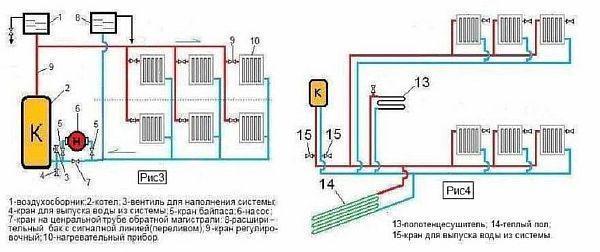
Heating a private home can be done by hand using various systems. There are two main methods: one-pipe and two-pipe systems.
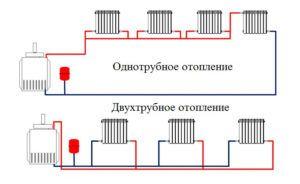
The single-pipe heating system is very popular among individual developers for the following reasons:
- The device's relatively affordable price and simplicity allow for DIY installation. All you need is a moderately skilled welder.
- Water resistance, in which the heat output of the wiring does not change when an individual heating element is switched off.
- Economical use of the main material – pipes.
- The system is characterized by low inertia and rapid heating of the circuit, which is explained by the reduced amount of coolant in this design.
- Aesthetic external design, especially when the main pipe is installed in the wall.
- The use of modern shut-off and control equipment (automatic and manual temperature controllers) allows for precise adjustment of the system and ensures its stability.
- The simplicity of the design determines its reliability.
- Easy installation, maintenance and operation.
The use of automation equipment allows a single-pipe system to be integrated into a Smart Home control system, regulating its operation depending on weather conditions, time of day, season, and other factors.
The main complaints about this connection scheme for a private house are uneven heating of individual elements – the greater the distance from the boiler, the slower the batteries heat up, since the coolant cools as it moves along the circuit.
This effect can be partially mitigated by using a circulation pump. It's also possible to increase the number of sections in remote radiators, which will help even out heat output.
These measures can significantly reduce the impact of negative factors. As a result, hydronic heating systems implemented using this design are considered the best option for private homes up to 150 m³.
In a two-pipe heating system, all radiators are filled simultaneously. This ensures uniform heating throughout the entire pipeline.
Video - One-pipe/two-pipe system
At the same time, it becomes possible to regulate the amount of coolant passing through any of the system’s collectors.
This design, done correctly by hand, has a number of distinct advantages:
- Possibility of automatic temperature control in each room.
- Each circuit operates independently; failure of one of them does not affect the functioning of the others.
However, there are also certain disadvantages:
- increased complexity of the design;
- high material consumption of the wiring;
- increased labor intensity of execution.
The choice of heating system design for a country house determines the stability of the entire system. For buildings with permanent residences, a single-pipe connection system is acceptable.
A two-pipe system is best used in homes with occasional occupancy, where the home can be heated with reduced fuel consumption.
The choice of connection option depends on the developer’s wishes and is entirely within their discretion.
Which circulation is optimal and why – forced or natural?
In considering this issue, we draw attention to the following circumstances:
- Natural circulation heating systems are used in small buildings. Pumping units are installed in such buildings when temperature control is needed, both in the entire system and in individual circuits.
- Random circulation is used out of necessity in the absence of electricity or long interruptions in its supply.
- When operating conditions require increased pressure in the heating system, circulation pumps are used in the systems.
Wet rotor circular saws are currently used for such purposes. Their selection is based on installation features and operating conditions.
Various materials are used as a coolant for a private home's heating system. This depends on the building's operating conditions.
For buildings with periodic visits, non-freezing liquids (antifreeze, transformer oil) are preferable, as they do not lead to pipeline ruptures in significant cold.
In permanent residences, water can be used.
Installing a heating system in a private home yourself
This is a critical undertaking, requiring skilled personnel and a solid grounding in theory. The work may be carried out in the following order:
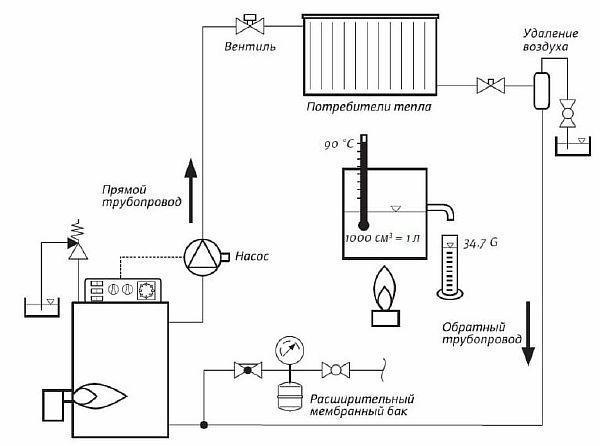
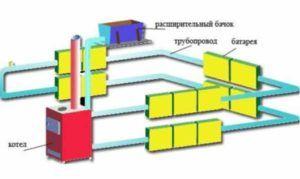
- Develop and draw a preliminary design of the heating system in a diagram (an example is presented below).

- Purchase all necessary components, including radiators, pipes, shut-off and control equipment, heat source, fittings, fasteners, etc.

- Install the boiler at its permanent location. When using an open system with natural circulation, it should be installed at the lowest point in the distribution system.
- Install a flue gas duct.
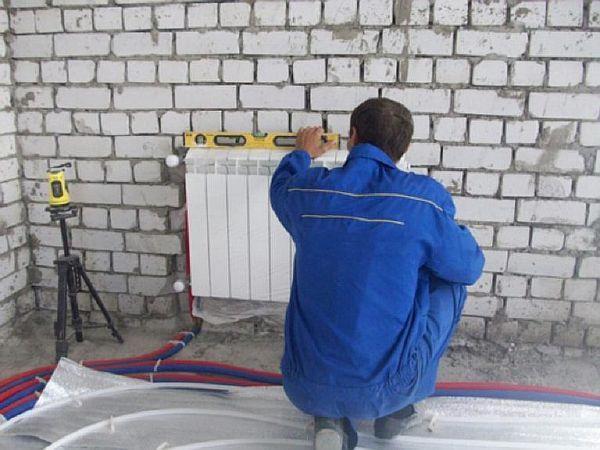
- Fix the radiators at the installation site in accordance with the design.

- Installation of piping in a private home's boiler room, including shut-off and control equipment, bypasses, air valves, and other equipment.

- Connecting circuits to the manifold, installing circulation pumps and control equipment.

- A cold test run is performed to identify installation defects. This is performed by injecting water into each circuit separately, with visual inspection of joints and welds. If leaks are detected, they must be repaired immediately, after which further inspection of the other circuits continues.
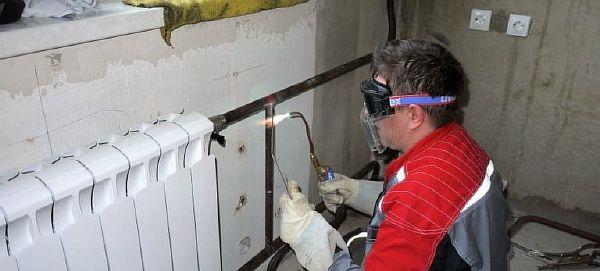
Video
Which pipes and what diameter should I choose?
There's a wide selection of pipes available today. There are two material options:
- plastic, among which the following options are possible: polypropylene, cross-linked polyethylene, reinforced with aluminum or fiberglass;
- metal - steel, stainless steel, copper.
Polypropylene pipes are most often used for heating a private home.
The diameter is also important. If the diameter is too small, the coolant flow may be impaired due to increased hydraulic resistance. As a result, the system will operate noisily.
If the pipe size is larger than optimal, the water flow rate decreases, impairing heat transfer. The pipe diameter for heating a private home can be calculated using the following formula:
x (0.86 x Q x dT) : V, where
Q – load on a certain section of the system, kW;
dT – difference in temperature between the inlet and return pipelines;
V – coolant flow velocity, m/sec.
Furthermore, gravity-fed systems use a larger-diameter outlet pipe for the distribution circuit than for the main distribution system. Its diameter is calculated based on the equality of the outflow flow rate per second and the total flow being distributed. This means that the size of the feeder pipe depends on the number of radiators and the flow rate.
When installing such a pipeline, it is necessary to adhere to the installation rules for a slope. The slope is installed with the feed pipe rising in the direction of fluid flow, and vice versa for the return pipe.
Connecting the boiler yourself
Before installing a heating boiler, you need to prepare the room for it. The following requirements apply:
- It must be equipped with supply and exhaust ventilation.
- During construction, the boiler foundation must be made of non-combustible materials and be 20-25 centimeters above the floor. If the floor is made of combustible materials, it should be covered with sheet metal at a distance of about a meter.
- The chimney connection must be completed.
- When using a boiler on the wall of a house, it must also be covered with metal.
Installation must be carried out in strict accordance with the instructions included with the heating unit. A gas boiler must be installed in a home with the assistance of a gas company specialist, and startup is permitted with their permission.
When connecting the heating system, all supplied components are used. Piping from the boiler room is carried out in accordance with the design.
Do-it-yourself heating system pressure testing
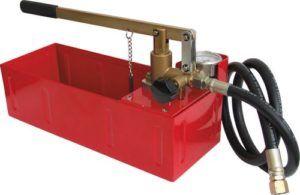 Pressure testing, or testing the piping system with elevated pressure, is the final step in its construction. This process involves pumping water into the system and gradually increasing the pressure.
Simultaneously, visual and instrumental inspection of the pipelines is performed. Initially, the pressure rises to 2 atmospheres, and after several hours, to 4-6.
Observations are carried out for 3-4 hours; if there are no leaks, the pressure is increased to 8-9 atmospheres, and this pressure is left in the system for 24 hours.
The result is considered positive if the pressure in the system has not decreased during this time, therefore, there are no leaks.
Typical installation errors
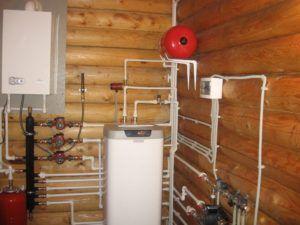 Heating systems are designed for long-term use, and sudden breakdowns during the heating season can cause a lot of trouble. The following circumstances can lead to this:
- The boiler room should be spacious enough to allow at least a meter of clearance from the walls. This will allow access for opening and repair.
- It is preferable to place the equipment along one wall, leaving space for other systems.
- Careful installation of the pipeline is important; this will facilitate maintenance and troubleshooting.
- A common problem is neglecting to use a filter. It should be installed on the return line, with the sump facing downwards. Failure to do so leads to clogging and complete silting of the pipeline.
- The circulation pump is installed on the return line, where the coolant flow rate is lower. Exceeding the required unit capacity results in significant flow velocity in the pipes, noisy operation, and impaired heat transfer.
- The capacity of the expansion tank must be at least 10% of the volume of water in the network, and the mounting location must be in front of the circulation pump.
Most often, errors in heating design and installation lead to complex and dangerous situations, so it's important to consult with an experienced specialist, even if you're doing the work yourself.
I think the biggest issue here is fuel and the choice of a specific boiler. But the biggest headache is the piping.