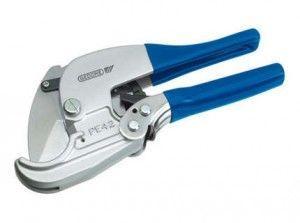
 There are several types of scissors for cutting polypropylene pipes. They are classified by operating principle and design. It's advisable to select different types of tools for PVC, polypropylene, and metal-plastic pipes, as this will affect the specifics of the job.
All popular companies offer pipe cutters that are best suited for workpieces made from specific components. Before purchasing, it's recommended to determine exactly what material the cutter is designed for.
In this article, we'll take a detailed look at various brands and the design of polypropylene pipe cutters, and compare the top-of-the-line models of popular products.
We'll learn what aspects to pay attention to when purchasing and take a detailed look at the operating instructions, including how to cut various types of pipes (polypropylene, PVC, metal-plastic, and so on) evenly yourself.
Types
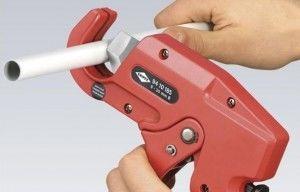 There are various types of plastic pipe cutters, varying in design, operating principle, and intended use. Models used for home repairs are typically manual and affordable.
Models designed for cutting water supply and heating pipes operate on an electric drive.
Precision
Their design is simple, and the operator uses only one hand, making the process easier. The primary purpose of this tool is to cut polypropylene and plastic pipes with diameters ranging from 2.5 mm to 42 mm. However, special models are also available that are suitable for pipes with diameters up to 70 mm.
The knife is made of alloy steel for added strength, and its sharp edge ensures a perfect cut. The ratchet mechanism makes it ideal for household use.
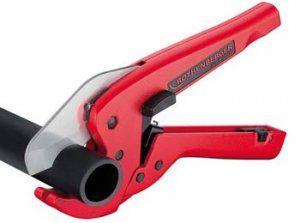 Plastic pipe shears are also used for reinforced and metal-plastic rolled pipe products. The main difference lies in the cutter material used. The tool designed for polypropylene pipes uses a steel version with fine teeth, which ensures the tightest possible grip.
When choosing precision equipment, pay attention to the following points:
- the sharpness of the cutter and the possibility of replacing it if it is planned to be used for a long period;
- comfort when working: smooth running (can quickly rub the palm under mechanical load) and ease of placement (should not slip).
Roller
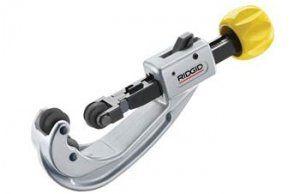 The simplest types consist of a hook with movable rollers on the inside. During the cutting process, the plastic pipe slowly rotates along these rollers, causing a cut. A spring and manual force move the cutter forward and backward.
Unlike precision shears, roller shears require two hands, as you need to hold not only the shears but also the valve that extends the blade. This device makes a neat cut and doesn't compress the pipe as much as other types.
As a rule, the cutter is replaceable, so they can be used for a long time.
The main difficulty in the cutting process is the need to maintain a perpendicular position. Failure to do so will result in blade failure.
With ratchet mechanism
This type is an improved and, therefore, more expensive version of roller shears. The ratchet mechanism provides more convenient use and eliminates the need for significant pressure. This is largely due to the inclusion of a cutting rack and a stop.
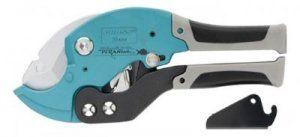 The tool's support is wide, which is necessary for securely fixing the elbow. This eliminates the need to ensure that the pipe cutter is was located evenly and perpendicularly.
Accordingly, the presence of a stop reduces the risk of accidental misalignment, damage, and uneven cuts. The blade of the plastic pipe shears is very sharp, allowing it to glide as smoothly as possible.
Battery-powered
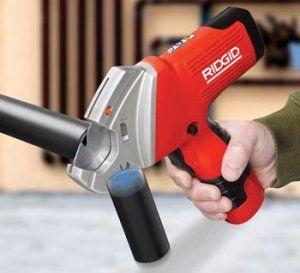 The battery-powered instrument is an improved version of the handheld device. The technician performing the procedure requires no effort, as the blade and clamping elements are powered by the battery.
A pipe cutter with an electric motor ensures a highly consistent cut and operates quickly. Due to its high cutting speed, this tool is considered professional equipment and is used by workers laying long water supply or heating lines.
Their operation is simple: the area of the pipe that needs to be cut is placed in a special clamp, then the motor is activated, and the job is done.
The only drawback that needs to be noted is the high cost compared to scissors for manual cutting of polypropylene pipes.
Guillotine
In addition to cordless pipe cutters, guillotines are also used as professional equipment. They require little effort and ensure quick and clean pipe cuts, making them ideal for laying long pipelines. They are suitable for large pipes with diameters ranging from 60 mm to 360 mm.
Watch the video
It's also worth noting, for comparison's sake, that guillotine machines are often used in production. A pipe is clamped in these machines, and a blade (sharply sharpened and Teflon-coated for improved performance) is directed from above. These machines can have an electric or mechanical motor that powers the cutting element.
Popular manufacturers
With a wide range of products available on the market today, choosing the right pipe cutter is a simple matter. Buyers can compare and select the right model based on specifications and price.
However, if you are planning to purchase a pipe cutter from a well-known and popular company, it is important to make sure that it is not a counterfeit.
Rothenberger
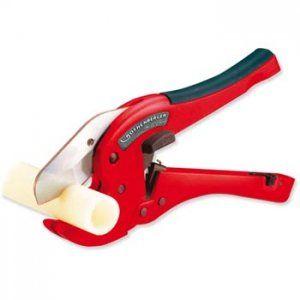 Rothenberger offers a wide range of polypropylene pipe shears. These products are distinguished by their high quality, ease of use, and light weight. They can cut pipes with diameters from 6 mm to 43 mm. The increased strength of the cutting element and body allows for manual cutting of thick-walled rolled pipes without leaving defects and producing a smooth cut.
The pipe cutter handles have a locking mechanism for safe storage and transportation. For added comfort, the handle is specially rubberized, allowing the user to work for extended periods without damaging their palms.
The housing features a special button that returns the support and rack to their original position. The main drawback of this company's products, compared to others, is the high price.
KRAFTOOL
The models sold are primarily for home and household use. They can cut pipes up to 42 mm in diameter.
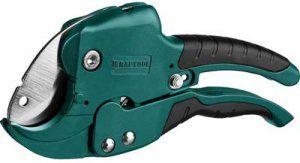
PVC pipe cutters have a long service life (they are distinguished by a layer of anti-corrosion coating on the metal parts) and are lightweight.
Their light weight and the presence of a safety bracket allow them to be transported conveniently and safely.
Valtec
Valtec products are primarily guillotine-type tools. PVC shears are designed for pipes smaller than 32 mm in diameter. A ratchet mechanism ensures a clean cut and a smooth end.
After use, you don't need to manually return the stopper to its original position; this happens automatically thanks to the spring. They are also lightweight.
Inforce
The company's product line is inferior to similar manufacturers, but its products offer a good price-quality ratio. The ratcheting tools are designed for pipes up to 42 mm in diameter and are lightweight. The sharp steel blade ensures smooth cuts without roughness or other imperfections.
Among the drawbacks, the metal handle is noteworthy. There are no rubber grips, making it uncomfortable to use and unsuitable for long-term construction purposes. This comparison does not favor Inforce.
What you need to know when choosing
Watch the video
[sociallocker]
If you decide to purchase scissors, consider the following important points:
- Blade features. Ideally, it should be made of stainless steel and sharpened at a 30-degree angle;
- The handle has rubber inserts for comfortable use. Before purchasing, compare it to other types to ensure it fits comfortably in your palm and is the perfect size.
- a wide and strong base so that the knee is securely fastened, otherwise the result will be an uneven cut;
- weight - everything is simple here, the less weight, the easier it is to perform the work;
- It's preferable for the cutting bar and support to return automatically using a spring. Otherwise, these elements will need to be manually returned to the open position.
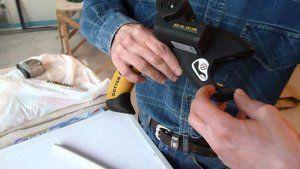
Also, before making a purchase, it is recommended to determine the diameter and length of the pipeline, and then make your choice based on this.
Instructions for use
How to use hand scissors:
- Measure the pipe sections and make appropriate marks.
- Place the pipe section into the tool, positioning it so the blade is positioned over the mark. You can make a small cut yourself first.
- Apply gentle but firm pressure to the pipe cutter handle. The pipe should be positioned exactly perpendicularly, ensuring that it doesn't shift accidentally.
- After cutting, the ends of the pipe are processed if necessary.
Therefore, choosing a pipe cutting tool requires time and preparation, and it must be lightweight. First, you need to know the diameter and length of the pipeline.
To determine the manufacturer, use the ratings of well-known companies; their products will perform well. Also, before beginning the procedure, we recommend watching a video tutorial on how to cut the pipe evenly.
Watch the video