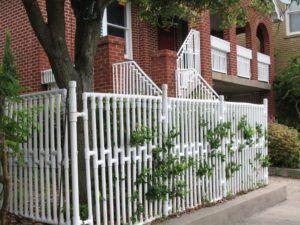
 Pipes have long been used regularly as a structural material. They are used in a wide variety of applications. Plastic products are no exception, thanks to their technical characteristics, particularly their resistance to rot and corrosion, as well as their durability. One application for these products is the manufacture of fences from plastic pipes.
At construction markets, you can often find ready-made plastic fences of various types, from low, neat front gardens to tall outdoor fencing. Their prices are quite reasonable and significantly lower than those for pipes.
But often there are leftovers from construction, and if you accumulate them from neighbors and friends, you can easily build a full-fledged fence. Furthermore, there are cases of mass rejection when pipes cannot be used for their intended purpose, and they can be purchased at a bargain price.
Let's assume the developer has the necessary materials for a fence. How can it be built?
Installation of poles
The supporting structures of the fence are the pillars to which the lattice spans are attached.
Watch the video
For this purpose, various profiles are used that are strong enough to withstand wind loads on the fence:
- galvanized steel pipes with a cross-section of 80 millimeters or more, round or profile;
- plastic ones with a size of 100-120 mm, as a rule, they need to be filled with concrete and reinforcement;
- reinforced cast concrete pillars;
- plastic posts, made specifically for fencing;
- wooden poles.
How to install pillars step by step
First, you need to calculate the number and dimensions of the spans. Their length determines the distance between the posts. Then, proceed in the following order:
- Using a taut cord, the line for installing the fence along the border of the summer cottage is determined.
- The locations of the gate, wicket and each support post are marked with pegs.
- Digging holes in the ground is best done using an auger garden auger. Ideally, a powered unit is included. You don't have to buy one; you can rent one on a daily basis.
- The pit depth should be greater than the ground freezing level. This value can be determined online. This will ensure that the supports remain stable when the ground freezes.
- A bed of sand and gravel should be placed at the bottom of the pit. This is necessary to quickly drain water away from the column during snowmelt and heavy rainfall.
- All posts must be filled with concrete to a depth no lower than ground level. Ideally, a strip foundation reinforced with 50x50 or 100x100 mm road mesh should be installed between the posts. The strip foundation should be 40 centimeters wide and half a meter deep. After concreting, the foundation should be left to cure for at least seven days.
- The fastening of the finished spans is carried out on site, depending on the profile from which the supports are made.
See how to install a pole for centuries.
Video on how to make a foundation.
Installation of a plastic fence
Once the support posts are completed, they need to be fitted with longitudinal joists—the connecting pieces that hold the fence planks. The number and height of these joists depend on the fence design.
Watch the video
For wicker fencing the logs must be be at least threeIf you have pipes with a diameter greater than 80 millimeters, you can cut them in half lengthwise and use them in the same way as a traditional picket fence.
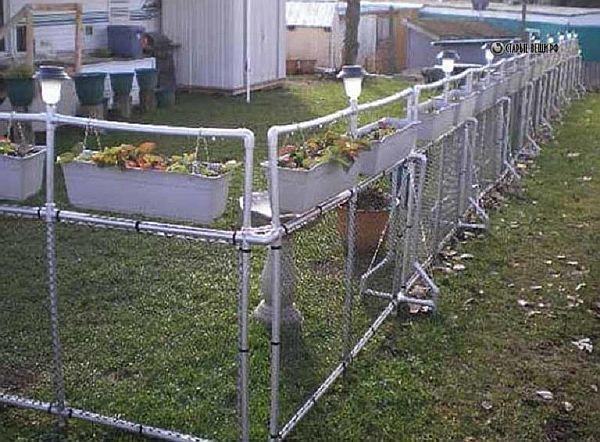
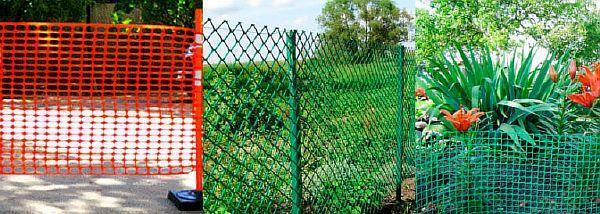
A popular fence design uses pipes for the frame and metal or plastic mesh. They can be permanent or temporary, permanent or portable, to delineate specific areas within the living area of a country house yard.
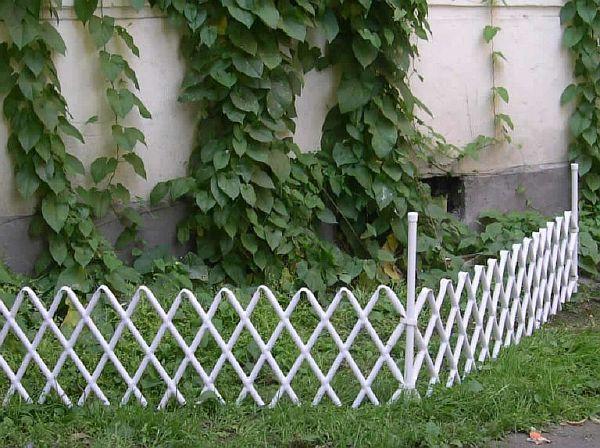
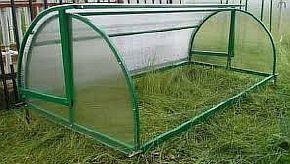
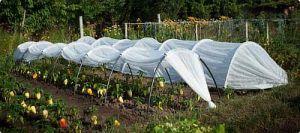
Leftover plastic pipes can be used to create a durable fence for a flower bed or vegetable plot.
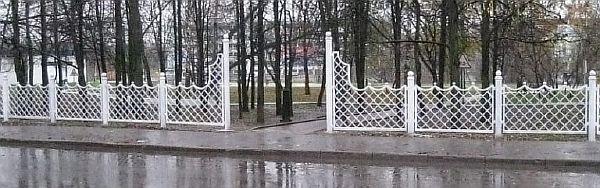
The flexibility of PVC allows you to realize your wildest fantasies when creating an external fence for your property. By fully utilizing the fittings, you can create stunningly beautiful compositions.
An original way to enclose a gazebo or a small area is to use vertical garden beds made from pipes.
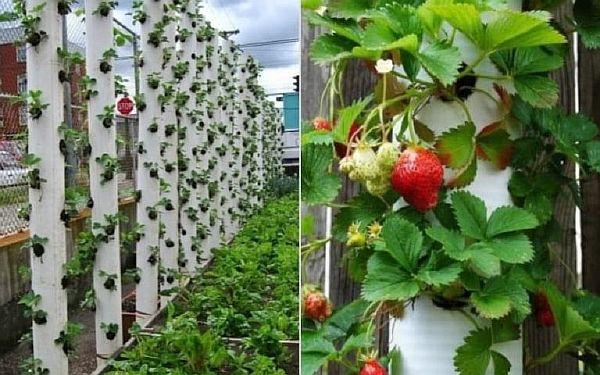
For this purpose, pipes with a diameter of at least 100 millimeters are used, with holes 25-30 millimeters in diameter drilled into their walls. The pipes are buried vertically in the ground, filled with fertile soil, and plants are planted in the holes. These can be strawberries or climbing plants.
See installation guide.
Video on how to install.
Types of fencing made of plastic pipes
First of all, let's note the inevitable generation of short pieces during plumbing installation. This is not waste at all! They can be successfully used to make flowerbed borders.
To install them, a trench must be dug to a depth of half the average length of the remaining material. After this, the pipes are placed end-on on the bottom, backfilled with previously excavated soil, and carefully compacted.
Traces of work can be concealed using removed sod, giving the entire structure a nearly finished appearance. By installing several rows of these fences at different levels, you can create a beautiful stepped flowerbed.
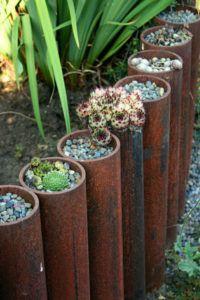 To divide the plot into residential and utility zones, palings—low-height fences—are installed. The rules for installing supporting posts are the same as for a perimeter fence—they must be buried below the frost line.
For a front garden, concrete supports aren't necessary, as the wind loads on a low fence located in the center of the property are low. When backfilling the post hole, it's sufficient to fill it with medium-sized stones and thoroughly compact the soil. This design will ensure long-term durability.
A fence made of plastic pipes, constructed as a wicker fence, looks great and is functional. To make one, you'll need pipes with a diameter of 16-20 millimeters.
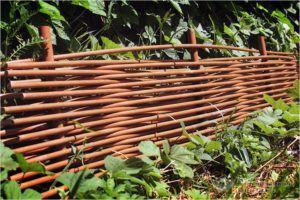
However, it must be acknowledged that fencing made of plastic pipes is expensive. Therefore, fencing options using plastic or metal mesh are more common.
It fills the space within the frame, which is the span of the fence, or is simply stretched between the posts. This is most often used on fences between properties.
Decor for plastic fences
A DIY fence made of plastic pipes is always unique in its design and speaks volumes about the owner's preferences and tastes. However, the modern construction market offers the opportunity to make it unique.
Decorative elements are available for this purpose. The most popular decorative elements are floral patterns.

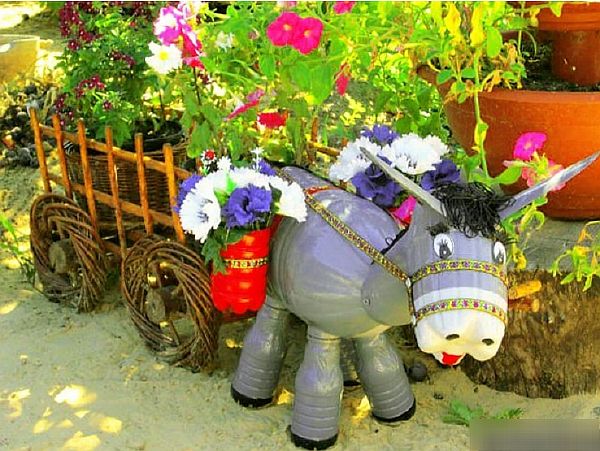
Original crafts in old traditions, such as a flower bed woven from vines, serve as a real decoration for flower beds and flower gardens.
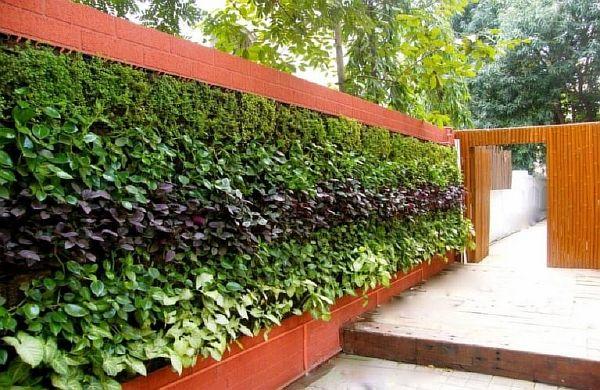
The easiest way to give a simple fence a fresh, original look is to decorate it with living vegetation, for which climbing plants are used.
Advantages of plastic fences
Modern plastic materials have a number of undeniable advantages, which are as follows:
- The material is not subject to corrosion, which determines its long service life.
- The material is light in weight, which simplifies logistics operations and loading and unloading of materials.
- During long-term operation, there is no need for any maintenance in the form of painting or similar measures.
- Plastic materials are easily processed mechanically.
- Most plastics have sufficient strength properties for use as fencing.
When comparing plastic materials to their metal counterparts, one obvious advantage is immediately apparent. A metal fence requires constant care and maintenance, which is uncommon for plastic.
Where can a plastic fence be installed?
There are virtually no limits to the use of plastic fencing. Everything from the smallest components to large blocks can be made from this material.
Plastic can be used to enclose flowerbeds or create a palisade. Moreover, such materials are manufactured specifically for this purpose, and often feature designer finishes.
However, not all materials are suitable for use for this purpose.
Polypropylene fence
Using polypropylene for fencing seems quite technologically advanced at first glance, especially if you include fittings. A wide variety of grating shapes can be created from these materials, and completely original designs are possible with the use of plastic decorative elements.
But let's remember some of the physical properties of polypropylene.
Obstacle one. The material has high coefficient of thermal linear expansionIn heating systems, this causes long sections of plumbing to sag. If used to build a fence, solar heating will have the same effect.
For heating, this drawback was addressed by reinforcing the material with fiberglass or aluminum. Either option reduces thermal expansion by 75%, which is sufficient to ensure the material's proper functioning.
Obstacle two The problem lies in the negative impact of harsh ultraviolet radiation on the material. When exposed to sunlight, polypropylene becomes brittle.
This can lead to structural failure. However, this defect has been overcome by adding up to 2% carbon black to the composition. This component imparts a black color to the products.
Therefore, for the installation of a fence made of polypropylene pipes, it is necessary to use reinforced black products.
DIY PVC Pipe Fence
Polyvinyl chloride pipes are free of all these negative qualities. On the positive side, this material's excellent ductility allows for the creation of complex shapes and designs.
Watch the video
So, we can conclude that a fence made of PVC pipes would be a good choice, and if using polypropylene, reinforced polypropylene is preferable. All you need is some imagination and skill.