Designing a bathroom in an apartment is a simple, yet time-consuming process. Apartment bathrooms are typically small, making it important to create an interior that both practically and visually enlarges the space.
There are several rules that are recommended to be followed when creating a design project. These relate to the choice of color palette, lighting, finishing materials, and plumbing fixtures. In this article, we will examine all of these points in detail.
Preparing for design and choosing a style
Before beginning the project, it's important to complete some preparatory work. This includes the following procedures:
- Selecting the desired toilet design for your apartment.
- Planning a toilet renovation, the design of which is being drawn up, and the calculation of the required materials.
- Purchase of materials (construction and finishing) that will be required to complete the work.
- A renovation project that includes the following stages: preparation and final alignment of surfaces (walls, floors, ceilings); doorway preparation; removal and installation of plumbing fixtures; finishing work; placement of remaining furniture; installation of lighting fixtures.
- Placement of auxiliary decorative elements.
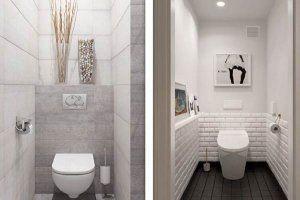
The first stage – developing your own idea of how the bathroom in your apartment should ultimately look. It's important to think through the desired design in advance; it should conceal the room's flaws (such as a small area) and utilize the space functionally. The design can be anything, but the following styles are currently the most popular:
- minimalism – involves the presence of only the most necessary attributes (for example, only a cabinet with a sink, a mirror and basic plumbing fixtures are placed);
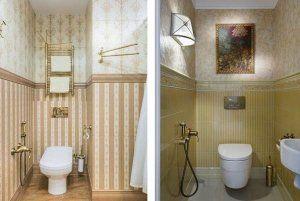
- Baroque is the complete opposite of minimalism. This design makes extensive use of gilding, warm shades of burgundy and brown, ornate embellishments, and paintings in dark gilded frames.
- Classic – a bathroom in an apartment with this design is distinguished by its elegant elements. The design uses marble, light, elegant shades, and a touch of bright gold;
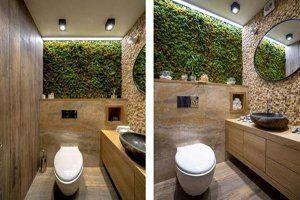
- Eco-style is a trend for the next few years. It involves the use of natural materials, such as stone and wood. Typically, the natural texture and color of the materials are preserved. Plants fit well into this design.
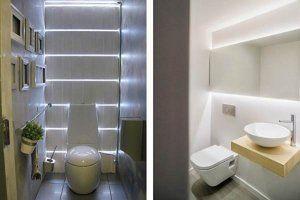
- Modernism is a classic style that leans toward minimalism. It features straight lines, contemporary plumbing fixtures, and glossy finishes. It's worth noting that the specific placement of lighting fixtures visually increases the size of the room.
Many people choose modern, minimalist, and eco-styles when decorating their apartment bathrooms. Sometimes, eclecticism is incorporated into the design, mixing elements from several different (and sometimes opposing) styles.
Color palette
Watch the video
Choosing the right color for a bathroom in an apartment is an important decision, as it affects the mood of the residents and the overall perception of the room. A bathroom of the same size, but with different colors, will be perceived completely differently. There are several subtleties and characteristics of shades that it is recommended that the person choosing the design be aware of:
- White – used in most bathrooms, ideal for small spaces. To make the color less boring, consider adding a few bright elements (furniture, mirrors, etc.);
- Black – this bathroom design looks stylish, especially when paired with white fixtures. It can visually reduce the space. Use with caution, as if the shade covers more than half the room, it will be difficult to navigate.
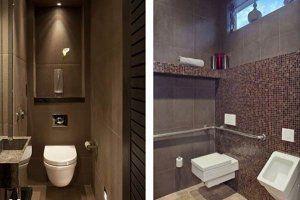
- Gray is a hit in modern apartment design, but it's important to pair it well with other elements. Ideally, the bathroom also features a colorful mosaic or painting;
- Shades of blue – used to create a nautical-style space. They can look either banal and boring or original and beautiful, depending on the shades used and how they are paired with the furniture.
- Bright colors – bathrooms in apartments with this design look fresh, but it's important not to overdo the color to avoid overdoing it. It's recommended to pair bright walls with a classic or minimalist interior.
It's worth noting that the design of a small bathroom in an apartment should definitely include cool, light shades. When choosing finishing materials, it's advisable to choose a finish with a straight, vertical pattern.
If tile is used, it's best to lay it diagonally. Owners of large apartment bathrooms can choose any design style and color palette to suit their taste.
Finishing and materials - tiles, wallpaper, plastic panels
Various materials can be used for finishing works, the most popular are plastic panels, wallpaper and ceramic tilesEach of these types has its own characteristics, which are important to know before choosing.
Watch the video
Finishing with plastic panels is considered a cheaper option compared to tiling. Other advantages of this material include:
- no need to level and plaster the surface;
- there are no difficulties if there are external communications (electrical wiring or plumbing), they can be easily hidden in the frame space;
- Due to the presence of small gaps, the material is ventilated, therefore, moisture on the wall will evaporate on its own;
- As a rule, pathogenic microorganisms do not multiply in plastic, so it is considered a safe material;
- easy to clean, any chemical solutions can be used;
- wear resistance and long service life.
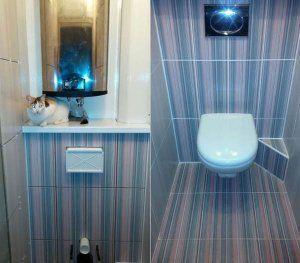
Disadvantages of plastic panels:
- the range is limited;
- Typically not used in high-end bathroom design projects;
- dents and other physical deformations appear in thin-walled plastic;
- the inability to create a monolithic surface finish;
- cannot be used for multi-layer construction for walls or ceilings.
Advantages of wallpaper as a finishing material:
- affordable cost;
- The market offers a wide range of different textures, patterns, and shades, allowing you to choose the material that best suits the style of your bathroom;
- Wallpapering is easier than hanging plastic panels or laying tiles. Even a novice can do it;
- dismantling is quite simple, you can periodically change the design by simply changing the wallpaper;
- You can use wallpaper for the kitchen if it is difficult to find suitable options for the bathroom on sale - See how to calculate wallpaper for a room;
- easy to combine with other types of finishes.
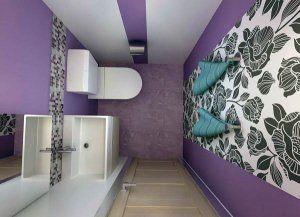
It's worth noting that when implementing a classic bathroom interior design, wallpaper is most often used. Its design should consist of two parts separated by a horizontal line.
Disadvantages of using wallpaper:
- Due to the high humidity in the bathroom, the material cannot be considered wear-resistant. There are special moisture-resistant models for bathrooms, but their selection is limited;
- increased humidity levels will cause the adhesive to expand, causing unevenness and bumps to appear on the surface;
- Moisture will gradually be absorbed into the material, so if low-quality glue was used, this will lead to peeling of the coating.
Ceramic tiles are considered the best solution for bathrooms. Advantages:
- inability to absorb unpleasant odors, dirt and dust, which significantly simplifies the cleaning procedure;
- fungi and microorganisms harmful to health cannot grow on the surface;
- the ability to operate and maintain a beautiful appearance for several decades;
- increased moisture resistance and wear resistance (especially tiles covered with glaze);
- a wide selection of designs, textures and colors;
- an environmentally friendly material that is completely safe for health and does not conduct electricity.
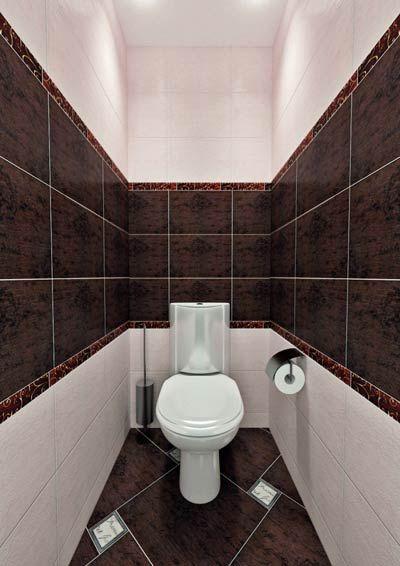
Flaws:
- The high cost of ceramic tiles. However, retail outlets often run promotions on ceramic tiles, allowing for significant savings;
- laying can only be done on a pre-prepared and leveled surface;
- The laying procedure is quite complex and involves many nuances, so it is recommended to entrust it to a specialist.
Watch the video
Lighting
Selecting lighting fixtures and decorative elements is usually the final stage of design, but it is important to plan their placement in the room in advance.
A well-chosen lighting scheme can help visually enlarge the space and highlight the advantages of the bathroom in an apartment. In most cases, soft, diffused lighting is used.
Bathroom fixtures are selected based on the bathroom's interior design. A spotlight system is the optimal solution. A wide selection allows you to choose fixtures that best complement your interior.
It is recommended to place them in corners and ledges; a large amount of light will make the bathroom in the apartment appear larger.
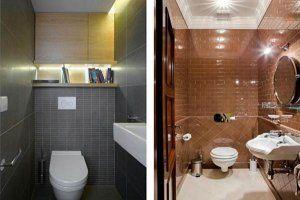
A few sconces placed near a mirror will look beautiful in almost any modern bathroom design style. If you're looking for a unique approach to lighting, consider creating neon lighting.
We design the toilet depending on its area
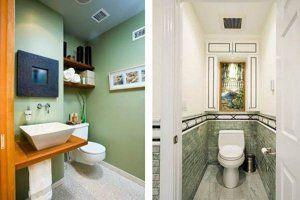
If you need to design a small toilet, it is advisable to follow these rules:
- Use more light shades in the design: white, light gray, beige, light blue. You can use both cool and warm colors, but avoid overly dark shades, which will make the space feel smaller. Using deep or overly bright colors in a 1 sq. m. bathroom design will make the room appear significantly smaller.
- It is better to choose a minimalist or modern design;
- It is recommended not to place small decorative elements, and it is advisable to hide various hygiene items in a closed small cabinet (possibly a mirrored one);
- If possible, it is recommended to place a large mirror, it will visually increase the space;
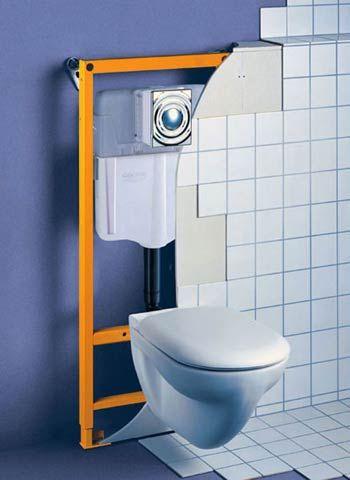
- If there is a niche in the wall, a wall-hung toilet should be installedThis allows you to save space and conceal plumbing. However, it's important to keep in mind that a toilet with a wall-mounted unit will cost more than a floor-standing version;
- When designing a toilet, you need to find a corner type sink;
- To increase the space, it is recommended to install spot lighting.
In general, designing a small restroom—say, 2 square meters—is fairly easy. The main challenge is designing and creating a plan that visually maximizes the available space.
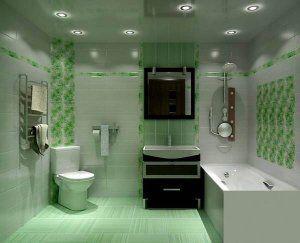
If your apartment has a combined bathroom, you have more freedom in choosing your interior style. Baroque or classical styles are ideal for this type of space. It's recommended to follow these guidelines:
- Visually divide the space using zoning techniques. The simplest solution is to paint the walls in two different colors or use a decorative screen if there's enough space;
- If you have a small combined bathroom, it's best to install a shower stall and a wall-hung toilet. This approach can also be used if you want to create a modern-style bathroom;
- It is better to place furniture along the walls so that the central part remains empty.
If you want to increase the space of a room, you can use spot lighting, mirrors, etc.
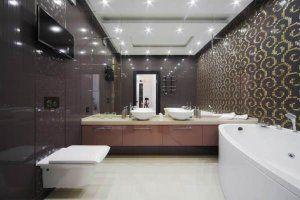
A large bathroom is rare, and its design allows for the most daring ideas. Design ideas:
- you can place several cabinets for storing various hygiene items, several mirrors and a long sink;
- It is advisable to take care of small decorative elements (for example, paintings, mosaics, panels, vases), otherwise the walls and space will look empty;
- Built-in furniture will not only fill the empty space, but also add functionality to the interior;
- use dark shades in combination with light plumbing;
- It is advisable to avoid too bright lighting.
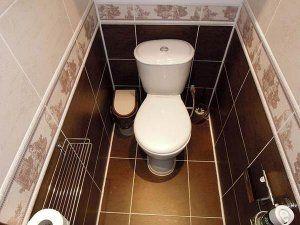
Floor
The style of flooring depends primarily on the overall interior design. Modern or minimalist styles call for cool-toned tiles, while classical or baroque styles favor warm colors.
Watch the video
Floor design options:
- A glossy self-leveling coating. Choosing the right color will visually enlarge the space. A patterned floor is only suitable if the walls and ceiling are decorated in a subdued manner.
- Hexagonal or octagonal tiles. A bathroom tile design in different colors, combining warm and cool tones, looks unusual;
- Ceramic tiles. If space is limited, it's best to choose tiles with a fine pattern.
Walls
Wall finishing is done using materials such as:
- ceramic tiles;
- plastic panels;
- wallpaper (usually water-repellent vinyl models are used).
You can read more about the features, advantages, and disadvantages of each type of finish above. If you've decided to implement an eco-style in your interior, you can decorate individual sections of the walls with decorative stone or natural wood panels.
To visually expand a room, it is recommended to divide it into zones using finishes in different colors and textures.
If you're designing a bathroom in a Khrushchev-era apartment, it's best to choose light wall colors, as the bathroom in such an apartment is small, and white will visually enlarge the space.
Ceiling
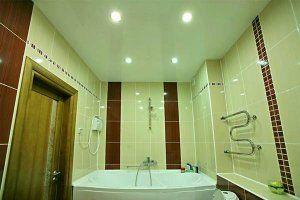
If the room's height and budget allow, it's best to opt for a suspended ceiling. In a small room, this design will visually enlarge the space (thanks to built-in lighting), and in a larger room, it will complement any interior style.
There are many types of stretch ceilings, varying in appearance and cost. It's recommended to consult a professional to help you choose the right option based on the room size.
Selection of furniture and plumbing fixtures and their arrangement
In a small room, it's important to choose compact and functional plumbing fixtures and furniture. If there's a wall niche or one that can be created without compromising space, a wall-hung toilet is the best choice. This design has undeniable advantages and will suit both modern and minimalist interiors.
The main problem with an apartment toilet is the presence of external utilities, so it's important to ensure they are concealed. This is often done behind panels or in a special installation.
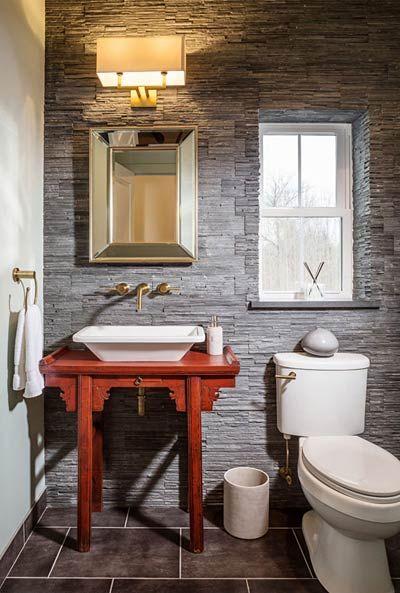
Once the work is complete, all that remains is to place a few necessary elements. Their design should be chosen to match the chosen interior style. These items include: a soap dish, a towel hook, a toilet brush, a toilet paper holder, and a toothbrush holder.
Thus, creating a design plan isn't difficult, but it is time-consuming. When designing a bathroom in an apartment, you need to select the decor and furniture for the room, consider a suitable color scheme, and choose the right finishing materials and lighting fixtures.
Watch the video