To ensure proper functioning of the sewer system in a private home, several factors must be considered. To eliminate unpleasant odors from indoor plumbing, a sewer aerator is often used. It is installed on the main riser, and the plumbing fixtures are equipped with special traps with a water seal.
A sewer aerator is a small plastic device with an air intake opening and a membrane-operated flap. It is used to equalize internal and external pressure in the system and prevent the spread of sewer odors. It is installed on the central riser.
Sewer aerator: what it is and what it's used for
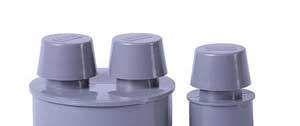 In some cases, a waste pipe installed on the central riser is used instead of an aerator. However, this often fails to eliminate sewer odors, so homeowners opt to install more advanced equipment. A sewer aeration valve can be installed on a new or existing system.
The aerator is a miniature device with a special opening in its plastic housing, its primary function being to draw in air. Inside the housing opening, in addition to the air duct, is a damper. It is activated by the device's membrane.
The main responsibilities of the device:
- preventing the spread of unpleasant odors from the pipeline into the room;
- equalization of pressure differences inside and outside the system.
Sewer aerator: operating principle
During a volley, when a large amount of liquid is discharged at once, the pressure in the sewer system increases significantly. When the liquid exits the local branch and enters the central riser, the vacuum in the pipeline causes the water seals to fail, causing an unpleasant sewer odor to enter the apartment.
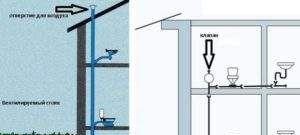
To avoid such a problem, a ventilation pipe is installed on the riser and leads out to the roof.
However, this method has significant disadvantages:
- the ventilation pipe may become clogged;
- there is a risk of damage to the integrity of the roofing surface during installation;
- In old buildings it is often not possible to use such ventilation.
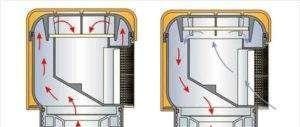
Therefore, a sewer aerator is most often used. Simultaneously, the pressure is reduced, acting on the membrane, which opens the channel.
Air passes through it, stabilizing pressure levels. Once the water drains and the pressure stabilizes, the valve closes automatically, preventing odors from entering the home.
Types and sizes - 110, 50 mm, etc.
Aeration systems for sewerage systems vary in purpose, design, manufacturer and diameter.
Main types of devices:
- Kinetic – designed to reduce the likelihood of excess air accumulation in the sewer system;
- automatic – necessary for removing air under high pressure;
- combined – have the functionality of kinetic and automatic varieties.
In most cases, a combination valve is used to ensure efficient operation of the sewer system. The pipeline is always multi-level and has both vertical and horizontal orientations. The most efficient devices are selected depending on the slope angles, pipe diameters, and other parameters.
Watch the video
Types of sewer aerators by design:
- receiving - installed in front of the pump in horizontal parts of the sewer;
- ball valve - suitable for small diameter pipelines and in most cases used for plumbing;
- non-return air valve - designed for septic tanks and pipes with a diameter of up to 40 cm;
- ball valve with shut-off spring;
- damper - installed on long sections with increased risk of water hammer;
- Interflange - mounted on sections of pipeline with a diameter of less than 20 cm, such devices are capable of turning 90 degrees or passing the flow.
Each of these models may also differ in the type of mechanism. For example, interflange aerators come in disc spring and double-leaf designs. Valve attachment can be achieved by coupling or welding between flanges.
Size classification:
- 110 mm refers to the diameter of the sewer system where the valve should be installed. There are two types of this aerator: external and internal. The external type is installed over the pipe, while the internal type is inserted into it using a rubber seal.
- 50 mm – used on local sewer lines. In most cases, it is installed within a private home or apartment with horizontal piping.
A 110 mm sewer aeration unit is used when the ventilation pipe is routed to the attic rather than the roof (this helps prevent clogging and reduces the negative impact of low temperatures), as well as for auxiliary risers (thanks to the aerators installed on them, only the main riser can be routed to the roof).
Advantages of this type of aerator:
- low cost;
- the pipeline footage is reduced, therefore saving is achieved;
- energy independence, which allows the valve to automatically regulate pressure even in the absence of electricity.
The operating principle of a 50 mm sewer aerator is generally the same as a 110 mm aerator, but its application varies. It is installed when several plumbing fixtures are used simultaneously in a room (for example, a toilet, bathtub, and sink); when there is a component in the pipeline where the pipe diameter changes abruptly; or when the slope is incorrect during installation of the sewer system.
 Larger units should be installed by housing and utilities workers, while local 50mm aerators must be installed independently. To ensure proper and long-lasting operation of the aerator, it is recommended to follow certain installation guidelines:
- the device is installed after the last plumbing element in the system and should be located above the other devices;
- The air valve must be connected to pipes with the smallest diameter;
- When using a drain, the device must be connected at least 35 cm above the floor. Otherwise, there is an increased risk of channel blockage and malfunction.
Important to remember! A sewer aerator of any kind cannot be installed outdoors; it can only function indoors or in the attic.
Watch the video
How to choose based on the characteristics and cost of the device
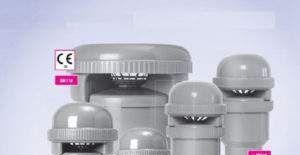 If you've decided to purchase a sewer aerator, you should know how to choose the right model. First of all, it's a good idea to understand the basics about your sewer system and the desired type of device before purchasing:
- horizontal, vertical or mixed pipeline;
- nominal pressure level;
- the size of the fixture and the chosen installation method;
- What material is the aerator made of and its strength;
- valve type: vacuum, membrane, combined, cylindrical, lever;
- The ability to independently adjust the equipment if a defect occurs. This is necessary to prevent the hydraulic seals from failing if the valve becomes stuck closed;
- ball or rotary mechanism of the aerator;
- the presence in the design of a unit that prevents rats from entering the house from the sewer system.
In most cases, the choice should be based on the pipe diameter, sewer orientation, and the required functions of the device. The cost of an aerator device is generally not too high, and the equipment does not require expensive and time-consuming installation. Therefore, if in doubt, it is recommended to install an aerator to improve the performance of the sewer system.
Reasons for installation
The condition of the sewer system is constantly changing. The decomposition of sewage and household waste produces gases that affect the functioning of the pipeline. Discharge through plumbing fixtures changes the hydraulic regime.
Without proper sewer system adjustment tools, it will quickly become clogged and malfunction. This will cause numerous unpleasant experiences for the homeowner.
That's why it's recommended to take proactive measures to ensure proper functioning of your sewer pipes and prevent unpleasant odors. The easiest way to do this is with a sewer aerator.
The main advantages of its installation:
- protects the ventilation pipe from freezing in winter and autumn;
- operation does not depend on the availability of electricity;
- low cost of most models, usually 100-200 rubles;
- simple installation process, does not require complex assembly, so the procedure can be easily carried out by a person without relevant experience;
- The sewer pressure is adjusted automatically.
The 110 sewer aeration valve balances the difference between the internal and external hydraulic conditions of the pipeline, but is limited to a height of two stories. This type of valve may not be able to handle the load if two or more plumbing fixtures are draining simultaneously.
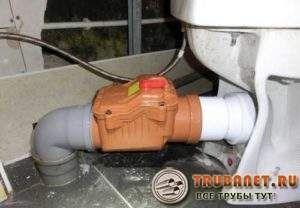
In this case, it's best to install a 50 mm diameter aerator on the local branch of the internal sewer system. In most cases, such devices are installed where the pipe diameter decreases from 50 mm to 32 mm. The device is installed on horizontal sections and equalizes pressure while simultaneously displacing the unpleasant sewer odor.
How to install a sewer aerator
After familiarizing yourself with the device's operating principles, you can begin the installation process. Installation is not a complicated procedure, but it is important to follow all steps precisely and adhere to the instructions. Before beginning installation, shut off the water supply to the riser and notify neighbors if the installation is being carried out in a high-rise apartment building.
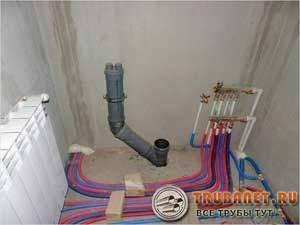 Cut off a small section of pipe and install the aerator according to the instructions. If the pipe is horizontal, the arrow on the equipment should align with the direction of the sewer drain.
When sewer fluids move rapidly, the pressure changes, triggering a valve and opening an air duct through which air is pumped. When the pressure drops, a spring closes the valve, preventing odor from entering the room.
Watch the video
[sociallocker]
Sequence of actions during installation:
- The area where the device will be installed is cut off from the horizontal pipe. If the aeration valve will be installed on a vertical riser, it is mounted at the highest point.
- The pipe is prepared: it is cut to the required size, and any burrs are removed from the cut surface. If an air damper is being installed for the ventilation pipe, this step can be skipped, as it is installed on the end of the pipe.
- To ensure a tight seal, a rubber gasket is installed in the socket. If the installation is threaded, FUM tape is used instead.
- The aerator is placed and secured directly.
Each model has specific installation requirements, depending on the manufacturer. To understand these, it is recommended to carefully read the instructions included with the equipment. After installation, it is recommended to perform preventative cleaning of the valve annually. Diaphragm models require more frequent cleaning.
Tips for a quality installation
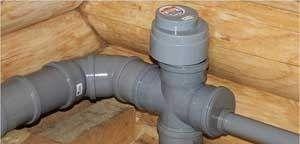 Before starting installation, it is advisable to familiarize yourself with some subtleties that will make the procedure easier and faster, and the device will work for many years.
Recommendations:
- Please read the manufacturer's instructions.
- If several sewer aerators are to be installed, the distance between them should be more than 1 m.
- With a valve installation, a separate ventilation shaft is not required.
- The highest point of the drain must be located above 1 m from the floor level.
- If there is a grate or pipes located under the floor, the device must be mounted 35 cm or more from its surface.
- The aerator device must be connected to the socket, and not vice versa.
Following these recommendations will significantly reduce the likelihood of breakdown and improper operation of the device, and will also prevent clogging of the valve with sewer waste.
Even someone with no construction or renovation experience can install a sewer aerator, as the procedure is straightforward. Furthermore, the technician won't need any additional tools other than the aerator and pipe cutter. The cost of these devices varies depending on the country and manufacturer, with German and Scottish manufacturers offering the most expensive and high-quality models. Typically, prices range from 100 to 1,500 rubles.
Watch the video
[sociallocker]
If you're unsure about your home's plumbing system or the best type of aerator, we recommend consulting with plumbers and other professionals. Many companies also offer high-quality and fast installation services, with prices ranging from 5,000 to 15,000 rubles.