What should you do if your toilet cistern is fogging up? There are several ways to resolve this: reduce the temperature in the bathroom, check the ventilation – it should be working properly, and replace the float mechanism or shutoff valve if necessary.
The question of how to remove condensation from a toilet cistern comes up quite often. First, it's important to understand what this phenomenon is and what potential future consequences it may pose.
Next, you need to determine what caused the water droplets to appear. In most cases, the cause is faulty components or insufficient ventilation in the bathroom, resulting in increased moisture levels.
It's not always necessary to take drastic measures to eliminate condensation. In some cases, minor changes are sufficient to reduce the volume of condensed liquid.
What is condensate?
In general, condensation is a water deposit that forms from the air and settles on various surfaces. It typically occurs as a result of a sudden change in temperature.
This phenomenon can often be observed after showering on the walls of the stall and other objects, but this moisture evaporates within a few minutes. However, if thin streams of water constantly form on the toilet cistern or pipes, this is a problem and requires specific measures to address it.
Please note! Condensation on a toilet cistern occurs due to the impact of cold water (8-16 degrees Celsius) on the tank's surface from the inside, and warm air (26-30 degrees Celsius) on the outer wall. The large temperature difference increases humidity and deposits sediment.
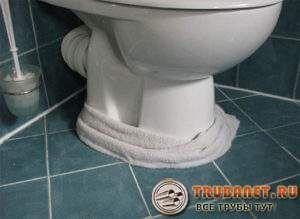
Why does condensation appear on the tank?
There are several basic conditions that need to be checked to determine why condensation is forming on the toilet cistern:
- Frequent use of plumbing fixtures prevents the water in the toilet tank from warming up to room temperature. In a large residential area, toilet use occurs in short intervals, leading to constant condensation;
- A faulty drain, causing heated water to drain away and the remaining supply to be replenished with cold water from the water supply. A faulty shut-off valve or other fittings is a fairly common cause of condensation on the toilet cistern;
- High humidity in the bathroom. For example, people sometimes dry clothes in the bathroom, which fills the air with moisture. However, this moisture cannot evaporate from plastic and ceramic surfaces, causing a watery residue to form on them;
- Lack of adequate ventilation. In some cases, homeowners decide to completely close the ventilation window during construction and renovations. However, this disrupts air circulation and increases humidity, resulting in severe condensation on the toilet cistern.
- location of various heating devices or hot water pipes near plumbing fixtures.
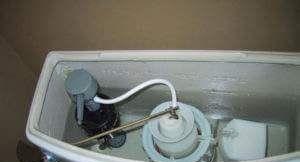
What are the dangers of condensation accumulation?
Each apartment owner decides for themselves how urgently the problem needs to be addressed, or whether it needs to be addressed at all. In some cases, the drain tank fogging is not a constant occurrence, meaning the condensation has time to dry.
In this situation, there's no need to worry, as it won't cause any serious negative consequences. However, if the toilet tank is constantly wet, you need to think about how to remove the sediment. The dripping water creates puddles on the floor, which require regular cleaning. This problem can cause significant inconvenience to the apartment owner.
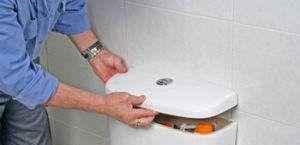 Possible consequences if you don't remove heavy condensation from the tank in a timely manner:
- sediment will get into small cracks and areas that are difficult to reach, then an unpleasant smell of stagnant water will appear;
- The humidity level in the room will increase, creating an ideal breeding ground for various fungal bacteria and mold. Such bacteria will not only ruin the appearance of walls and other surfaces but can also cause allergies, frequent headaches, and other health problems in residents;
- After several years of constant moisture, if the cause of its occurrence isn't addressed, the cistern will begin to deteriorate. Small cracks will appear on the external surface, where fungi and mold bacteria will thrive;
- High humidity will cause various wooden objects, such as wooden flooring, to rot.
- Pipes, furniture, and other metal objects will corrode. Mold may also grow on the inside of the mirror, making it unusable.
Therefore, if condensation is dripping from the toilet cistern, it is recommended to take immediate action to eliminate it. Otherwise, it could damage furniture and other furnishings, and lead to the growth of dangerous fungi and mold.
If the problem is not addressed in a timely manner, the toilet will need to be completely renovated within 5 years.
How to get rid of the problem
Once sediment is detected, it's recommended to learn how to remove it. There are several ways to resolve the problem, depending on the specific cause of condensation on the toilet cistern.
Change of microclimate
If the increased humidity is caused by a ventilation problem, it will be necessary to address the microclimate issues in the room, specifically by using specialized devices.
Let's determine what to do if condensation on the toilet cistern occurs due to problems with the microclimate:
- Ensure forced ventilation in the room. If there's a small gap under the door, air will flow through it. If there isn't, it's recommended to check the ventilation duct (this can be easily done with a match or lighter). If there's insufficient draft, clean the ventilation shaft. If this doesn't help, you'll need to install an exhaust ventilation device. When choosing such a device, it's advisable to consider the type of toilet. If it's a combined toilet, then it's worth choosing a fan model with improved protection against moisture and water splashes.
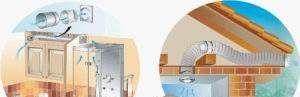
- Install a dehumidifier. This device will collect water molecules from the air and store them in a separate container. The device operates using readings from a built-in hygrometer. When choosing, consider the size of the bathroom.
In most cases, such actions will prevent the situation where condensation accumulates on the toilet cistern.
Increasing water temperature
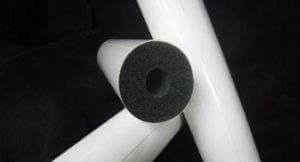 As mentioned above, sediment forms due to a temperature difference of approximately 15 degrees between the water in the tank and the room temperature. Therefore, to remove sediment, it is necessary to minimize this difference by increasing the temperature of the working fluid in the tank.
Let's determine what to do if condensation accumulates on the toilet cistern due to the following reason:
- Insulate the pipeline (this will increase the temperature in the pipes by several degrees). Ready-made material for this is sold in many hardware stores;
- Connect the hot water supply to the tank instead of the cold water supply. However, this is only advisable if you don't have a corresponding meter, otherwise, water consumption costs will be very high;
- install a boiler system;
- create a heat exchanger using a heat riser from an apartment;
- install a half-flush system that will dilute the already heated water with cold water.
Tank modernization
If the bathroom ventilation is functioning properly and has sufficient draft, and the problem is not a violation of the microclimate, another approach is used to get rid of sediment.
How to combat condensation on a toilet cistern:
- Insulation of the tank from the inside;
- Place the container inside a special plastic tank. The distance between the inserted plastic container and the tank should be 2-3 mm. Silicone or rubber gaskets are placed in the small gap.
- Removing the existing toilet and installing a more modern model with a tank that prevents condensation. These models feature a dual cistern with a plastic and porcelain tank. This option is the most expensive, but cost is the only drawback of these toilets.
Internal insulation of the tank is achieved using foam plastic, Tepofol, polyethylene foam, and other thermal insulation materials. Before beginning the process, it is important to completely shut off the water supply and remove any remaining liquid from the tank. Adhesive and sealant may also be required.
When choosing a material, it's recommended to purchase a layer up to 1 cm thick to ensure the tank's working capacity isn't reduced. After gluing the insulation, seal the joints with sealant. Once the sealant has hardened, you can cut holes for plumbing fixtures.

In some cases, polyurethane foam is used for insulation. It has excellent thermal insulation properties, but requires a more complex application process. It is recommended to apply the foam in four stages to ensure uniformity.
Then you'll need to wait a while for it to harden completely, after which you can trim off the excess. For high-quality insulation, a layer one centimeter thick is sufficient.
Watch the video
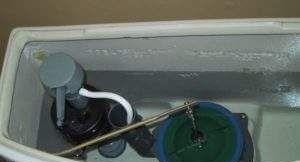
Repair of the drain structure
If the toilet cistern is constantly leaking, the water in the tank does not have time to heat up, resulting in condensation forming on the surface.
If the shut-off valve is broken, the rubber bulb has lost its elasticity, or the rubber seal has stopped performing its functions, Water from the tank will constantly drain into the sewer - see common causes and how to fix themThis situation can lead to the formation of up to 2-3 liters of condensation per day.
The answer to the question of how to deal with condensation on the toilet cistern in this case is to replace the faulty parts. Typically, broken components cannot be repaired, so it's best to purchase new ones.
ADVICE! When choosing, it's important to consider the model of your toilet or cistern, as otherwise the parts you purchase may not be the right size, and the problem will persist.
When installing a new drainage system, it is advisable to adhere to certain rules:
- remove limescale deposits from the holes;
- change the seal (rubber gasket);
- It's best to tighten plastic nuts by hand, but not too tightly. Using metal tools and tightening them too tightly can cause the fasteners to break. A wrench should only be used on older models with metal bolts.
- The drain structure must not touch the walls of the tank.
Reducing the volume of drainage
If a large family uses the same plumbing fixtures, the water will be flushed frequently, which means the collected liquid won't have time to heat up. In this case, reducing the volume of water flushed will help eliminate condensation.
How to eliminate condensation on a toilet cistern:
- Install a half-flush button. This can be done manually by adjusting the shut-off valve mechanism, or by installing a new cistern;
- Install a double start/stop button to control the volume of liquid being flushed.
If this is not possible, it is advisable to purchase a modernized tank with a button that helps minimize flushing.
The question of how to remove condensation from a toilet cistern is a common concern for apartment owners. If sediment buildup is rare and the moisture has time to dry, drastic measures may not be necessary.
However, in other cases, it's important to address condensation promptly. There are several solutions, and the appropriate one is chosen based on the cause of the problem.