When building a house near centralized networks, the owner often faces a choice: install an independent drainage system or connect to the central utilities.
Connecting a private home to a central sewer system is the most popular solution, but it requires understanding many subtleties: the main disadvantages and advantages of this approach, what documents and permits are required, how to prepare a private plot, and how to connect correctly.
The answers to these questions are in this article.
- Advantages and disadvantages of connecting to a central sewer system
- Where to start, what permits need to be obtained, what documents will be needed
- Preparing the site for cutting in and connection types
- Connecting the sewer system to a private house – work stages
- Connection quality control
- Connection cost
- Operation
- Storm sewer: how to connect to the central
Advantages and disadvantages of connecting to a central sewer system
Before making a final decision on the type of sewer system, you should know all the advantages and disadvantages of connecting to the central network.
Advantages of this solution:
- the connection price is lower than the cost of installing a stand-alone septic tank;
- perhaps save on materials;
- the problem of drainage of storm and domestic water can be solved simultaneously;
- Owners of private homes do not need to monitor the quality and volume of wastewater;
- There is no need to regularly clean and pump out liquid from special water collection tanks used in autonomous sewerage systems, so maintenance of such a system is simpler and cheaper.
The main disadvantages include:
- the need to collect many documents and permits from various authorities;
- long wait to obtain permission;
- You will need to pay monthly for sewerage.
Where to start, what permits need to be obtained, what documents will be needed
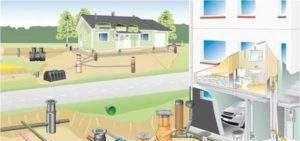
First of all, you need to find out what type of central sewerage system is located near your private home: separate or mixedNext, you should calculate the preliminary costs and, if possible, minimize them as much as possible. For example, a collective connection to the public grid is an effective way to save money.
Before starting work on installing a central sewer line to a private home, the property owner needs to know where to apply for permits and what documents will be required.
List of required documents and where to apply for them:
- A land plan showing the pipeline connection diagram. This is prepared by organizations specializing in expert geodetic assessments;
- Technical conditions for connection to the main line. These are prepared by companies that operate in the sewer network maintenance sector;
- A developed project for connecting to the main pipeline. This project is carried out by a design engineer, taking into account the technical specifications and the private site plan prepared in the previous stages;
- The project is approved by the Vodokanal Municipal Enterprise and the Architectural Department. At this stage, the organization that will connect the individual branch to the city sewerage system is selected, resulting in the conclusion of an agreement with the Vodokanal.
Another important document is a list of residents of nearby houses and their signatures, indicating that they have no objections to the installation of a sewer pipeline.
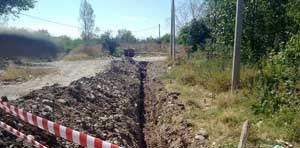
If third-party networks (for example, heating or electricity) or a road pass through the section where the pipeline will be located, then it will also be necessary to obtain permits from the companies operating these networks.
It is important to know that in the absence of all the above documents and permits, when making an illegal connection, the owner of a private plot will be obliged pay a significant fine, and also dismantle the sewer line at your own expense.
Preparing the site for cutting in and connection types
Before installation begins, it's necessary to prepare the property for the tie-in. Preparatory work is carried out in the following order:
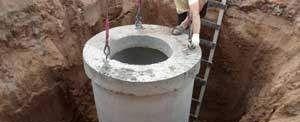
- An inspection manhole is installed. This design provides continuous access to the individual section of the central sewer system for maintenance, clearing blockages, and repairs.
- Trenches are dug for laying pipes and the place for connecting the pipeline drain to the well is prepared.
- Connect existing drainage systems inside the building to the main outlet.
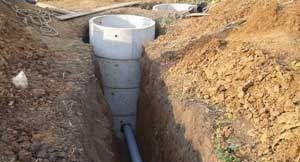 At this point, the preparatory work is complete, and the private property owner must contact the city utility service, which will connect the property to the main sewer line. There are several types of connection to the central sewer system in a private home: separate and combined.
With the separate option, separate drainage systems for storm and utility water are connected to the city sewerage system. disadvantages This type of installation requires the installation of two pipes, which entails double payment and the maintenance of these systems on the property. The advantage is that additional stormwater testing is eliminated.
The combined approach is used only for mixed-use pipelines and involves connecting a common drainage system for all types of wastewater. The advantage of this solution is its lower cost and time-consuming nature, as well as the elimination of the need to maintain a second system on the private property.
Watch the video
Connecting the sewer system to a private house – work stages
When laying the pipeline, it's important to ensure the required slope to ensure wastewater flows independently at an appropriate rate. A subsidence of 3-5 cm per meter is recommended. The installation depth should be more than 1 meter.
After completing all the preparatory stages (installing an inspection well; digging a trench and connecting it to the well; connecting the drainage system inside the building to the inspection well and the created trench), you can begin connecting the individual branch to the general central sewerage system.
The main stages of the procedure:
 Calling a land committee employee who will mark the sewer lines on the plan of the private plot.
- Submission of an application for the creation of technical conditions for a new connection to the central highway.
- Development of a main connection project by a design company, followed by its approval by the architect and representatives of the water utility.
- Approval by the architect of the company responsible for performing the connection work.
- Obtaining permission from neighbors to carry out construction work near their homes.
- If necessary, additional permits should be obtained from companies operating the roadway, heating or electrical networks.
- Before the start of construction, the water utility is notified in writing.
- If the project is successfully accepted, a contract for the provision of wastewater collection services is concluded between the water utility and the owner of the private home, which determines the permissible volume of liquid and the amount of the fee for using the main line.
- Connecting a private branch to the central sewer system is only permitted in the presence of an authorized representative of the Vodokanal municipal enterprise. They must certify that there were no violations during installation and that the procedure complied with Building Codes and Regulations.
Connection quality control
According to the Building Codes and Regulations, the following requirements are put forward for the installed system:
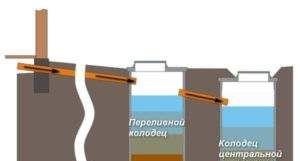
 connection to the central main line is permitted provided that it is located close to the overflow inspection wells (structure at the site of the drainage deepening);
- the drain pipe must be located below the soil freezing level and above the drain, and must be connected at an angle to the well;
- The recommended foundation depth varies depending on the region where the private house is located: in the central regions of Russia – 2.5-3 meters, in the southern regions – 1.5 m, in the northern regions – 3.5 m;
- The slope should be approximately 3-5 cm per meter of pipeline. A large slope will result in rapid liquid drainage and the settling of grease and dirt particles on the pipe, while a small slope will cause stagnation in the pipes and subsequent clogging;
- No sharp turns in the drainage system. If a 90-degree turn is necessary, a special inspection manhole is installed at the turn location, allowing for quick cleaning of the pipes;
- the diameter of the drain should be approximately 15-25 cm; for collective connections, pipes with a diameter of 25 cm are used; an inspection well is installed at the point of connection to the main line;
- the drain is installed using a socket connection, and tightness is achieved by using silicone gel at the joints;
- A cushion consisting of sand and gravel, 10-15 cm in size, is placed in the dug trench. The cushion must be compacted next to the inspection well;
- After installation is complete, the slope is checked and backfilling is carried out: sand is poured in, it is filled with water to ensure a strong adhesion and then covered with soil on top;
- A rainwater drainage system for a private home should only be installed after obtaining the appropriate additional permit; otherwise, an autonomous sewer system for collecting stormwater must be installed.

Connection cost
Before deciding to connect to the main water supply, homeowners should know the cost of this procedure. The main expense will be hiring specialists to calculate the pipe depth, design and prepare a work plan, and obtain a connection permit.
Watch the video
Even if the property owner digs the trench and lays the pipes themselves, the pipe connection can only be performed by a water utility worker or a contractor licensed by the utility. If the pipes are laid by professionals, the average cost will be 1,000 rubles per linear meter, plus a separate fee for installing the pipe in the well.
Connecting a sewer yourself is not only expensive but also quite a hassle. You'll need to gather all the necessary documents, obtain the necessary permits from the relevant authorities, and resolve a host of other organizational issues. Using specialized companies can make things much easier. The cost of connecting a private home to the sewer system will certainly increase, but the company will handle the paperwork, obtain permission from neighbors to install the pipe, design the work, and have it certified by the water utility and an architect.

It's also possible to save money on connecting to the centralized main line. However, this is only possible if sewer upgrades are planned. If the owner of a private home contacts the Vodokanal office and provides a small contribution for the upgrade, the company can undertake the design and connection, reducing costs. The connection cost can also be reduced if the pipe installation is carried out jointly with neighbors.
Operation
Compared to a stand-alone sewer system, operating a central sewer system requires fewer resources. However, even in this case, certain rules must be followed to avoid future problems.
Watch the video
[sociallocker]
Main operating rules:
- Do not dispose of large, durable objects that could clog pipes (e.g. hair, paper, feminine hygiene products) down the drain;
- It is advisable to regularly clean the siphons under the sinks in the kitchen, as well as clean the plumbing using a plunger and a wire brush;
- Use a wire brush to clear small toilet clogs. You can make a similar device yourself using a piece of cable with the end fanned out.
It is also recommended not to use strong volatile chemicals to clear clogs. This can cause poisoning for family members and negatively impact the environment. Instead, it is better to use hydrodynamic cleaning of plumbing equipment.
Storm sewer: how to connect to the central
Once the decision has been made to connect to the central sewerage system for domestic water drainage, the question of how to remove rainwater from the site should be considered.
The least costly option for this procedure is to direct the water drainage to the property surrounding the house via a drainage system. However, this is often not possible, so it's best to also direct stormwater runoff into a central pipeline.
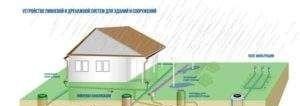
With a mixed connection, the following situation may occur: precipitation levels rise significantly, causing the sewer manhole to be unable to handle the large volume of liquid. Then, wastewater and sewage will rise to the surface, causing numerous problems for the property owner.
To avoid this problem, you can install a separate connection to the central sewer system in a private home, meaning that the stormwater and sanitary water pipes will be connected separately to the main pipeline. The disadvantage of this approach is the increased cost of installing the second pipe and maintaining the additional system.
The document collection process is similar to the process for preparing to connect a domestic sewer system. Permission from neighbors and relevant organizations is also required if the pipes will be located near road surfaces, power lines, or heating networks. A site plan with a connection diagram, developed technical specifications, and a completed project must be certified by water utility specialists and an architect.
Preliminary work includes installing a special well, laying trenches, connecting them to the well, and connecting the internal sewerage system of a private house to the general outlet.
Watch the video
Before connection, it is imperative to notify the water utility in writing of the commencement of work. The procedure itself is carried out in person by a water utility employee, who will monitor compliance with all standards and regulations.
It's important to note that if a storm drain is installed without authorization and connected to the main line, the owner may be subject to a substantial fine. They will also be required to pay for the removal of the individual section of the pipeline.
Therefore, it is better to collect all permits and documents at once; then, with timely payment, the owner of the site can use the sewer system for a long time without problems.

How much will it cost to connect to the city sewer system, and what is the approximate timeframe? I have a private house in Kolomyagi! Is this possible?