Today, plumbing and heating systems are increasingly being made from polypropylene pipes rather than steel ones. But since polypropylene pipes are plastic, the question arises: what is the maximum temperature that polypropylene pipes can withstand?
Let's take a closer look at this issue. We'll examine the properties of polypropylene material. We'll learn about the types of polypropylene pipes and their characteristics. We'll also discuss the temperatures this pipeline can withstand and the specifics of its use in hot water mains.
Properties of polypropylene
Polypropylene is a synthetic polymer product in white powder form, used to produce profiles by melting or pressing. It is the hardest and most durable plastic, resistant to corrosion.
The main physical properties of polypropylene are durability, reliability, wear resistance, and high temperature resistance. It is impervious to chemicals, salts, and alkaline solutions, so these substances present in water pose no threat to this pipeline.
Polypropylene products:
- weigh less than steel;
- do not emit substances harmful to health - suitable for installation in domestic premises;
- the inner surface is smooth, which prevents scale deposits;
- the level of thermal conductivity is low;
- good sound insulation;
- high electrical insulation;
- heat capacity index 2.0 kJ/(kg.°C);
- permissible temperature level -15 — +120;
- density value is 0.92 kg/cm³.
Polypropylene softens at +140 degrees, and its melting point is +175 – this is the temperature of steam.
This factor makes polypropylene pipeline suitable for cold or hot water supply (especially reinforced), where the heating temperature of the coolant is maintained within the range of +95, but it cannot be used as a steam pipe.
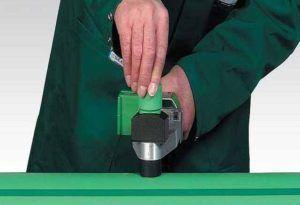
When heated, polypropylene becomes soft, and upon cooling, it regains all its physical properties and becomes solid again. Therefore, assembling a water main from these products is convenient, and the process of connecting the pipeline elements is quite simple. Simply heat the ends and join them together; couplings are also possible.
The main drawback of polypropylene is its plasticity. When heated, the product softens and can be easily bent. However, when bending such a profile, the internal diameter significantly decreases, reducing its throughput.
Furthermore, this material is sensitive to light, causing the product to lose its shine, crack, and fade. To prevent this, various components are added to polypropylene.
It's worth noting that polypropylene doesn't tolerate frost well, becoming brittle at temperatures between -5 and -15 degrees Celsius. This disadvantage can be overcome by adding ethylene or ethylpropylene rubber.
The standard pressure rating for polypropylene products is 30 kg per 1 cm². However, according to manufacturer recommendations, it should not exceed 10 kg.
Types of polypropylene pipes
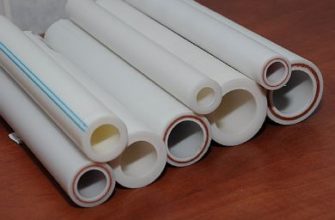
Polypropylene pipes are divided into two main types: reinforced or unreinforcedThey are also categorized by design and material. If a product has a blue stripe, it is recommended for cold water supply; if it has a red stripe, it is recommended for hot water supply.
Polypropylene products of any type are marked with the letters PN. The number next to the PN abbreviation affects the price; the higher the number, the higher the price.
Unreinforced
Non-reinforced types are intended for cold water mains. They are not suitable for hot water supply, as the pipeline can expand when heated—by 150 mm every 10 meters, which can cause rupture. However, non-reinforced models can be installed in low-temperature structures, but only if the pressure is not high.
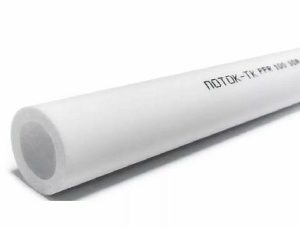
These types offer increased flexibility, moldability, and low cost. Standard profiles are easy to install, as the connection areas with the fittings are unobstructed.
Polypropylene products are marked with the following markings, which indicate the maximum permissible temperature:
- PN 10 — permissible temperature +45 (for underfloor heating) and +20 (for water supply), pressure 1 MPa. Wall thickness — 10 mm, diameter — from 20 to 110 mm.
- PN 16 — permitted pressure 1.6 MPa, temperature value + 60. Wall thickness from 3.4 mm.
- PN 20 — permissible pressure of 2 MPa at a temperature of +80 degrees. Wall thickness of 16–18.4 mm.
The service life of unreinforced pipelines when used in cold water supply reaches 50 years, 30 years if heated coolant flows through them.
Reinforced
Reinforcement is the addition of an additional aluminum or fiberglass layer. This material makes the product stronger and increases its service life, even in the presence of hot heat transfer fluids; the profile will last up to 50 years.
In addition, the reinforcement allows the use of this pipeline with water heated to + 120 degrees, without risk, that a linear expansion will occur, with a further break in the highway.
Reinforced models are designed for high-pressure hot water supply. This type:
- more resistant to chemicals;
- its expansion coefficient is 5 times lower than that of a conventional profile;
- ability to withstand high temperatures and maximum loads.
According to the reinforcement material, profiles are:
- With an aluminum layer—these models have high operating pressures, making them suitable for central heating and hot water systems. The aluminum layer reduces thermal deformation and oxygen diffusion.
Installing aluminum-reinforced profiles is difficult because the aluminum interlayer must not come into contact with water. Therefore, the joints must be cleared of several centimeters of reinforcing material.
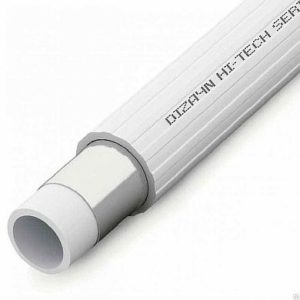
- Fiberglass-reinforced models have low expansion. The fiberglass reduces deformation when heated. Compared to aluminum models, these products have lower thermal expansion stress, making them less popular.
The installation process for this type is simpler because no stripping is required. The fibers are bonded together with molten polyethylene, preventing material delamination.
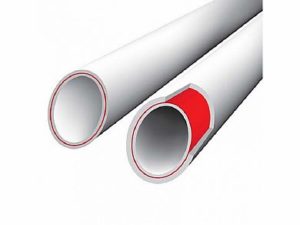
- Basalt fiber-reinforced pipes. This type offers numerous advantages over not only any reinforced models but also plastic and metal profiles. It's easier to install than aluminum-coated pipes, as no stripping is required. Basalt products easily connect to any type of polypropylene fittings.
Reinforced pipes are marked PN 20 and PN 25. They can withstand temperatures of +95 and pressures of up to 2.5 MPa.
However, not all reinforced products can withstand higher temperatures. For example, aluminum pipes cannot withstand temperatures as high as those of fiberglass-reinforced polypropylene pipes—+120°C (although not for long periods).
Marking
In addition to the PN marking, which indicates temperature and pressure, all plastic pipes have:
- the word "pipe";
- abbreviated name of the material;
- SDR — the ratio of the external size to the wall thickness;
- external profile dimension;
- operational class;
- working pressure limit;
- standard room.
For example:
Pipe PP-R SDR 11-20´ 1.9 class 1/1.0 MPa GOST R 52134-2003, where:
- profile made of random polypropylene - copolymer SDR 11;
- outer diameter 20 mm;
- wall thickness 1.9;
- class 1;
- permissible pressure 1 MPa.
According to their structure, profiles are divided into:
- S — single-layer;
- M — multilayer;
- TI — with thermal insulation layer;
- PP - standard;
- PP-RP - high pressure resistant.
By type of material there are:
- PPB - they have high strength, their purpose is floor heating with a hot coolant;
- PPH - have an increased internal diameter, are mounted on ventilation systems and cold water;
- PPR is a universal type that can withstand high temperatures.
By class they are divided into:
- class 1 — up to +60 C, intended for water supply;
- 2 — up to +70 (pipelines);
- 3 — + 60 (warm floors);
- 4 — +70 C, used in heating;
- 5 - + 90 (heating);
- class XB - for cold water supply.
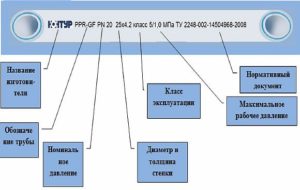
Some manufacturers put a trademark on their products.
Temperature table
For clarity, we have provided a table of temperatures that polypropylene pipes can withstand.
| View | Purpose | Maximum temperature level | Working pressure (atm) |
| PN 10 | Cold water supply | +40 C | 10.2 |
| PN 16 | Universal model | +60 | 16.3 |
| PN 20 | Universal | +80 — 95 | 20.4 |
| PN 25 | Hot water | +95 — 120 | 25.5 |
Features of use in a heating system
Today, polypropylene profiles are increasingly being installed in both central heating systems and private homes. They are non-deformable, impermeable to oxygen, and can withstand sub-zero temperatures, meaning that freezing of water in the mains does not damage the system as a whole.
The answer to the question of which polypropylene heating pipe is best is simple: choose a pipe that can withstand a maximum temperature of +60 to +95°C. The most suitable models are PN 20 with a heating rating of +60°C or PN 25 with a heating rating of +95°C.
When choosing polypropylene profiles for heating, in addition to temperature, you should consider the following:
- Plastic products are rigid and difficult to bend. To turn the main line, a corner must be installed, which is not very convenient.
- The cross-section of the pipes must correspond to the size of the risers to which they will be connected. In a private home, the central distribution system is made of 32 mm section profile, and the connection to the radiators is made with 20–25 mm pipes.
- PP pipe fittings have a large cross-section, which deteriorates the appearance of the system.
- Polypropylene stretches when heated, which leads to thinning of the walls and sagging of the pipeline, which looks unsightly when installed outdoors.
When installing plastic piping, it's important not to overheat it, as this will reduce the flow when inserted into the fitting. This error significantly reduces the system's efficiency.
Furthermore, polypropylene products are not recommended for boiler piping. Boiler rooms experience frequent temperature changes, which is contraindicated for this type of profile.
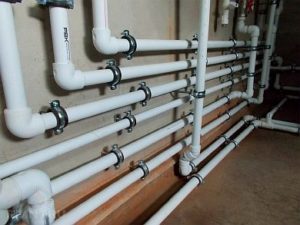
If you take into account all the above points, then polypropylene types with a maximum temperature of +95 are quite suitable for heating installations.
The use of polypropylene pipes in hot water supply
When installing a hot water main, remember that polypropylene pipes have a high coefficient of expansion when heated. If the coolant temperature increases by 10 degrees, the polypropylene pipe expands by 1.25 mm per meter. When using reinforced polypropylene, the expansion rate is 0.32 mm/m.
The heating temperature of the coolant supplied to individual consumers ranges from +45 to +75 degrees Celsius. Therefore, to ensure an uninterrupted supply to such systems, it is recommended to install reinforced polypropylene pipes of PN 20 or 25 grade, with a pressure of 2 to 2.5 MPa.
Polypropylene is a common material used in water pipes. If you choose the right model and follow all the recommended operating instructions, polyethylene pipes will last for decades.