When painting heating batteries, it is necessary to choose odorless paint, which is one of the main factors when purchasing.
The reason for this is the heating of the structure during the heating season, which causes the evaporation of paint and varnish components.
Another factor is that the paint must be able to withstand high temperatures so that its structure does not change.
- Requirements for paints for heating radiators
- Types of odorless paints for batteries
- Acrylic enamel
- Alkyd enamel
- Water-based enamel
- Oil enamel
- Other varieties
- Glossy or matte?
- How to choose the right paint for heating radiators?
- Rules for painting heating devices
- Preparatory stage
- Features of applying paint to radiators
Requirements for paints for heating radiators
Before purchasing radiator paint, carefully review the basic requirements that paint bases must meet. These are:
- Safety. The paint should not contain toxic substances, since when the metal is heated they evaporate, releasing poison (and a person inhales these vapors).
- Resistance to high temperatures. Radiators pass water at temperatures up to 80°C, so the paint must be able to withstand these temperatures. If not, the surface will turn yellow and begin to crack and peel.
- Drying speed. Since the work is most often carried out in residential premises, the product must dry quickly, especially considering that two or three coats are applied.
- Resistance to humidity. All heating radiators are made of metal materials, which are subject to corrosion. Paint must create a reliable protective barrier, especially in rooms with high humidity (bathrooms, toilets, kitchens).
- No pungent odor. This requirement applies not only to the painting process (at this time, the technician may wear a respirator). It's much more important to prevent unpleasant odors from emanating from the radiator during winter operation.
- Thermal conductivity. To ensure that paints do not reduce the radiator's heat transfer coefficient, they must have high performance indicators. Additionally, they should be applied in a maximum of two coats, as three coats reduce heat transfer by 1% or more.
- Color retention. If low-quality coloring pigments are added to the paint, the color will quickly fade and burn out under the influence of sunlight.
- Evenness of coverage. The composition must adhere evenly to the metal, so you shouldn't buy products intended for wood, for example. There are paints designed specifically for specific iron, so what's recommended for steel won't work on cast iron.
Types of odorless paints for batteries
The construction market is replete with radiator paints and varnishes. They vary in composition, technical specifications, and manufacturers, so it's important to determine in advance which one is right for your application.
Acrylic enamel
The product is based on acrylic resin, organic solvents, and coloring pigments, so acrylic enamel has no unpleasant odor. Its temperature tolerance is at least +80°C, depending on the manufacturer.
Basic snow-white options are available for sale, but colored products are also available.
Positive characteristics:
- smoothness and evenness of the surface after complete drying;
- there is no smell even during painting;
- minimum consumption;
- resistance to high temperatures, high humidity, steam;
- elasticity and density of the structure, due to which there are no smudges;
- environmental friendliness;
- does not yellow or crack;
- thanks to the presence of a basic white base, any shade can be achieved by adding pigments;
- affordable price.
It dries quickly, but the drying time also depends on the manufacturer. The minimum drying time is 10-15 minutes, while the average is 30 minutes. For the paint to dry completely and the radiator to be ready for use, it needs to wait 5 hours.
But acrylic enamel also has its disadvantages:
- To extend the service life, the radiator surface must be pre-treated with a special primer, in 2 layers;
- It is prohibited to use abrasive cleaning agents and tools, as their resistance to mechanical damage is low.
Top 9 Odorless Acrylic Paints:
- VGT;
- Diola;
- VGT Profi;
- Radiator Paint;
- Ceresit CF 33;
- Caparol Samtex 7 ELF;
- Parade;
- Tex;
- Livna-134, etc.
The price for 1 liter varies from 280 to 650 rubles.
Alkyd enamel
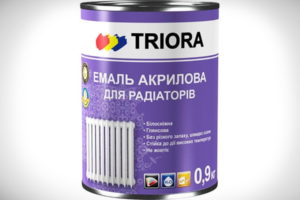
Alkyd enamels contain pentaphthalic or glyphthalic varnishes, pigment dispersions, film formers, silicates, and alkyds, making them reliable and durable. They can withstand temperatures of 70-80°C. Depending on the type of alkyd enamel, these temperatures may increase (see the label).
The organosilicon variety does not lose its properties at a temperature of 600°C.
Like acrylic enamel, it has a base – snow-white or colored options.
Advantages:
- does not peel off;
- does not fade;
- reveals gloss;
- resistant to mechanical impact;
- uniform surface structure after application;
- does not wear out;
- affordable price;
- withstands moisture.
Apply at least two coats of paint. Drying time is 1 to 3 hours, but the radiator is not ready for use until 24 hours have passed.
The enamel also contains white spirit, so it emits a pungent odor when applied, which disappears after drying. However, the unpleasant odor reappears within the first 2-4 days after turning on the heating system. It will disappear after further use. This is the main drawback of alkyd enamel.
Rating of the most popular brands:
- Tex;
- Malta-30;
- Miranol;
- Jamaica-90;
- Dufa Heizkorperlack, etc.
The average cost for 1 liter is 300-600 rubles.
Water-based enamel
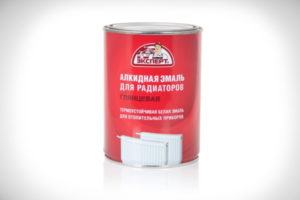
Dispersion paint is based on acrylic enamel, but it's water-based, so when the material's viscosity increases, it's diluted with plain water. Water-based enamel is completely odorless and is considered the most environmentally friendly and affordable product. It can withstand temperatures up to +90°C.
Pros:
- complete safety both during the painting process and during operation;
- due to the absence of odor, you can work without a protective mask;
- water-repellent effect;
- low cost;
- drying speed;
- uniform application;
- resistance to mechanical impact;
- The painted product can be washed with water.
Drying time is 30 minutes, but the radiator will be fully operational within 4 hours. Drying time largely depends on the thickness of the paint.
Disadvantages include the lack of color range (it's only available in white) and the need for at least two coats. If the paint isn't thinned with water, one coat is sufficient. This paint method also prevents drips.
What brands are produced:
- Snowball;
- Aquametallic;
- Dulux Master Lux Aqua;
- Lacra, etc.
The cost of 1 liter is from 250 to 800 rubles.
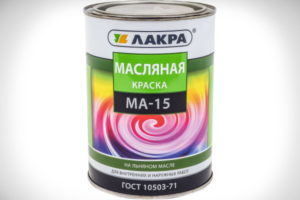
Oil enamel
Made from organic oils, it's considered safe for the human body. It offers several benefits:
- the range includes both colored and transparent options (like varnish);
- an even layer is applied;
- high hiding power;
- adheres perfectly to any type of metal;
- relatively low price;
- withstands the required temperature (+80°C);
- increased resistance to moisture, mechanical shock, steam.
Despite its extensive list of advantages, experts do not recommend using oil-based enamel paint for radiators, as the high water temperature in the radiator can cause cracking and color changes. Furthermore, removing the coating for repainting is quite difficult.
Other disadvantages:
- lies on the metal in a thick layer, which reduces heat transfer;
- streaks are formed;
- does not protect iron from rust;
- The minimum drying time is 48 hours.
Another significant drawback is that oil-based enamel has a persistent, unpleasant odor that's difficult to remove (it doesn't dissipate well). This affects not only the application time but also the operating time, especially if the radiators overheat.
Famous brands:
- Alpina Heizkorper;
- Krafor MA–15;
- Lacra;
- NOVOCOLOR MA-15, etc.
The cost is low – 1 liter costs between 180 and 500 rubles.
Other varieties
There are three more types of paint for heating radiators, but they are not very popular. Let's take a look at them:
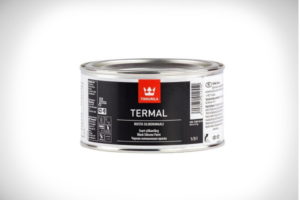
- Silicone paint. The silicone base can withstand high temperatures and is stable in all respects, but it is expensive.
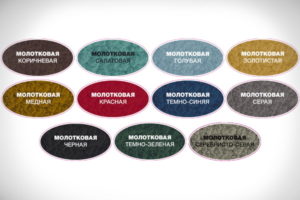
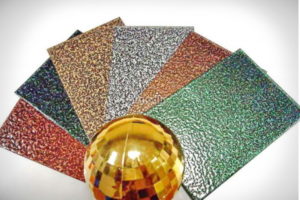
- Hammer enamel. It's a type of alkyd paint. Its distinctive feature is that after painting, the surface takes on a unique appearance. This can be a hammered effect, a chiseled effect, etc. It should not be applied to glossy metal.
- Powder type paint. It is considered the most durable and strong, easy to apply (you need to use constant voltage for this), but it creates a lot of dirt around the heating battery.
It is rarely used for painting radiators, as it requires special equipment, a curing chamber, etc.
Glossy or matte?
All types of paint for heating radiators are classified as matte or glossy, depending on the surface appearance after drying. Users are accustomed to choosing based on taste and personal preference, but for radiators, it's important to consider the following:
- For cast iron radiators, it is better to use glossy enamel, which will visually hide the roughness;
- Matte paints are ideal for modern materials, as the radiators have a smooth and even surface.
How to choose the right paint for heating radiators?
Before you head to the store to buy radiator paint, be sure to research the selection guidelines. This will help you purchase a product that meets all standards and requirements. Here's what to consider:
- Read the label carefully - if the paint is foreign, it must comply with European standards, if domestic - with GOST (if there is no such information, but only technical specifications - do not buy);
- The can indicates which specific material the enamel is intended for – do not ignore this (find out in advance the exact name of the raw material from which the heating battery is made);
- For cast iron products, choose any enamel, but not oil;
- For bimetallic, steel and aluminum batteries - alkyd or acrylic enamel;
- To avoid buying counterfeit products, give preference to trusted manufacturers.
Rules for painting heating devices
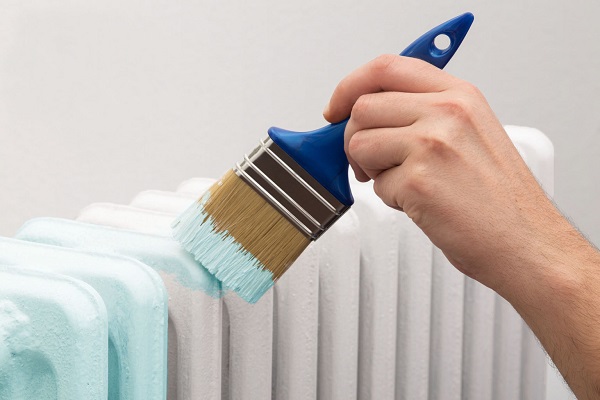
Painting radiators requires special tools, such as a curved brush, so buy everything you need in advance. The painting process always begins with preparatory work, and only then does the actual work begin.
Preparatory stage
To ensure a smooth painting experience, it's important to prepare a number of materials and tools in advance. Specifically:
- paint;
- 2 brushes - curved and straight;
- primer;
- solvent (except water-dispersion enamel);
- old rags;
- newspapers or plastic;
- sanding paper (No. 2);
- protective equipment – rubber gloves, respirator.
If the radiator has already been painted, it must be stripped of the old coating. While applying a coat of paint over the radiator is possible, this will significantly reduce heat transfer.
After removing the old paint, proceed as follows:
- Sand the surface with an abrasive material to make it smooth.
- Wash with a cloth and detergent.
- Wipe dry – there should be no moisture on the batteries.
- Degrease with solvent - there should be no grease at all.
- After drying, treat with primer.
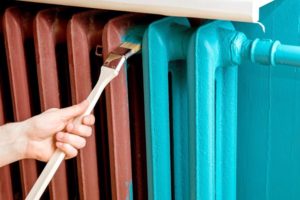
Features of applying paint to radiators
The process of applying the coloring agent is quite simple; the main thing is to strictly follow the sequence. It's as follows:
- Lay newspapers or plastic sheeting on the floor to prevent paint drips. Additionally, protect window frames and walls.
- Open the enamel. If necessary, thin with water or a special solvent appropriate for the type of paint being applied.
- Mix the mixture thoroughly (even if you haven't diluted it). A construction mixer is the best option for achieving the most uniform consistency. Some DIYers attach a special mixer attachment to a screwdriver.
- Dip a curved brush into the paint mixture.
- Start painting from the top inner corner.
- Gradually move down.
- Now paint the back of the radiator in the same way.
- The final stage is the front wall.
Features of painting a heating battery that you need to know:
- Carefully inspect the areas where the paint is applied - if there are any smudges, smear them with a brush without enamel;
- allow the maximum time allowed (for a particular paint) for drying;
- try to paint radiators in the summer (if in autumn or spring, then the weather should be sunny and dry), but avoid this work in winter;
- Experienced craftsmen recommend applying the second layer only to the front part of the device, as this increases heat transfer;
- the optimal temperature for drying enamel is 15-18°C;
- If possible, remove radiators from the walls – this way the work will be done more accurately and to a higher quality;
- Do not leave any gaps, otherwise corrosion will form in these areas.
There are aerosol paints for radiators. They're quick and easy to use, but they're expensive.
When painting metal radiators indoors, use only odorless paint, especially if you're living in the same apartment during the renovation. Be sure to follow the paint and varnish requirements and application instructions to ensure your painted radiators last a long time without sacrificing their heat output.

I occasionally do apartment renovations, so I'm well-versed in radiator paints. I strongly advise against using oil-based paints. Firstly, the color fades, secondly, it causes cracks, and thirdly, the smell is unbearable.
About four years ago, I painted my radiators and pipes with alkyd enamel. I can say there was a slight smell of solvent at first, but it quickly dissipated, and once the heating was turned on, there was no trace left. Now I'm faced with the question of painting the radiators again, but this time at my dacha. I'm definitely going with alkyd.
Alkyd or acrylic enamel is the best option. I've used it myself and have no complaints.
Why paint radiators at all? Modern models don't need it, and the old cast-iron ones are fine, no argument there. I installed bimetallic radiators and don't see any need to paint them.
"Why paint radiators at all?" Don't you think you forgot to include the phrase "bimetallic radiators" in that comment? Many people don't have radiators like yours, and they need to paint them.