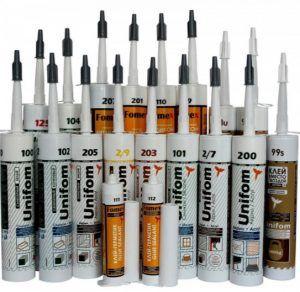
 Sewer pipe sealant is an integral part of the drainage system. It is used at joints. If sewer pipes are installed without a plumbing sealant, the pipeline becomes dangerous. Any unfavorable event (physical impact, sudden temperature change) can cause damage. a joint leak may occur.
Any suitable sealant can be used to seal pipes. However, it's important to choose products specifically designed for sewer lines.
Pipe sealing must be approached with the utmost care. While exterior finish defects are easily corrected, secondary sealing of deformed joints requires the same amount of work as installing the network from scratch.
When operating sewer pipelines, it is strictly prohibited to:
- Presence of leakage from inside.
- Groundwater must not enter external pipelines.
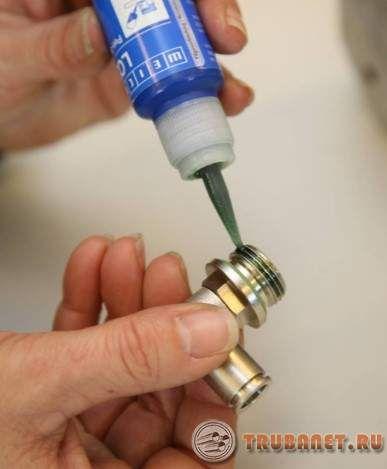 Reliable plumbing sealants ensure high strength of pipe-to-pipe joints. They are especially effective for gravity drainage systems. Even the most modern systems with special sealing cuffs are indispensable.
The following options are used for sewer mains:
- Made of silicone or acrylic.
- Reinforced aluminum tape.
- Bituminous mastic.
All of these types are used in construction work, but for drainage systems, experts recommend using silicone material.
What to consider when choosing a sealant for sewer pipes
Purchasing plumbing sealant for sewer lines is not difficult. However, the variety of options from manufacturers presents buyers with a dilemma. Which product should you buy? And what should you consider when making your choice?
- Tape plumbing sealantThese building materials are considered progressive. Their distinguishing features are ease of installation and high efficiency.
- Silicone plumbing sealantsThey are based on silicone rubber. The vulcanization process occurs under the influence of moisture in the air.
- Technical sulfurIt is used for cast iron sewer pipes.
- Epoxy resinThe adhesive based on it is the most common household sealant.
- Portland cementIt is used for calking socket joints of cast iron sewer pipes.
- Asphalt mastic. Most often used for working with ceramic sewer lines.
- A strand of resin and a ropeThis is usually used to seal cast iron and ceramic pipes.
Acrylic and silicone based sealants
Silicone sealant for sewer pipes has become the most popular option for installation. These products contain additives and active ingredients.
The main component of the substance is a silicone or acrylic rubber material. Ultimately, it ensures a strong hold on the pipe connection.
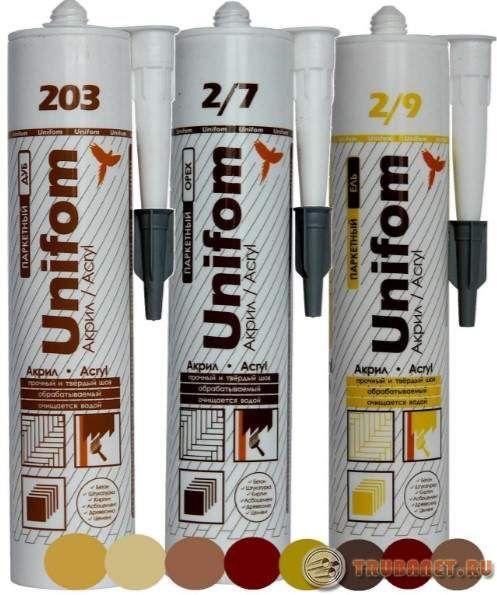
Depending on the type of hardener, silicone pipe sealants are divided into the following types:
- Acid-resistant. This product is inexpensive and not recommended for use on surfaces that are sensitive to acid. A distinctive feature of this type of plumbing sealant is that it reacts with almost all metals. The only exception is stainless steel.
- Neutral. This is a more versatile material. It's suitable for most types of installation, which accounts for the higher cost.
By using silicone sealants, it is possible to seal sewer pipe materials made of metal and plasticIt's not difficult to work with them.
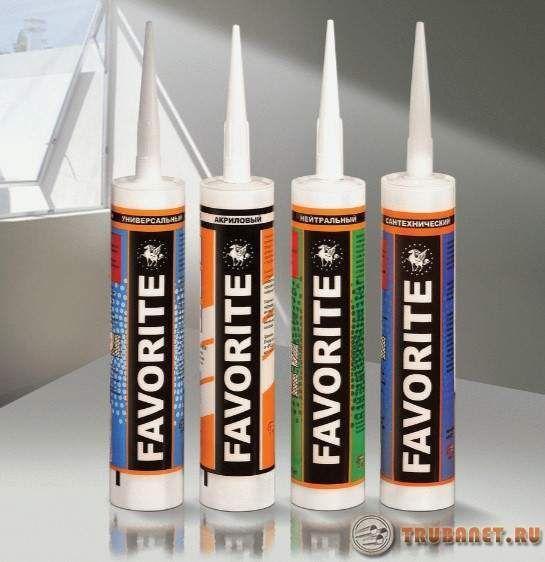
They're easily pressed out with a nail gun. If you don't have one, you can use a regular hammer. Insert it into the tube and press down like a piston.
Actions with cast iron pipelines
Various sealants can be used for cast iron sewer pipes, such as tape.
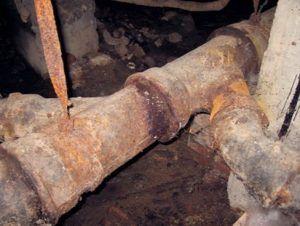 Cast iron pipe sealing tape is used for comprehensive protection. Its use allows for finishing not only joints, but also cut-ins, bends, elbows, plugs, and more.
Sealing of cast iron products with tape is carried out in the following way:
- Preparation - cleaning areas from dust and drying them.
- The tape is tautly wound around the circumference of the intended joint, avoiding any unevenness.
- It is wound in turns, overlapping.
- The connection ends up under a couple of layers of sealant.
IMPORTANT! The tape is sensitive to ultraviolet radiation. For this reason, if cast iron pipes are installed outdoors, it must be covered with an additional protective layer.
Traditional method of sealing
The idea is as follows: I fill the pipeline two-thirds full with tarred tape. The remaining space is filled with a thick cement mortar.
Asbestos cement is often used as a substitute. However, it must be of high quality. The installation itself takes a lot of time and effort.
Video
Then a special cement mixture comes to the rescue. It hardens quickly, but that's not the most important thing. This mixture expands and compacts itself as it dries.
These qualities are considered ideal for plumbing sealants. Another important advantage is its moisture-proofing properties. Now, liquid will not be able to leak into or out of the pipe.
To properly apply the self-expanding compound, the blanks are cemented and the joint is filled with the mixture. When doing this, it's important to maintain the correct ratio of ingredients. It's five parts water to two parts cement.
Cable duct
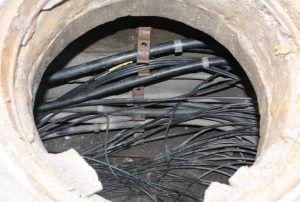 Sealing cable ducts requires a special approach. Special mastic inserts are used for such tasks.
When installing cable ducts, detachable plastic mechanical seals are also used. They are designed to ensure the cable network is watertight.
These detachable element systems are used in manholes, sewers, and building entrances. These sealing devices are easy to install and remove by hand or with simple tools.
They are corrosion-resistant and reusable. The design is completely disassemblable and can be used in channels already containing cables or protective sleeves in any combination.
There's no need to use any additional sealants. Components are selected using special tables that list all standard sizes.
Video
Heat-shrink plugs are also used to seal cable ducts. They are specifically designed for this purpose.
They are installed on the outer surface of the workpiece with a cable running through it. They are also installed on rolled tubular products that do not yet have a cable.
Stormwater drainage systems
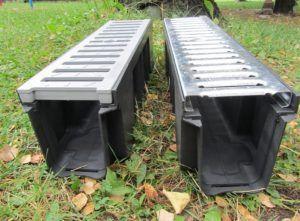
Sealing storm drains is no less important than any other system. Properly designed storm drains allow recreation areas, parking lots, and paths to be fully utilized.
Video
The main purpose of such systems is to drain rainwater, floodwater, and meltwater. This also increases the lifespan of the concrete pavement, basement, and foundation of each building.
The objects of water drainage are waterproof surfaces:
- sites;
- roofs;
- paths, etc.
Water flows through them to a point or linear receiver. It then ends up in a reservoir. The distinguishing features of such a system are burst discharges and the absence of a stable flow in the middle of the main line. They also do not contain organic contaminants.
In this case, a sealant is necessary to ensure the system functions without leaks. Proper storm drain sealing includes:
- Correctly selected type of building material.
- Precise actions during sealing.
When working with plumbing sealants, it is important to understand that this task does not tolerate careless or inattentive handling.
Even a minor error can lead to irreversible consequences resulting from a poor quality joint.
Ultimately, everything will have to be redone, which means unnecessary financial investment and wasted time.
If you have any doubts about the accuracy of the work, it's a good idea to ask a professional to assist you. A professional will help you choose the right product for your sewer blanks and, if necessary, quickly complete the installation.
The investment in his services will be fully justified by a reliably functioning stormwater drainage system. However, we recommend using reputable companies with highly qualified specialists.
The work of such specialists is distinguished by a high level of quality, and at the same time, there will be no problems in the form of urgent emergency repairs.
Video
Which plumbing sealant for sewer pipes to choose doesn't really matter. After all, all of the options described rank very highly in terms of reliability.
The key to this issue is the correct approach to the work itself (sealing). This will determine the future reliable operation of the sewer pipes and the system as a whole.