A coupling is a cylindrical device used to connect drive shafts or pipelines. Its primary purpose is to transmit torque without changing its magnitude or direction, or to connect pipe sections into a single unit.
Couplings for plastic pipes are very often used during pipeline installation. This seemingly simple component is actually a crucial element of a plastic pipeline.
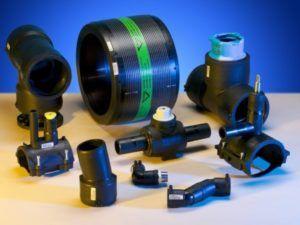
Plastic, which has almost completely replaced metal and cast iron products, has proven itself to be the optimal option for laying networks for any purpose.
However, during installation work, it becomes necessary to connect sections of pipeline into a single network. And that's where couplings come in.
What is a coupling and why is it needed?
A plastic pipe coupling is a device used to connect elements of heating or water supply systems (and other systems). The product range in this line is extremely wide, and all these elements are classified by design features, connection method, and other characteristics.
The modern construction market offers a wide range of products, so choosing shouldn't be a problem. You can purchase types of the most complex configurations.
Couplings significantly simplify the connection of plastic pipelines used in the following systems:
- water supply - both cold and hot;
- drainage system;
- heating;
- oil and gas pipelines;
- electrical networks.
When discussing these devices, it's important to note that they are universal products that can serve as transitions between structures with different structural features. For example, when connecting a smooth-walled section to a corrugated one.
There are many areas where these connecting elements are used, the main ones are:
- Housing and communal services.
- Agriculture.
- Construction industries.
- Chemical production.
- Oil and gas industry.
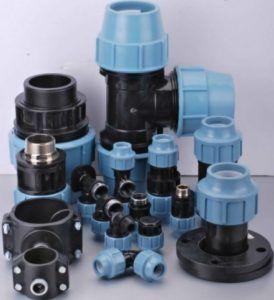 In addition, this type of connection is often used when installing and connecting pumping equipment.
In addition, this part has found wide application in the home. For example, a coupling for 32 mm plastic pipes is installed in drip irrigation systems. Couplings and valves for connecting drip tape are installed in 32 mm plastic pipes.
32 mm couplings and mini taps for garden drip tubing are also installed in this type of pipe. 32 mm clamp couplings are used to join two sections together.
A 110 mm plastic pipe coupling is used to quickly connect sections of large pipelines. 110 mm fittings are made of high-quality plastics that withstand high temperatures and provide long-lasting service.
The listed advantages of 110 mm fittings are complemented by simple installation that can be performed by anyone.
Main advantages
Plastic is one of the new, "young" materials, and it offers numerous undeniable advantages. These include:
- environmental friendliness;
- resistance to aggressive chemical environments;
- heat resistance;
- low price;
- ease of installation;
- long service life;
- reliability.
Types of coupling connections
Couplings designed for plastic pipes come in a variety of designs, technical specifications, and installation methods. In addition to couplings, there are other types of fittings used on plastic systems.
For example, heat-resistant or cast fittings can be used for gas mains, while corrugated types of these products are used for sewer pipes.
- Connecting (repair) fittings. These fittings are designed to ensure the tight and reliable connection of pipeline components and to eliminate emergency situations.
- Protective. As the name suggests, these shaped elements are used to protect polyethylene materials from damage.
Features of the use of thermistor electrofusion couplings
In order to provide various options for joining tubular products, the following coupling devices were provided:
- Electrical, also known as thermistor.
- Compression and crimping.
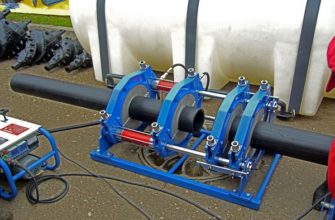
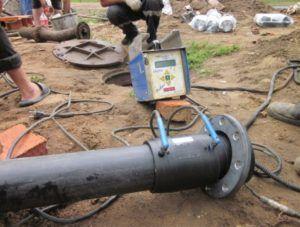 Thermistor fittings have a built-in heating element, which allows for a permanent connection. The most reliable method for joining pipeline components is welding. This is achieved using electrofusion couplings.
A unique feature of thermistor devices is their installation. This can only be accomplished using specialized welding equipment. The connection is made using copper wire.
It is heated by electricity and causes the polyethylene to melt, which then leads to the formation of a very reliable joint.
To use such a fitting, the following is required.
- Prepare the tubular products for welding. The plastic pipes must be thoroughly cleaned of any dirt or dust. The thin surface layer of polyethylene must also be carefully removed from the area of the planned joint.
- The material prepared for work is positioned on a single axial line. This applies to the main pipeline components and the electrical coupling.
- Electricity is connected to the coupling.
- The integrated heating element begins heating the part to the required temperature, thereby melting the end surfaces in contact.
- When heated, polyethylene products expand and fit tightly onto each other.
- Next, the power supply is turned off, and the completed structure must remain motionless until it has completely cooled.
- After twenty minutes, a sealed and durable joint is formed.
Modern electrofusion couplings offer the advantage of being able to independently control the entire welding process and subsequent cooling. Installation of such components is practical in confined spaces.
This connection option is considered a priority when the butt-joint option is inconvenient and impractical. Such locations typically include wells, poorly accessible channels, and mounting holes in the foundation or building wall.
Another advantage is that it is suitable for emergency situations when a plastic or polypropylene pipeline is damaged, and when the defect must be repaired within a very short timeframe.
The only drawback in this case is called high price These devices, understandably, aren't affordable for everyone. The cost of these products is significantly higher compared to similar products, but the speed of installation and the reliability of the resulting connection more than compensate for this.
Protective coupling parts
As previously described, protective fittings for plastic systems are designed to protect the pipe structure from mechanical damage. These are one-piece devices into which the pipe is mounted. As a result, the pipe assembly does not come into contact with the reinforced concrete, and its integrity remains intact.
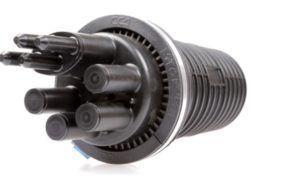
These products are used for installation in the reinforced concrete wall of a sewer manhole. They protect the inlet and outlet structures, absorb the load on the plastic main line, and maintain a high level of sealing at the joints.
The device, which is installed in the wall, is fixed with a cement mortar and creates a hole of the required size for laying the pipeline.
The main purposes of these fittings.
- Reduction of the external influence force generated by vibration and changes in diameter due to temperature changes, as well as after the “settling” of the walls.
- Design of a landing area with a smooth surface inside.
- Partial mitigation of the impact on the pipeline from the inside.
Sealing rings perform an additional compensatory function here.
Professional plumbers highlight the quality of the three-layer PVC fittings with a foamed interior in this product line. However, similar fittings made of PVC also boast excellent technical characteristics.
Protective cast HDPE couplings are specialized protection devices. They feature a special design with a slip-resistant outer section and are equipped with special reinforcement ribs.
These are notches that allow the cast device to be firmly anchored in the wall. Inside such a product, there is a sealing ring that allows the fitting to fit tightly to the pipe and protects the part inside the connecting device from becoming clogged with soil.
The protective connecting mechanisms are one-piece castings, which allows them to easily perform the functions assigned to them.
These devices come in diameters ranging from 110 to 1200 mm. This volume is identical to that of PE pipes. Commercially available lengths range from 150 to 510 mm.
If a job requires a coupling component of a different diameter, it can be custom-ordered. Almost all companies can supply couplings with non-standard dimensions.
The use of protective devices is considered the most effective solution, as any plastic pipeline is subject to movement and deformation during operation.
Compression devices
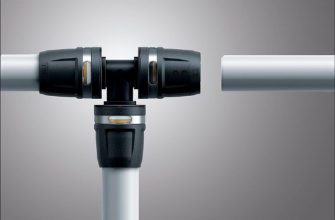
Unlike electrofusion fittings, this type of fastener does not require specialized equipment for installation. Welding is not necessary in this situation.
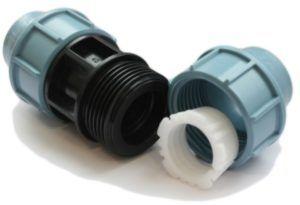
Using compression fittings, a detachable connection can be created., which can be disassembled if necessary. Such joints can be disassembled and reassembled as often as needed.
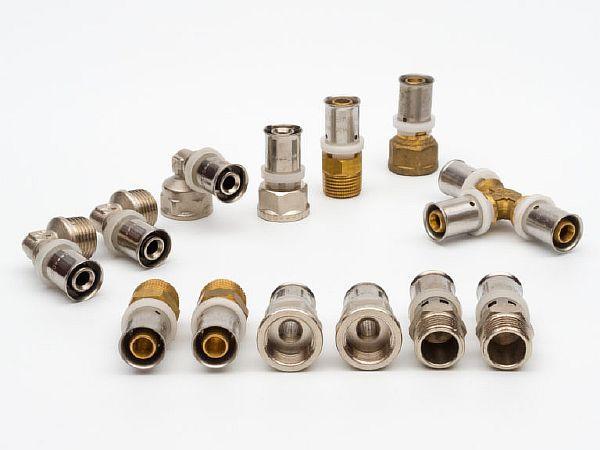
Compression devices are divided into:
- devices that fasten tubular products of the same diameter;
- adapters for connecting pipelines of various volumes;
- products with external thread;
- devices that have internal threads.
The fittings in this line are made from environmentally friendly materials. This type of fitting is easy to install. To create a reliable joint, you need:
- prepare the coupling device by partially disassembling it and unscrewing the union nut by 3/4 turns;
- prepare the pipe, at the same time, its surface is cleaned from contaminants using a chamfering tool or a well-sharpened knife;
- the pipe is marked with the size of the coupling part entering the body;
- To facilitate installation, it is recommended to wet the compression mechanism with liquid soap or apply a special lubricant to it;
- the pipe is inserted into the coupling device up to the specified mark; during these actions a certain force must be applied;
- then the union nut is tightened until it stops;
- In order for the connecting fastening to be airtight, the threads must be protected with FUM tape.
Flange connecting elements
These connecting devices are capable of ensuring a highly sealed joint on a structure, and professional craftsmen claim that this coupling mechanism is characterized by relatively simple installation. Flanged couplings are fitted with special paronite gaskets.
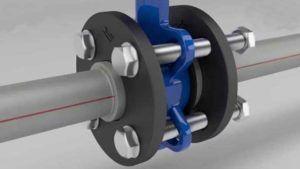
The composition of such a connecting device also includes a metal flange and a polyethylene tube.
The price of this line of connecting products is affordable, which can also be added to its undeniable advantages.
Operating procedure and connection features
The installation steps will not cause any particular difficulties if everything is done exactly according to the rules.
- First, it's necessary to draw a plan of the pipeline being constructed. When developing the diagram, it's important to take into account every turn and connection in the metal-plastic or plastic pipeline. The more accurate the diagram of the future structure, the easier it will be to complete all subsequent steps.
- The next step is purchasing the necessary materials. Their quantities are determined based on the plan.
- If a compression coupling is used, it is used to secure the end of the pipe to the central network. This fitting consists of two semicircular parts with a flange for the pipe connection. The coupling is then placed on the pipe and tightened tightly with bolts. A hole is then drilled through the flange to allow the fluid to pass through.
- Next, the first workpiece, pre-cut perpendicularly, is placed against the flange. The end of the pipe is inserted into the coupling piece (up to the corresponding mark). Before inserting the pipe, its end is coated with a special adhesive.
- A similar procedure is carried out with the part of the part where the connection is made.
- After the glue has dried, press it with the threaded end.
Preparing pipes for connection is the same in all cases. The only difference lies in the methods used to seal joints on plastic structures. For example, when using electrofusion fittings, no adhesive is used.
These devices feature a heating coil that applies heat to the elements being joined. This melts the polyethylene, and the individual sections are securely welded together.