A fitting is a component that allows for quick and secure pipe joints. There are several variations of this device:
- adapters between different diameters or different materials;
- elements for branching or turning pipes;
- for connecting a pipeline with shut-off, control or measuring valves.
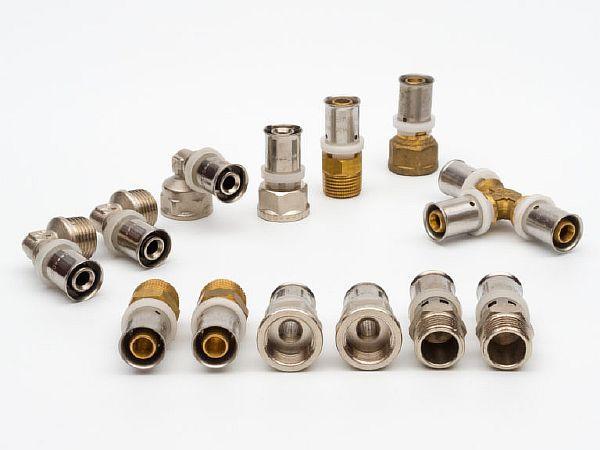 Fittings for metal-plastic pipes are an important structural component. Metal-plastic (MP) pipes are currently very widely used.
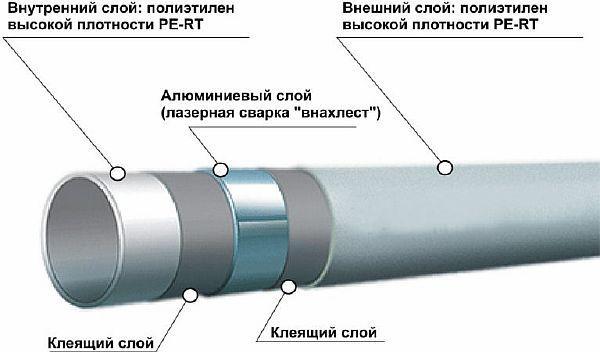
The high popularity of these materials is driven by their unique capabilities. They can simultaneously perform several functions: convey liquids at temperatures up to 110 degrees Celsius and change pipeline directions without compromising their integrity.
The design features of metal-plastic pipes, namely the combination of aluminum and polypropylene, have become the basis for the fact that this type of product range is permitted for use:
- when installing underfloor heating systems;
- with hidden installation option;
- when connecting to heating devices;
- when constructing country irrigation systems and much more.
 The advantages of these products are numerous, but here are the main ones:
- Absolutely ecologically clean.
- Long service life.
- Maintaining throughput capacity throughout the entire service life.
- Small mass.
- The ability to bend without causing damage to the integrity of the pipe.
- Simple and quick installation.
- Possibility of hidden installation in concrete and cement mortar.
- Low thermal conductivity.
- Good sound insulation performance.
- Attractive appearance
- Affordable price.
Despite the high ductility of metal-plastic products, special fittings are used for connections when laying complex structures. This product line is the most popular among consumers, because the fittings are suitable for both water and heating mains.
Advantages of fittings
Connecting fittings for metal-plastic pipes have many advantages:
- There is no need for welding work.
- The connection is made quickly, and most importantly, without any special professional skills.
- No special knowledge or skills are required for installation.
- There is no need to purchase expensive and complex equipment.
- When working with these connecting parts, the labor intensity is much lower than, for example, in the case of copper, polypropylene and steel pipelines.
- These connecting parts are produced in various shapes, which allows them to be installed on pipelines of any structural complexity.
TIP: These fittings are recommended for installations that require quick removal. These connecting pieces are also effective for quick maintenance, as the joint can be easily removed if needed.
Types of fittings for metal-plastic products
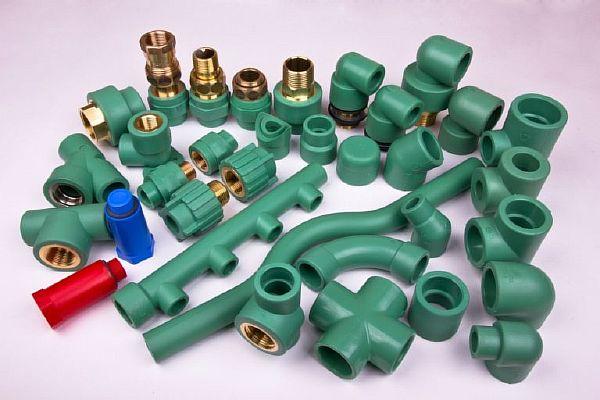 There are different types of fittings for metal-plastic pipes. For example:
- straight devices - they can be equipped with a transition to internal or external threads;
- tees, these types are also equipped with a transition to internal or external threads;
- tees with fasteners, which are called sockets;
- squares, these types also have a fastening;
- crosspieces.
When considering the types of these shaped elements, it is important to note that they all have one major drawback – high costIt increases as the product's volume increases. For plumbing systems, couplings of 16 and 20 mm are most often used.
In comparison with other shaped elements, their cost is the most lowHowever, heating mains use products with a volume of 32 to 40 mm. These types are significantly more expensive than the previous types.
However, the seemingly high cost of fittings for metal-plastic pipes is offset by the installation costs. After all, the cost of professional services, which are not required in this case, is significantly higher than the price of the device itself.
How couplings work
The design of fittings for metal-plastic pipes varies in each individual case, although some types of fittings for metal-plastic pipes have structural similarities.
For example, all press fittings are designed the same way:
- The housing. The shape of a particular type of part depends on it. The housing type determines the specific model of the device: coupling, elbow, or tee.
- The sleeve. This part of the device is called the main part and is made of stainless steel. The pliers are clamped on its surface during installation. Once the sleeve is fully clamped, it can no longer return to its original dimensions, and this does not happen not only during installation but also over a period of long-term use.
- A ring-shaped clip. It is used to join the cartridge case to the body.
Watch the video: A cheap way to connect metal-plastic pipes
When installing this type of coupling, no sealants or lubricants are required. The required seal is achieved by deforming the steel sleeve.
Push-in couplings, also known as push-in couplings, have a slightly different design. The design in this case is as follows:
- The body is made of polymer, its strength can be compared to metal products.
- Rubber rings are seals. They can withstand high temperature loads.
- The ring inside is equipped with a spring. It is responsible for securing the pipe in the desired position.
- The plastic casing is located on the outside and holds the entire structure.
All the described types of connecting parts for metal-plastic pipes differ easy installation, which is their significant advantage over other similar devices.
Collet parts
Collet fittings for metal-plastic pipes are very often used when pulling pipelines. If the joint is made correctly and in accordance with all requirements, there is no need to worry about strength and tightness.
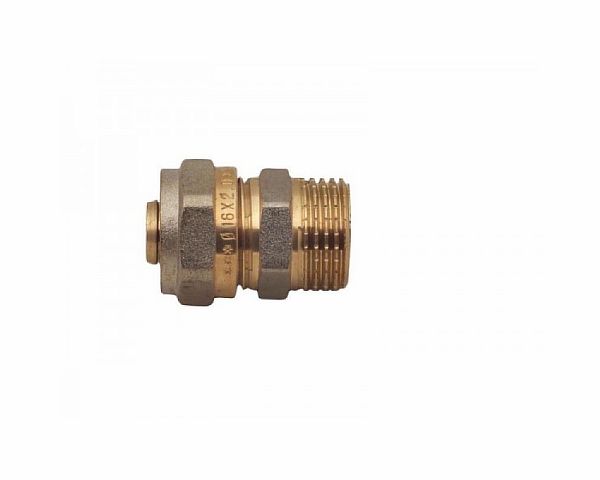
Another important detail is that installation work in this case is quick and easy. All you need to install the collet elements are: chamfering tools, scissors, wrenches, and a calibrator.
The main advantage of a joint formed by a collet connector is the ability to be disassembled later if necessary. However, they require constant maintenance. This involves constantly tightening the union nut.
Many manufacturers produce collet fittings, and they are available in vast quantities on the market. For example, there are over a dozen Italian companies producing this product line alone, and many more Chinese manufacturers.
Tees
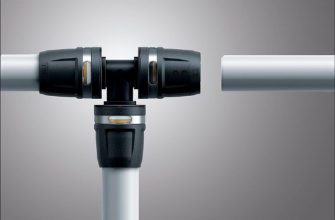
A tee fitting for metal-plastic pipes is an important component for branching and diverting main lines. These fittings allow three pipelines to be connected.
Video - Overview of press fittings and proper crimping
Tees come in two types: equal-bore and reducing. A reducing tee is installed at the junction of pipelines with different volumes, while equal-bore devices are used on main lines with the same volume.
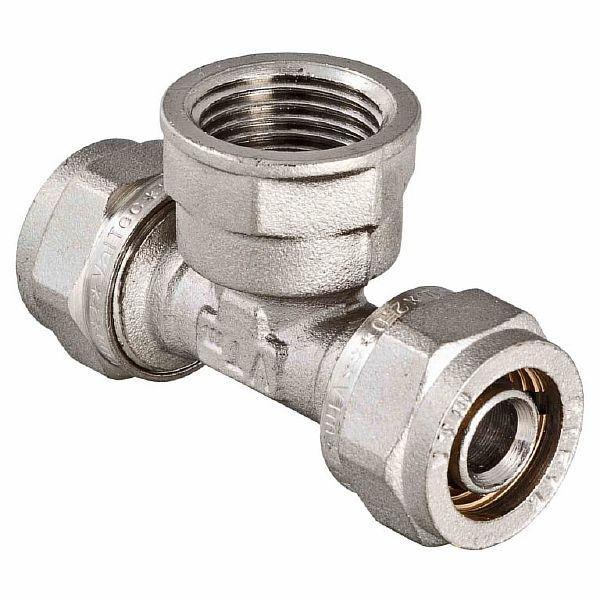
One important feature of these shaped products is that they help to reduce the area of the constructed highway to a minimum size.
The cost of tees depends on the material they're made from. To ensure the proper functioning of this mechanism, it's best to purchase from reputable manufacturers. Otherwise, the quality of the tee may be poor, which is unacceptable for this type of installation.
American women
Union-style fittings for metal-plastic pipes are considered the most convenient and popular type of fittings. They also boast high reliability.
This type of threaded connection is considered exotic, and Americans are said to have been involved in its development. This is, in fact, where the name "American" comes from.
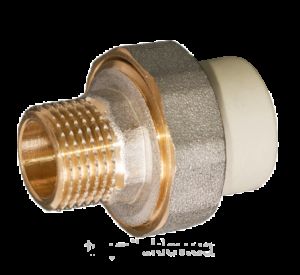 In essence, it is a coupling with union nut, which can be dismantled multiple times. To make a joint with this type of fitting, you only need to tighten the nut.
There are several types of union nut fittings, including straight, angled, conical, and cylindrical fittings. The versatility of connections made with union nut fittings makes them indispensable for many installation projects.
Experts also claim that using an American wrench is very convenient for working with heating radiators.
Based on this structural element, it is possible to create a joint with the highest level of tightness, for these reasons this type of connection is widely used in high-temperature systems with the same pressure level.
Cranes
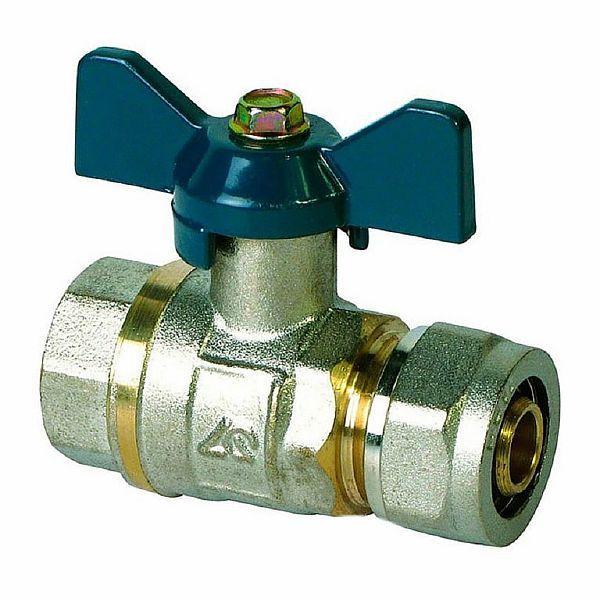 Taps are fittings for metal-plastic pipes, which comprise a series of shut-off and control valves. They are used for various pipelines, including those supplying both cold and hot water. When installing a tap, it's important to keep a few rules in mind.
A valve or faucet recommended for cold water supply should not be installed in the same location as a hot water supply. Similarly, a mechanism designed for hot water is not recommended for cold water supply.
Taps come in the following types: straight, angle, and combination. They make it easy to design a highly complex system.
The cost of cranes varies depending on the complexity of their design.
Press couplings
Video - Press Fitting
Compression fittings for metal-plastic pipes are called press fittings. The mechanism for this type of fitting is described above, and these couplings come in several types. This allows for the construction of a press fitting for all configurations.
Bends, elbows, and tees are used for branching and turning. Adapters and connecting pieces are used to complete the linear pipeline. Furthermore, the standardization of these fittings allows for joining metal-plastic pipes with copper and other types of pipes.
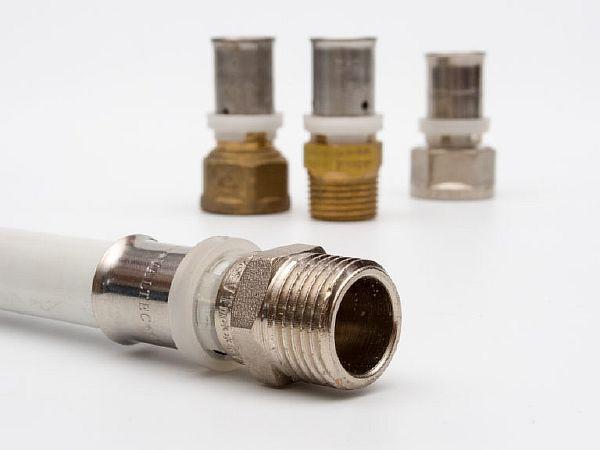 It should be noted that crimping products for metal-plastic pipes create a permanent connection, which has its own significant advantages:
- High strength. The press fitting installed in the area can withstand pressures up to 10 atmospheres.
- The press fittings have a long service life on metal-plastic pipelines. And the high connection performance remains consistent throughout their entire service life. Manufacturers claim that press fittings, when installed correctly, can last for over half a century.
- The joints require no maintenance. This property allows them to be installed concealed.
- Press couplings are not affected by temperature changes.
- Installation is easy and takes a short time.
- The use of pressure-tested fittings reduces the consumption of pipe and fittings, which, by and large, reduces the cost of pipeline installation.
Some secrets of installing clamping coupling devices
Although compression fittings for metal-plastic pipes are easy to install, there are a few nuances to remember. First and foremost, choosing the right pliers for the job is crucial.
Without this quality tool, reliable pipeline operation is out of the question. When purchasing, pay attention not only to the manufacturer of the clamping tools but also to the fact that the tool is designed to handle only a specific volume of rolled pipe.
However, there are models that can handle multiple clamping mechanism diameters. New, improved models of clamping pliers for clamping couplings have special markings: OPS, APC, and APS. Consumers can also find manual and hydraulic versions of specialized clamping equipment.
Compression couplings
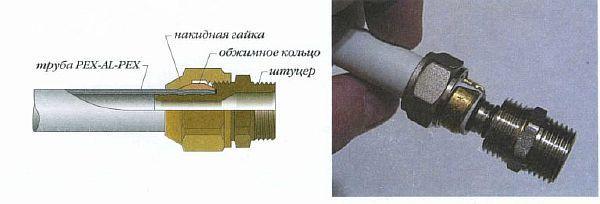
Compression fittings for connecting metal-plastic pipes in network pipelines are very common. The design of a compression element is as follows: a compression ring, a union nut, and a nipple.
Installing a compression fitting is not difficult. The procedure is as follows:
- the tubular blank is aligned;
- a cut is carefully made on it, for which markings are made in advance;
- the cut area is processed with a reamer, and the tubular product is given a rounded, correct shape;
- a compression fitting nut and a cut ring are placed on the workpiece;
- the moistened fitting is “placed” on the pipe so that the end part of the pipe rests against the edge of the coupling;
- the nut is tightened by hand until it stops;
- then the nut is tightened with a wrench, making no more than one or two turns.
When installing compression couplings, do not use wrenches equipped with additional levers.
Plastic fittings
Plastic fittings for metal-plastic pipes are modern, lightweight, and durable options. Thanks to their excellent qualities, these fittings are used in metal-plastic pipelines for various purposes.
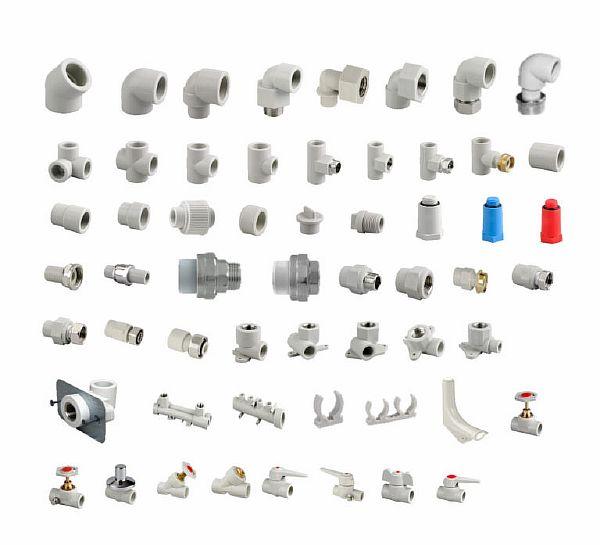
Plastic products are environmentally friendly and certified in many countries. These fasteners are rightfully considered the most versatile.
Installing plastic fittings doesn't require complex technical steps. You can do it yourself, without the need for professional help.
Plastic fittings are produced in various types, and they must be selected depending on their intended purpose.
By purchasing these devices, you can be confident that the pipeline installed with them will be durable and reliable. Their affordable price is also a plus. And if they are purchased from a reputable manufacturer, you'll be guaranteed a wide range of positive operating characteristics.
Video - overview of pipes and fittings.
Choosing the right fittings for metal-plastic pipes is not difficult. The main thing is to correctly determine the required configuration. If all this is done correctly, the reliability of the main connections will be 100%.