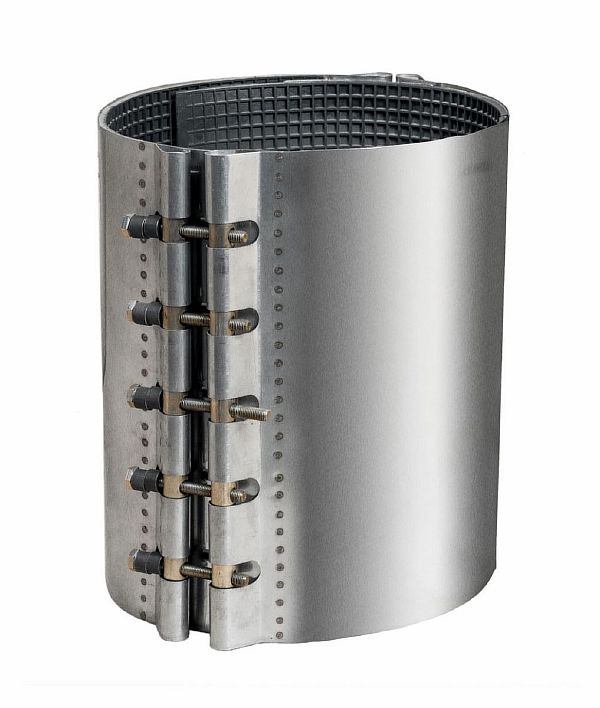
 During work on various pipelines, emergency situations arise that require immediate resolution. Often, a complete system shutdown can be extremely inconvenient, so it's recommended to use a pipe repair clamp to address these issues.
Such pipe devices make it possible to carry out replacement and repair work on the main line without cutting off the entire network.
They are used to seal holes, cracks, and porous areas in pipelines transporting liquids. The sealing cuff on these devices has a cellular structure, allowing for a reliable seal. Manufacturer tests have shown that this connection can withstand pressures of up to 30 bar.
Where are they applied?
Repair clamps, also known as pipe couplings, are used for working with pipelines made of any material. Their main advantage is their reusability. These couplings allow for inexpensive and timely repairs of pipelines made of:
- Cast iron.
- They became.
- Polyethylene.
- Metal-plastic and asbestos cement.
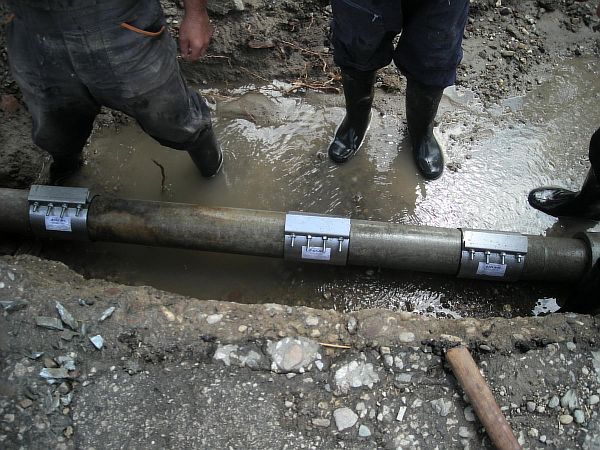
Types of damage that can be repaired with clamps:
- Post-weld.
- Pipe fractures.
- Longitudinal cracks formed.
- Needle hole.
- Post-corrosive fistula.
- Holes resulting from impact.
The advantages of clamps are obvious:
- Installation is simple and can be done very quickly.
- The emergency zone is quickly sealed.
- The products are characterized by low cost.
- With these couplings, you can reduce the cost of repairs.
- When using it for repairs, there is no need to turn off the entire system.
- The structure formed by the clamps is distinguished by its reliability and long service life.
Manufacturers of this product line
The construction materials market offers a variety of products from domestic and international manufacturers. Professional craftsmen rightly praise the high quality of products from Israeli and Swiss companies.
Watch the video
Almost all products available for sale are manufactured according to European standards and have all the necessary certificates for use in our country.
This line of repair products is available in a very wide range, allowing them to be used on any pipeline system with any pipe diameter. This includes drinking water systems.
Let's look at what types there are
Repair clamps for metal and other pipes are divided into the following depending on the material they are made of:
- Steel. Made of material not coated with anti-corrosion protection.
- Steel. Made of stainless material.
- Steel. (Galvanized).
- Cast iron.
Depending on the type of fastener, coupling devices for metal and other pipelines are:
- One-sided.
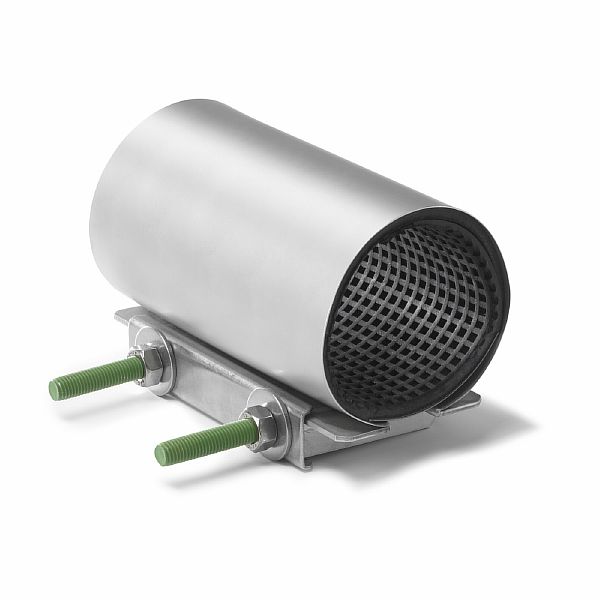
- Double-sided.
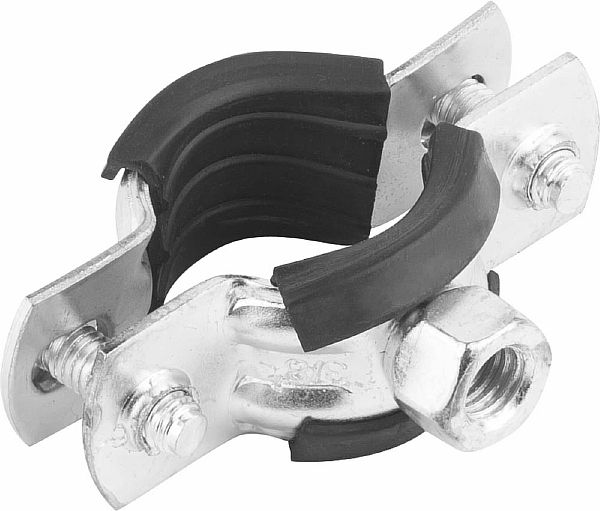
- Standard.
- Two-part.
- Three-piece (for large-volume metal pipelines).
In addition to these models, manufacturers provide a set of components for metal systems with larger diameters. The number of components for such repair devices depends on the overall volume.
Watch the video
Products for metal and other pipes differ in several design features, which means they are easy to select for any network.
Main technical characteristics of repair tools
Crimping repair clamps for pipes consist of the following parts:
- Bandage. This is a crimping element (stainless steel or galvanized), which is one or two millimeters thick. Carbon steel (1.5 to three millimeters thick) is also used for this structural element. Cast iron parts are also often used for this purpose.
- Cuff. It serves as a seal on crimping tools. It is made of 6429 cellular rubber – from 8 to 13 VAL.
- The fastening elements of the crimping mechanisms are made of stainless steel or galvanized steel.
The permissible operating pressure for crimping tools ranges from 6 to 10 atm. Their working environment is water, air, or any inert gas.
The temperature norm for crimping devices is from -20 to +600S. And their diameters range from 1.5 to 120 cm.
Repair coupling for 300
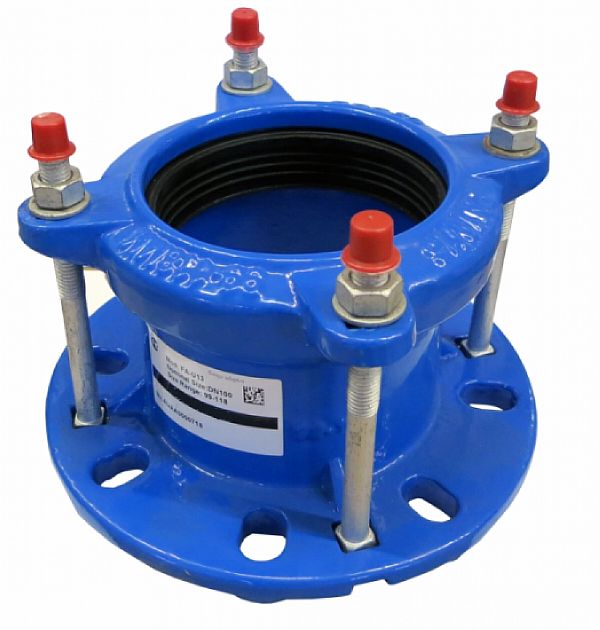 The 300mm pipe repair clamp is used for repairs on large-diameter pipelines. This device is excellent for addressing issues such as:
- Formation of cracks running longitudinally (with a possible deviation of 5 degrees).
- The appearance of a large fistula on a steel and cast iron main line.
Using 300 repair tools, you can connect steel and cast iron pipelines to polyethylene ones. The 300 part allows you to repair a leak without disconnecting the entire system.
These couplings use gaskets made of certified food-grade rubber. The use of unspecified materials on these devices is completely eliminated. Therefore, these products are highly environmentally friendly.
The 300 device is a reliable and high-quality device, made from high-quality materials. Adding to all these advantages is its affordable price.
Clamp for repairing steel pipelines
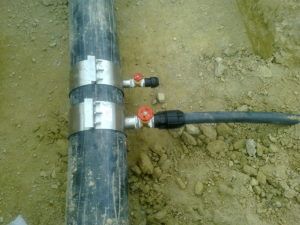 A steel pipe repair clamp is made of steel, and these devices are most often installed on water supply networks. This steel pipe component is folded:
- Several galvanized or steel half couplings.
- Gaskets.
- Bolts, nuts and washers made of steel materials or galvanized.
The nominal volume of such a device for steel pipelines ranges from 1.5 to 60 cm. These devices are made in the form of a strip, the edges of which are fastened with galvanized tubes.
Cuff The valve on these devices is made of a cellular material, which creates a hermetically sealed connection between the mechanism and the fault location on steel pipelines. The metal thickness is 1 mm.
They are not subject to corrosion formations and are cost-effective and easy to use.
Their features
A repair clamp for cast iron, metal, and polyethylene pipes offers numerous advantages. It can be used on fragile cast iron and any other system, making these tools versatile.
These mechanisms are easy to install, and anyone can do the job themselves. These fasteners allow you to connect cast iron pipes to any other type of pipe.
When installed on a metal system, they make it possible to extend the service life of the line.
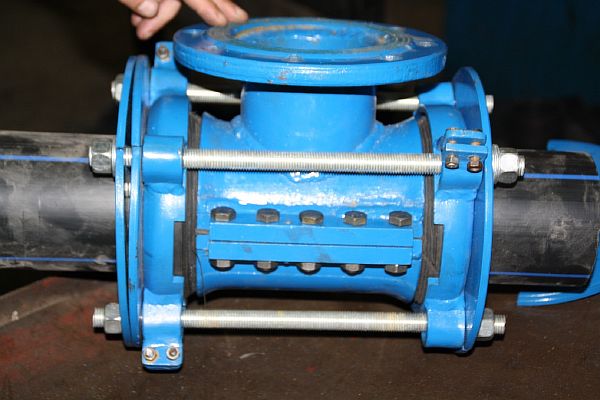
Anyone can install this device for a cast iron system, even without specialized skills. These mechanisms, for cast iron and any other network, can withstand high temperatures.
However, to ensure that these technical characteristics meet all requirements, you should only purchase products from a trusted manufacturer.
Application and installation sequence
It has already been noted that installation in this case is quick and easy. A brief description of this type of work is as follows:
- The mechanism must be wrapped around the circumference of the pipe and secured to the part opposite the accident site.
- Then the nuts are fastened; they must fit tightly to the pipeline.
The quality of installation in an emergency zone directly depends on the coupling material and its strength. A crucial detail during installation is the precise connection between the fastening device and the system.
There's no need to replace the installed fixture; it can last as long as the pipe itself. Therefore, it's cost-effective to purchase several clamps for repairs rather than incur the expense of replacing the entire pipeline or a separate section.
When selecting the right repair tool, it's important to consider the extent of the damage. Metal, plastic, and other types of tools are used to best address the damage.
Each repair mechanism is designed as a semi-closed sleeve and a screw clamp. All components of this design are tightened using bolts. Its diameter must precisely match the dimensions of the line; this alone guarantees a reliable seal.
Watch the video
The described fastening method is versatile and simple. However, installation often presents challenges that require specific skills. For example:
- A stable fastening option. The primary support points with a fixed zone are those where the clamp secures the pipe without the possibility of subsequent movement. This fastening is performed near the socket point on the body. This system allows for the use of various fixture shapes and creates a robust structure.
- Floating fastening method. Metal or steel coupling mechanisms are used as connecting parts, but this type of fastening requires considerable force. Another option for this method is plastic types. These should be selected with a larger diameter to ensure effective fastening.
Clamps made of metal and plastic
The pipeline installation process involves a variety of coupling configurations and sequences. Only this method ensures the stability of the reproducible structure. Additional fittings are used in areas where the pipeline branches and turns.
Using rigid and fixed fasteners for metal or plastic couplings is advisable in heated rooms. For other applications, plumbers use a flexible fastening method using elastic inserts.
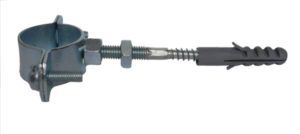 If the system is exposed to high temperatures, the pipes must be fitted with couplings of various shapes with a movable type and elastic gasket.
The use of various options—metal, plastic, and steel—is aimed at performing plumbing work associated with troubleshooting system defects. Their fastening option involves securing them to the wall with sharp metal pins.
For example, the fastening of a polypropylene pipeline is carried out at a distance of 2 m, while a plastic pipeline is allowed to be fastened less frequently.
Do it yourself
Homemade clamps, made from scrap materials, are often used for repairs. These are very simple devices that can temporarily fix the problem.
A rubber band is wound around the pipe and secured with a wire wrap. Finally, the structure is covered with tape, or electrical tape can be used.
The use of such mechanisms involves a number of limitations:
- Use is permitted only on a straight section of the main line and on its outer part.
- Cannot be installed on a system with a volume greater than 350 mm.
- The emergency section should not be longer than 20 cm.
- If a pipe is broken, the distance between the end parts should not exceed 1 cm, and the deviation of the axes should not exceed three degrees.
- If the mechanism covers more than half of the damaged section of the pipe, it cannot be installed. In this case, technicians recommend replacing the pipes.
A pipe repair clamp is currently the optimal solution for repairing pipeline faults. It's a cost-effective method that ensures uninterrupted network operation for a very long time.
Watch the video