 A steel or plastic pipe plug is used to seal off an opening at the end of a piping system. Steel versions are successfully installed in almost all pipelines. They are stamped or cut from steel sheets.
When discussing steel pipe plugs, it's important to note that their diameters range from 3.2 to 10.2 cm. Their ability to withstand high pressure, very low, and very high temperatures is also noteworthy.
The main advantages of these products:
- Plugs for main pipes are characterized by a high level of resistance to external factors.
- They can be securely connected to the system components.
- Any of the parts can be dismantled without much effort.
- Allowed to be installed in networks transporting aggressive media.
- The effectiveness of these plugs does not decrease when operating under very high temperature conditions.
- These products make it possible to provide a durable seal for the hole at the end of a pipeline.
They are most often made from stainless steel, alloy steel, and carbon steel. Differences in working surfaces dictate manufacturing variations.
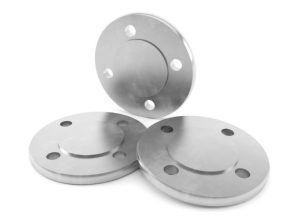
Based on this fact, this product is used:
- For use in systems containing oval section products.
- Parts that are equipped with projections for joining.
- Elements that have depressions and spikes.
The scope of application of each type of these parts depends on their classification and the required technical indicators.
Options for steel pipe rolling
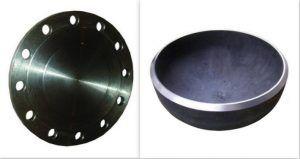
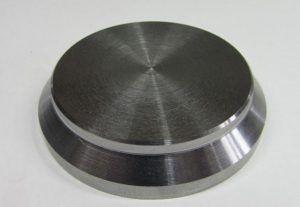
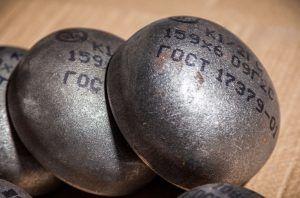
Steel pipe end caps are manufactured by many companies that produce them according to GOST and TU standards. They produce the following types of fittings for steel pipes:
 FlangedThey have a good safety margin. Furthermore, they are resistant to the harmful effects of aggressive substances. Another important factor is their excellent protection against corrosion, which is why flanged types are widely used in pipeline networks at pharmaceutical, food, and petrochemical plants.
 FlatTheir use is quite common in pipeline systems. According to GOST requirements, they are designed for an operating pressure of 10 kgf/cm². According to the same GOST standards, the operating temperature for flat products is 80 degrees Celsius. According to the GOST standard, the volume of these plugs ranges from 5.7 to 10.2 cm².
 EllipticalMade of stainless steel, this translates to high strength in this case. This is complemented by a good resistance to aggressive substances. They have gained immense popularity among consumers due to their long service life. They are widely used in many industrial sectors.
Threaded elements
When discussing plugs, we can't ignore the threaded varieties. Threaded plugs for steel pipes have proven themselves to be excellent in use.
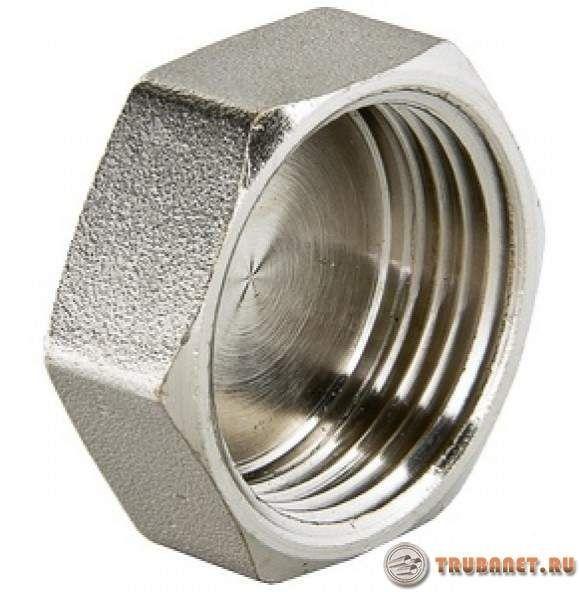
This applies to both European and domestic products. It's worth noting that many Russian companies produce these items of very high quality.
They are divided into:
- External threaded. Their diameter ranges from 1/8 to 4 inches.
- Options with internal threads. In this case, product volumes range from 1/8" to 4".
According to GOST, threaded components are classified under 21873-78. These standards apply to products that operate at temperatures ranging from -40 to +120 degrees Celsius.
Threaded fittings are considered easier to work with than welded ones, as installation requires no specialized equipment or skills.

IMPORTANT! Please remember that threaded plugs for this type of pipe material have a low operating pressure rating, no higher than 63 MPa.
Other steel pipeline fittings
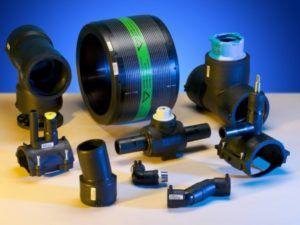
Elbows, reducers, tees, and plugs for steel pipes are available in a vast selection. This pipeline fittings are manufactured in strict compliance with GOST standards. You can see their appearance in the photos provided.
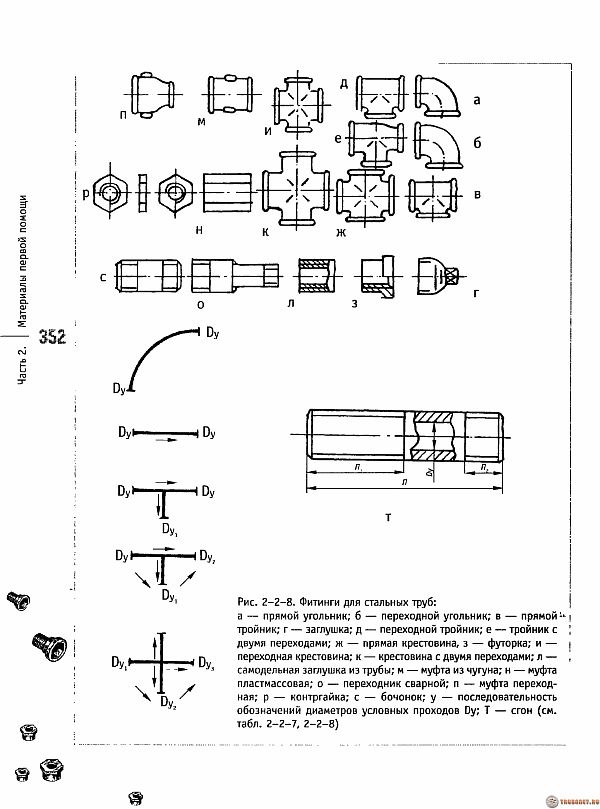
Pipeline elements are connecting fittings that are used when laying pipelines for various purposes.
They are installed at turns, bends, slopes, to transition to pipes of a different diameter, and to close the end opening in the main line. Below is a more detailed description of each of these types:
- BendsThese connection elements are placed on the network in order to change its direction.
- TransitionInstalled on a pipeline to connect pipes of different volumes. Concentric reducers are used to connect pipes along the main axis of symmetry of the system. Eccentric reducers are used to connect rolled pipe materials along the generatrix from below.
- Tees (straight and reducing)These options are intended for laying a branch on a pipeline.
- Bottoms and plugs (threaded or welded)They are used to close openings at the ends of main lines and when installing tanks. Threaded ones are distinguished by their ease of installation.
- HardwareUsed for flange joints. This includes studs, nuts, bolts, etc.
Weld-on plug
Weld-on steel pipe plugs are widely used when installing heating, water, and gas systems. Weld-on steel plugs are designed to seal off unused areas of a pipe section and to close off the opening at the end. The photographs show what this component looks like.
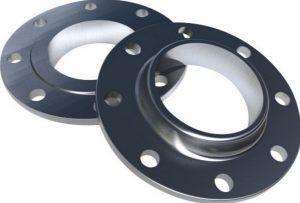
Manufactured using a seamless process, it's based on a material known for its strength and reliability: steel.
This material can withstand high pressures and maintains its properties at varying temperatures. Weld-on plugs offer the following advantages:
- Significant level of quality.
- Excellent practicality indicators.
- Reliability in operation.
- Affordable price.
- Long service life.
- Steel plugs for welding have found wide application in the housing and utilities sector and industry.
These items can be purchased at any plumbing supply store. Pricing is reasonable, and delivery is fast. Knowledgeable sales representatives will assist you with your purchase and help you choose the right product in just a few minutes.
The price of these materials
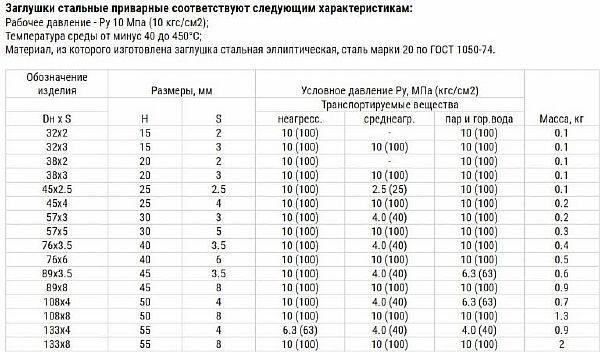
Steel pipe plugs have proven to be a highly desirable material; despite their impressive array of advantages, they are very affordable. It's hard to imagine any piping system without these components.
The main application of these elements is to close end openings. However, they nevertheless become an effective protection against damage during transportation of workpieces..
Plugs are made from a variety of materials, including metal and plastic. Plastic, polypropylene, and steel options are available on the market.

When purchasing them, it's important to pay attention to the quality guarantee. This condition must be strictly adhered to. Because today's market is full of counterfeits, the quality of which is highly questionable.
It is impossible to distinguish such products with the naked eye, and over time, such a mechanism in the pipeline will lead to its rapid failure.
By contacting companies that provide a guarantee, consumers receive:
- Wide range of products.
- Free assistance from specialists.
- Discount on wholesale purchases.
The price in this case ranges from 60 to 900 rubles. Some models may be more expensive.
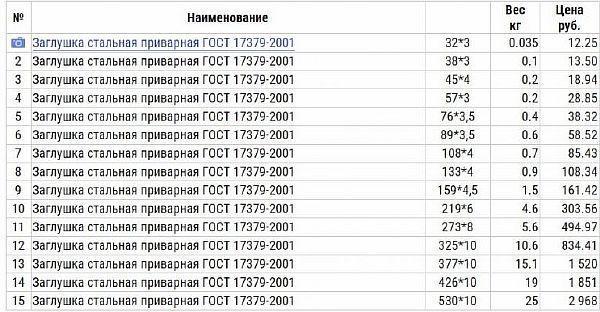
Please confirm the exact price of these items with our managers upon purchase. They will also provide you with the technical specifications of each item during order placement.
Steel plugs for plastic pipes
Steel plugs for plastic pipes can be used for pipelines of any purpose. The appearance of these plugs can be seen in the photos provided.
This type of fitting has become very popular because it is used not only for jamming the network, but also for creating protection, which becomes necessary when carrying out other activities.
Steel parts for profile pipes are divided into the following types:
- Flat welded type.
- Interflange.
- Flanged.
- Elliptical.
- Rotary.
A steel plug for plastic pipes can withstand very high temperatures (up to 600 degrees Celsius). It also boasts excellent resistance to aggressive chemicals.
Products of this type come in a variety of shapes, depending on the shape of the blank. They can be square, rectangular, or oval. In other words, steel parts for plastic blanks can have a variety of cross-sections.
- Laying of oil and gas pipelines.
- For laying out housing and communal services networks.
Aluminum plates, stainless steel sheets, and other metals are used to produce steel end caps for plastic pipe systems. Fittings made from this material are resistant to seasonal temperature fluctuations and do not deform under high temperatures.
For these reasons, metal options are perhaps the most popular in both industry and construction work.
Plastic fittings are also used for such systems; they are installed both indoors and in outdoor buildings. To increase strength, these mechanisms are reinforced with ribs.
For ease of installation, they are cone-shaped. Despite their modest strength, these mechanisms perform their intended function perfectly. This includes providing protective protection during the transportation of metal structures.
Plastic products installed inside homes are primarily decorative. To enhance their strength when fastened, they are equipped with stiffening ribs. This type of installation is simple and can be handled even by an untrained person.
Why a plug and not a tap or valve? It's quite simple; the priority here is simplicity of design and low material consumption, and therefore low cost. These factors have led to their widespread use.
Dear friends!
Steel and stainless steel plugs: elliptical, spherical, hemispherical, conical, flat, hot and fire bowls!
Our AoChun factory is located in Heibei Province, China. We've been producing plugs for over 20 years. Our quality is excellent! Our prices are competitive!
If you're interested in our products, please contact me! We look forward to a long-term and fruitful partnership with you!
Sincerely, Sonya