The effectiveness of underfloor heating depends on the strength of the screed. Regular concrete mortar deteriorates under constant temperature fluctuations, which negatively impacts the operation of the entire heating system.
Therefore, experts recommend using plasticizers as an additive when pouring screeds for heated floors.
Is a plasticizer necessary and what is its purpose?
A plasticizer is a component designed to make concrete for underfloor heating elastic and durable, while producing a more even and smooth surface.
This substance improves the solubility of cement clinker, which promotes the attraction of particles to each other, pushing out air and excess water, thereby making the mixture more elastic. It becomes denser, meaning it dries better, has virtually no shrinkage, and is impervious to moisture.
In addition, the additive protects the concrete surface from deformation under the influence of heat, regardless of the type of underfloor heating: water, electric or infrared.
For your information! The plasticizer contains only components that are safe for human health, they are non-toxic, and have no unpleasant odor.
The main disadvantage of adding a filler to a solution for underfloor heating is the increased cost of the structure and the more complex installation process, as the mixture must be in constant vibration.
Properties and types
A plasticizer for cement mortar, intended for the construction of heated floors, has properties that positively affect their quality.
The main properties of additives used in the production of cement mortar for heated floors:
- repel liquid;
- withstand sub-zero temperatures down to -25°C;
- have a neutralizing effect on potassium nitrate in the amount of 5% of the total mass;
- protect the concrete base from the negative effects of chemicals;
- have inhibitory qualities;
- impart strength by reducing the surface tension of water;
- reduce the tendency to crack.
It's important to choose the right type of floor plasticizer, as this affects both the lifespan of your heating system and your energy costs.
When using concrete mix without a plasticizer, uneven heating of the surface and reduced thermal conductivity may occur due to air pockets in the screed. It's better to add a plasticizer in the form of an emulsion to ensure a more homogeneous mix.
According to the type of additive, there are:
- liquid - easy to work with and no need for preparation;
- dry - can be stored for a long time, but require mixing;
- reinforcing - equipped with additional chemical elements that give strength to the screed;
- Anti-freeze - used for outdoor work.
Manufacturers and prices
When choosing a plasticizer for your mortar, consider its compatibility with underfloor heating. The cost of the screed additive also plays a significant role.
Today, there are many companies worldwide that specialize in its production. Let's look at the main manufacturers.
Isomat Plastiproof
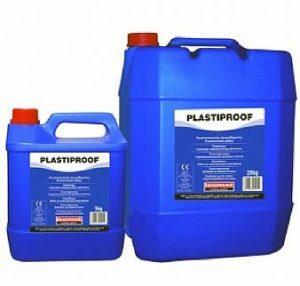
Isomat Plastiproof (Greece) is a waterproofing material with plasticizing properties. It improves the physical properties of concrete and reduces water absorption.
Increases elasticity and prevents air pockets in the mortar. Contains no chlorides or other corrosive substances.
The use of Isomat Plastiproof makes it possible create high-strength concrete, which can be pumped. It is compatible with any type of concrete. It is available in canisters from 5 to 20 kg and in barrels of 240 kg. The average price for 5 kg is 1,200 rubles.
Sanpol
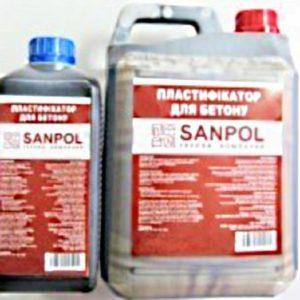
Sanpol is a Ukrainian manufacturer. This product is a high-quality, liquid mixture. It is designed for underfloor heating screeds, as it improves the strength and thermal conductivity of the structure. Using this type of additive reduces water consumption by up to 15%.
The process of pouring screed is lengthy and quite complex, requiring some experience. However, the advantage is that Sanpol slows down the setting time of the mixture, allowing for correction of any mistakes, making it especially suitable for those new to concrete.
For your information! The plasticizer for underfloor heating in concrete is used at a rate of 0.1 liter per 200 kg of cement. The average price is around 140 rubles per liter.
DEG-1
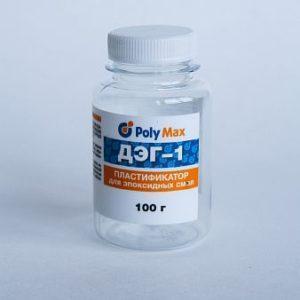
DEG-1 is an epoxy resin classified as an additive and used as a casting plasticizer. Its unique properties include increasing the plasticity of the mixture and reducing its strength. Its main drawback is that it cannot be used for making transparent parts.
Produced in Russia, the price per 1 kg of product is 9860 rubles.
ArmMix
This water-based compound is recommended for flooring and creating dense, waterproof concrete products. It is manufactured in Russia by Termoplast. The recommended consumption rate for 1 liter of modifier is 100 kg of cement powder.
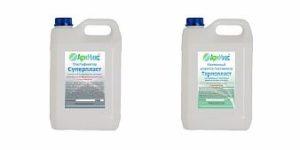
It's prepared in two ways: by mixing the substance with water in a special container, or by adding it directly to the cement-sand mortar. It costs 100 rubles per liter.
Advantages of this brand:
- reduces cement consumption;
- promotes the formation of a concrete mixture with high density;
- can be used at high sub-zero temperatures;
- reduces the process of screed deformation to a minimum;
- increases the plasticity of the concrete mass.
Heated floor HLV-75
The main purpose of this type of plasticizer is to facilitate high-quality installation of any type of underfloor heating, regardless of whether it is a water or electric system.
It can be added directly to the mixture during stirring or to the water before mixing. The modifier must be thoroughly mixed to ensure it is evenly distributed throughout the concrete.
The main advantage of this type:
- increases the mobility and thermal conductivity of concrete screed;
- prevents cracking;
- reduces cement consumption by 20%;
- protects reinforcement from corrosion;
- accelerates hardening by 4 times.
Designed for underfloor heating installations, it can be used with either rough or fine screeds. Manufactured in Ukraine, the price is 620 rubles for 2 kg of dry product.
Rehau
This brand (made in Germany) is recommended for pouring thin concrete screeds when installing heating systems. It's a superplasticizer for underfloor heating and is considered the best premium model.
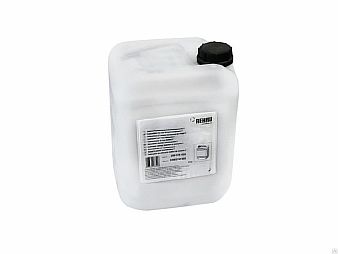
Available in both dry and liquid form, it's sold in 10 kg containers, with each canister costing 3,000 rubles. The product is of superior quality, environmentally safe, and harmless to health.
Adding a plasticizer to a cement mortar increases the floor's strength and thermal conductivity, improving its physical properties. Furthermore, the likelihood of concrete cracking is significantly reduced, as the mixture contains an optimal water-to-cement ratio.
Plasticizer S-3
S-3 (Russia) is a viscous, cream-colored liquid. It is packaged in metal or plastic canisters of varying volumes, from 0.5 to 10 liters. It is used in the preparation of solutions, along with solid fillers. The price for 10 liters is 1,000 rubles.
Like all plasticizers, this model makes the solution for heated floors stronger (by 35%), allows for savings on cement, significantly reduces the volume of water in the solution, improves water resistance (by 18%), and promotes the adhesion process.
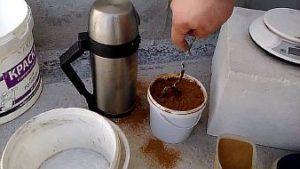
Before adding, mix thoroughly; 1 liter of additive is needed per 100 kg of cement. If using dry additive for underfloor heating, dilute it with warm water and let it sit for several hours until the mixture becomes homogeneous. For every one part powder, add two parts water.
How to choose what to pay attention to
When choosing the best floor plasticizer, you should consider both the quality and type of additive, as well as the conditions in which it will be used, as each type has its own characteristics.
Today, a number of additives are produced that are designed for underfloor heating systems. Before purchasing a material, it's important to read the specifications on the packaging. Manufacturers also specify compatibility with underfloor heating systems.
Key points to consider when purchasing a floor filler additive:
- the substance must be compatible with the cement grade to obtain a plastic mixture;
- be odorless;
- not be released under the influence of liquid and oil.
When choosing a plasticizer for installing a water-based floor, it's important to consider the presence of air bubbles within the resulting mixture, so a dry product is better.
When installing an electrical system, a semi-dry fill is used. This mixture consists of sand, cement powder, plasticizer, fiber, and a little water. This prevents cracks from forming on the surface. Therefore, a liquid fill with increased plasticity is recommended.
Instructions for use
Today, there are a large number of additives, each with its own proportions, which are specified by the manufacturer in the instructions. The quality of the solution depends on proper adherence to these standards. A standard plasticizer has a density of 1.15-1.2 g/m³.
The substance tolerates compatibility well with materials such as:
- crushed stone and sand GOST 8267–93;
- Portland cement;
- cement;
- sand.
To prepare the mixture, begin by preparing a deep container, at least 10 liters, as the dry product will be mixed with a mixer. Experts recommend using 0.8 liters of diluted mixture per 100 kg of cement. The result is an elastic mixture that will make an excellent screed.
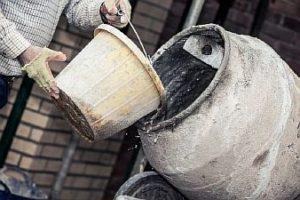
Important! When preparing a solution for a heated base, it's worth adjusting the component ratio: 2 liters of plasticizer per 100 kg should be used. This will increase viscosity and help prevent defects.
If you add too little plasticizer to the concrete mix, the setting process will be faster, and if you add too much, it will be slower. During cold weather, it's important to use a minimum amount of liquid in the screed to reduce the risk of defects.
For your information! In the rain, the plasticizer loses many of its beneficial properties. And when the weather is hot and work is being done outdoors, the permissible rate is 1 liter of additive per 100 kg.
The dry supplement should be diluted in warm water at a rate of 200 grams per 1 liter, and left for 1–2 hours.
How to make it yourself
If you want to save money and get an environmentally friendly product, you can make your own plasticizer for underfloor heating screeds. The process is simple and doesn't take long.
To add viscosity to the solution you need to take:
- shampoo or liquid soap;
- washing powder that should be dissolved in water.
The procedure for producing the mixture is as follows:
- Sand, cement and water are taken and mixed until a homogeneous composition is obtained.
- Mix liquid soap or washing powder with 200 ml of liquid. This combination will slow down the setting time by 3 times and reduce crack formation by 4 times.
- The mixture is added at the moment when the cement mortar is in the mixer, and mixed again.
- To reduce the risk of cracking, you can add slaked lime along with the soapy solution; it will slow down the hardening process. Use 30 grams of lime per 50 kg of solution.
However, experts warn that soap contains various additives, which can negatively impact concrete over time. Therefore, they recommend purchasing plasticizers for warm structures from reputable manufacturers.
Today, the main requirement for concrete structures is increased quality and reliability. A plasticizer was invented for this purpose. It increases the viscosity of the solution; it is not recommended to make a screed without it.
Video tutorials
Watch the video on the topic.