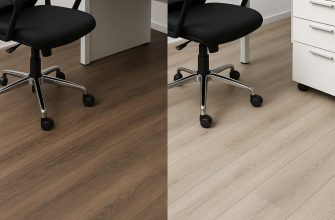
Today, porcelain stoneware is considered a popular finishing material in the construction market, especially among cottage owners. This type of flooring creates a modern and aesthetically pleasing interior.
Porcelain stoneware is a durable man-made finishing product available in tiles of varying sizes and textures. It is made from kaolin or illite clay, the main component, under high pressure.
The formed forms are fired at a temperature of about 1300 degrees.
Granite differs from ceramic tiles in its technological process; processing occurs at significantly higher temperatures.
- Pros and cons of porcelain tiles
- How to choose porcelain tiles
- How do different types of heated floors fit together with porcelain stoneware?
- Water-heated floor
- Electric cable floor
- Infrared film type
- Infrared rod
- What type of flooring is best for porcelain tiles?
- We are installing underfloor heating under porcelain tiles.
- Video tutorials
Pros and cons of porcelain tiles
In addition to being convenient and practical, porcelain stoneware also meets the latest fashion trends.
Advantages of this material:
- long service life - compared to ceramic tiles or laminate;
- high strength - can withstand a load of several hundred kg per 1 cm2;
- an environmentally friendly product - this is confirmed by its composition: clay, feldspar, kaolin, quartz sand;
- does not require special care - just wipe with a damp cloth;
- can be used for cladding both indoors and outdoors;
- resistant to moisture and temperature changes;
- A wide range of textures and colors allows you to choose a product to suit any interior.
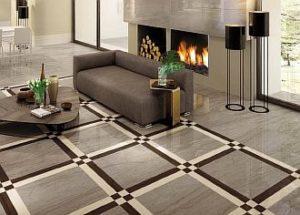
In addition, the material is easy to install, warms up well and easily distributes the resulting heat throughout the room.
The main disadvantage — has a low temperature. However, this problem can be solved by installing underfloor heating underneath the slabs. Porcelain tiles are slippery, especially when wet, so they are not recommended for kitchens and bathrooms. Furthermore, the material is not cheap, but the cost is justified and offsets over time.
How to choose porcelain tiles
When purchasing porcelain tiles for underfloor heating, it's important to carefully consider the model. It's important to consider the heating structure and coating characteristics. Experts recommend paying attention to the following:
- tiles with a glazed surface do not give off heat;
- if the tiling method involves empty joints, then when heated, the product expands, so it must be selected carefully, especially for the electric type.
It's worth noting that some tile models have installation considerations. This applies to adhesives, which affect the installation of certain heating systems.
It's best to entrust the selection of porcelain tiles to a specialist, so there won't be any unexpected surprises in the operation of the device.
How do different types of heated floors fit together with porcelain stoneware?
When installing underfloor heating over porcelain stoneware, the question arises: what type of heating system is best for this material?
Any type can be laid under granite tiles, the main thing is to follow some rules.
Watch the video
Water-heated floor
Installing a water-based underfloor heating system under porcelain tiles is a popular option, especially in private homes. In apartments, the difficulty of installing this type of system lies in connecting it to the main heating system and raising the floor height. The heat transfer fluid is either emulsion or water, which circulates in the pipes.
The advantage of this system is its efficiency, so it's often installed in larger rooms. Although installation is time-consuming, it's not complicated, and the end result is complete heating.
The disadvantage is the high cost; installation of such a structure is impossible without major repairs, and there is a need for constant preventive inspection.
And if a leak occurs, the consequences can be serious, requiring significant financial investment, as it will be difficult to access the defect through porcelain stoneware.
The water floor pie under porcelain tiles consists of several layers:
- subfloor;
- hydro and thermal insulation material;
- reinforced mesh;
- heating circuit;
- finishing screed;
- floor covering - porcelain stoneware.
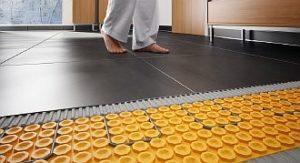
As mentioned above, installation work can be done independently. The majority of the structure consists of the insulating underlayment and screed.
When installing on a rough surface, the minimum concrete layer is 45 mm, as the pipes are 25 mm in diameter, and 20 mm is required to completely cover them. To reduce the load on the structure, it is recommended to add a plasticizer to the mortar.
Electric cable floor
Unlike hydronic systems, electric underfloor heating elements are thinner. Furthermore, some models are installed in the screed, while others are installed directly under the flooring.
A pie of this design is the presence of:
- primary floor or screed;
- heat-reflecting material;
- thermal films;
- polyethylene film;
- plasterboard;
- layer of tile adhesive;
- porcelain stoneware.
When installing electric underfloor heating under porcelain tiles, the first priority is to protect the system from moisture.
If there is a thin screed, it is recommended to add a plasticizer to the solution or apply an epoxy primer to the surface to increase moisture resistance.
A foil-lined interlayer is crucial when constructing an electrical structure. The main drawback is the concrete screed, which significantly reduces the room's height.
There are the following types of electric cable floors: heating cable and heating mats, which are laid under a certain layer of screed:
- A 50 mm thick heating cable is used here, embedded in a concrete screed. The advantage of this device is the ability to adjust the installation pitch, allowing for different power levels in different areas. The heating cable can be used as either the primary or secondary heat source. To reduce heat loss, a reflective insulation layer is required. This will reduce energy costs and improve the performance of the device.
When laying such a screed under porcelain tiles, it's important to maintain the correct screed thickness. A screed thickness greater than 50 mm will increase energy costs and reduce thermal conductivity. A screed thickness of less than 30 mm will create a thermal zebra pattern—cold and hot spots on the floor surface.
Furthermore, the surface must be level and free of air pockets. These can damage the cable and impair the proper functioning of the floor.
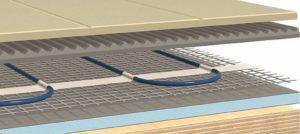
Important to know! To ensure the unit heats the floor evenly, the cable should be securely fastened. This will prevent it from shifting when the screed is poured.
- A thickness of approximately 3 mm is a modern technology for installing underfloor heating. It is recommended for installing thin heating mats. This type of underfloor heating layer under porcelain tiles will be only 3 mm thick. This design is a solution if raising the floor height is not possible.
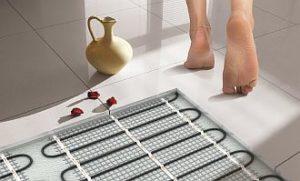
Please note: Heating mats are cables placed on a special self-adhesive mesh at a specific pitch.
The key to installing this structure is choosing the right adhesive for granite over underfloor heating. In this design, the heating elements will be located within the adhesive layer.
Infrared film type
We consider film flooring a modern system that emits infrared waves without generating electromagnetic fields. A waterproofing layer is essential, and to prevent heat trapping, the system must be covered with plywood, onto which the tiles will be attached.
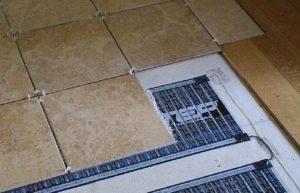
There are two types of infrared floors:
- With carbon heating elements, this system is connected in parallel. A polyester film serves as the base. The unit can be placed on either a horizontal or vertical surface. Some models have a graphite coating, which increases durability and reliability.
It's possible to lay a film with carbon strips under the tiles, but the process is labor-intensive. The problem is that the adhesive doesn't bond properly to the film, requiring additional steps. Furthermore, the effectiveness of the film under the tiles is reduced, while such a structure is expensive.
- Bimetallic films feature heating elements made of aluminum or copper plates coated on both sides with elastic polyurethane. This type is not recommended for use under porcelain tiles.
Infrared rod
A relatively new type, it's not very popular. Its heating elements are flexible rods made of carbon, silver, or graphite. Rod-based underfloor heating is sold in heating mats, in which the rods are arranged parallel and spaced 10 cm apart.
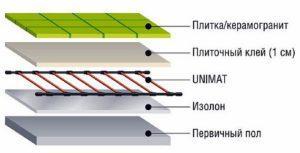
The advantage of this type of communication system, unlike film-based systems, is that its operation is unaffected by furniture placed on it. It complements any flooring, including porcelain tiles.
What type of flooring is best for porcelain tiles?
Comparing all heated floors and their compatibility with porcelain tiles, we can conclude that the most optimal solution will be installation of electric cable heating mats under porcelain tiles (two-wire).
This type of flooring can provide efficient and uniform heating of the tiles, thereby creating comfortable living conditions in the room.
It's also worth noting that installing heating mats doesn't require much prep work. And, as mentioned earlier, the heating elements are placed directly into the adhesive solution.
We are installing underfloor heating under porcelain tiles.
Before installing underfloor heating, you should decide whether it will be your primary or secondary heating source. This will help you choose the right power level; typically, it's 140-180W.
Calculating the number of mats is essential, as cutting them will damage the cable. It's not recommended to place them under furniture, although this isn't critical with mats.
Let's look at the installation of underfloor heating under porcelain tiles, using electric cable mats as an example:
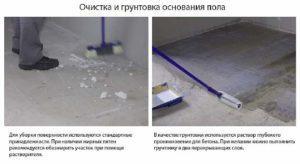
- The base is prepared: the subfloor is thoroughly cleaned of debris, cracks and uneven areas are sealed, and a primer is then applied.
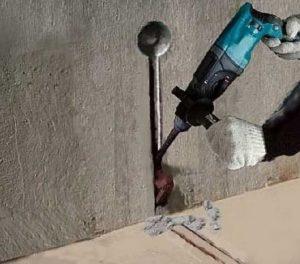
- Determine the location for the thermostat—it should be located on the wall, at least 3 cm above the floor. A groove is made in the wall for the cable to run through.
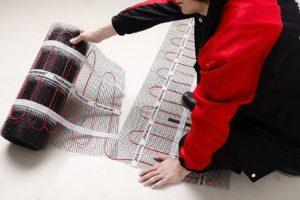
- The mats are laid out—rolled out over the surface, spaced 10 cm from the wall. The mesh is cut where the cables are turned. The mats are fixed to the floor with adhesive, spot-on. Once the adhesive has dried, the entire surface of the structure is covered with a thin layer of adhesive, protecting it from external influences.
Advice! Use heat-resistant glue made from epoxy resin.
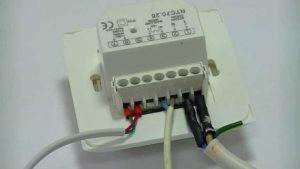
- The wire is connected to the temperature sensor.
- The test is carried out as follows: the floor should be turned on for the first time after the glue has completely dried, to ensure that all parts of the structure are working.
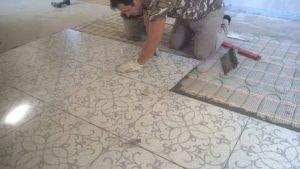
- The porcelain tiles are laid directly on the mats using glue; there is no need for a concrete screed.
Which underfloor heating system to choose under porcelain tiles is up to you. Each has its advantages and can create an excellent microclimate in the room. The main thing is to properly consider the specific features of the room and install it in accordance with the required regulations.